

The United Nations Office at Geneva
Multimedia Newsroom
Edited News , Statements , Images , Conferences | HRC , OCHA , UNOG
World Humanitarian Day Commemoration - 19 August 2025
Record 383 aid workers killed in 2024, warns UN aid coordination office on World Humanitarian Day
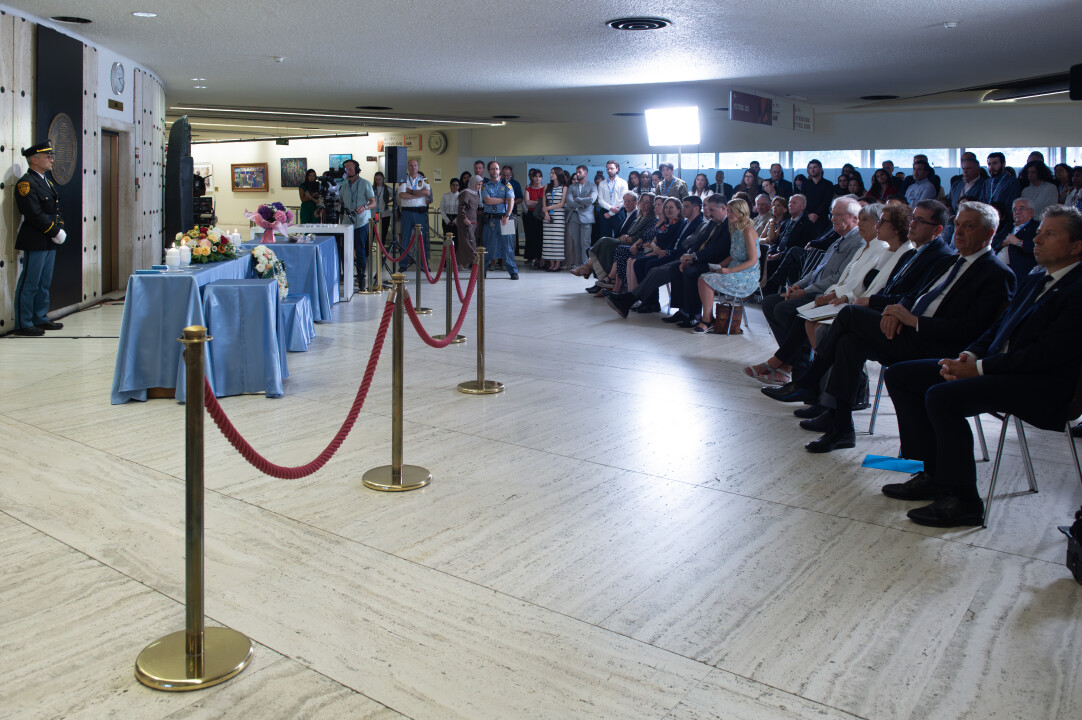
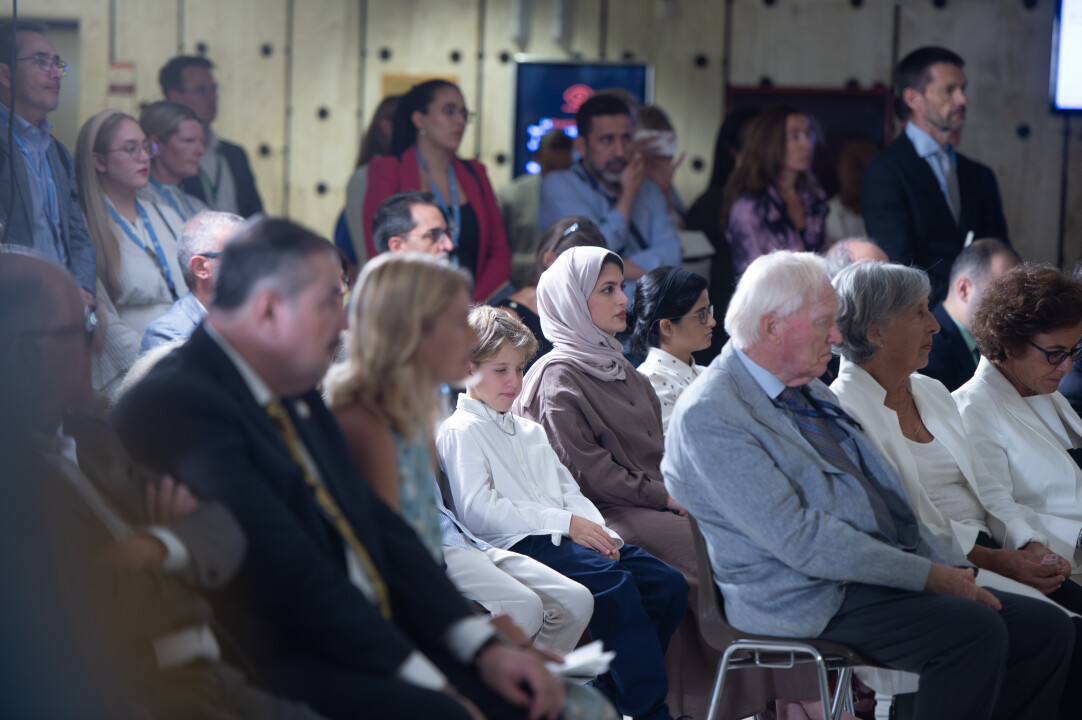
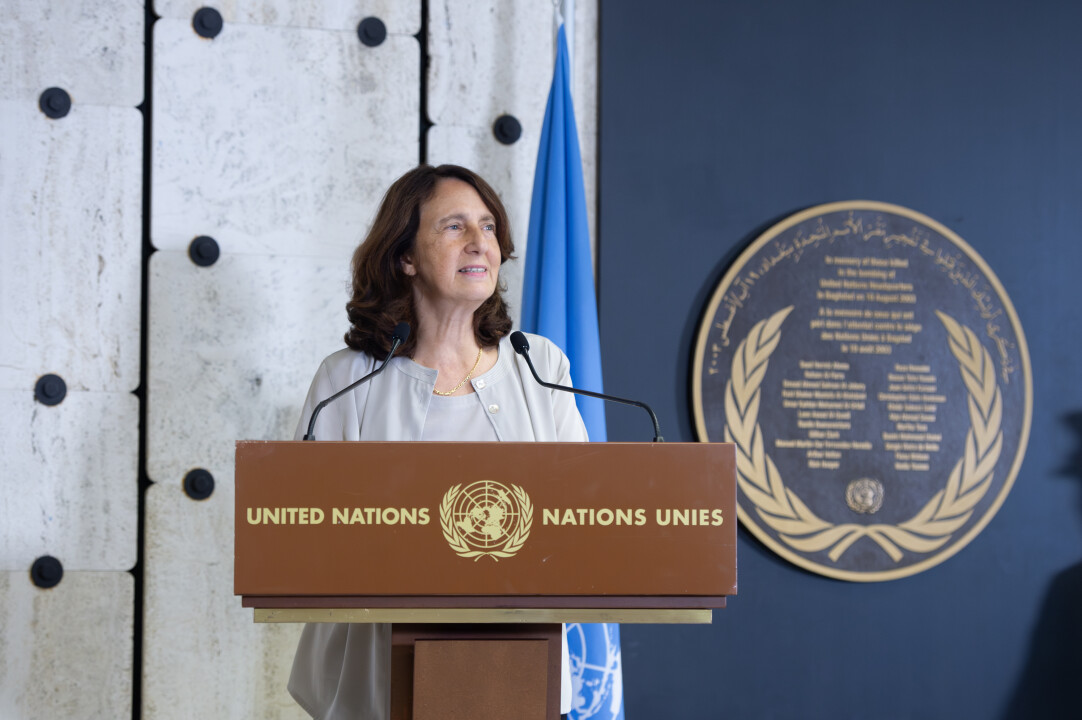
A record 383 aid workers were killed last year with hundreds more wounded, kidnapped and detained, the UN’s top aid official said on Tuesday in a call for accountability, at a solemn ceremony in Geneva to mark World Humanitarian Day.
“In Gaza, 520 aid workers - mostly UNRWA staff - killed since October 2023; the deadliest place for humanitarians for the second year running,” said Under-Secretary-General for Humanitarian Affairs and Emergency Relief Coordinator, Tom Fletcher.
Despite the dangers, aid teams globally reached more than 116 million people last year, the senior UN official continued, with “families fed, children in school, sick people cured, communities protected.”
Echoing those comments from inside Gaza, veteran UN aid worker Olga Cherevko reaffirmed the resolve of humanitarians everywhere to save lives and relieve suffering. She paid tribute in particular to her national colleagues who had lost everything, time and again.
Despite these hardships and repeated displacement, “they continue to show up. They continue to work without electricity, without food, without basic supplies. And they continue to serve.”
From her base in Deir Al-Balah in central Gaza, Ms. Cherevko reflected on the nature of humanitarian work today and the frustration that aid teams often face when their lifesaving missions are delayed, preventing them from delivering assistance at scale.
“I think as a humanitarian, I feel powerless sometimes in Gaza because I know what it is that we can do as humanitarians when we're enabled to do so, both here in Gaza and in any other humanitarian crisis,” she explained.
“We continue to face massive impediments for delivering aid at scale, when our missions are delayed, when our missions last 12, 14, 18 hours. And the routes that we're given are dangerous or impassible or inaccessible.”
Latest data indicates a 31 per cent surge in aid worker deaths last year compared to 2023, driven by the relentless conflict in Gaza.
Worryingly, there is no sign that the trend is slowing this year, with 265 aid workers killed as of 14 August this year, according to provisional data from the Aid Worker Security Database.
According to the UN aid coordination office, OCHA, most aid workers killed last year were national staff serving their communities; they were attacked in the line of duty or in their homes. An additional 308 aid workers were wounded, 125 kidnapped and 45 detained in 2024.
Also speaking at the UN Geneva ceremony, UN deputy human rights chief Nada Al-Nashif noted that attacks and killings of humanitarian workers have risen sharply in recent years. This is in “utter disregard for international law and in flagrant violation of the Geneva Conventions and the protections that are embedded in the Universal Declaration of Human Rights”, she insisted.
Why do we mark World Humanitarian Day?
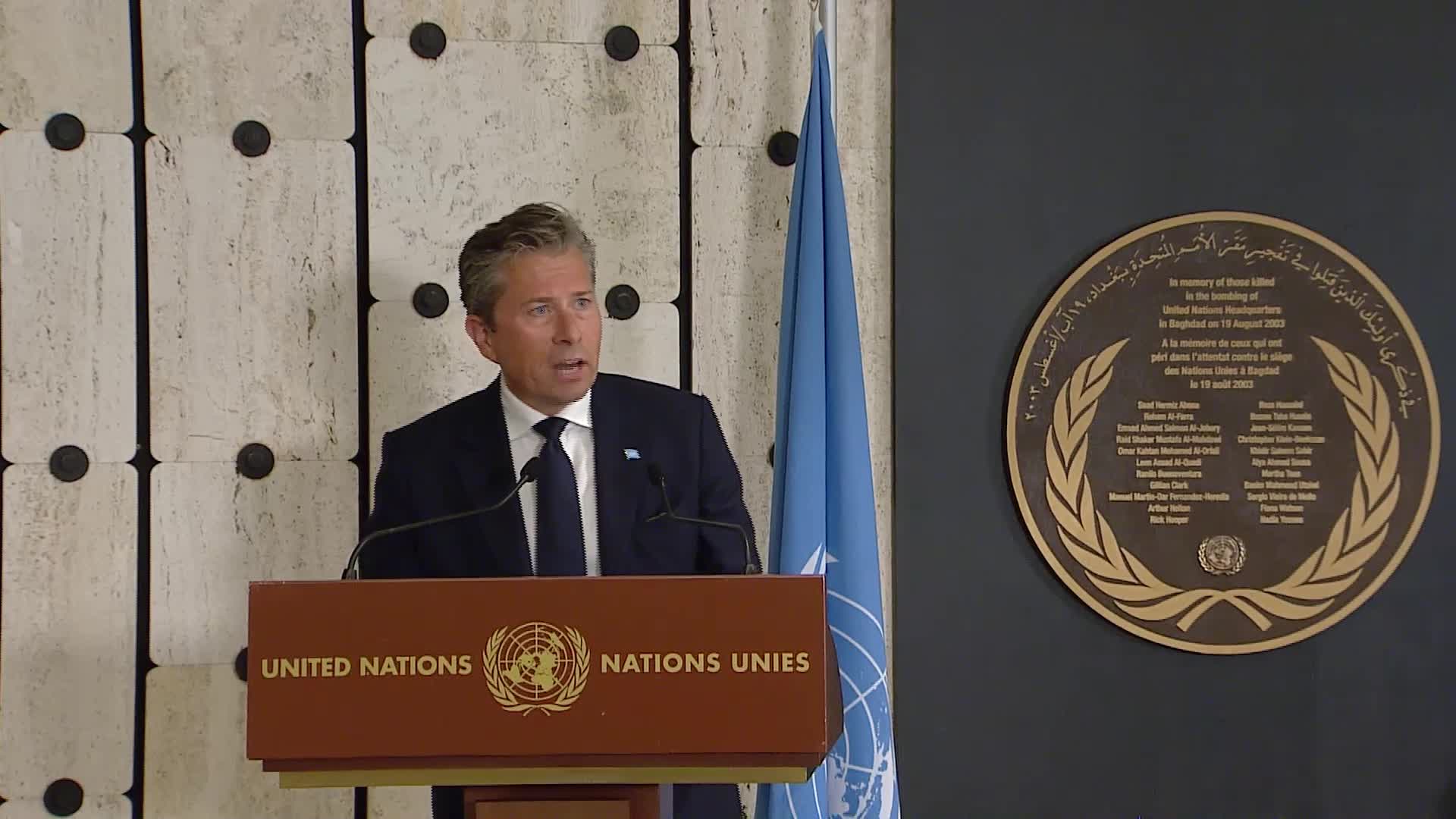
On 19 August 2003, a bomb attack on the Canal Hotel in Baghdad killed 22 humanitarian aid workers, including the UN Special Representative of the Secretary-General for Iraq, Sergio Vieira de Mello. Five years later, the General Assembly adopted a resolution designating 19 August as World Humanitarian Day.
Each year, the international day brings together partners from across the humanitarian system to advocate for the survival, well-being and dignity of people affected by crises, and for the safety and security of aid workers.
The theme of this year’s commemoration overseen by OCHA is an end to the attacks on humanitarians and civilians and impunity under International Humanitarian Law. “We urge those in power to #ActForHumanity,” the UN agency said.
ends
STORY: World Humanitarian Day
TRT: 3’44”
SOURCE: UNTV CH
RESTRICTIONS: NONE
LANGUAGE: ENGLISH/ NATS
ASPECT RATIO: 16:9
DATELINE: 19 AUGUST 2025 GENEVA, SWITZERLAND and various broll from Gaza dated as indicated. Please credit the UN agency indicated.
Speakers:
- Tom Fletcher, UN Under-Secretary-General for Humanitarian Affairs and Emergency Relief Coordinator
- Nada Al-Nashif, UN Deputy High Commissioner for Human Rights
- Olga Cherevko, aid worker, UN Office for the Coordination of Humanitarian Affairs (OCHA), from Deir Al-Balah, central Gaza
SHOTLIST
- Exterior wide shot: Palais des Nations, flag alley.
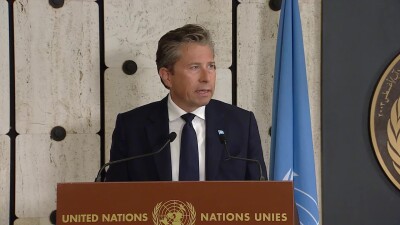
- Wide, World Humanitarian Day commemoration, UN Geneva.
- SOUNDBITE (English) – Under-Secretary-General for Humanitarian Affairs and Emergency Relief Coordinator, Tom Fletcher: “Last year, more than 380 humanitarians were killed - not dead, killed - the highest ever recorded. Hundreds more wounded, kidnapped, detained.”
- Close up, a small bowl of lentils, 26 July 2025, Gaza. PLEASE CREDIT UNFPA ON SCREEN
- Close up, a boy eats a spoon of lentils at a displacement camp on 26 July 2025, Gaza. PLEASE CREDIT UNFPA ON SCREEN.
- SOUNDBITE (English) – Olga Cherevko, aid worker, UN Office for the Coordination of Humanitarian Affairs (OCHA) – from Gaza: “As a humanitarian I feel powerless sometimes in Gaza because I know what it is that we can do as humanitarians when we're enabled to do so, both here in Gaza and in any other humanitarian crisis.”
- Medium shot, Dr. Younis Awadallah of UNICEF in a car with a bullet mark on the window, in central Gaza. Production period: July to November 2024, OPT. PLEASE CREDIT UNICEF ON SCREEN.
- SOUNDBITE (English) – Under-Secretary-General for Humanitarian Affairs and Emergency Relief Coordinator, Tom Fletcher: “In Gaza, 520 aid workers - mostly UNRWA staff - killed since October 2023; the deadliest place for humanitarians for the second year running.”
- Wide shot, destruction inside a medical centre in northern Gaza, where most equipment - including incubators - has been destroyed. Production period: July to November 2024, State of Palestine. PLEASE CREDIT UNICEF ON SCREEN.
- Medium shot, UN staff overseeing the cold chain for vaccine storage in central Gaza Strip. Production period: July to November 2024, OPT. PLEASE CREDIT UNICEF ON SCREEN.
- SOUNDBITE (English) – Olga Cherevko, aid worker, UN Office for the Coordination of Humanitarian Affairs (OCHA) – from Gaza: “Specifically mentioning the Palestinian colleagues, the doctors, the nurses, the aid workers who many of them have lost everything and several times over. And, of course, displaced time and time again. And, they continue to show up. They continue to work without electricity, without food, without basic supplies. And they continue to serve.”
- Wide, podium shot in profile with Nada Al-Nashif, UN Deputy High Commissioner for Human Rights.
- SOUNDBITE (English) – Nada Al-Nashif, UN Deputy High Commissioner for Human Rights: “Attacks and killings of humanitarian workers have risen sharply over recent years in utter disregard for international law and in flagrant violation of the Geneva Conventions and the protections that are embedded in the Universal Declaration of Human Rights.”
- Wide shot, a Palestinian family in front of their tent in a displacement camp. 26 July 2025, Gaza. PLEASE CREDIT UNFPA ON SCREEN.
- SOUNDBITE (English) – Olga Cherevko, aid worker, UN Office for the Coordination of Humanitarian Affairs (OCHA) – from Gaza: “The starvation crisis is continuing to grow and deepen because we still have a situation where there's not enough supplies entering and we continue to face massive impediments in delivering our supplies at scale to the people in need, using our community-based mechanisms.”
- Wide shot, a vendor sells a small selection of cooking oil and dry goods at a market in Gaza City. 26 July 2025, Gaza. PLEASE CREDIT UNFPA ON SCREEN.
- SOUNDBITE (English) – Under-Secretary-General for Humanitarian Affairs and Emergency Relief Coordinator, Tom Fletcher: “Last year, despite these risks, we reached more than 116 million people. Families fed, children in school, sick people cured, communities protected.”
- Wide shot, hundreds of families live in a displacement camp where there is no electricity, running water, sanitation services and very limited food available. 26 July 2025, Gaza. PLEASE CREDIT UNFPA ON SCREEN.
- SOUNDBITE (English) – Olga Cherevko, aid worker, UN Office for the Coordination of Humanitarian Affairs (OCHA) – from Gaza: “We continue to face massive impediments for delivering aid at scale, when our missions are delayed, when our missions last 12, 14, 18 hours. And the routes that we're given are dangerous or impassible or inaccessible.”
- Medium shot, a young girl plays hopscotch at a large displacement camp. 26 July 2025, Gaza. PLEASE CREDIT UNFPA ON SCREEN.
- SOUNDBITE (English) – Under-Secretary-General for Humanitarian Affairs and Emergency Relief Coordinator, Tom Fletcher: “As a humanitarian movement, we demand the protection of civilians and aid workers and we demand that perpetrators are held to account.”
- Wide, participants lighting candles at the UN Geneva ceremony.
- Close, flame lighting wick of candle at the UN Geneva ceremony.
- Medium, participants at the UN Geneva ceremony standing in front of a plaque commemorating fallen humanitarian workers killed in the 2003 attack on the United Nations office in Baghdad.


Similar Stories
1
12
1
1
Press Conferences , Images | UNOG
Closing Press Conference following the Sixth Consultative Meeting on Enhancing Coordination of Peace Initiatives and Efforts in Sudan

2
17
1
2
Edited News , Press Conferences | OCHA , WMO
Two UN agencies teamed up on Wednesday to issue an appeal for immediate assistance to help communities already being impacted by the strongest El Niño on record.

3
16
2
2
B-roll , Conferences , Edited News | UNITED NATIONS , UNOG
Sixth Consultative Meeting on Enhancing Coordination of Peace Initiatives and Efforts for Sudan

1
1
1
Edited News | UNICEF , WHO , UNHCR
Yemen war continues to force families from homes amid hunger and disease
More than 250,000 people have now fled renewed fighting in Yemen, the UN said on Tuesday, citing particular concern for those sheltering in the southwestern city of Taiz and the wider governorate, where access is “essentially blocked”.

1
1
1
Edited News | UNICEF
A little over one year since a ceasefire agreement was announced between Hamas fighters and Israel, more than 340 children have been reported killed and hundreds more injured, the UN Children’s Fund, UNICEF, said on Friday.

1
1
1
Edited News | UNICEF , IFRC
Six weeks after Nepal’s deadly flooding disaster, communities are still struggling to rebuild their lives, but they will need sustained help as global warming increases the risk of another Himalayan catastrophe, the UN Children’s Fund (UNICEF) said on Friday.

1
1
1
Statements , Press Conferences | OHCHR

1
1
1
Edited News | WHO
In suspected Russia plague death, testing and monitoring underway – WHO
The death of a lab worker in Russia’s Siberia region has sparked concerns about plague being the cause, the UN World Health Organization (WHO) said on Tuesday, adding that it was following the situation closely.

1
1
Edited News | OHCHR , UNOG
UN Human Rights Chief Volker Türk on Friday provided and oral update to the 63rd session of the Human rights Council on Ukraine.
2
1
2
Statements , Conferences | HRC , OHCHR
Interactive dialogue with the High Commissioner for Human Rights, Volker Türk on the oral update on Ukraine.

1
1
1
Edited News | OHCHR , UNOG
UN Human Rights Chief Volker Türk on Friday provided and oral update to the 63rd session of the Human rights Council on the human rights situation in Haiti.

1
1
1
Edited News | WHO
Repeated delays in bringing lifesaving medicines, prosthetics and more from Israel into Gaza risk having devastating consequences on Palestinians who urgently need them in the wartorn enclave, the UN World Health Organization (WHO) said on Friday. “A truck full of non-priority supplies or the right supplies arriving too late, doesn't save lives. That's the question that actually matters," said Dr Reinhilde Van De Weerdt, WHO Representative in the OPT.