

The United Nations Office at Geneva
Multimedia Newsroom
Edited News | UNHCR , UNICEF , OHCHR
Middle East crisis update UNHCR - OHCHR - UNICEF 15 October 2024
Lebanon crisis: UN human rights office calls for probe into Israeli strike
With no let-up to the ongoing Israel-Lebanon conflict, the UN human rights office on Tuesday called for an independent probe into an Israeli airstrike that hit an apartment block in northern Lebanon a day earlier that left a reported 22 dead.
“What we’re hearing is that amongst the 22 people who were killed were 12 women and two children,” said Jeremy Laurence, spokesperson for the Office of the High Commissioner for Human Rights (OHCHR). “We understand it was a four-storey residential building that was struck. With these factors in mind, we have real concerns with respect to [International Humanitarian Law], so the laws of war and principles of distinction, proportion and proportionality. In this case, we would - our Office - call for a prompt, independent and thorough investigation into this incident.”
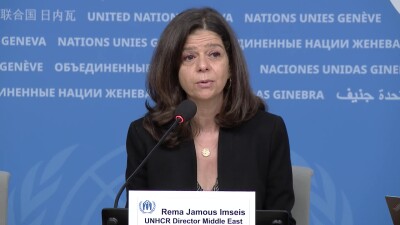
Since the Israeli military escalated its offensive against Hezbollah fighters in Lebanon last month whose deadly rocket attacks at Israel have not stopped, the UN refugee agency, UNHCR, reported that the death toll in Lebanon is now more than 2,200 since the outbreak of the war in Gaza in October 2023. That number “continues to climb as the situation becomes more dramatic”, said Rema Jamous Imseis, UNHCR Director for the Middle East.
Over 10,000 people have also been injured amid Israeli airstrikes and Israeli evacuation orders that have left more than 25 per cent of the country “under a direct Israeli military evacuation order”, the UNHCR official told journalists in Geneva.
Some 1.2 million people have now been displaced across Lebanon, according to the country’s government, while the UN aid coordination office, OCHA, warned that all those impacted “are enduring the worst humanitarian crisis in decades”.
“Violence is pushing an already overwhelmed health system to the brink, with devastating impacts on care. Attacks on health facilities are a violation of international humanitarian law. They must end now,” OCHA said in an online post.
“People are heeding these calls to evacuate and they're fleeing with almost nothing,” UNHCR’s Ms. Imseis said. “Many of them are being forced out into the open, they're sleeping under the skies as they try to find their way towards safety and support.”
Providing assistance to those in need remains dangerous and difficult, she continued, noting that “for the last three days running, we've had to endorse and approve and reapprove an interagency convoy movement which is now scheduled to take place today”.
Desperate scenes have also been reported on Lebanon’s border with Syria, where more than 283,000 people have now crossed into northern Syria “seeking safety, fleeing Israeli airstrikes”, the UNHCR official said. About 70 per cent of those people are Syrians and roughly 30 per cent are Lebanese.
“We saw women with - two women - with about nine children between them who described their journey on foot for 10 hours to reach that point. They had seen directly the impact of the violence, an airstrike had hit a home 100 metres from their home and they fled, literally, with just the clothes on their backs.”
In Gaza, meanwhile, the UN Children’s Fund (UNICEF) condemned Monday’s strike on the al Aqsa hospital courtyard, where people from northern Gaza were told to relocate. At least four people were burned to death, and scores of others, including women and children, suffered severe burns.
“There are far too many children there with burns and with burn wounds” needing treatment that [the] hospital does not have the medicines and the antiseptics and the painkillers that are required,” said UNICEF spokesperson James Elder. “On my last mission to Gaza earlier this month, I discovered such a thing as fourth degree burns; I met a little six-year-old boy, Hamid with fourth degree burns. So what we saw last night will have again been large numbers of people, including children, with horrendous burns to which that hospital simply doesn't have the resources to treat.”
Providing assistance to those in need remains dangerous and difficult, she continued, noting that “for the last three days running, we've had to endorse and approve and reapprove an interagency convoy movement which is now scheduled to take place today”.
Story: Middle East crisis update – UNHCR, OHCHR, UNICEF
Speakers:
- Rema Jamous Imseis, UNHCR Director Middle East
- Jeremy Laurence, spokesperson, OHCHR
- James Elder, spokesperson, UNICEF
TRT: 03’21”
SOURCE: UNTV CH
LANGUAGE: ENGLISH / NATS
ASPECT RATIO: 16:9
DATELINE: 15 October 2024 - GENEVA, SWITZERLAND
RESTRICTIONS: None
SHOTLIST
- Exterior medium shot: UN flag alley.
- Wide shot of the UN Geneva Press room.
- SOUNDBITE (English) Rema Jamous Imseis, UNHCR Director, Middle East: “The death toll in Lebanon continues to climb as the situation becomes more dramatic and we see continued Israeli airstrikes and people on the move seeking shelter and safety. Over 2,000 people - over 2,200 rather - have now been killed by Israeli airstrikes and we have over 10,000 people who have been injured as a result of the conflict.
- Medium-wide shot of Press room.
- SOUNDBITE (English) Rema Jamous Imseis, UNHCR Director, Middle East: “Israeli airstrikes and Israeli evacuation orders continue to increase the areas impacted, so now that we have over 25 per cent of the country under a direct Israeli military evacuation order.”
- Medium-wide, Press room, journalists, TV cameras.
- SOUNDBITE (English) Jeremy Laurence, spokesperson, OHCHR: “What we're hearing is that amongst the 22 people who were killed were 12 women and two children. We understand it was a four-storey residential building that was struck. With these factors in mind, we have real concerns with respect to IHL, so the laws of war and principles of distinction, proportion and proportionality. In this case, we would - our Office - call for a prompt, independent and thorough investigation into this incident.”
- Medium, participant.
- SOUNDBITE (English) Rema Jamous Imseis, UNHCR Director, Middle East: “People are heeding these calls to evacuate and they're fleeing with almost nothing. Many of them are being forced out into the open, they're sleeping under the skies as they try to find their way towards safety and support.”
- Medium, podium from above, TV screen showing remote speaker.
- SOUNDBITE (English) Rema Jamous Imseis, UNHCR Director, Middle East: “We also have challenges as humanitarians reaching people who are in need of our assistance; for the last three days running, we've had to endorse and approve and reapprove an interagency convoy movement which is now scheduled to take place today.”
- Medium, TV journalist operating camera.
- SOUNDBITE (English) Rema Jamous Imseis, UNHCR Director, Middle East: “The latest count is that we have over 283,000 people who have crossed from Lebanon into Syria seeking safety, fleeing Israeli airstrikes. About 70 per cent of those people are Syrians, roughly 30 per cent of them are Lebanese.”
- Medium-wide, Press room, participants and TV screens showing speakers.
- SOUNDBITE (English) Rema Jamous Imseis, UNHCR Director, Middle East: “We saw women with - two women - with about nine children between them who described their journey on foot for 10 hours to reach that point. They had seen directly the impact of the violence, an airstrike had hit a home 100 metres from their home and they fled, literally, with just the clothes on their backs.”
- Medium-wide, Press room.
- SOUNDBITE (English) James Elder, spokesperson, UNICEF: “There are far too many children there with burns and with burn wounds that simply need that… which that hospital does not have the medicines and the antiseptics and the painkillers that are required. On my last mission to Gaza earlier this month, I discovered such a thing as fourth degree burns; I met a little six-year-old boy, Hamid – H-A-M-A-D - with fourth degree burns. So what we saw last night will have again been large numbers of people, including children, with horrendous burns to which that hospital simply doesn't have the resources to treat.”
- Medium-wide, journalist taking video images with mobile phone.
Similar Stories

1
1
1
Edited News | OCHA , UNICEF , WFP
Aid agencies warned on Friday of the fast-developing humanitarian emergency inside Taiz City in Yemen, which has been encircled by de facto Houthi forces fighting government troops along the country’s west coast.

2
17
1
2
Edited News , Press Conferences , Images | OCHA , WMO
Two UN agencies teamed up on Wednesday to issue an appeal for immediate assistance to help communities already being impacted by the strongest El Niño on record.

3
16
2
2
Edited News , B-roll , Conferences , Images | UNITED NATIONS , UNOG
Sixth Consultative Meeting on Enhancing Coordination of Peace Initiatives and Efforts for Sudan

1
1
1
Edited News | UNICEF , WHO , UNHCR
Yemen war continues to force families from homes amid hunger and disease
More than 250,000 people have now fled renewed fighting in Yemen, the UN said on Tuesday, citing particular concern for those sheltering in the southwestern city of Taiz and the wider governorate, where access is “essentially blocked”.

1
1
1
Edited News | UNICEF
A little over one year since a ceasefire agreement was announced between Hamas fighters and Israel, more than 340 children have been reported killed and hundreds more injured, the UN Children’s Fund, UNICEF, said on Friday.

1
1
1
Edited News | UNICEF , IFRC
Six weeks after Nepal’s deadly flooding disaster, communities are still struggling to rebuild their lives, but they will need sustained help as global warming increases the risk of another Himalayan catastrophe, the UN Children’s Fund (UNICEF) said on Friday.

1
1
1
Edited News | WHO
In suspected Russia plague death, testing and monitoring underway – WHO
The death of a lab worker in Russia’s Siberia region has sparked concerns about plague being the cause, the UN World Health Organization (WHO) said on Tuesday, adding that it was following the situation closely.

1
1
Edited News | OHCHR , UNOG
UN Human Rights Chief Volker Türk on Friday provided and oral update to the 63rd session of the Human rights Council on Ukraine.

1
1
1
Edited News | OHCHR , UNOG
UN Human Rights Chief Volker Türk on Friday provided and oral update to the 63rd session of the Human rights Council on the human rights situation in Haiti.

1
1
1
Edited News | WHO
Repeated delays in bringing lifesaving medicines, prosthetics and more from Israel into Gaza risk having devastating consequences on Palestinians who urgently need them in the wartorn enclave, the UN World Health Organization (WHO) said on Friday. “A truck full of non-priority supplies or the right supplies arriving too late, doesn't save lives. That's the question that actually matters," said Dr Reinhilde Van De Weerdt, WHO Representative in the OPT.

1
1
1
Edited News | WHO
DRC: Early access to care and oxygen decisive for Ebola patients’ survival – WHO
In the Democratic Republic of the Congo (DRC), health workers fighting the country’s largest-ever Ebola outbreak are struggling to overcome critical challenges to patient care, the UN World Health Organization (WHO) warned on Tuesday.

1
1
1
Edited News | OCHA , UN
Civilians in Iran are continuing to feel the consequences of months of conflict and military escalation, the UN’s top official in the country has said, as loss of life, damage to civilian infrastructure and mounting economic pressures leave many facing continued uncertainty.