

The United Nations Office at Geneva
Multimedia Newsroom
“It seems to me we are at a fork in the road. We can either continue on our current path — a treacherous ‘new normal’ — and sleepwalk into a dystopian future. Or we can wake up and turn things around for the better, for humanity and the planet,” Türk said.
“The ‘new normal’ cannot be endless, vicious military escalation and increasingly horrifying, technologically “advanced” methods of warfare, control, and repression. The ‘new normal’ cannot be continued indifference to deepening inequalities within and between States,” he said.
“It cannot be the free-for-all spread of disinformation, smothering facts and the ability to make free and informed choices. Heated rhetoric and simplistic fixes, erasing context, nuance, and empathy. Paving the way for hate speech and the dire consequences that inevitably follow,” Türk said.
“The ‘new normal’ cannot be that national sovereignty is twisted to shroud – or excuse – horrific violations,” he added.
“We can and must make a different choice. Reconnect with our common humanity, nature, and our planet. In other words, we could choose to be guided by human rights and the universal values that we all share,” he said.
“I have been speaking about the negative impact on peoples’ rights of entrenched power structures, and of the misuse of power. And yet, movements such as those against apartheid, racism, for women’s rights, for environmental rights, and many others have shown us how human rights can trigger positive change in society, steering us towards greater justice and stability,” he said.
Amid elections scheduled during 2024, Türk called on voters to keep in mind the issues that matter most to them – be it a home, education for their children, their health or job, justice, their family and loved ones, the environment, to be free from violence, tackling corruption, being heard.
“I urge voters to ask themselves which of the political platforms or candidates will work for the human rights of everyone,” he said.
Türk stressed that States must not – cannot – accept blatant disregard for international law, including binding decisions of the Security Council and orders of the International Court of Justice.
He highlighted how, in many situations, even minimal humanitarian aid to civilians has been instrumentalized, diverted or indeed blocked altogether, as is access for human rights monitors.
“For those of us engaged in this work, it is as if we are standing on the banks of a river watching people drown, with lifebuoys piled at our feet,” Türk said.
“States themselves have designed international human rights and humanitarian law to preserve and guarantee our common humanity. These norms are our mainstay against unbridled power. All parties to conflicts and other States, particularly those with influence, must do everything they can to put an end to violations,” he stated.
ENDS
STORY: UN Human Rights Chief Volker Türk – “Human rights are our mainstay against unbridled power”
TRT: 03:35
SOURCE: OHCHR/ UNOG
RESTRICTIONS: NONE
LANGUAGE: English/NATS
ASPECT RATIO: 16:9
DATELINE: 9 September 2024 – GENEVA, SWITZERLAND
SHOTLIST
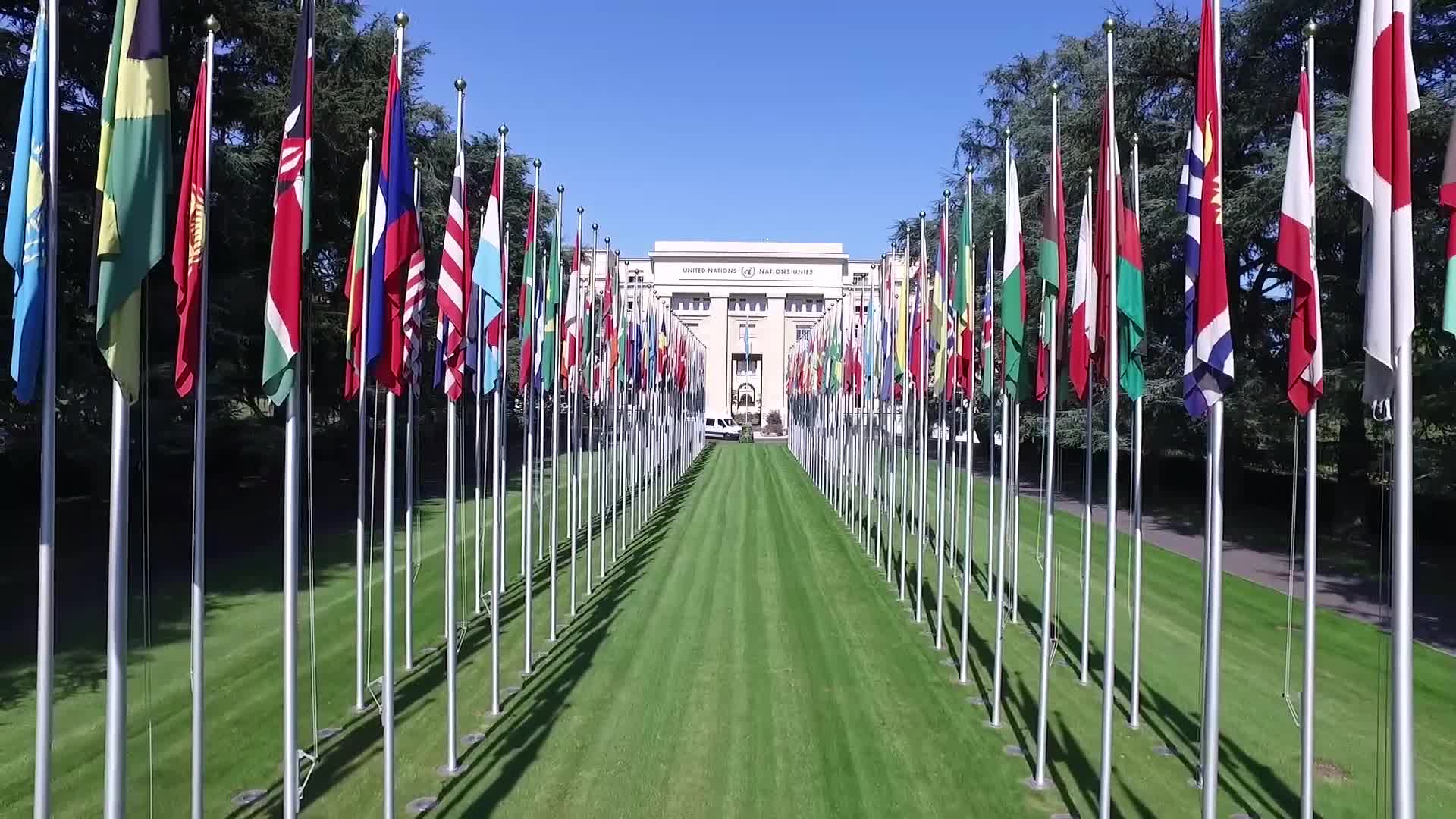
- Exterior shot: Palais des Nations
- Interior shot: Human Rights Council
- SOUNDBITE (English) — Volker Türk, UN High Commissioner for Human Rights:“It seems to me we are at a fork in the road. We can either continue on our current path — a treacherous ‘new normal’ — and sleepwalk into a dystopian future. Or we can wake up and turn things around for the better, for humanity and the planet.”
- Cutaway: Human Rights Council
- SOUNDBITE (English) — Volker Türk, UN High Commissioner for Human Rights:“The ‘new normal’ cannot be endless, vicious military escalation and increasingly horrifying, technologically “advanced” methods of warfare, control, and repression. The ‘new normal’ cannot be continued indifference to deepening inequalities within and between States.”
- Cutaway: Human Rights Council
- SOUNDBITE (English) — Volker Türk, UN High Commissioner for Human Rights:“It cannot be the free-for-all spread of disinformation, smothering facts and the ability to make free and informed choices. Heated rhetoric and simplistic fixes, erasing context, nuance, and empathy. Paving the way for hate speech and the dire consequences that inevitably follow.”
- Cutaway: Human Rights Council
- SOUNDBITE (English) — Volker Türk, UN High Commissioner for Human Rights:“The ‘new normal’ cannot be that national sovereignty is twisted to shroud – or excuse – horrific violations.”
- Cutaway: Human Rights Council
- SOUNDBITE (English) — Volker Türk, UN High Commissioner for Human Rights:“We can and must make a different choice. Reconnect with our common humanity, nature, and our planet. In other words, we could choose to be guided by human rights and the universal values that we all share.”
- Cutaway: Human Rights Council
- SOUNDBITE (English) — Volker Türk, UN High Commissioner for Human Rights:“I have been speaking about the negative impact on peoples’ rights of entrenched power structures, and of the misuse of power. And yet, movements such as those against apartheid, racism, for women’s rights, for environmental rights, and many others have shown us how human rights can trigger positive change in society, steering us towards greater justice and stability.”
- Cutaway: Human Rights Council
- SOUNDBITE (English) — Volker Türk, UN High Commissioner for Human Rights:“I urge voters to ask themselves which of the political platforms or candidates will work for the human rights of everyone.”
- Cutaway: Human Rights Council
- SOUNDBITE (English) — Volker Türk, UN High Commissioner for Human Rights:“For those of us engaged in this work, it is as if we are standing on the banks of a river watching people drown, with lifebuoys piled at our feet.”
- Cutaway: Human Rights Council
- SOUNDBITE (English) — Volker Türk, UN High Commissioner for Human Rights:“States themselves have designed international human rights and humanitarian law to preserve and guarantee our common humanity. These norms are our mainstay against unbridled power. All parties to conflicts and other States, particularly those with influence, must do everything they can to put an end to violations.”
Similar Stories

1
1
1
Edited News | OCHA , UNICEF , WFP
Aid agencies warned on Friday of the fast-developing humanitarian emergency inside Taiz City in Yemen, which has been encircled by de facto Houthi forces fighting government troops along the country’s west coast.

2
17
1
2
Edited News , Press Conferences , Images | OCHA , WMO
Two UN agencies teamed up on Wednesday to issue an appeal for immediate assistance to help communities already being impacted by the strongest El Niño on record.

3
16
2
2
Edited News , B-roll , Conferences , Images | UNITED NATIONS , UNOG
Sixth Consultative Meeting on Enhancing Coordination of Peace Initiatives and Efforts for Sudan

1
1
1
Edited News | UNICEF , WHO , UNHCR
Yemen war continues to force families from homes amid hunger and disease
More than 250,000 people have now fled renewed fighting in Yemen, the UN said on Tuesday, citing particular concern for those sheltering in the southwestern city of Taiz and the wider governorate, where access is “essentially blocked”.

1
1
1
Edited News | UNICEF
A little over one year since a ceasefire agreement was announced between Hamas fighters and Israel, more than 340 children have been reported killed and hundreds more injured, the UN Children’s Fund, UNICEF, said on Friday.

1
1
1
Edited News | UNICEF , IFRC
Six weeks after Nepal’s deadly flooding disaster, communities are still struggling to rebuild their lives, but they will need sustained help as global warming increases the risk of another Himalayan catastrophe, the UN Children’s Fund (UNICEF) said on Friday.

1
1
1
Edited News | WHO
In suspected Russia plague death, testing and monitoring underway – WHO
The death of a lab worker in Russia’s Siberia region has sparked concerns about plague being the cause, the UN World Health Organization (WHO) said on Tuesday, adding that it was following the situation closely.

1
1
Edited News | OHCHR , UNOG
UN Human Rights Chief Volker Türk on Friday provided and oral update to the 63rd session of the Human rights Council on Ukraine.

1
1
1
Edited News | OHCHR , UNOG
UN Human Rights Chief Volker Türk on Friday provided and oral update to the 63rd session of the Human rights Council on the human rights situation in Haiti.

1
1
1
Edited News | WHO
Repeated delays in bringing lifesaving medicines, prosthetics and more from Israel into Gaza risk having devastating consequences on Palestinians who urgently need them in the wartorn enclave, the UN World Health Organization (WHO) said on Friday. “A truck full of non-priority supplies or the right supplies arriving too late, doesn't save lives. That's the question that actually matters," said Dr Reinhilde Van De Weerdt, WHO Representative in the OPT.

1
1
1
Edited News | WHO
DRC: Early access to care and oxygen decisive for Ebola patients’ survival – WHO
In the Democratic Republic of the Congo (DRC), health workers fighting the country’s largest-ever Ebola outbreak are struggling to overcome critical challenges to patient care, the UN World Health Organization (WHO) warned on Tuesday.

1
1
1
Edited News | OCHA , UN
Civilians in Iran are continuing to feel the consequences of months of conflict and military escalation, the UN’s top official in the country has said, as loss of life, damage to civilian infrastructure and mounting economic pressures leave many facing continued uncertainty.