

The United Nations Office at Geneva
Multimedia Newsroom
Edited News | UNOG , OHCHR
UN Human Rights HC Volker Türk delivered an Oral update on Myanmar to the 56th Human Rights Council
“As we convene here in the Council, yet again discussing Myanmar, we are bearing witness to a country being suffocated by an illegitimate military regime. Myanmar is in agonizing pain. And the disintegration of human rights continues at breakneck speed. This is a crisis emblematic of a decades-long legacy of military domination, the stifling of dissent, and division,” Türk told the UN Human Rights Council in Geneva.
“And right now, these very same dynamics are playing out in terrifying form with the Rohingya and Rakhine communities.We are hearing stories of horrific war tactics, such as beheadings. Midnight drone attacks. The burning of homes as people sleep. People being shot at as they flee for their lives,” he said.
“The military has lost control over a considerable amount of territory. So it is resorting to increasingly extreme measures. Forced conscription. Indiscriminate bombardment of towns and villages. Brutal atrocity crimes,” the High Commissioner said.
“The Myanmar military continues to gain access to foreign currency and weapons it needs to sustain its campaign of terror, while international financial support for the people of Myanmar is meagre at best,” Turk said.
On a recent visit to Southeast Asia, the High Commissioner met with Myanmar civil society to discuss the spiralling regional impacts and the urgent need for leadership and influence to halt the catastrophe in Myanmar.
In Malaysia, he met with representatives of almost all ethnic communities from Myanmar, noting that a few years ago, it would have been unthinkable to meet with Rohingya and other ethnic communities around one table.
“I also witnessed a profound sense of hope. In my discussions with Myanmar civil society, human rights defenders and refugee communities, it was clear to see there is a new generation of young people from all ethnic communities leading the struggle to create an inclusive vision for the future of Myanmar,” he said.
“We are witnessing a people’s revolution against decades of oppression and violence,” Türk said.
In some areas outside the military’s control, new local governance structures have emerged, supported by ethnic armed groups and activists alike. They are providing food, shelter, education and healthcare for hundreds of thousands who are otherwise receiving little to no humanitarian support. And they are delivering critically needed protection services in the complete absence of a functioning public system.
Armed conflicts continue to rage brutally across the country, taking an increasingly grim toll on the lives of civilians, Türk said. The UN Human Rights Office is investigating several reported attacks against civilians in Rakhine State and Sagaing over recent days with large numbers of civilians allegedly killed -- in airstrikes, naval artillery barrages and shootings.
In a cynical move, the military has pressured and threatened young Rohingya men to join their ranks. Some reports have indicated thousands of Rohingya youth have been conscripted into the very same forces that displaced hundreds of thousands of their community in 2016 and 2017.
In response, the Arakan Army has exhorted Rohingya to fight with them against the military. They have targeted their communities by forcibly displacing residents. On multiple occasions, they have detained or killed men of fighting age who they suspected of taking up arms against them.
“These tactics have brought back the shocking images and memories from 2017 of systematic terrorisation, persecution and forced displacement of populations,” the High Commissioner said.
And tens of thousands of civilians from these communities have been forced to flee, among them entire Rohingya communities with no guarantees of finding safe haven. Over one million Rohingya refugees in Bangladesh are still living in limbo in dire conditions, with no prospect for durable solutions.
“The violence must end. The attacks against civilians must end. The forced conscription must end. And the denial of humanitarian aid must end,” Türk said.
ENDS
For more information and media requests, please contact:
In Geneva
Ravina Shamdasani - + 41 22 917 9169 / ravina.shamdasani@un.org or
Liz Throssell - + 41 22 917 9296 / elizabeth.throssell@un.org or
Jeremy Laurence - +41 22 917 9383 / jeremy.laurence@un.org or
Marta Hurtado - + 41 22 917 9466 / marta.hurtadogomez@un.org or
Thameen Al-Kheetan - + 41 76 223 77 62 / thameen.alkheetan@un.org
Tag and share
Twitter @UNHumanRights
Facebook unitednationshumanrights
Instagram @unitednationshumanrights
STORY: UN Human Rights Chief Volker Türk Myanmar oral update to the 56th Human Rights Council
TRT: 03:07
SOURCE: UNOG/OHCHR
RESTRICTIONS: NONE
LANGUAGE: English/ NATS
ASPECT RATIO: 16:9
DATELINE: 18 June 2024- Geneva, Switzerland
SHOTLIST
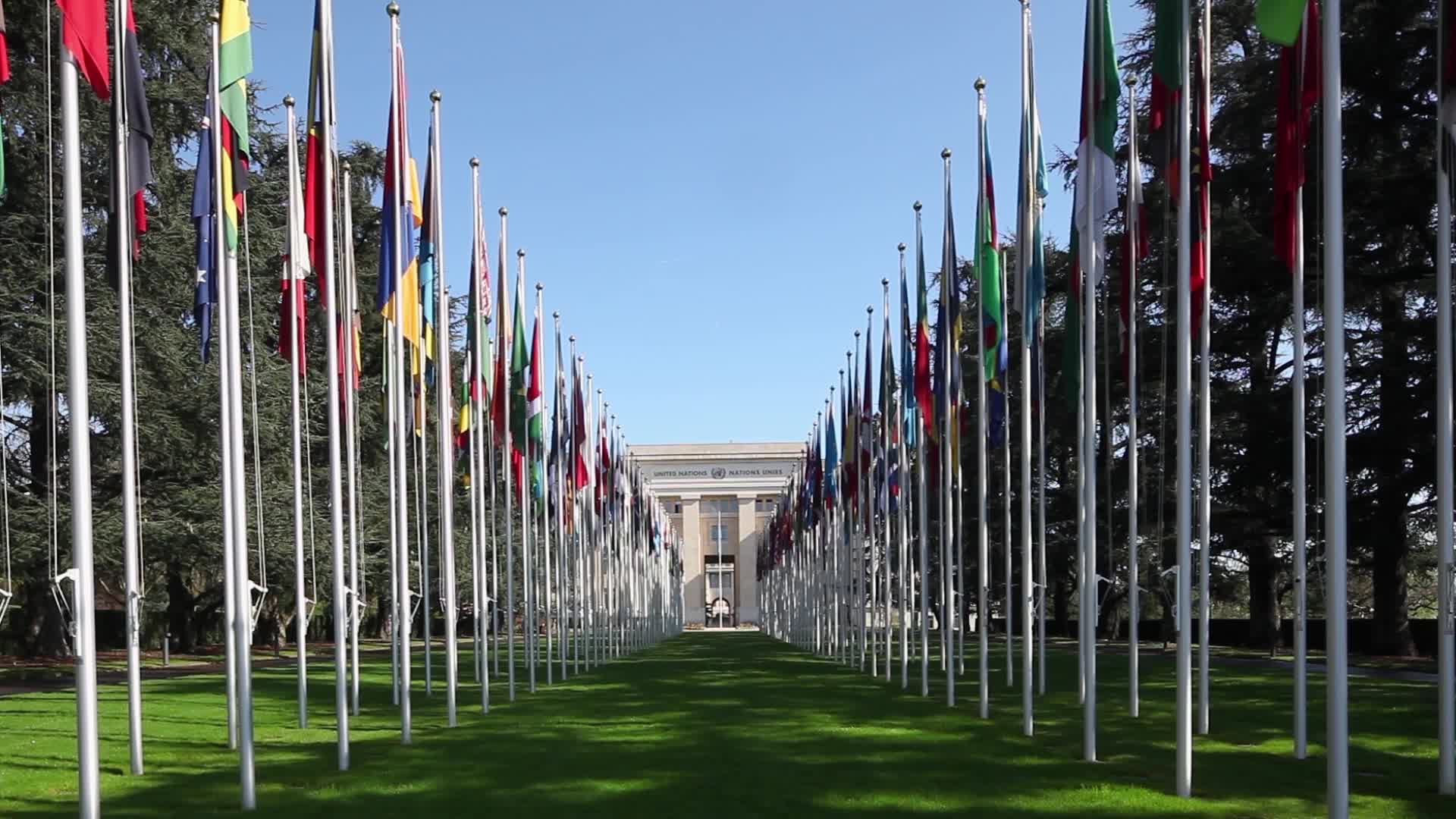
1. Exterior: Alley of flags, Palais des Nations
2. Interior: Room 20
3. SOUNDBITE (English) Volker Türk UN High Commissioner for Human Rights: “As we convene here in the Council, yet again discussing Myanmar, we are bearing witness to a country being suffocated by an illegitimate military regime. Myanmar is in agonizing pain. And the disintegration of human rights continues at breakneck speed. This is a crisis emblematic of a decades-long legacy of military domination, the stifling of dissent, and division.”
4. Cut Aways: Room 20
5. SOUNDBITE (English) Volker Türk UN High Commissioner for Human Rights: “Rohingya and Rakhine communities.We are hearing stories of horrific war tactics, such as beheadings. Midnight drone attacks. The burning of homes as people sleep. People being shot at as they flee for their lives.”
6. Cut Aways: Room 20
7. SOUNDBITE (English) Volker Türk UN High Commissioner for Human Rights: “The military has lost control over a considerable amount of territory. So it is resorting to increasingly extreme measures. Forced conscription. Indiscriminate bombardment of towns and villages. Brutal atrocity crimes.”
8. Cut Aways: Room 20
9. SOUNDBITE (English) Volker Türk UN High Commissioner for Human Rights: “The Myanmar military continues to gain access to foreign currency and weapons it needs to sustain its campaign of terror, while international financial support for the people of Myanmar is meagre at best.”
10. Cut Aways: Room 20
11. SOUNDBITE (English) Volker Türk UN High Commissioner for Human Rights: “I also witnessed a profound sense of hope. In my discussions with Myanmar civil society, human rights defenders and refugee communities, it was clear to see there is a new generation of young people from all ethnic communities leading the struggle to create an inclusive vision for the future of Myanmar.”
12. Cut Aways: Room 20
13. SOUNDBITE (English) Volker Türk UN High Commissioner for Human Rights: “We are witnessing a people’s revolution against decades of oppression and violence.”
14. Cut Aways: Room 20
15. SOUNDBITE (English) Volker Türk UN High Commissioner for Human Rights: “These tactics have brought back the shocking images and memories from 2017 of systematic terrorisation, persecution and forced displacement of populations.”
16. Cut Aways: Room 20
17. SOUNDBITE (English) Volker Türk UN High Commissioner for Human Rights: “The violence must end. The attacks against civilians must end. The forced conscription must end. And the denial of humanitarian aid must end”
Similar Stories

1
1
1
Edited News | OCHA , UNICEF , WFP
Aid agencies warned on Friday of the fast-developing humanitarian emergency inside Taiz City in Yemen, which has been encircled by de facto Houthi forces fighting government troops along the country’s west coast.

2
17
1
2
Edited News , Press Conferences , Images | OCHA , WMO
Two UN agencies teamed up on Wednesday to issue an appeal for immediate assistance to help communities already being impacted by the strongest El Niño on record.

3
16
2
2
Edited News , B-roll , Conferences , Images | UNITED NATIONS , UNOG
Sixth Consultative Meeting on Enhancing Coordination of Peace Initiatives and Efforts for Sudan

1
1
1
Edited News | UNICEF , WHO , UNHCR
Yemen war continues to force families from homes amid hunger and disease
More than 250,000 people have now fled renewed fighting in Yemen, the UN said on Tuesday, citing particular concern for those sheltering in the southwestern city of Taiz and the wider governorate, where access is “essentially blocked”.

1
1
1
Edited News | UNICEF
A little over one year since a ceasefire agreement was announced between Hamas fighters and Israel, more than 340 children have been reported killed and hundreds more injured, the UN Children’s Fund, UNICEF, said on Friday.

1
1
1
Edited News | UNICEF , IFRC
Six weeks after Nepal’s deadly flooding disaster, communities are still struggling to rebuild their lives, but they will need sustained help as global warming increases the risk of another Himalayan catastrophe, the UN Children’s Fund (UNICEF) said on Friday.

1
1
1
Edited News | WHO
In suspected Russia plague death, testing and monitoring underway – WHO
The death of a lab worker in Russia’s Siberia region has sparked concerns about plague being the cause, the UN World Health Organization (WHO) said on Tuesday, adding that it was following the situation closely.

1
1
Edited News | OHCHR , UNOG
UN Human Rights Chief Volker Türk on Friday provided and oral update to the 63rd session of the Human rights Council on Ukraine.

1
1
1
Edited News | OHCHR , UNOG
UN Human Rights Chief Volker Türk on Friday provided and oral update to the 63rd session of the Human rights Council on the human rights situation in Haiti.

1
1
1
Edited News | WHO
Repeated delays in bringing lifesaving medicines, prosthetics and more from Israel into Gaza risk having devastating consequences on Palestinians who urgently need them in the wartorn enclave, the UN World Health Organization (WHO) said on Friday. “A truck full of non-priority supplies or the right supplies arriving too late, doesn't save lives. That's the question that actually matters," said Dr Reinhilde Van De Weerdt, WHO Representative in the OPT.

1
1
1
Edited News | WHO
DRC: Early access to care and oxygen decisive for Ebola patients’ survival – WHO
In the Democratic Republic of the Congo (DRC), health workers fighting the country’s largest-ever Ebola outbreak are struggling to overcome critical challenges to patient care, the UN World Health Organization (WHO) warned on Tuesday.

1
1
1
Edited News | OCHA , UN
Civilians in Iran are continuing to feel the consequences of months of conflict and military escalation, the UN’s top official in the country has said, as loss of life, damage to civilian infrastructure and mounting economic pressures leave many facing continued uncertainty.