

The United Nations Office at Geneva
Multimedia Newsroom
Destruction of Al-Shifa hospital ‘rips heart out of Gaza health system’: WHO
The Israeli military's raid of Al-Shifa hospital in the past two weeks has destroyed Gaza's biggest medical facility, “ripping the heart out” of the enclave's healthcare system, the UN World Health Organization said on Tuesday.
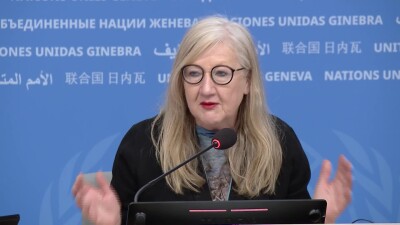
“It was the tertiary care center, it was a huge hospital: 750 beds, 25 operating theaters, 30 intensive care rooms. It was the place people go to for the kind of care that a really good health system provides,” explained Dr Margaret Harris, WHO spokesperson.
Israeli special forces left the Gaza City hospital on Monday, after a two-week operation in which they reported the detention of hundreds of suspected Palestinian militants. Israel said Hamas fighters had based themselves there; Hamas and medical staff deny the allegations.
Speaking to journalists in Geneva, Dr Harris said the hospital “directors told us that Al-Shifa hospital has ‘gone’, it’s no longer able to function in any way, shape or form as a hospital. At least 21 patients died during the period of the siege. We also know that the staff had to bring the patients together in a building that wasn't even a clinical building. It was a human resources administration area. They had no water, food, they were sharing one bottle of water between 15 people,” she added.
If permission is granted on Tuesday to reach Al-Shifa and northern Gaza’s last few remaining health facilities, priorities for WHO teams include bringing medicines, fuel and food – and assessing what additional supplies are needed to save the remaining patients. The WHO says the agency has been trying to go “for days and days” and most of the missions have been rejected.
The development comes amid renewed safety concerns for aid operations in the Gaza Strip after World Central Kitchen reported that an Israeli airstrike on one of its vehicles had killed seven aid workers in Deir al-Balah, central Gaza. Images of the NGO vehicle show a large hole in its roof.
WHO’s Dr Harris maintained that the NGO mission had been agreed with the Israeli authorities ahead of time. “This was an agreed mission with this team, it was ‘de-conflicted’. ‘De-conflicted’ means both sides know they are coming, both sides have agreed. The car was well marked, it was very clear it was World Central Kitchen. Now this is happening,” she said. “And remember, hundreds of health care workers have been killed while doing their job,” along with thousands of civilians, including 13,000 children, amid constant Israeli bombardment launched after Hamas-led terror attacks on Israel on 7 October that left some 1,200 dead and more than 350 taken hostage.
A UN health agency team also intends to visit Kamal Adwan Hospital in Gaza City where there are already dire concerns about the growing number of babies being born too underweight to survive.
The facility is already admitting at least 15 malnourished children per day and the needs are growing, according to the WHO. In a renewed call for a ceasefire, Dr Harris insisted that “the ceasefire, the UN resolution – the world has agreed a ceasefire must happen. It should have happened months ago, but it must happen now.”
Ends
Story: Gaza Al-Shifa hospital destroyed – WHO – 02 April 2024
Speaker is Dr Margaret Harris, WHO spokesperson
TRT: 2’04”
SOURCE: UNTV CH
LANGUAGE: ENGLISH
ASPECT RATIO: 16:9
DATELINE: 02 April 2024 - GENEVA, SWITZERLAND
Geneva Press briefing
SHOTLIST
- Exterior medium shot: UN flag alley
- Wide shot of Press conference room with journalists
- SOUNDBITE (English) Dr Margaret Harris, WHO spokesperson: “The directors told us that Al-Shifa hospital has ‘gone’, that it's no longer able to function in any shape or form as a hospital. We know that at least 21 patients died during the period of the siege. We also know that the staff had to bring the patients together in a building that wasn't even a clinical building. It was a human resources administration area. They had no water, food, they were sharing one bottle of water between 15 people.”
- Medium shot: Press room podium with speakers
- SOUNDBITE (English) Dr Margaret Harris, WHO spokesperson: “Destroying Al-Shifa means ripping the heart out of the health system. It was the tertiary care center. It was a huge hospital: 750 beds, 25 operating theaters, 30 intensive care rooms. It was the place people go to for the kind of care that a really good health system provides.”
- Wide shot: Press conference room
- SOUNDBITE (English) Dr Margaret Harris, WHO spokesperson: “This was an agreed mission with this team, it was ‘de-conflicted’. ‘De-conflicted’ means both sides know they are coming, both sides have agreed. The car was well marked, it was very clear it was World Central Kitchen. Now this is happening. And remember, hundreds of health care workers have been killed while doing their job. Ambulance drivers and, of course, thousands of civilians, more than 13,000 of them children.”
- Wide shot of Press conference room
- SOUNDBITE (English) Dr Margaret Harris, WHO spokesperson: “The ceasefire, the UN resolution, the world has agreed: a ceasefire must happen. It should have happened months ago, but it must happen now.”
- Various shots of the Press room
Similar Stories

1
1
1
Edited News | OCHA , UNICEF , WFP
Aid agencies warned on Friday of the fast-developing humanitarian emergency inside Taiz City in Yemen, which has been encircled by de facto Houthi forces fighting government troops along the country’s west coast.

2
17
1
2
Edited News , Press Conferences , Images | OCHA , WMO
Two UN agencies teamed up on Wednesday to issue an appeal for immediate assistance to help communities already being impacted by the strongest El Niño on record.

3
16
2
2
Edited News , B-roll , Conferences , Images | UNITED NATIONS , UNOG
Sixth Consultative Meeting on Enhancing Coordination of Peace Initiatives and Efforts for Sudan

1
1
1
Edited News | UNICEF , WHO , UNHCR
Yemen war continues to force families from homes amid hunger and disease
More than 250,000 people have now fled renewed fighting in Yemen, the UN said on Tuesday, citing particular concern for those sheltering in the southwestern city of Taiz and the wider governorate, where access is “essentially blocked”.

1
1
1
Edited News | UNICEF
A little over one year since a ceasefire agreement was announced between Hamas fighters and Israel, more than 340 children have been reported killed and hundreds more injured, the UN Children’s Fund, UNICEF, said on Friday.

1
1
1
Edited News | UNICEF , IFRC
Six weeks after Nepal’s deadly flooding disaster, communities are still struggling to rebuild their lives, but they will need sustained help as global warming increases the risk of another Himalayan catastrophe, the UN Children’s Fund (UNICEF) said on Friday.

1
1
1
Edited News | WHO
In suspected Russia plague death, testing and monitoring underway – WHO
The death of a lab worker in Russia’s Siberia region has sparked concerns about plague being the cause, the UN World Health Organization (WHO) said on Tuesday, adding that it was following the situation closely.

1
1
Edited News | OHCHR , UNOG
UN Human Rights Chief Volker Türk on Friday provided and oral update to the 63rd session of the Human rights Council on Ukraine.

1
1
1
Edited News | OHCHR , UNOG
UN Human Rights Chief Volker Türk on Friday provided and oral update to the 63rd session of the Human rights Council on the human rights situation in Haiti.

1
1
1
Edited News | WHO
Repeated delays in bringing lifesaving medicines, prosthetics and more from Israel into Gaza risk having devastating consequences on Palestinians who urgently need them in the wartorn enclave, the UN World Health Organization (WHO) said on Friday. “A truck full of non-priority supplies or the right supplies arriving too late, doesn't save lives. That's the question that actually matters," said Dr Reinhilde Van De Weerdt, WHO Representative in the OPT.

1
1
1
Edited News | WHO
DRC: Early access to care and oxygen decisive for Ebola patients’ survival – WHO
In the Democratic Republic of the Congo (DRC), health workers fighting the country’s largest-ever Ebola outbreak are struggling to overcome critical challenges to patient care, the UN World Health Organization (WHO) warned on Tuesday.

1
1
1
Edited News | OCHA , UN
Civilians in Iran are continuing to feel the consequences of months of conflict and military escalation, the UN’s top official in the country has said, as loss of life, damage to civilian infrastructure and mounting economic pressures leave many facing continued uncertainty.