

The United Nations Office at Geneva
Multimedia Newsroom
GAZA: Flood of aid needed to avert imminent famine
Mass casualties are looming in parts of Gaza because of dire food shortages in the Strip that surpass famine thresholds - unless a ceasefire urgently allows for a substantial influx of food aid, UN humanitarians warned on Tuesday.
“All coping mechanisms have been exhausted. And, mind you, the coping mechanisms we have seen the past weeks, even months, are people eating birds’ seeds, animal fodder, wild grass and wheat. So, they have consumed that already, we are beyond that, there's literally nothing left,” said Jens Laerke, spokesperson for the UN Office for the Coordination of Humanitarian Affairs (OCHA) at a UN press briefing on Tuesday in Geneva.
The latest analysis from the Integrated Food Security Phase Classification (IPC) report warns that the situation in Gaza is catastrophic, with famine a very likely scenario anytime between now and May 2024 .
“These are also not projections whereby they say this is probably going to happen by the end of May. They say it is most likely happening within a period that started two days ago, mid-March,” Mr. Laerke specified. “So, famine…what they are saying, clearly, is that the famine threshold may already be the case in northern Gaza.”
“Looking ahead for a famine projection with 1.1 million at risk, and you look at the crude death rate, then you are looking at more than 200 people dying from starvation per day,” the OCHA spokesperson added.
Intense Israeli bombardment and ground operations – as well as heavy fighting between Israeli forces and Palestinian armed groups – continue to be reported across much of the Gaza Strip, particularly in Deir Al Balah and near Al-Shifa Hospital in Gaza City in the north.
“I and my colleagues have rarely seen anything develop into a situation like that we are briefing about today, this fast, this brutally,” Mr. Laerke said, reflecting on 20 years of humanitarian work by the UN and partners around the world. “One asks the question: where did humanity go?”
According to the World Health Organization (WHO), less than 1 percent (0.8%) of children under 5 years of age were acutely malnourished in Gaza prior to the last 5 months of conflict. However, the Interphase Food Security Phase Classification (IPC) report, released earlier this week, shows that, as of February, that acute malnutrition is now affecting between12.4 and 16.5 percent of the population in the northern areas.
“What the doctors and medical staff are telling us is more and more they're seeing the effects of starvation,” said WHO spokesperson Dr. Margaret Harrison.
“They're seeing newborn babies simply dying because they're too low birth weight, they're seeing the pregnant women who are coming in are also underweight and suffering, the complication that occur if you are trying to carry a pregnancy and you lack the nutrition,” she said.
WHO and partners are currently supporting children with severe acute malnutrition and medical complications, who are at the highest risk of imminent death, through a nutrition stabilization center in Rafah, in southern Gaza.
“None of the things we are seeing existed before these hostilities began and it's going to take a flood of aid to reverse it, but it can be reversed, as of now, if the hostilities stop,” Dr. Harrison said. “And I would ask those who say that there's some sort of military objective that they think they need to achieve, I would ask them to look into the face of a child in Gaza and explain to her why their military objective is more important than her life,” she added,
The Office of the UN High Commissioner for Human Rights (OHCHR) said that the extent of Israel’s continued restrictions on the entry of aid into Gaza, together with the way it continues to conduct hostilities, may amount to the use of starvation as a method of war, which is a war crime.
“We've watched malnourished children suffering. We know of amputations without anaesthesia. Children, as the High Commissioner said, are heading south, unaccompanied. Could you imagine the fear? Can you imagine the desperation? It's war crimes that have been committed - and they must stop,” said spokesperson Jeremy Laurence.
Mr. Laurence stressed that Israel, as the occupying power, has the obligation under international humanitarian law to ensure the provision of food and medical care to the population, commensurate with their needs, and to facilitate the work of humanitarian organisations to deliver that assistance.
-ends-
STORY: Gaza imminent threat of famine – OCHA, WHO, OHCHR
TRT: 3:43”
SOURCE: UNTV CH
RESTRICTIONS: NONE
LANGUAGE: ENGLISH / NATS
ASPECT RATIO: 16:9
DATELINE: 19 March 2024 GENEVA, SWITZERLAND
1. Exterior medium shot: UN flag alley
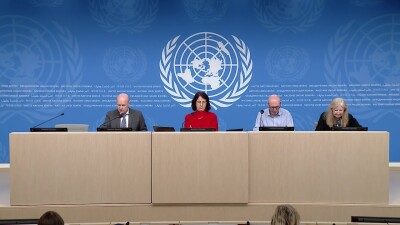
2. Medium shot: speakers at the podium of the press conference
3. SOUNDBITE (English) – Jens Laerke, spokesperson for the UN Office for the Coordination of Humanitarian Affairs (OCHA): “All coping mechanisms have been exhausted. And mind you, the coping mechanisms we have seen the past weeks, even months, are people eating birds’ seeds, animal fodder, wild grass and wheat. So, they have consumed that already, we are beyond that. There's literally nothing left.”
4. Medium shot: speakers at the podium filmed from behind during the press conference
5. SOUNDBITE (English) – Jens Laerke, spokesperson for the UN Office for the Coordination of Humanitarian Affairs (OCHA): “These are also not projections whereby they say this is probably going to happen by the end of May. They say it is most likely happening within a period that started two days ago, mid-March. So famine, what they are saying clearly is that famine threshold may already be the case in northern Gaza.”
6. Medium shot: Journalists in press room
7. SOUNDBITE (English) – Jens Laerke, spokesperson for the UN Office for the Coordination of Humanitarian Affairs (OCHA): “Looking ahead for a famine projection with 1.1 million at risk, and you look at the crude death rate, then you are looking at more than 200 people dying from starvation per day.”
8. Close up, journalist listening
9. SOUNDBITE (English) – Jens Laerke, spokesperson for the UN Office for the Coordination of Humanitarian Affairs (OCHA): “I and my colleagues have rarely seen anything develop into a situation that we are briefing about today, this fast, this brutally, and where one asks the question, where did humanity go?”
10. Wide shot: speakers at the podium filmed from behind during the press conference with journalists in the press room
11. SOUNDBITE (English) - Margaret Harrison, spokesperson for the World Health Organisation (WHO): “What the doctors and medical staff are telling us is more and more they're seeing the effects of starvation. So, they're seeing newborn babies simply dying because they're too low birth weight. They're seeing the pregnant women who are coming in are also underweight and suffering, the complication that occur if you are trying to carry a pregnancy and you lack the nutrition. “
12. Wide shot: speakers at the podium filmed from behind during the press conference with journalists in the press room
13. SOUNDBITE (English) - Margaret Harrison, spokesperson for the World Health Organisation (WHO): “None of the things we are seeing existed before these hostilities began and it's going to take a flood of aid to reverse it, but it can be reversed as of now if the hostilities stop. And I would ask those who say that there's some sort of military objective that they think they need to achieve, I would ask them to look into the face of a child in Gaza and explain to her why their military objective is more important than her life.”
14. Wide shot, journalists in press room with screen on the side
15. SOUNDBITE (English) - Jeremy Laurence, spokesperson for the Office of the UN High Commissioner for Human Rights (OHCHR): “We've watched malnourished children suffering. We know of amputations without anaesthesia. Children, as the High Commissioner said, are heading south, unaccompanied. Could you imagine the fear? Can you imagine the desperation? It's war crimes that have been committed and they must stop.”
16. Close up, journalist typing
17. Medium shot, speakers at podium reflecting in window
18. Wide shot: Journalists in press room
Similar Stories

1
1
1
Edited News | OCHA , UNICEF , WFP
Aid agencies warned on Friday of the fast-developing humanitarian emergency inside Taiz City in Yemen, which has been encircled by de facto Houthi forces fighting government troops along the country’s west coast.

2
17
1
2
Edited News , Press Conferences , Images | OCHA , WMO
Two UN agencies teamed up on Wednesday to issue an appeal for immediate assistance to help communities already being impacted by the strongest El Niño on record.

3
16
2
2
Edited News , B-roll , Conferences , Images | UNITED NATIONS , UNOG
Sixth Consultative Meeting on Enhancing Coordination of Peace Initiatives and Efforts for Sudan

1
1
1
Edited News | UNICEF , WHO , UNHCR
Yemen war continues to force families from homes amid hunger and disease
More than 250,000 people have now fled renewed fighting in Yemen, the UN said on Tuesday, citing particular concern for those sheltering in the southwestern city of Taiz and the wider governorate, where access is “essentially blocked”.

1
1
1
Edited News | UNICEF
A little over one year since a ceasefire agreement was announced between Hamas fighters and Israel, more than 340 children have been reported killed and hundreds more injured, the UN Children’s Fund, UNICEF, said on Friday.

1
1
1
Edited News | UNICEF , IFRC
Six weeks after Nepal’s deadly flooding disaster, communities are still struggling to rebuild their lives, but they will need sustained help as global warming increases the risk of another Himalayan catastrophe, the UN Children’s Fund (UNICEF) said on Friday.

1
1
1
Edited News | WHO
In suspected Russia plague death, testing and monitoring underway – WHO
The death of a lab worker in Russia’s Siberia region has sparked concerns about plague being the cause, the UN World Health Organization (WHO) said on Tuesday, adding that it was following the situation closely.

1
1
Edited News | OHCHR , UNOG
UN Human Rights Chief Volker Türk on Friday provided and oral update to the 63rd session of the Human rights Council on Ukraine.

1
1
1
Edited News | OHCHR , UNOG
UN Human Rights Chief Volker Türk on Friday provided and oral update to the 63rd session of the Human rights Council on the human rights situation in Haiti.

1
1
1
Edited News | WHO
Repeated delays in bringing lifesaving medicines, prosthetics and more from Israel into Gaza risk having devastating consequences on Palestinians who urgently need them in the wartorn enclave, the UN World Health Organization (WHO) said on Friday. “A truck full of non-priority supplies or the right supplies arriving too late, doesn't save lives. That's the question that actually matters," said Dr Reinhilde Van De Weerdt, WHO Representative in the OPT.

1
1
1
Edited News | WHO
DRC: Early access to care and oxygen decisive for Ebola patients’ survival – WHO
In the Democratic Republic of the Congo (DRC), health workers fighting the country’s largest-ever Ebola outbreak are struggling to overcome critical challenges to patient care, the UN World Health Organization (WHO) warned on Tuesday.

1
1
1
Edited News | OCHA , UN
Civilians in Iran are continuing to feel the consequences of months of conflict and military escalation, the UN’s top official in the country has said, as loss of life, damage to civilian infrastructure and mounting economic pressures leave many facing continued uncertainty.