

The United Nations Office at Geneva
Multimedia Newsroom
Edited News , Press Conferences | OCHA , UNHCR
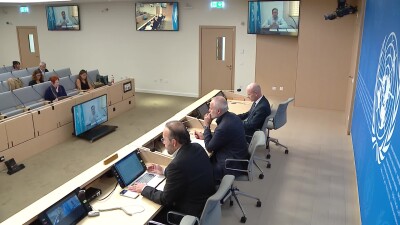
Conférence de presse : Événement de lancement des plans de réponse humanitaire et de réponse aux réfugiés de l'Ukraine 2025
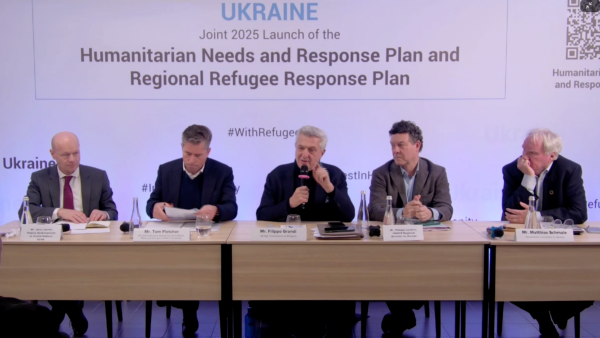
Le Bureau de la coordination des affaires humanitaires des Nations Unies (OCHA) et l'Agence des Nations Unies pour les réfugiés (HCR), en collaboration avec le gouvernement de l'Ukraine et les partenaires humanitaires, lanceront conjointement le Plan de réponse humanitaire et des besoins 2025 ainsi que le Plan de réponse régional pour les réfugiés en Ukraine le 16 janvier depuis Kyiv. Ces plans visent à assurer la poursuite de l'aide essentielle aux personnes touchées par la crise humanitaire en Ukraine, où environ 12,7 millions de personnes ont besoin d'aide, ainsi qu'aux plus de 6,8 millions de réfugiés ukrainiens dans le monde.
L'événement de lancement sera précédé d'un point de presse.
Orateurs de la conférence de presse :
- M. Tom Fletcher, Secrétaire général adjoint des Nations Unies pour les affaires humanitaires et Coordonnateur des secours d'urgence
- M. Filippo Grandi, Haut Commissaire des Nations Unies pour les réfugiés
Histoire : Appel d'aide pour l'Ukraine – OCHA, HCR 16 janvier 2025
Orateurs :
- M. Tom Fletcher, Secrétaire général adjoint des Nations Unies pour les affaires humanitaires et Coordonnateur des secours d'urgence, chef de l'OCHA
- M. Filippo Grandi, Haut Commissaire des Nations Unies pour les réfugiés
- M. Matthias Schmale, Coordonnateur résident et humanitaire de l'ONU en Ukraine
TRT : 03’53”
SOURCE : UNTV CH
LANGUE : ANGLAIS / NATS
FORMAT D'IMAGE : 16:9
DATELINE : 16 janvier 2025 - KYIV, UKRAINE + tournage OCHA 13 & 14 janvier 2025 + tournage HCR 15 & 16 janvier 2025
RESTRICTIONS – CRÉDIT “OCHA” BROLL À L'ÉCRAN + BROLL HCR À L'ÉCRAN.
LISTE DE PLANS
- Plan large, dame avec une canne marchant dans la ville de Bilopilia en première ligne – HCR, 15 janvier.
- Plan large, cheminée d'usine émettant de la fumée, Bilopilia – HCR, 15 janvier.
- EXTRAIT SONORE (Anglais) Tom Fletcher, Coordonnateur des secours d'urgence de l'ONU et chef de l'OCHA : “Notre demande, comme vous le verrez, est de 2,6 milliards de dollars pour financer cette campagne et nous aider à atteindre six millions de personnes.”
- Moyen, chef du HCR Filippo Grandi rencontrant des habitants à Bilopilia – HCR, 15 janvier.
- Gros plan, chef du HCR Filippo Grandi rencontrant des habitants à Bilopilia – HCR, 15 janvier.
- EXTRAIT SONORE (Anglais) Filippo Grandi, Haut Commissaire des Nations Unies pour les réfugiés : “L'objectif bien sûr, n'est pas de s'assurer que ces personnes soient réfugiées pour toujours, l'objectif est de créer les conditions pour que ces personnes puissent retourner en Ukraine. C'est ce dont l'Ukraine a besoin et c'est ce que la majorité des réfugiés veulent.”
- Large, convoi du Programme alimentaire mondial (PAM) de l'ONU approchant Shevchenkove, région de Kharkiv, à environ 30 kilomètres de la ligne de front – OCHA, 14 janvier.
- Moyen, camion du Programme alimentaire mondial (PAM) de l'ONU reculant vers le dépôt – OCHA, 14 janvier.
- Moyen, travailleurs humanitaires déchargeant des fournitures dans un dépôt ukrainien – OCHA, 14 janvier.
- EXTRAIT SONORE (Anglais) Matthias Schmale, Coordonnateur résident et humanitaire de l'ONU en Ukraine : “Inévitablement, une grande partie des besoins se trouvent le long de la ligne de front et nous soutenons en particulier les personnes qui ont choisi de rester près de la ligne de front et parmi celles-ci, en particulier les personnes handicapées et les personnes âgées qui ont du mal à se déplacer.”
- Moyen, chef des secours d'urgence de l'ONU Tom Fletcher et Coordonnateur résident et humanitaire de l'ONU en Ukraine, Matthias Schmale, accompagnant le convoi d'aide de l'ONU – OCHA, 14 janvier.
- Moyen, chef des secours d'urgence de l'ONU Tom Fletcher dans un dépôt alimentaire ukrainien – OCHA, 14 janvier.
- EXTRAIT SONORE (Anglais) Tom Fletcher, Coordonnateur des secours d'urgence de l'ONU et chef de l'OCHA : “Nous ne devons pas oublier ces Ukrainiens qui se trouvent dans les territoires occupés dont les besoins sont extrêmes. Et nous devons continuer à être créatifs et courageux pour apporter notre soutien à ceux qui en ont le plus besoin.”
- Plan de suivi de la destruction dans la ville de Kupiansk, Ukraine, OCHA 14 janvier.
- EXTRAIT SONORE (Anglais) Filippo Grandi, Haut Commissaire des Nations Unies pour les réfugiés : “Presque tout le monde n'a pas - ou très peu de gens - ont accès au chauffage dans le froid glacial. Vous savez, j'ai observé au fil des années l'évolution du conflit, mais je dois dire que ce ciblage par la Fédération de Russie des infrastructures énergétiques, qui bien sûr affecte directement la vie des civils, est quelque chose qui doit cesser.”
- Large, chef des secours d'urgence de l'ONU Tom Fletcher avec Andrii Kanashevych, chef du district de Kupianskyi, marchant dans la ville de Kupiansk, avec le Coordonnateur résident et humanitaire de l'ONU en Ukraine, Matthias Schmale, OCHA 14 janvier.
- EXTRAIT SONORE (Anglais) Tom Fletcher, Coordonnateur des secours d'urgence de l'ONU et chef de l'OCHA : “Le peuple ukrainien a montré un courage incroyable au fil des années. Et nous devons répondre en montrant un engagement international réel, sincère et soutenu, nous devons répondre avec cœur. Et quand je dis soutenu, je veux dire que nous serons ici avec le peuple ukrainien aussi longtemps qu'il le faudra pour répondre à ces besoins et les soutenir en ce moment.”
- Moyen, chef des secours d'urgence de l'ONU Tom Fletcher visitant un appartement endommagé dans la ville de Kupiansk, OCHA 14 janvier.
- Moyen, chef des secours d'urgence de l'ONU Tom Fletcher dans un appartement endommagé appartenant à Svitlana dans la ville de Kupiansk, OCHA 14 janvier.
- Moyen-large, dégâts à l'appartement de Svitlana dans la ville de Kupiansk, OCHA 14 janvier.
- Large, chef du HCR Filippo Grandi et chef des secours d'urgence de l'ONU Tom Fletcher rencontrant des responsables ukrainiens, Biliopia, HCR 15 janvier.
- Moyen, chef du HCR Filippo Grandi et chef des secours d'urgence de l'ONU Tom Fletcher rencontrant des responsables ukrainiens, Biliopia, HCR 15 janvier.
- Moyen-large, chef du HCR Filippo Grandi et chef des secours d'urgence de l'ONU Tom Fletcher rencontrant des responsables ukrainiens, Biliopia, HCR 15 janvier.
Similar Stories
1
12
1
1
Press Conferences , Images | UNOG
Closing Press Conference following the Sixth Consultative Meeting on Enhancing Coordination of Peace Initiatives and Efforts in Sudan

2
17
1
2
Edited News , Press Conferences | OCHA , WMO
Two UN agencies teamed up on Wednesday to issue an appeal for immediate assistance to help communities already being impacted by the strongest El Niño on record.

3
16
2
2
B-roll , Conferences , Edited News | UNITED NATIONS , UNOG
Sixth Consultative Meeting on Enhancing Coordination of Peace Initiatives and Efforts for Sudan
1
1
1
Press Conferences | CITES
Wildlife trade and conservation policy discussions at the 81st meeting of the CITES Standing Committee (SC81)

1
1
1
Edited News | UNICEF , WHO , UNHCR
Yemen war continues to force families from homes amid hunger and disease
More than 250,000 people have now fled renewed fighting in Yemen, the UN said on Tuesday, citing particular concern for those sheltering in the southwestern city of Taiz and the wider governorate, where access is “essentially blocked”.
1
1
1
Press Conferences | UNHCR , UNCTAD , WMO , OCHA , UNICEF , WHO
UNHCR Hungary’s 1956 Refugee Crisis: 70 Years On, UNCTAD World Investment Forum 2026, Doha, WMO Greenhouse Gas Bulletin and Climate Update for COP31, OCHA Afghanistan: Malnutrition, Girls’ Education and Recovery, UNICEF Yemen: Child Malnutrition and Unsafe Water in Taiz, WHO Inequalities in Noncommunicable Diseases and Risk Factors

1
1
1
Press Conferences | UNHCR
End of UNHCR's 77th Annual Executive Committee (ExCom) meeting week

1
1
1
Edited News | UNICEF
A little over one year since a ceasefire agreement was announced between Hamas fighters and Israel, more than 340 children have been reported killed and hundreds more injured, the UN Children’s Fund, UNICEF, said on Friday.

1
1
1
Press Conferences | UNICEF , IOM , UNHCR
UN Special Assistant to the Personal Envoy Office (SUDAN): Peace Initiatives and Efforts in Sudan; UNICEF: Dire situation of children in Gaza; IOM: Damaged Homes and Energy Attacks Risk Displacing Ukrainians for this winter; UNHCR: update on EXCOM week

1
1
1
Press Conferences | IOM , UNDRR
UN stresses importance of household preparedness for disaster risk reduction.

1
1
1
Edited News | UNICEF , IFRC
Six weeks after Nepal’s deadly flooding disaster, communities are still struggling to rebuild their lives, but they will need sustained help as global warming increases the risk of another Himalayan catastrophe, the UN Children’s Fund (UNICEF) said on Friday.

1
1
1
Statements , Press Conferences | OHCHR