

The United Nations Office at Geneva
Multimedia Newsroom
CONFÉRENCE DE PRESSE DE L'ONU À GENÈVE
26 avril 2024
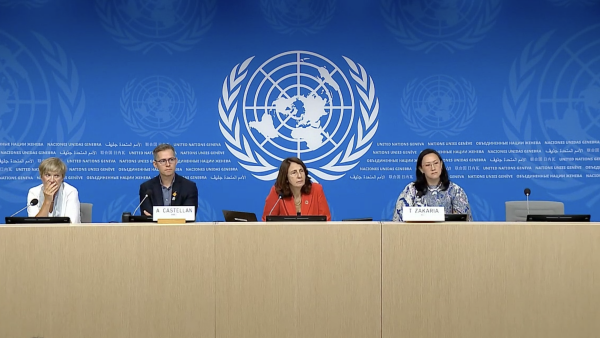
Rolando Gómez du Service d'information des Nations Unies (UNIS), a présidé le point de presse hybride, auquel ont assisté les porte-parole et représentants du Service de l'action antimines des Nations Unies, du Centre international de déminage humanitaire de Genève, de la Fédération internationale de la Croix-Rouge, du Haut-Commissariat des Nations Unies aux droits de l'homme et de l'Organisation mondiale de la santé.
27e Réunion internationale des directeurs nationaux de l'action antimines et des conseillers des Nations Unies
Christelle Loupforest, responsable par intérim du bureau de Genève pour le Service de l'action antimines des Nations Unies (UNMAS), a déclaré que la 27e Réunion internationale des directeurs nationaux de l'action antimines et des conseillers des Nations Unies se tiendrait à Genève la semaine prochaine. La réunion se tiendrait lundi, mardi et mercredi au Centre international de conférences de Genève. Elle était organisée avec le Centre international de conférences de Genève pour le déminage humanitaire, avec le soutien du gouvernement suisse. 800 dirigeants de l'action antimines se réuniraient du monde entier, ainsi que des organisations non gouvernementales, des représentants du secteur privé et des conseillers des Nations Unies et des organisations humanitaires. Les journalistes étaient invités à assister aux cérémonies d'ouverture et de clôture. La cérémonie d'ouverture débutait le lundi 29 avril, de 9h30 à 10h30, et la cérémonie de clôture se tenait le mercredi 1er mai, de 16h15 à 16h45. Des interviews pouvaient être organisées avec les responsables des programmes d'action antimines présents à la conférence du monde entier. Lee Woodyear et Laura Collier de l'UNMAS pouvaient organiser des interviews.
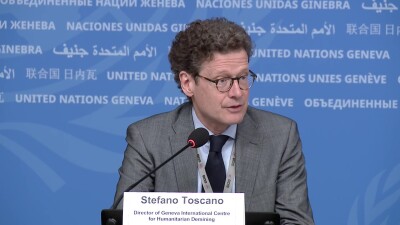
Stefano Toscano, directeur du Centre international de déminage humanitaire de Genève, a souligné l'excellente coopération avec l'UNMAS dans l'organisation de la réunion. Dans un monde où les conflits augmentent, l'action antimines est une réponse nécessaire. Aujourd'hui, 60 millions de personnes sont touchées par la menace des mines terrestres, des munitions et des engins explosifs chaque jour. Ce danger persiste pendant des décennies après les conflits et montre que l'action antimines transcende ce qui est généralement considéré comme une tâche humanitaire. Les mines terrestres et autres engins explosifs sont un obstacle aux droits de l'homme et au développement. La réunion des directeurs nationaux est le plus grand rassemblement du secteur et est un événement technique. On espère que les participants repartiront des réunions avec des idées sur la manière de relever les défis pratiques de l'action antimines. Le thème de cette année est « Protéger la vie et construire la paix », avec des sessions couvrant des sujets tels que le rôle de l'action antimines dans la sécurité alimentaire, entre autres.
En réponse aux questions, M. Gómez a déclaré qu'avec un badge de l'ONUG, des accréditations supplémentaires n'étaient pas nécessaires pour entrer dans le Centre de conférences. Lee Woodyear avait plus d'informations à ce sujet et pouvait répondre à d'autres questions.
En réponse aux questions, Pehr Lodhammar, chef du programme d'action antimines pour l'UNMAS, a déclaré qu'il était impossible de relayer des chiffres spécifiques sur les mines terrestres et les munitions non explosées à Gaza. Il y avait un taux d'échec de 10 % des munitions de service terrestre ; des munitions qui étaient tirées mais qui n'ont pas fonctionné. On estimait qu'il y avait 37 millions de tonnes de débris, soit 300 kilos par mètre carré de surface. 65 % des bâtiments détruits étaient des bâtiments résidentiels. Un atelier avait été organisé il y a deux semaines à Amman, portant sur la gestion des explosifs, en se concentrant sur Gaza. M. Lodhammar a déclaré que la situation à Gaza était extrêmement compliquée. L'UNMAS travaillait à Gaza depuis plusieurs années et connaissait les types de munitions. Avec 100 camions, on estimait qu'il faudrait 14 ans pour enlever tous les débris.
En réponse aux questions, M. Toscano a déclaré qu'il avait été à Kyiv la semaine dernière. Il était important de souligner que le chiffre de 174 000 m² contaminés était un point de départ. Le point difficile était de déterminer quelles surfaces étaient contaminées. Par exemple, ces derniers mois, les autorités ukrainiennes avaient pu restituer 18 000 m² à un usage productif.
En réponse à d'autres questions, Mme Loupforest a déclaré que des programmes étaient en cours en Éthiopie, au Burkina Faso, au Mali, en Somalie et au Yémen, entre autres. Ces crises étaient exacerbées par l'utilisation d'engins explosifs par des groupes non étatiques. Les médias internationaux oubliaient souvent ces histoires malgré les décès qui survenaient et l'UNMAS faisait donc appel aux médias pour mettre en lumière ces conflits, aider ces pays à surmonter leurs défis liés aux mines terrestres et aider à financer l'UNMAS à cet égard.
M. Toscano a déclaré que certains pays travaillaient à l'élimination de toutes les mines antipersonnel et des munitions à fragmentation. Le Zimbabwe, le Liban et le Sri Lanka étaient trois pays qui pourraient totalement éliminer ce problème avec un peu de soutien.
Mme Loupforest a déclaré que 300 millions étaient nécessaires pour reconstituer son fonds d'affectation spéciale volontaire. La conférence n'était pas une conférence de promesses de dons mais serait une réunion technique pour partager les meilleures pratiques et renforcer les partenariats. Cependant, en marge, il y aurait une réunion avec le groupe de soutien à l'action antimines, un groupe de 30 donateurs, pour présenter la situation désespérée du fonds d'affectation spéciale volontaire. Certaines crises étaient bien financées, mais d'autres étaient oubliées, et cela devait être abordé. Il devait également y avoir des investisseurs du secteur privé.
OHCHR
- Jeremy Laurence (dans la salle de presse) - Iran : loi sur le hijab
- Seif Magango, Orateur du Bureau des Droits de l'Homme de l'ONU (Nairobi) - Soudan : situation à El Fasher
IFRC
- Alexander Matheou, Directeur Régional de la FICR, région Asie-Pacifique (depuis Doha) - Besoins humanitaires actuels croissants, impact des réductions de financement et stratégie humanitaire-développement à long terme en Afghanistan.
UNMAS
- Stefano Toscano, Directeur du Centre International de Déminage Humanitaire de Genève (dans la salle de presse) et Christelle Loupforest, OIC UNMAS Genève (dans la salle de presse) - 27ème Réunion Internationale des Directeurs Nationaux de l'Action contre les Mines et des Conseillers des Nations Unies (NDM-UN27)
Similar Stories
1
1
1
Statements , Press Conferences | OHCHR
1
1
1
Press Conferences | UNHCR , UNICEF , IFRC , OHCHR , UN WOMEN , IOM , OCHA , WHO
UNHCR – ExCom Meeting, UNICEF – Nepal Recovery, IFRC – Flash Floods, WHO – Mental Health, IOM – South Sudan Floods, OCHA – DRC Humanitarian aid, UNHCR – Sahel Displacement, UNICEF – Yemen Update, IOM – Gaza Shelter, UN Women – Gaza Women, OHCHR – Arrests and detentions of Syrians by Israeli force
2
1
2
Press Conferences | UNCTAD
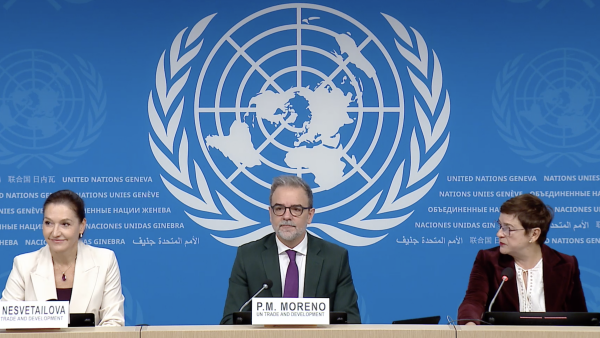
Presentation of the Trade and Developement Report 2026
Embargoed until 9 October 2026 at 11 a.m. (Geneva Time)
UNCTAD: UNCTAD’s flagship report finds that governments increasingly use industrial, trade, financial and technology policies to pursue economic and national security objectives. Market access and the ability to move into higher-value activities now depend more heavily on technology, finance and geopolitics.
1
1
1
Press Conferences | UPU
Release of the State of the Postal Sector Report 2026
1
1
1
Press Conferences | IOM , ITU , UNECE , UNICEF , WHO , WMO
UNICEF: Ebola, DRC - children orphans or separating them from parents and caregivers; IOM: Humanitarian needs in Djibouti amid arrivals from Yemen and increased migrant movements; WHO: Darfur, scale of health needs far exceeds available resources; WMO co-sponsored Global Heat Forum, Bangkok, monthly Global Seasonal Climate Update; UNECE: UN Forum of Mayors; ITU Plenipotentiary Conference 2026; WHO: child and adolescent obesity guidelines and new global roadmap to tackle pregnancy hypertension, a leading cause of maternal mortality
1
1
1
Press Conferences | OCHA , UN WOMEN , UNHCR , WFP , WHO , WTO , UNEP
OCHA – $160M CERF allocation to 12 underfunded crises; UNHCR – 5.8M refugee children remain out of school amid funding cuts; UN Women – Middle East escalation and food security among women/girls; WHO – Gaza supplies and overall situation; WFP – Yemen food insecurity and impact on global hunger ; UNEP - First International Conference of the Global Framework on Chemicals in Geneva | 16-20 November 2026
1
1
1
Press Conferences | UNHCR , WHO
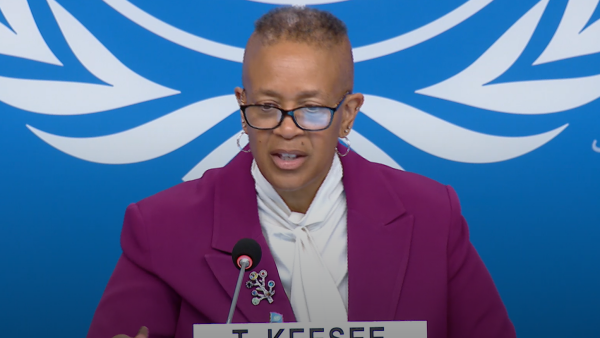
Yemen's health system nears collapse amid conflict, causing rising casualties and medicine shortages.
1
1
1
Press Conferences | HRC
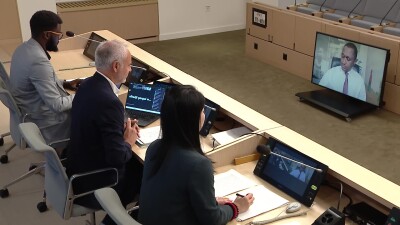
Update by the Expert Mechanism to Advance Racial Justice and Equality in Law Enforcement
1
1
1
Press Conferences | WIPO , WHO , UNICEF , UNHCR , IOM , WFP , FAO
WIPO Global Innovation Index 2026 launch and press conference, WHO Composition of influenza vaccines for the 2027 Southern Hemisphere flu season, UNICEF Yemen hunger and malnutrition; UNHCR Sudan displacement into Chad; IOM Ebola and population movements in DRC; WFP emergency food assistance in Nepal; and FAO food loss and waste.
2
1
2
Press Conferences | UNCTAD
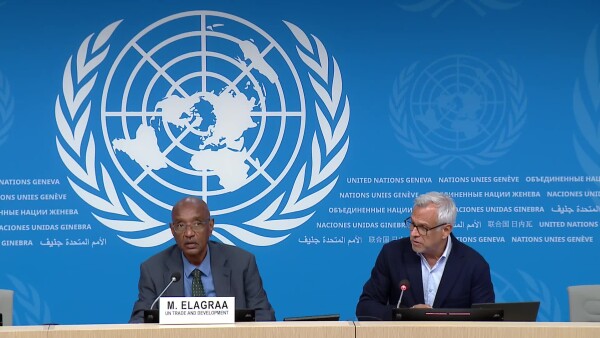
Gaza reconstruction needs reach $71.5 billion as Palestinian economy and public finances face severe strain. Latest UNCTAD report documents the loss of decades of development gains, economic collapse in Gaza and tightening economic constraints in the West Bank.
The report identifies three immediate priorities: transferring withheld Palestinian revenues, safeguarding the banking system and aligning reconstruction support with the documented scale of damage and economic losses.
1
1
1
Press Conferences | HRC
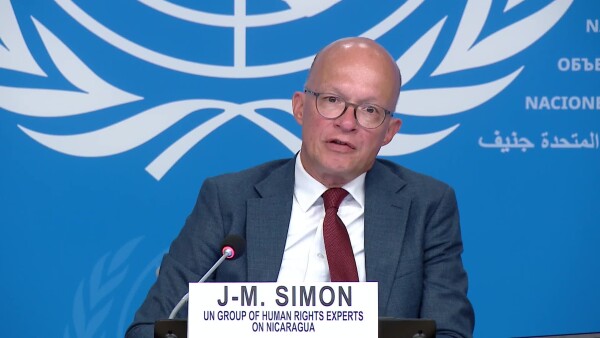
Press conference on the situation of human rights in Nicaragua by the UN Group of Human Rights Experts
1
1
1
Press Conferences | ITU , UNHCR , WHO , WMO
YEMEN - UNHCR: Escalating conflict in Yemen could fuel more displacement, refugee movement
CLIMATE - WHO / WMO: Health and Climate impact of El Niño