

The United Nations Office at Geneva
Multimedia Newsroom
Edited News | UNHCR , OCHA , UNITED NATIONS
UNOG-NEWS 2022 Humanitarian Response Plans for Afghanistan and the Region Griffiths - Grandi 11JAN2022
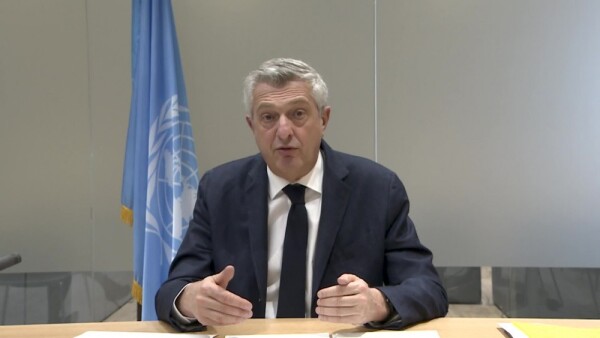
The UN and partners launched a more than $5 billion funding appeal for Afghanistan and the region on Tuesday, in the hope of shoring up collapsing basic services there, which have left 22 million in need of assistance inside the country and 5.7 million more requiring help beyond its borders. Continuity of statements by Martin Griffiths, UN Under-Secretary-General for Humanitarian Affairs and Emergency Relief Coordinator, and Filippo Grandi, UN High Commissioner for Refugees; moderator: Dominique Hyde, UNHCR.
STORY: Humanitarian Response Plans for Afghanistan and the Region: Griffiths - Grandi
TRT: 21’15”
SOURCE: UNTV CH
RESTRICTIONS: NONE
LANGUAGE: ENGLISH
ASPECT RATIO: 16:9
DATELINE: 11 January 2021, GENEVA, SWITZERLAND
SHOTLIST
- SPEAKER (English): Moderator, Dominique Hyde, UNHCR.
- SPEAKER (English): UN Under-Secretary-General for Humanitarian Affairs and Emergency Relief Coordinator, Martin Griffiths: "A warm welcome to everyone in this meeting.
Excellencies, partners, friends, ladies and gentlemen, thank you very much for joining us for a very important moment of profound consequence today in this launch for the people of Afghanistan.
Conditions on the ground, for most families, are simply untenable for women, men, children and older people, all, and all of this through no fault of their own.
More than half of the population of Afghanistan now depends on life-saving assistance, a staggering 30 per cent increase in 2022 over those in need in 2021.
Health care and other essential services are faltering and at risk of collapse.
Millions of people depend on food assistance to survive.
And without intervention of the sort that we are describing today, nearly 4 million children under age 5 will be malnourished this year – over 1 million of those children severely so.
Our staff on the ground, our partners and agencies, national and international, are witnessing this tragedy unfold every day and across the country: 4-year-olds weighing only 9 kg – hollowed-out versions of what they should be, with desperate parents seeking their survival and being treated in facilities managed by our partners and funded by your generosity.
Livelihoods have been crushed. People’s limited reserves expended. Many are forced into harmful and irreversible coping mechanisms to save their lives and to survive, including child marriages and child labour. People are burning household possessions to keep warm or selling off items used to run small businesses in a kinder time to cover the cost of food for their families.
And although the level of internal displacement has slowed – and we will hear of course more from Filippo on this – millions of people remain displaced because of decades of relentless conflict and violence.
And this is the reason why today we are launching together the world’s largest-ever single-country humanitarian appeal and its consequences in the region, marking the enormity of the crisis in Afghanistan.
This response plan and the relief we have planned is a vital lifeline for millions of people.
Last year, with your contributions and our collective commitment to scale up operations, humanitarian partners reached 18 million people across the country, over 60 per cent more than the year before.
And the generosity of donors last year meant that the Afghanistan programme was the best-funded appeal in the world, and we hope this will continue this year too, because much more is needed now.
In 2022, in Afghanistan itself, we need US$4.4 billion to assist more than 22 million Afghans with food, health care, livelihoods and other life-saving assistance. And more will be needed, as we will hear, in the neighbouring countries.
While we have seen significant progress – and I need to emphasize the progress – in allowing women to work in the humanitarian sector across all provinces, as had been promised to the United Nations by the Taliban, we are grateful for this, we welcome it, but we recognize that more needs to be done. The space is there for humanitarian operations and it needs to be managed and used.
The protection of women and girls – it hardly needs saying – is central to all our efforts. They must have access to all education and employment opportunities, health care and other essential services.
And for women to work in humanitarian operations is a condition precedent for delivery of assistance and protection to women and girls throughout the country.
One of the most sinister of recent developments in Afghanistan since those weeks in the second half of August has been the extraordinary impact on the economy – which resulted from the suspension of international assistance and engagement – with a GDP contraction of an estimated 40 per cent – what has been described elsewhere as a freefall in the economy. This trend will continue, and has only been made worse by a series of droughts.
Wheat and fuel have become so expensive that a family now spends almost all its income on food to survive.
The Central Emergency Response Fund, or CERF, and the Country-based Pooled Funds – many financed very generously by people in this meeting – have helped us to rapidly scale up responses in those last months of last year.
A stop-gap $45 million allocation, for example, from CERF with the assistance and delivery and leadership of UNICEF and WHO, helped to prevent Afghanistan’s health-care structure from collapse and those saved services which enabled people to stay working or to go home.
Last year, CERF allocated a total of $93 million to life-saving action in Afghanistan, making it by far the largest recipient country in the world.
The Afghanistan Humanitarian Fund, now the largest Country-based Pooled Fund in the world, in 2021, $257 million was made available through again the generosity of so many Member States. By the year’s end, the Fund had allocated $158 million of that for prioritized life-saving assistance.
Your contributions – and I speak to so many representatives in this room – have made an enormous difference, and I know it will again this year.
We welcome, and take note of, the leadership that led to the Security Council of the United Nations’ humanitarian exception to the UN sanctions regime announced in the middle of December after detailed negotiation by those members. This is an extraordinarily important decision which will enable agencies to operate without fear or favour and enable operations to continue. We thank the Security Council for that, and also other Member States that made exemptions from their own sanction regimes, because the message today is simple: It is our duty to save the millions of Afghan lives that are at stake.
We must also act now to prevent the quality of life in Afghanistan from deteriorating further.
We recognize that life-saving assistance is but one element for the international response and needs to be linked to attention to the economy, attention to capacity, attention to the stabilization of basic services.
But for now, life-saving assistance is the essential first step, and we rely on your generosity for it.
Thank you very much." - SPEAKER (English): UN High Commissioner for Refugees Filippo Grandi: "Thank you very much Martin [Griffiths] and thank you Dominique [Hyde]. Let me add a few remarks to complement what Martin just said in his briefing. But to begin with let me stress that I fully subscribe to his views. The key here being the need to urgently stabilize the situation inside Afghanistan, including that of people that are displaced also, not only, but also to prevent a larger refugee crisis from happening.
To do this, taking advantage of what is no doubt a safer space for action inside Afghanistan, the ability of humanitarian organizations, the UN, international and national NGOs to operate and deliver, and in general a more favorable context then we have had for many years.
I have often quoted, in recent weeks an important figure - 170,000 internally displaced people that have decided to return home in the months that followed the takeover by the Taliban. Whilst this is by no means a sign of a good situation, we’ve heard from Martin how dramatic the situation is, it shows that there are opportunities on which to build created essentially by a safer and more accessible space. Now, meanwhile, and this is really the core of my message in this meeting: it is important as we continue to focus on Afghanistan not to forget that there is a regional dimension to this crisis, represented essentially by Afghan refugees and Afghans with other status, that have left the country and live in neighboring countries and beyond. Especially, I would say, in Pakistan and Iran that have borne the brunt of hosting Afghan refugees for more than 40 years. We should, of course, not forget - and these Appeals are related to them as well - Central Asian neighboring states – Turkmenistan, Uzbekistan, and Tajikistan - and although this is outside the scope of this Appeal, Turkey that hosts more than 300,000 Afghan refugees in addition to millions of other refugees.
There are more than six million Afghans estimated to live in neighboring countries, as I said mostly Iran and Pakistan. This represents 15% of the population inside of Afghanistan. A majority of these people have left Afghanistan prior to the 15th of August, prior to the takeover by the Taliban. Some of them have been living for many, many years in neighboring countries with little support from the international community.
But there are also, of course, new arrivals, people that have chosen to leave the country after the takeover by the Taliban. These arrivals are also in sizeable numbers, although it is very difficult at this stage to estimate accurately their numbers. I was recently, just a couple of weeks ago, in Iran. The estimate of the Government of Iran is that 500,000 people have recently left and sought refuge in Iran. This is a figure we have agreed to verify through proper registration and eventually documentation of these people, but here my message is that there is a continuing issue of external displacement that needs to be addressed.
And this is why as a companion piece to the Humanitarian Response Plan inside Afghanistan, we are launching today a Refugee Response Plan - a Regional Refugee Response plan - asking for 623 million dollars for 2022. This Plan will continue to be implemented by UNHCR (the coordinating organization) and 40 partners, but under the leadership and in support of the host countries: Iran, Pakistan and the others. This is very important not to lose sight of this regional dimension, at this time of great needs, and as we heard, but also, of anxiety and fragility in the region. Anxiety and fragility which are enhanced, which are increased, by the consequences of the ongoing COVID-19 pandemic.
The Plan is of course to support Afghan refugees and other Afghans in the region, many of them are not documented, but also to support national communities hosting them. There is a strong focus on health, education, renewable and sustainable energy; strong focus as well on protection measures, I mentioned registration, documentation. Big efforts are going on in these countries. By the way, Iran and Pakistan have among the most progressive refugee policies in the world, so this also needs to be sustained, recognized, and above all not taken for granted with international support. And of course, as with the Humanitarian Response Plan, a strong focus on women and children.
While this response plan deals with existing refugee caseloads in the countries - sometimes even old caseloads - it also focuses on helping those countries prepare for the continuation of outflows should these happen.
I have to stress - Martin mentioned that the response to last year’s Afghanistan humanitarian plan was very good - the response to refugee appeals was less substantive, although it was more substantive last year than in previous years. So a strong appeal here to restore that confidence in these programmes, and restore support to the host countries that are – reasonably - very, very worried.
As we move into 2022, through financial contributions, but may I say also beyond this appeal, through the increase in refugee resettlement opportunities that are another form; another gesture; of responsibility sharing that these countries well deserve.
The key of course, before I conclude, let me say it again, the key remains to make every possible effort inside Afghanistan to prevent further flows. The points made by Martin in this respect are extremely important. Humanitarian aid is crucial today to save lives, to avoid the catastrophe we that we have already heard about. But in the medium- and long-term, Afghanistan as a country must be able to function again; to be viable again; to give protection and support to its own citizens.
Which means to continue to work on sanctions, on currency, on services through temporary arrangements, as we have heard, but also eventually, through more sustainable arrangements. This is urgent. This is not something that can wait for very long. Humanitarian agencies are fully committed to doing their jobs, but humanitarian agencies cannot substitute to the work that States must do for their people.
Once more, let me say in a very considerate manner, in a very prudent manner, that I would like to alert that if all of this - humanitarian action, support, and then transitional and eventually sustainable mechanisms are not put in place, all of this can cause, when the season becomes more mild, further external displacement, which will be immensely destabilizing for the region and difficult to manage for the international community at large.
Thank you very much."
ends
Similar Stories

1
1
1
Edited News | UNICEF , IFRC
Six weeks after Nepal’s deadly flooding disaster, communities are still struggling to rebuild their lives, but they will need sustained help as global warming increases the risk of another Himalayan catastrophe, the UN Children’s Fund (UNICEF) said on Friday.

1
1
1
Edited News | WHO
In suspected Russia plague death, testing and monitoring underway – WHO
The death of a lab worker in Russia’s Siberia region has sparked concerns about plague being the cause, the UN World Health Organization (WHO) said on Tuesday, adding that it was following the situation closely.

1
1
Edited News | OHCHR , UNOG
UN Human Rights Chief Volker Türk on Friday provided and oral update to the 63rd session of the Human rights Council on Ukraine.

1
1
1
Edited News | OHCHR , UNOG
UN Human Rights Chief Volker Türk on Friday provided and oral update to the 63rd session of the Human rights Council on the human rights situation in Haiti.

1
1
1
Edited News | WHO
Repeated delays in bringing lifesaving medicines, prosthetics and more from Israel into Gaza risk having devastating consequences on Palestinians who urgently need them in the wartorn enclave, the UN World Health Organization (WHO) said on Friday. “A truck full of non-priority supplies or the right supplies arriving too late, doesn't save lives. That's the question that actually matters," said Dr Reinhilde Van De Weerdt, WHO Representative in the OPT.

1
1
1
Edited News | WHO
DRC: Early access to care and oxygen decisive for Ebola patients’ survival – WHO
In the Democratic Republic of the Congo (DRC), health workers fighting the country’s largest-ever Ebola outbreak are struggling to overcome critical challenges to patient care, the UN World Health Organization (WHO) warned on Tuesday.

1
1
1
Edited News | OCHA , UN
Civilians in Iran are continuing to feel the consequences of months of conflict and military escalation, the UN’s top official in the country has said, as loss of life, damage to civilian infrastructure and mounting economic pressures leave many facing continued uncertainty.
1
1
1
Edited News | WHO , UNICEF
Aid agencies in Yemen highlighted the growing hunger emergency sparked by renewed fighting between Houthi opposition forces and Government troops, after mobile health clinics reported that hundreds of children displaced by the violence are suffering from the most deadly form of malnutrition.
1
1
1
Edited News | UNHCR
Displacement on the rise in Yemen as fighting continues - UNHCR
As hostilities worsen in Yemen, more people have been fleeing their homes, further intensifying the humanitarian crisis within the region, the UN Refugee Agency (UNHCR) warned on Tuesday.
1
1
1
Edited News | IOM , OHCHR , UNFPA , UNOG , UNHCR , WHO
Yemen’s humanitarian crisis growing by the hour amid spike in displacement
Yemenis displaced by renewed fighting have described fleeing for their lives amid shelling and gunfire, aid agencies reported on Friday, while highlighting the dramatic increase in humanitarian needs in the country and in Djibouti, where thousands have sought shelter.
1
1
1
Edited News | OHCHR , UNOG
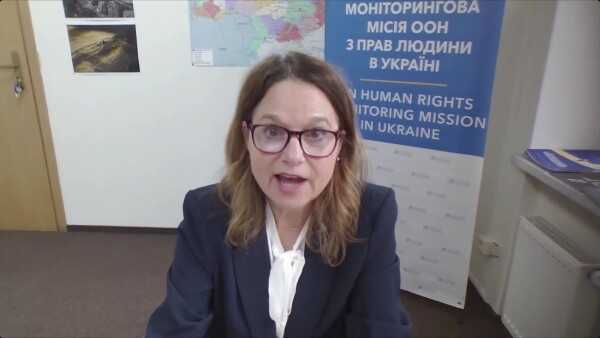
The UN Human Rights Office issued on Friday a report documenting a shocking pattern of sexual violence amid Russia’s full-scale armed attack on Ukraine.
2
1
2
Edited News , Press Conferences | WMO
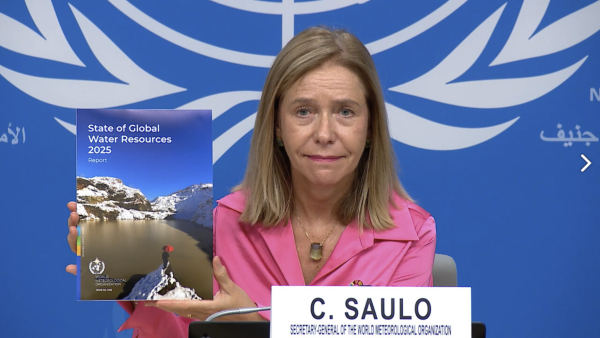
As world’s water reserves change, countries must prepare for a new reality: WMO
New data showing that rivers were at their lowest level for decades last year provides further evidence that the climate crisis is real and countries must act immediately to protect themselves from the increasing threat to communities and livelihoods, the UN World Meteorological Organization (WMO) said on Thursday.
The key findings from WMO’s State of Global Water Resources 2025 report covering the hydrological cycle and extreme events in the five-year period to last year:
- 2025 was one of driest years for river discharge in 35 years
- Past seven years have seen abnorfmal river flows
- Water storage on Earth’s land surface has decreased in past decade
- Widespread glacier loss across all regions for fourth consecutive year
- Asia and Africa are regions most affected by water-related disasters
- Water data availability has improved, but gaps remain in hard-hit areas
Highlighting the long-term decline in the Earth’s freshwater storage and glacier melt, WMO Secretary-General Celeste Saulo explained that the planet’s water reserves used to act as a planetary “savings account” that absorbed the occasional dry season, avoiding a water crisis. “One of the central stories of the 2025 report is what is happening to that savings account? And the simple answer is that we are depleting it,” she told journalists in Geneva.
Groundwater reserves are equally stretched and have been in decline since 2014, WMO’s report states, with nearly two-thirds of monitored wells worldwide showing levels lower than the historical norm and indicating a shift “further toward deficit…not recovery”.
“At the same time, we are seeing more water-related disasters,” Ms. Saulo said, while also stressing that the currently strengthening El Niño “will increase the risk of drought in some areas, and flooding in others”.
Glaciers disappearing
In 2025, for the fourth consecutive year, every major glaciated region on Earth lost ice mass, leading to short-term hazards including floods and long-term water insecurity, according to WMO.
Responding to a question about whether the changing global water cycle might have contributed to the deadly Nepal-China flooding disaster, Ms. Saulo explained that melting ice and rock was just one factor in the chain of events that ultimately sent a massive and deadly wall of water and debris downstream on 26 August, killing at least 1,367 people.
“You asked if it could happen again? Absolutely; the problem in this region is that there’s 63,700 glaciers at the last count,” she told a Press Conference in Geneva. “Even if you’re looking with remote sensing with satellites at these glaciers, you might see some faults, you might see some slight shifting, that does not mean necessarily catastrophic collapse. So, in order to plan for this, it’s very, very difficult. But the international community is looking very hard at ways in which we can bring people together to solve some of these monitoring issues.”
Data indicates that glaciers shrank between 2023 and 2025 with cumulative losses of 1,400 gigatonnes of water – or about one third of annual fresh water needs.
Every major glacier region on Earth lost ice for the fourth consecutive year.
“All 19 glacier regions around the globe lost ice; in Central Asia, Iceland, the Russian Arctic and western Canada and the United States, it was among the three worst years on record,” said Wayne Jenkinson, WMO’s Director of Hydrology and Cryosphere.
Some regions with smaller glaciers such as Central Europe, the Caucasus, the western Canada and the United States may already have reached “peak water”, Mr. Jenkinson warned.
“After this point, the glacier gives less meltwater each year simply because there is less ice left to melt. That matters for every community downstream that relies on water during hot, dry summers,” he explained.
Narelle van der Wel, WMO’s Head of Cryosphere Monitoring, Predictions and Services, stressed that while some further glacier loss is unavoidable, the eventual scale of the decline is not predetermined.
“Some glacier loss is inevitable, but total loss of glaciers is not yet inevitable,” she said, pointing to emissions reductions as central to limiting future losses.
Preparing for moving baselines
The report does not attribute every observed change to climate change alone. WMO says pressure on water resources and natural variability also contribute.
Mr. Jenkinson said governments need to prepare for “moving baselines” as historical patterns become less reliable.
“The situation 30 years ago is not where we are today,” he said. Countries, he added, need to prepare “for those changes that have really already arrived”.
ends