

The United Nations Office at Geneva
Multimedia Newsroom
Hybrid Press Conference / Conférence de presse hybride
OHCHR
Subject:
Tigray - Joint investigation into alleged violations of international human rights, humanitarian and refugee law committed by all parties to the conflict in the Tigray region of Ethiopia – report by the UN Human Rights Office and the Ethiopian Human Rights Commission
Speakers:
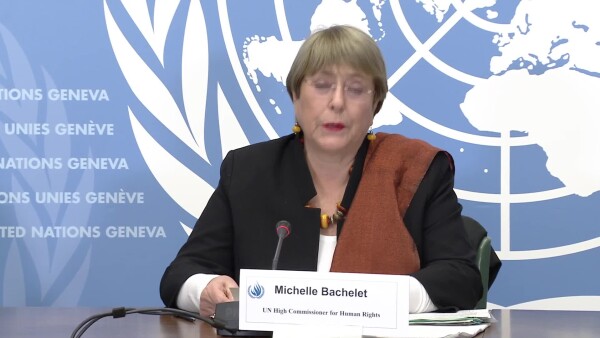
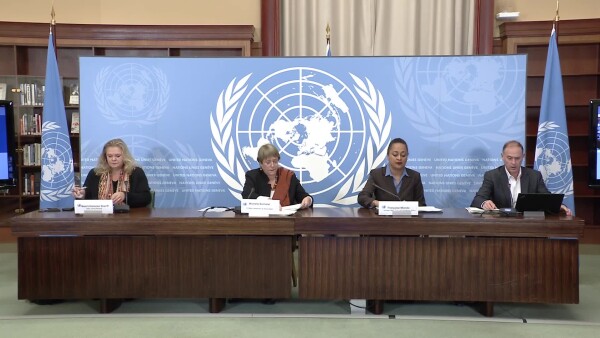
- Michelle Bachelet, UN High Commissioner for Human Rights
- Maarit Kohonen Sheriff, Chief, Africa Branch
- Françoise Mianda, Section Chief, East and Southern Africa
Date: 03 Novembre2021
Location: Geneva
Subject: UN Human Rights Chief calls for calls for accountability for violations and abuses by all parties in Tigray conflict
The Ethiopian Human Rights Commission (EHRC) and the UN Human Rights Office have today published a joint report which examines the devastating impact the conflict in Tigray has had on civilians. The report details a series of violations and abuses, including unlawful killings and extra-judicial executions, torture, sexual and gender-based violence, violations against refugees, and forced displacement of civilians.
SOUNDBITE (English): Michelle Bachelet UN High Commissioner for Human Rights: “We have reasonable grounds to believe that during this period, all parties to the Tigray conflict have committed violations of international human rights, humanitarian and refugee law. Some of these may amount to war crimes and crimes against humanity.”
SOUNDBITE (English): Michelle Bachelet UN High Commissioner for Human Rights: “Civilians in Tigray have been subjected to brutal violence and suffering. The Joint Investigation Team uncovered numerous violations and abuses, including unlawful killings and extra-judicial executions, torture, sexual and gender-based violence, violations against refugees, and forced displacement of civilians.”
The Joint Investigation Team (JIT) faced several security, operational, and administrative challenges in carrying out its work, in particular being unable to carry out all planned visits to parts of Tigray.
The report covers the period from early November 2020, when the armed conflict began between the Ethiopian National Defence Force (ENDF), the Eritrean Defence Force (EDF), the Amhara Special Forces (ASF), the Amhara Fano and other militias on one side, and the Tigrayan Special Forces (TSF), Tigrayan militia and other allied groups on the other, until 28 June 2021 when the Ethiopian Government declared a unilateral ceasefire.
The JIT conducted 269 confidential interviews with victims and witnesses of alleged violations and abuses, and other sources; and held over 60 meetings with federal and regional officials, representatives of international organisations, NGOs, community-based committees, medical personnel, and other sources.
The report states that there are reasonable grounds to believe all parties to the conflict - including the ENDF, EDF and Tigrayan forces - either directly attacked civilians and civilian objects, such as houses, schools, hospitals, and places of worship, or carried out indiscriminate attacks resulting in civilian casualties and destruction or damage to civilian objects. The JIT visited several locations In Tigray, including Mekelle:
SOUNDBITE (English): Michelle Bachelet UN High Commissioner for Human Rights: “The family of four killed in Ayder, Mekelle as their house was shelled, reportedly by the Ethiopian National Defence Force, without any apparent military justification. The 26-year-old woman in Adiet who was gang raped by Eritrean Defence Force soldiers in front of her three-year-old daughter. The man in Mai Kadra attacked with machetes by the Samri Tigrayan youth group, shot in the back and thrown into a fire.”
SOUNDBITE (English): Michelle Bachelet UN High Commissioner for Human Rights: “And this senseless war has since continued and is escalating, engulfing increasing parts of the country. Every day more people are suffering and dying. Recent days have seen reports of continued shelling by the Ethiopian National Defence Force of the Tigrayan regional capital of Mekelle and further advances by Tigrayan forces into the neighbouring region of Amhara.”
SOUNDBITE (English): Michelle Bachelet UN High Commissioner for Human Rights: “We are receiving continued allegations of serious abuses and violations of international human rights and international humanitarian law. There are reports of shelling and airstrikes resulting in civilian deaths, summary executions, large-scale displacement and a worsening humanitarian situation. I will shortly issue a brief update referring to some of the allegations we have been receiving since the June cut-off date of our report.”
SOUNDBITE (English): Michelle Bachelet UN High Commissioner for Human Rights: “While the majority of the violations documented between November 2020 and June 2021 appear to have been committed by Ethiopian and Eritrean forces, we have since then seen an increasing number of allegations of human rights abuses by Tigrayan forces, as well as continued reported violations by Ethiopian and Eritrean defence forces.”
SOUNDBITE (English): Michelle Bachelet UN High Commissioner for Human Rights: “We embarked on this joint investigation, at the invitation of the Ethiopian Human Rights Commission, to enable our teams to get first-hand information on the facts, to allow us to provide a faithful account of the situation in Tigray, and to assist in ensuring accountability.”
SOUNDBITE (English): Michelle Bachelet UN High Commissioner for Human Rights: “The report is not an exhaustive record of all violations and abuses that occurred during the conflict, but it fairly illustrates the main types and overall patterns of violations and abuses. I am grateful to the many victims and witnesses who shared their experience and to others who provided pertinent information. Their voices speak in the pages of this report.”
SOUNDBITE (English): Michelle Bachelet UN High Commissioner for Human Rights: “
I want to amplify here today what victims and survivors of violations conveyed to our joint investigation team: they want their means of livelihood restored. They want reparations for their destroyed homes and all they have lost. They want to know the truth about what happened to their loved ones, for all sides to acknowledge their role in the suffering they have inflicted on them and for the perpetrators to be brought to justice.”
SOUNDBITE (English): Michelle Bachelet UN High Commissioner for Human Rights: “A key concern of our report is due accountability. National authorities have the primary responsibility to deliver fair and independent proceedings that address the full range of violations identified, rather than isolated individual instances. If national authorities are not in position to do so, an international, independent investigative mechanism should be considered.”
SOUNDBITE (English): Michelle Bachelet UN High Commissioner for Human Rights: “Building on this joint report, such a mechanism could then take steps to undertake criminal investigations, and gather and analyse evidence of the full range of violations and abuses that can be directly used in competent criminal courts, whether at national, regional or international levels.”
SHOTLIST OF THE EDITED STORY:
- Exterior Palais des Nations, alley of flags
- Wide shot: podium in press conference - HC Michelle Bachelet
- SOUNDBITE (English): Michelle Bachelet UN High Commissioner for Human Rights: “We have reasonable grounds to believe that during this period, all parties to the Tigray conflict have committed violations of international human rights, humanitarian and refugee law. Some of these may amount to war crimes and crimes against humanity.”
- Wide shot: podium in press conference with participants
- SOUNDBITE (English): Michelle Bachelet UN High Commissioner for Human Rights: “Civilians in Tigray have been subjected to brutal violence and suffering. The Joint Investigation Team uncovered numerous violations and abuses, including unlawful killings and extra-judicial executions, torture, sexual and gender-based violence, violations against refugees, and forced displacement of civilians.”
- High shot: of press conference room
- SOUNDBITE (English): Michelle Bachelet UN High Commissioner for Human Rights: “The family of four killed in Ayder, Mekelle as their house was shelled, reportedly by the Ethiopian National Defence Force, without any apparent military justification. The 26-year-old woman in Adiet who was gang raped by Eritrean Defence Force soldiers in front of her three-year-old daughter. The man in Mai Kadra attacked with machetes by the Samri Tigrayan youth group, shot in the back and thrown into a fire.”
- Close up: journalist watching screen
- SOUNDBITE (English): Michelle Bachelet UN High Commissioner for Human Rights: “And this senseless war has since continued and is escalating, engulfing increasing parts of the country. Every day more people are suffering and dying. Recent days have seen reports of continued shelling by the Ethiopian National Defence Force of the Tigrayan regional capital of Mekelle and further advances by Tigrayan forces into the neighbouring region of Amhara.”
- Cut away: participants
- SOUNDBITE (English): Michelle Bachelet UN High Commissioner for Human Rights: “We are receiving continued allegations of serious abuses and violations of international human rights and international humanitarian law. There are reports of shelling and airstrikes resulting in civilian deaths, summary executions, large-scale displacement and a worsening humanitarian situation. I will shortly issue a brief update referring to some of the allegations we have been receiving since the June cut-off date of our report.”
- Medium shot: Photographers
- SOUNDBITE (English): Michelle Bachelet UN High Commissioner for Human Rights: “While the majority of the violations documented between November 2020 and June 2021 appear to have been committed by Ethiopian and Eritrean forces, we have since then seen an increasing number of allegations of human rights abuses by Tigrayan forces, as well as continued reported violations by Ethiopian and Eritrean defence forces.”
- Close up: Photographers
- SOUNDBITE (English): Michelle Bachelet UN High Commissioner for Human Rights: “Weembarked on this joint investigation, at the invitation of the Ethiopian Human Rights Commission, to enable our teams to get first-hand information on the facts, to allow us to provide a faithful account of the situation in Tigray, and to assist in ensuring accountability.”
- Wide shot: Cameras and photographers
- SOUNDBITE (English): Michelle Bachelet UN High Commissioner for Human Rights: “The report is not an exhaustive record of all violations and abuses that occurred during the conflict, but it fairly illustrates the main types and overall patterns of violations and abuses. I am grateful to the many victims and witnesses who shared their experience and to others who provided pertinent information. Their voices speak in the pages of this report.”
- Medium shot: journalists
- SOUNDBITE (English): Michelle Bachelet UN High Commissioner for Human Rights: “I want to amplify here today what victims and survivors of violations conveyed to our joint investigation team: they want their means of livelihood restored. They want reparations for their destroyed homes and all they have lost. They want to know the truth about what happened to their loved ones, for all sides to acknowledge their role in the suffering they have inflicted on them and for the perpetrators to be brought to justice.”
- Medium shot: participant
- SOUNDBITE (English): Michelle Bachelet UN High Commissioner for Human Rights: “A key concern of our report is due accountability. National authorities have the primary responsibility to deliver fair and independent proceedings that address the full range of violations identified, rather than isolated individual instances. If national authorities are not in position to do so, an international, independent investigative mechanism should be considered.”
- Wide shot: press conference room and cameras
- SOUNDBITE (English): Michelle Bachelet UN High Commissioner for Human Rights: “Building on this joint report, such a mechanism could then take steps to undertake criminal investigations, and gather and analyse evidence of the full range of violations and abuses that can be directly used in competent criminal courts, whether at national, regional or international levels.”
- Wide shot: press conference room
- Various UN Human rights maps: Africa – Ethiopia- Tigray.
Similar Stories
1
12
1
1
Press Conferences , Images | UNOG
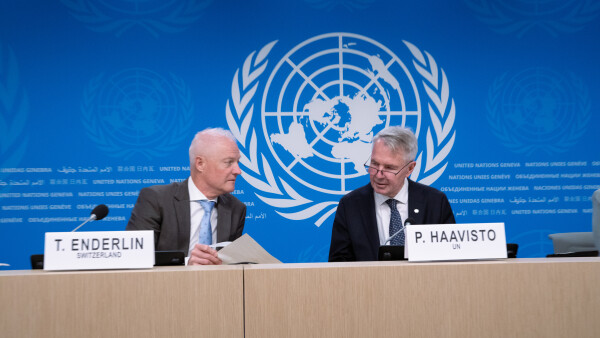
Closing Press Conference following the Sixth Consultative Meeting on Enhancing Coordination of Peace Initiatives and Efforts in Sudan

2
17
1
2
Edited News , Press Conferences | OCHA , WMO
Two UN agencies teamed up on Wednesday to issue an appeal for immediate assistance to help communities already being impacted by the strongest El Niño on record.
3
16
2
2
B-roll , Conferences , Edited News | UNITED NATIONS , UNOG
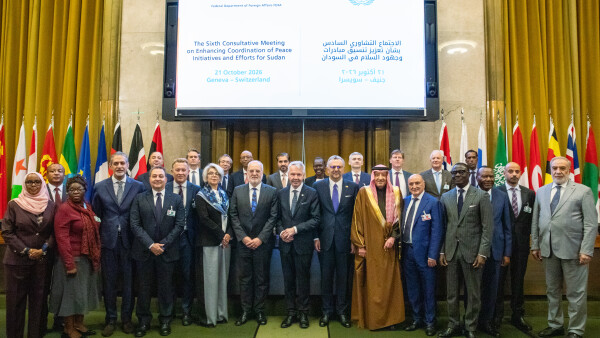
Sixth Consultative Meeting on Enhancing Coordination of Peace Initiatives and Efforts for Sudan
1
1
1
Press Conferences | CITES
Wildlife trade and conservation policy discussions at the 81st meeting of the CITES Standing Committee (SC81)
1
1
1
Edited News | UNICEF , WHO , UNHCR
Yemen war continues to force families from homes amid hunger and disease
More than 250,000 people have now fled renewed fighting in Yemen, the UN said on Tuesday, citing particular concern for those sheltering in the southwestern city of Taiz and the wider governorate, where access is “essentially blocked”.
1
1
1
Press Conferences | UNHCR , UNCTAD , WMO , OCHA , UNICEF , WHO
UNHCR Hungary’s 1956 Refugee Crisis: 70 Years On, UNCTAD World Investment Forum 2026, Doha, WMO Greenhouse Gas Bulletin and Climate Update for COP31, OCHA Afghanistan: Malnutrition, Girls’ Education and Recovery, UNICEF Yemen: Child Malnutrition and Unsafe Water in Taiz, WHO Inequalities in Noncommunicable Diseases and Risk Factors

1
1
1
Press Conferences | UNHCR
End of UNHCR's 77th Annual Executive Committee (ExCom) meeting week

1
1
1
Edited News | UNICEF
A little over one year since a ceasefire agreement was announced between Hamas fighters and Israel, more than 340 children have been reported killed and hundreds more injured, the UN Children’s Fund, UNICEF, said on Friday.

1
1
1
Press Conferences | UNICEF , IOM , UNHCR
UN Special Assistant to the Personal Envoy Office (SUDAN): Peace Initiatives and Efforts in Sudan; UNICEF: Dire situation of children in Gaza; IOM: Damaged Homes and Energy Attacks Risk Displacing Ukrainians for this winter; UNHCR: update on EXCOM week

1
1
1
Press Conferences | IOM , UNDRR
UN stresses importance of household preparedness for disaster risk reduction.

1
1
1
Edited News | UNICEF , IFRC
Six weeks after Nepal’s deadly flooding disaster, communities are still struggling to rebuild their lives, but they will need sustained help as global warming increases the risk of another Himalayan catastrophe, the UN Children’s Fund (UNICEF) said on Friday.

1
1
1
Statements , Press Conferences | OHCHR