

The United Nations Office at Geneva
Multimedia Newsroom
Edited News , Press Conferences | UNICEF , WHO
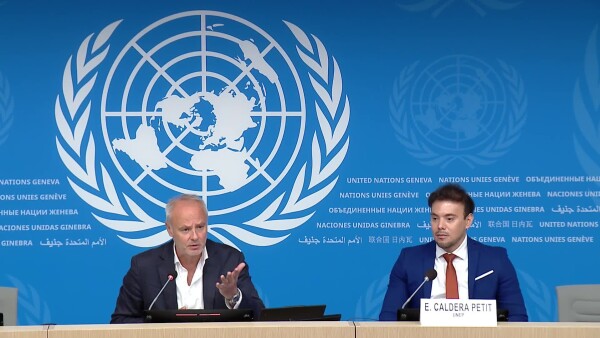
WHO virtual press conference - Hypertension guidelines and estimates 23 August 2021
Low and middle-income countries now carrying the burden of hypertension, new report finds
Over the last 30 years, the burden of hypertension has shifted from wealthy nations to low and middle-income countries, according to a report led by Imperial College London and the World Health Organization (WHO). The first comprehensive analysis of trends in hypertension prevalence, detection, treatment and control, published on Wednesday in The Lancet, also found that the number of adults aged 30-79 years with hypertension has doubled from 650 million to 1.28 billion and nearly half these people did not know they had hypertension. “It's far from being a condition of affluence. It's very much a condition of poverty,” said Professor Majid Ezzati, senior author of the study and Professor of Global Environmental Health at the School of Public Health at Imperial College London, who was speaking at the launch of the review in Geneva. The study, conducted by a global network of physicians and researchers, covered the period 1990-2019. It found that whilst the number of people with hypertension doubled to 1.28 billion, the percentage of people who have hypertension has changed little since 1990. This was primarily owing to population growth and ageing. However, in 2019, over one billion people with hypertension (82 per cent of all people with hypertension in the world) lived in low and middle-income countries. “There are people who have had hypertension for years and decades and they have never had their blood pressure measured because they have not had that opportunity, whereas countries with good health systems do this within,” the report said. Professor Ezzati called it a public health failure that so many of the people with high blood pressure in the world are still not getting the treatment they need. Hypertension significantly increases the risk of heart, brain and kidney disease, and is one of the top causes of death and disease throughout the world. It can be detected easily by measuring blood pressure, at home or in a health centre, and can often be treated effectively with medications that are low-cost.
The study used blood pressure measurement and treatment data from more than 100 million people aged 30-79 years in 184 countries, covering 99 per cent of the global population, which makes it the most comprehensive review of global trends in hypertension to date. By analysing this massive amount of data, the researchers found that Canada, Peru and Switzerland had among the lowest prevalence of hypertension in the world in 2019, while some of the highest rates were seen in the Dominican Republic, Jamaica and Paraguay for women and Hungary, Paraguay and Poland for men. However, success in controlling the disease is “not just an issue of high-income countries”, said Mr. Ezzati, who also listed Chile, Thailand, Turkey and Iran as doing “remarkably well”. Some middle-income countries such as Costa Rica and Kazakhstan now have higher treatment rates than most higher-income countries. These countries have put together “all of the things needed to diagnose people with hypertension, to treat them and to control the conditions, to treat them in a really effective way”, he said, listing universal health coverage, access to health centres, good guidelines, equipment and drug procurement as requirements. Although it is straightforward to diagnose hypertension and relatively easy to treat the condition with low-cost drugs, the study revealed significant gaps in diagnosis and treatment. About 580 million people with hypertension (41 per cent of women and 51 per cent of men) were unaware of their condition because they were never diagnosed. The study also indicated that more than half of people (53 per cent of women and 62 per cent of men) with hypertension, or a total of 720 million people, were not receiving the treatment that they needed. Blood pressure was controlled, which means medicines were effective in bringing blood pressure to within normal ranges, in fewer than one in four women and one in five men with hypertension. “So only 23 per cent of women and 18 per cent of men have control,” said Dr. Bente Mikkelsen, WHO Director, Department of Noncommunicable Diseases. Men and women in Canada, Iceland and the Republic of Korea were most likely to receive medication to treat and control their hypertension, with more than 70 per cent of those with the condition receiving treatment in 2019. Comparatively, men and women in sub-Saharan Africa, central, south and south-east Asia, and Pacific Island nations are the least likely to be receiving medication. Treatment rates were below 25 per cent for women, and 20 per cent for men, in a number of countries in these regions, creating a massive global inequality in treatment. “We need to close three gaps,” said Dr. Mikkelsen. “First of all, there is the gap of getting diagnosed. The second is the gaps to get treated, and the third thing is to get control.” Dr Bin Zhou, a research fellow at the School of Public Health at Imperial College London, who led the analysis, said that although hypertension treatment and control rates have improved in most countries since 1990, there has been little change in much of sub-Saharan Africa and Pacific Island nations. “International funders and national governments need to prioritize global treatment equity for this major global health risk.” The ”WHO Guideline for the pharmacological treatment of hypertension in adults”, also released on Wednesday, provides new recommendations to help countries improve the management of hypertension. Dr. Taskeen Khan, of WHO’s Department of Noncommunicable Diseases, who led the guideline development, said: “The need to better manage hypertension cannot be exaggerated. By following the recommendations in this new guideline, increasing and improving access to blood pressure medication, identifying and treating comorbidities such as diabetes and pre-existing heart disease, promoting healthier diets and regular physical activity, and more strictly controlling tobacco products, countries will be able to save lives and reduce public health expenditures.”.
STORY: HYPERTENSION GUIDELINES -- WHO
TRT: 02:55”
SOURCE: UNTV CH
RESTRICTIONS: NONE
LANGUAGE: ENGLISH
ASPECT RATIO: 16:9
DATELINE: 25 AUGUST 2021, GENEVA, SWITZERLAND
- Exterior wide shot, United Nations flag flying
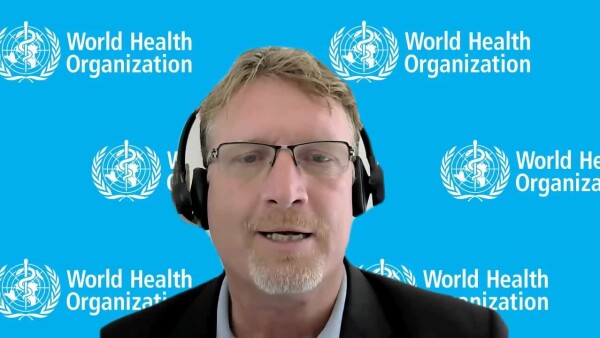
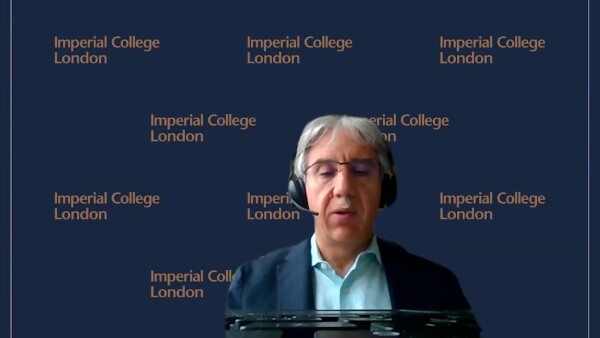
- SOUNDBITE: (ENGLISH) Professor Majid Ezzati, Professor of Global Environmental Health, School of Public Health, Imperial College London: “There are nearly 1.3 billion people, 2.8 billion people in the world that have hypertension, and perhaps one of the most important findings is that this is by far a dominant issue in low and middle income countries and in some of the countries in Central and Eastern Europe. It's far from being a condition of affluence. It's very much a condition of poverty”.
- Mid shot, Palais des Nations
- SOUNDBITE: (ENGLISH) Professor Majid Ezzati, Professor of Global Environmental Health, School of Public Health, Imperial College London: “Almost half of them don't even know that they have hypertension, and for many of us and many of you and others, you might be travelling in a country, there are people who have had hypertension for years and decades and they have never had their blood pressure measured because they have not had that opportunity, whereas countries with good health systems do this quite within”.
- Exterior wide shot, United Nations flag flying
- SOUNDBITE: (ENGLISH) Professor Majid Ezzati, Professor of Global Environmental Health, School of Public Health, Imperial College London: Chile has done remarkably well Thailand is doing well in many aspects. Turkey, Iran. So these are the countries that have actually put together all of the things that are needed to to diagnose people with hypertension, to treat them and to control the conditions, to treat them in a really effective way. This includes universal health coverage for people to actually be able to get to a health centre, to have access. Good guidelines, the equipment, drug procurement, all of the pieces. So success is not an issue of just high income countries”.
- Mid shot, Palais des Nations
- SOUNDBITE: (ENGLISH) Dr Bente Mikkelsen, Director, Department of Noncommunicable Diseases, WHO: “We need to close three gaps. First of all, there is the gap of getting diagnosed. The second is the gaps to get treated, and the third thing is to get control. And before we haven't been able to look at the full cascade of things”.
- Exterior wide shot, United Nations flag flying
- SOUNDBITE: (ENGLISH) Dr Bente Mikkelsen, Director, Department of Noncommunicable Diseases, WHO: “We have an estimated 1.28 billion adults aged 30 to 79 worldwide that have hypertension, but few have control. So only 23 percent of women and 18 percent of men have control. As I mentioned before”.
- Exterior wide shot, United Nations flag flying
Similar Stories
1
1
1
Press Conferences | IOM , UNDRR
UN stresses importance of household preparedness for disaster risk reduction.

1
1
1
Edited News | UNICEF , IFRC
Six weeks after Nepal’s deadly flooding disaster, communities are still struggling to rebuild their lives, but they will need sustained help as global warming increases the risk of another Himalayan catastrophe, the UN Children’s Fund (UNICEF) said on Friday.
1
1
1
Statements , Press Conferences | OHCHR
1
1
1
Press Conferences | UNHCR , UNICEF , IFRC , OHCHR , UN WOMEN , IOM , OCHA , WHO
UNHCR – ExCom Meeting, UNICEF – Nepal Recovery, IFRC – Flash Floods, WHO – Mental Health, IOM – South Sudan Floods, OCHA – DRC Humanitarian aid, UNHCR – Sahel Displacement, UNICEF – Yemen Update, IOM – Gaza Shelter, UN Women – Gaza Women, OHCHR – Arrests and detentions of Syrians by Israeli force
2
1
2
Press Conferences | UNCTAD
Presentation of the Trade and Developement Report 2026
Embargoed until 9 October 2026 at 11 a.m. (Geneva Time)
UNCTAD: UNCTAD’s flagship report finds that governments increasingly use industrial, trade, financial and technology policies to pursue economic and national security objectives. Market access and the ability to move into higher-value activities now depend more heavily on technology, finance and geopolitics.
1
1
1
Press Conferences | UPU
Release of the State of the Postal Sector Report 2026

1
1
1
Edited News | WHO
In suspected Russia plague death, testing and monitoring underway – WHO
The death of a lab worker in Russia’s Siberia region has sparked concerns about plague being the cause, the UN World Health Organization (WHO) said on Tuesday, adding that it was following the situation closely.
1
1
1
Press Conferences | IOM , ITU , UNECE , UNICEF , WHO , WMO
UNICEF: Ebola, DRC - children orphans or separating them from parents and caregivers; IOM: Humanitarian needs in Djibouti amid arrivals from Yemen and increased migrant movements; WHO: Darfur, scale of health needs far exceeds available resources; WMO co-sponsored Global Heat Forum, Bangkok, monthly Global Seasonal Climate Update; UNECE: UN Forum of Mayors; ITU Plenipotentiary Conference 2026; WHO: child and adolescent obesity guidelines and new global roadmap to tackle pregnancy hypertension, a leading cause of maternal mortality

1
1
Edited News | OHCHR , UNOG
UN Human Rights Chief Volker Türk on Friday provided and oral update to the 63rd session of the Human rights Council on Ukraine.

1
1
1
Edited News | OHCHR , UNOG
UN Human Rights Chief Volker Türk on Friday provided and oral update to the 63rd session of the Human rights Council on the human rights situation in Haiti.

1
1
1
Edited News | WHO
Repeated delays in bringing lifesaving medicines, prosthetics and more from Israel into Gaza risk having devastating consequences on Palestinians who urgently need them in the wartorn enclave, the UN World Health Organization (WHO) said on Friday. “A truck full of non-priority supplies or the right supplies arriving too late, doesn't save lives. That's the question that actually matters," said Dr Reinhilde Van De Weerdt, WHO Representative in the OPT.
1
1
1
Press Conferences | OCHA , UN WOMEN , UNHCR , WFP , WHO , WTO , UNEP
OCHA – $160M CERF allocation to 12 underfunded crises; UNHCR – 5.8M refugee children remain out of school amid funding cuts; UN Women – Middle East escalation and food security among women/girls; WHO – Gaza supplies and overall situation; WFP – Yemen food insecurity and impact on global hunger ; UNEP - First International Conference of the Global Framework on Chemicals in Geneva | 16-20 November 2026