

The United Nations Office at Geneva
Multimedia Newsroom
World Food Programme (WFP) warns that COVID-19 third wave has hit Myanmar’s people like a ‘tsunami’
The World Food Programme (WFP) warned on Friday that it is facing a 70 per cent funding shortfall in Myanmar, where millions face growing food insecurity.
Amid the “triple impact of poverty, the current political unrest and economic crisis”, coupled with the rapidly spreading third wave of COVID-19, that is “practically like a tsunami that’s hit this country”, the people of Myanmar are “experiencing the most difficult moment in their lives”, WFP Myanmar Country Director Stephen Anderson said, from Nay Pyi Taw.
“These multiple challenges are undermining the ability of many communities throughout Myanmar to put food on their family’s table,” he added. The WFP needs $86 million to help fight hunger in the country over the next six months, amid turmoil since the military ousted the elected government led by Aung San Suu Kyi on 1 February 1.
In April, the UN agency estimated that 3.4 million more people nationwide could be pushed into food insecurity between May and October. In response, the WFP tripled its planned support to the country and commenced “large-scale emergency food distributions for up to two million people in the poorest townships of Myanmar, starting in Yangon,” Mr Anderson explained.
At the same time, the WFP is “stepping up its operations” to reach newly-displaced people affected by the clashes and insecurity in recent months, while continuing to assist 360,000 food-insecure people in Rakhine, Kachin and Shan states, where there have been longstanding concerns.
Calling for critical access to all those in need in order to provide them with humanitarian assistance, Mr. Anderson urged the international community to support the WFP’s work.
“We very much need sustained access to those who are in greatest need of humanitarian assistance…we do need the support and attention of the international community now more than ever.”
ends
STORY: Myanmar Food Insecurity - WFP
TRT: 03:04”
SOURCE: UNTV CH
RESTRICTIONS: NONE
LANGUAGE: ENGLISH
ASPECT RATIO: 16:9
DATELINE: 6 August 2021, GENEVA, SWITZERLAND
SHOTLIST
1. Exterior wide shot, United Nations flag flying.
2. Wide shot, press briefing room.
3. SOUNDBITE: (ENGLISH) Stephen Anderson, WFP Myanmar Country Director: “The people of Myanmar are going through their most difficult time in memory. They've been faced with multiple challenges, multiple shocks. First of all, poverty. Of course, poverty predated the current situation. But then, of course, since the 1 February military takeover, there has been increased political unrest, there is also economic and economic crisis.”
4.Wide of panel at the briefing.
5. SOUNDBITE: (ENGLISH) Stephen Anderson, WFP Myanmar Country Director: “COVID19, we had a very tough second wave last year, which had a devastating impact on people's livelihoods, and now the third wave, it's practically like a tsunami that's hit this country. It's hitting all aspects and creating major havoc.”
6.Close, side view of panel at the briefing.
7.SOUNDBITE: (ENGLISH) Stephen Anderson, WFP Myanmar Country Director:
“WFP has tried to launch large-scale assistance to people who are we believe are in very high need, in critical need in urban areas, in the poorest parts of the urban areas. And we started in Yangon and we've assisted approximately 750,000 people so far. But we believe that about two million people should be targeted with emergency food assistance.”
8.Mid of journalists at the briefing.
9. SOUNDBITE: (ENGLISH) Stephen Anderson, WFP Myanmar Country Director:
“We are also sustaining our support for about 360 thousand people who require monthly lifesaving support. And these were people who were needy even before this year. They are mainly living in Rakhine, Kachin and Shan states where there has been long-running conflict.”
10.Mid of journalist at briefing.
11. SOUNDBITE: (ENGLISH) Stephen Anderson, WFP Myanmar Country Director:
“So, essentially, we are facing a 70 per cent funding gap over the next six months. We need approximately $86 million. Equally, of course, we very much need sustained access to those who are in greatest need of humanitarian assistance. And really so to really sum it up, we do need the support and attention of the international community now more than ever.”
12. Mid of journalist on phone at briefing.
13. Wide of panel at briefing.
14. Mid of journalist at briefing.
Similar Stories

1
1
1
Edited News | UNICEF , IFRC
Six weeks after Nepal’s deadly flooding disaster, communities are still struggling to rebuild their lives, but they will need sustained help as global warming increases the risk of another Himalayan catastrophe, the UN Children’s Fund (UNICEF) said on Friday.

1
1
1
Edited News | WHO
In suspected Russia plague death, testing and monitoring underway – WHO
The death of a lab worker in Russia’s Siberia region has sparked concerns about plague being the cause, the UN World Health Organization (WHO) said on Tuesday, adding that it was following the situation closely.

1
1
Edited News | OHCHR , UNOG
UN Human Rights Chief Volker Türk on Friday provided and oral update to the 63rd session of the Human rights Council on Ukraine.

1
1
1
Edited News | OHCHR , UNOG
UN Human Rights Chief Volker Türk on Friday provided and oral update to the 63rd session of the Human rights Council on the human rights situation in Haiti.

1
1
1
Edited News | WHO
Repeated delays in bringing lifesaving medicines, prosthetics and more from Israel into Gaza risk having devastating consequences on Palestinians who urgently need them in the wartorn enclave, the UN World Health Organization (WHO) said on Friday. “A truck full of non-priority supplies or the right supplies arriving too late, doesn't save lives. That's the question that actually matters," said Dr Reinhilde Van De Weerdt, WHO Representative in the OPT.

1
1
1
Edited News | WHO
DRC: Early access to care and oxygen decisive for Ebola patients’ survival – WHO
In the Democratic Republic of the Congo (DRC), health workers fighting the country’s largest-ever Ebola outbreak are struggling to overcome critical challenges to patient care, the UN World Health Organization (WHO) warned on Tuesday.

1
1
1
Edited News | OCHA , UN
Civilians in Iran are continuing to feel the consequences of months of conflict and military escalation, the UN’s top official in the country has said, as loss of life, damage to civilian infrastructure and mounting economic pressures leave many facing continued uncertainty.
1
1
1
Edited News | WHO , UNICEF
Aid agencies in Yemen highlighted the growing hunger emergency sparked by renewed fighting between Houthi opposition forces and Government troops, after mobile health clinics reported that hundreds of children displaced by the violence are suffering from the most deadly form of malnutrition.
1
1
1
Edited News | UNHCR
Displacement on the rise in Yemen as fighting continues - UNHCR
As hostilities worsen in Yemen, more people have been fleeing their homes, further intensifying the humanitarian crisis within the region, the UN Refugee Agency (UNHCR) warned on Tuesday.
1
1
1
Edited News | IOM , OHCHR , UNFPA , UNOG , UNHCR , WHO
Yemen’s humanitarian crisis growing by the hour amid spike in displacement
Yemenis displaced by renewed fighting have described fleeing for their lives amid shelling and gunfire, aid agencies reported on Friday, while highlighting the dramatic increase in humanitarian needs in the country and in Djibouti, where thousands have sought shelter.
1
1
1
Edited News | OHCHR , UNOG
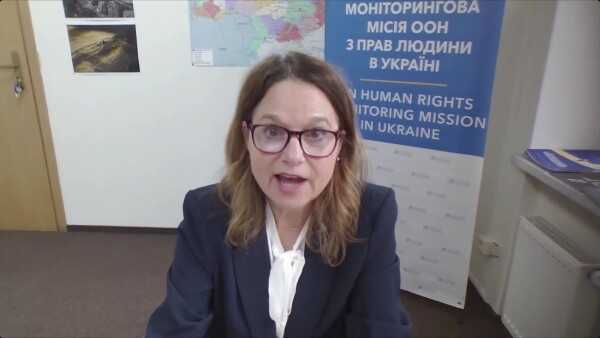
The UN Human Rights Office issued on Friday a report documenting a shocking pattern of sexual violence amid Russia’s full-scale armed attack on Ukraine.
2
1
2
Edited News , Press Conferences | WMO
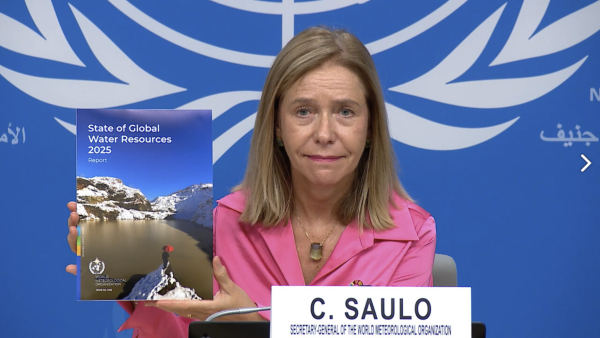
As world’s water reserves change, countries must prepare for a new reality: WMO
New data showing that rivers were at their lowest level for decades last year provides further evidence that the climate crisis is real and countries must act immediately to protect themselves from the increasing threat to communities and livelihoods, the UN World Meteorological Organization (WMO) said on Thursday.
The key findings from WMO’s State of Global Water Resources 2025 report covering the hydrological cycle and extreme events in the five-year period to last year:
- 2025 was one of driest years for river discharge in 35 years
- Past seven years have seen abnorfmal river flows
- Water storage on Earth’s land surface has decreased in past decade
- Widespread glacier loss across all regions for fourth consecutive year
- Asia and Africa are regions most affected by water-related disasters
- Water data availability has improved, but gaps remain in hard-hit areas
Highlighting the long-term decline in the Earth’s freshwater storage and glacier melt, WMO Secretary-General Celeste Saulo explained that the planet’s water reserves used to act as a planetary “savings account” that absorbed the occasional dry season, avoiding a water crisis. “One of the central stories of the 2025 report is what is happening to that savings account? And the simple answer is that we are depleting it,” she told journalists in Geneva.
Groundwater reserves are equally stretched and have been in decline since 2014, WMO’s report states, with nearly two-thirds of monitored wells worldwide showing levels lower than the historical norm and indicating a shift “further toward deficit…not recovery”.
“At the same time, we are seeing more water-related disasters,” Ms. Saulo said, while also stressing that the currently strengthening El Niño “will increase the risk of drought in some areas, and flooding in others”.
Glaciers disappearing
In 2025, for the fourth consecutive year, every major glaciated region on Earth lost ice mass, leading to short-term hazards including floods and long-term water insecurity, according to WMO.
Responding to a question about whether the changing global water cycle might have contributed to the deadly Nepal-China flooding disaster, Ms. Saulo explained that melting ice and rock was just one factor in the chain of events that ultimately sent a massive and deadly wall of water and debris downstream on 26 August, killing at least 1,367 people.
“You asked if it could happen again? Absolutely; the problem in this region is that there’s 63,700 glaciers at the last count,” she told a Press Conference in Geneva. “Even if you’re looking with remote sensing with satellites at these glaciers, you might see some faults, you might see some slight shifting, that does not mean necessarily catastrophic collapse. So, in order to plan for this, it’s very, very difficult. But the international community is looking very hard at ways in which we can bring people together to solve some of these monitoring issues.”
Data indicates that glaciers shrank between 2023 and 2025 with cumulative losses of 1,400 gigatonnes of water – or about one third of annual fresh water needs.
Every major glacier region on Earth lost ice for the fourth consecutive year.
“All 19 glacier regions around the globe lost ice; in Central Asia, Iceland, the Russian Arctic and western Canada and the United States, it was among the three worst years on record,” said Wayne Jenkinson, WMO’s Director of Hydrology and Cryosphere.
Some regions with smaller glaciers such as Central Europe, the Caucasus, the western Canada and the United States may already have reached “peak water”, Mr. Jenkinson warned.
“After this point, the glacier gives less meltwater each year simply because there is less ice left to melt. That matters for every community downstream that relies on water during hot, dry summers,” he explained.
Narelle van der Wel, WMO’s Head of Cryosphere Monitoring, Predictions and Services, stressed that while some further glacier loss is unavoidable, the eventual scale of the decline is not predetermined.
“Some glacier loss is inevitable, but total loss of glaciers is not yet inevitable,” she said, pointing to emissions reductions as central to limiting future losses.
Preparing for moving baselines
The report does not attribute every observed change to climate change alone. WMO says pressure on water resources and natural variability also contribute.
Mr. Jenkinson said governments need to prepare for “moving baselines” as historical patterns become less reliable.
“The situation 30 years ago is not where we are today,” he said. Countries, he added, need to prepare “for those changes that have really already arrived”.
ends