

The United Nations Office at Geneva
Multimedia Newsroom
Press Conferences | UNHCR , OCHA , UNOG , UNITED NATIONS
UNOG Bi-weekly press briefing 15 January 2021
Ethiopian refugees in Sudan
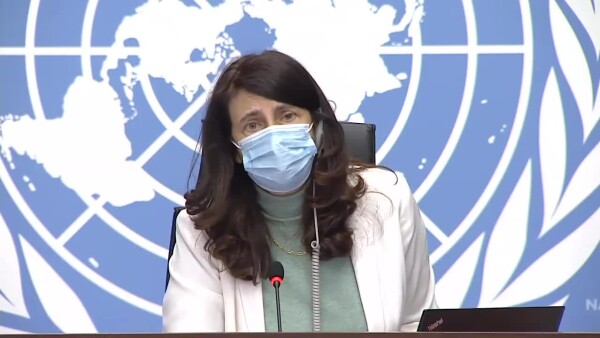
Axel Bisschop, for the United Nations Refugee Agency (UNHCR), speaking from Khartoum, said that he had just returned from the east part of Sudan, where a recent influx of refugees from Ethiopia had taken place. The influx, which had started in November, was still continuing, and it was difficult to predict what lay ahead. Refugees were using two border crossings from Tigray (Ethiopia) into Sudan, from which they were being taken by UNHCR and partners to two settlements, Um Rakouba and Tunaydbah.
The Government of Sudan had generously opened the border, and all refugees coming in were immediately given the refugee status, said Mr. Biscchop. There were still quite a few people on the borders, and the UNHCR was working with partners to decongest those areas, relocating the refugees to the two settlements. The refugees arriving now came from all spheres of society, and some were Eritrean; several hundred refugees were still arriving every day. UNHCR was calling on all donors and partners to provide support, as the operation was currently only 30 percent funded. Most refugees said that they had left because of the fighting and because of an increased conflict between the Tigrayans and the Amharans. Many feared to return, said Mr. Bisschop in a response to a question.
Babar Baloch, also for the United Nations Refugee Agency (UNHCR), referring to the previous day’s statement by Filippo Grandi, the UN High Commissioner for Refugees, said that UNHCR had no access to the Shimelba and Hitsats refugee camps in north Tigray, and without direct access it was difficult to say what was happening there. UNHCR repeated its call on the federal Ethiopian authorities to provide unhindered access to Tigray.
Jens Laerke, for the Office for the Coordination of Humanitarian Affairs (OCHA), added that the UN was alarmed about reports of civilians being killed in rural parts of Tigray; many in the region were receiving no assistance, more than two and a half months into the conflict. There were reports of an increase in malnutrition and water-borne diseases. Humanitarian assistance continued to be constrained by insecurity and bureaucratic obstacles caused by regional and federal authorities, deplored Mr. Laerke. UN renewed its call to all actors to allow for a safe unobstructed access to the entire region.
Libya talks
Jean El-Alam, for the United Nations Support Mission in Libya (UNSMIL), apologized for the technical difficulties that had caused inconvenience to the journalists on the start of the talks at the Palais des Nations this week. Mr. El-Alam said that much had been accomplished during the meeting of the Libyan Political Dialogue Forum (LPDF) in Tunisia between 9 and 15 November 2020, where Libyans had agreed on a roadmap for the preparatory period leading to the national election; eligibility criteria for the unified executive authority positions; the prerogatives of the unified executive authority; and most importantly, setting a date for the elections on 24 December 2021, which was a top priority for UNSMIL.
With some 70 percent of the roadmap accomplished, the LPDF had not been able to make progress on the selection mechanism of the unified executive authority, which was why this week in Geneva, the Advisory Committee was meeting to come up with concrete recommendations about the formation of an interim unified executive authority to be presented to the LPDF to decide upon. Mr. El-Alam informed that there had been significant progress in the ongoing talks of the Advisory Committee on some major blockages.
In addition to the political track, there had been very encouraging progress in the military track since the signing of ceasefire agreement in Geneva by the 5+5 Joint Military Commission on 23 October 2020, including recent exchanges of detainees conducted under the JMC’s supervision, as part of wider confidence-building measures; the resumption of flights to all parts of Libya; the full resumption of oil production and export; and the proposed unification and restructuring of the Petroleum Facilities Guards. On the economic track, there had been a long—awaited meeting of the Board of Directors of the Central Bank of Libya, which had resulted in the unification of the exchange rate.
Earthquake in Sulawesi, Indonesia
Jens Laerke, for the Office for the Coordination of Humanitarian Affairs (OCHA), said that a 6.2 magnitude earthquake had stricken the West Sulawesi Province in Indonesia in the early morning local time today. Local authorities had reported 34 people killed and 637 people injured so far. More than 18,000 people had been temporarily displaced to ten evacuation sites. Those numbers were likely to increase as assessments continued.
Heavy damages had been reported in the city of Majene, including at the five-story Mitra Manakarra Hospital where eight people were reportedly trapped inside. The Governor’s office, two hotels, a mall, a community health centre, and over 300 houses had also sustained damages.
The earthquake interrupted the access road between Majene and the provincial capital Mamuju in three different locations. Electricity, communications network and fuel supply have also been disrupted. The UN was in close contact with the Indonesian Government and stood ready to support the response, said Mr. Laerke.
At least initially there had been no tsunami warning, confirmed Mr. Laerke in a response to a question.
Refugees from the Central African Republic
Boris Cheshirkov, for the United Nations Refugee Agency (UNHCR), stated that UNHCR was calling for the immediate end to all violence in the Central African Republic as nearly 60,000 people had been forced to seek refuge in neighbouring countries since December, a two-fold rise in just one week.
Most had fled to the Democratic Republic of the Congo, across the Ubangui River, where the number of arrivals topped 50,000 after 10,000 Central African refugees had arrived in a single day on 13 January. The events of the previous month, since reports of election-related violence had begun, reversed the trend of recent years of Central African refugees returning home.
UNHCR was already seeking USD 151.5 million this year to respond to the CAR situation. The needs of the recently displaced Central Africans were mounting, and UNHCR would soon face a substantial funding shortfall.
Responding to questions, Mr. Cheshirkov confirmed a rapidly growing number of refugees, caused by the increasing violence in CAR. UNHCR was appealing for an immediate end to the violence.
UNHCR briefing note is available here.
World Health Organization
A number of journalists voiced strong concerns regarding the absence of the World Health Organization (WHO) representatives in biweekly press briefings, and the general lack of access of journalists to information regarding the COVID-19 pandemic, possibly the most important global story in many years. The journalists emphasized that it was imperative for the Geneva-based press corps to be able to receive specialized briefings and directly ask questions to the WHO.
Alessandra Vellucci, for the United Nations Information Service (UNIS), thanked the journalists for sharing their concerns; good note was taken of their requests, which would be once again shared with the WHO. Discussions were on-going with the Association of UN accredited journalists (ACANU) and should be pursued in another setting.
Human Rights Council
Alessandra Vellucci, speaking on behalf of the Human Rights Council (HRC), informed that the Council was having a meeting today at the Palais des Nations to hold a secret ballot election to appoint its President for 2021, who would come from the Asia-Pacific region. The meeting was webcast live, and the results of the secret ballot elections would be announced at the end of the meeting today.
Geneva announcements
Alessandra Vellucci, for the UN Information Service (UNIS), reminded that the Conference on Disarmament would open its 2021 session and hold its virtual public plenary on 19 January at 10 am. The Conference would be addressed by Tatiana Valovaya, in her capacity as the Secretary-General of the Conference. The Conference would open under the presidency of Belgium. More information is available here.
The current number of UN Secretariat staff in Geneva infected by COVID-19 stood at 205, informed Ms. Vellucci. Responding to a question on COVID-19 related measures at the Palais des Nations, Ms. Vellucci said that UN Geneva was already implementing the policy of teleworking and limiting the number of people in meetings to five.
Similar Stories
1
12
1
1
Press Conferences , Images | UNOG
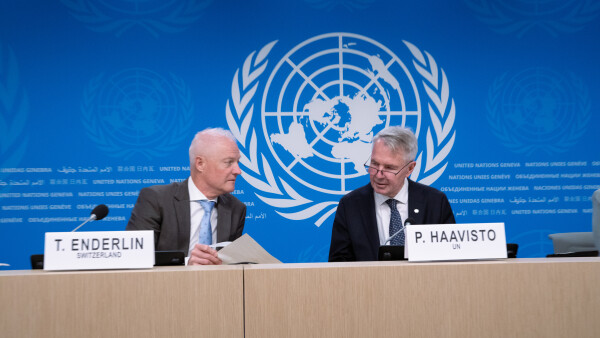
Closing Press Conference following the Sixth Consultative Meeting on Enhancing Coordination of Peace Initiatives and Efforts in Sudan

2
17
1
2
Edited News , Press Conferences | OCHA , WMO
Two UN agencies teamed up on Wednesday to issue an appeal for immediate assistance to help communities already being impacted by the strongest El Niño on record.
1
1
1
Press Conferences | CITES
Wildlife trade and conservation policy discussions at the 81st meeting of the CITES Standing Committee (SC81)
1
1
1
Press Conferences | UNHCR , UNCTAD , WMO , OCHA , UNICEF , WHO
UNHCR Hungary’s 1956 Refugee Crisis: 70 Years On, UNCTAD World Investment Forum 2026, Doha, WMO Greenhouse Gas Bulletin and Climate Update for COP31, OCHA Afghanistan: Malnutrition, Girls’ Education and Recovery, UNICEF Yemen: Child Malnutrition and Unsafe Water in Taiz, WHO Inequalities in Noncommunicable Diseases and Risk Factors
1
1
1
Press Conferences | UNHCR
End of UNHCR's 77th Annual Executive Committee (ExCom) meeting week
1
1
1
Press Conferences | UNICEF , IOM , UNHCR
UN Special Assistant to the Personal Envoy Office (SUDAN): Peace Initiatives and Efforts in Sudan; UNICEF: Dire situation of children in Gaza; IOM: Damaged Homes and Energy Attacks Risk Displacing Ukrainians for this winter; UNHCR: update on EXCOM week
1
1
1
Press Conferences | IOM , UNDRR
UN stresses importance of household preparedness for disaster risk reduction.
1
1
1
Statements , Press Conferences | OHCHR
1
1
1
Press Conferences | UNHCR , UNICEF , IFRC , OHCHR , UN WOMEN , IOM , OCHA , WHO
UNHCR – ExCom Meeting, UNICEF – Nepal Recovery, IFRC – Flash Floods, WHO – Mental Health, IOM – South Sudan Floods, OCHA – DRC Humanitarian aid, UNHCR – Sahel Displacement, UNICEF – Yemen Update, IOM – Gaza Shelter, UN Women – Gaza Women, OHCHR – Arrests and detentions of Syrians by Israeli force
2
1
2
Press Conferences | UNCTAD
Presentation of the Trade and Developement Report 2026
Embargoed until 9 October 2026 at 11 a.m. (Geneva Time)
UNCTAD: UNCTAD’s flagship report finds that governments increasingly use industrial, trade, financial and technology policies to pursue economic and national security objectives. Market access and the ability to move into higher-value activities now depend more heavily on technology, finance and geopolitics.
1
1
1
Press Conferences | UPU
Release of the State of the Postal Sector Report 2026
1
1
1
Press Conferences | IOM , ITU , UNECE , UNICEF , WHO , WMO
UNICEF: Ebola, DRC - children orphans or separating them from parents and caregivers; IOM: Humanitarian needs in Djibouti amid arrivals from Yemen and increased migrant movements; WHO: Darfur, scale of health needs far exceeds available resources; WMO co-sponsored Global Heat Forum, Bangkok, monthly Global Seasonal Climate Update; UNECE: UN Forum of Mayors; ITU Plenipotentiary Conference 2026; WHO: child and adolescent obesity guidelines and new global roadmap to tackle pregnancy hypertension, a leading cause of maternal mortality