

The United Nations Office at Geneva
Multimedia Newsroom
Edited News | OHCHR , UNOG
UN Human Rights report details shocking pattern of sexual violence amid Russia’s full scale armed attack on Ukraine in Kyiv
“The report details a shocking pattern of sexual violence against civilians and prisoners of war. More than 1,000 cases were documented by our Human Rights Monitoring Mission colleagues - from the 24th of February 2022 to the end of July this year,” said Shabia Mantoo, UN Human Rights Office Spokesperson, at the UN biweekly press briefing in Geneva.
The 20-page report is based on confidential interviews with hundreds of victims and survivors of sexual violence committed by both parties, and other relevant materials, including court documents and official records.
“Individual victims recounted deeply distressing experiences to our colleagues. Among violations committed are rape, gang rape, genital mutilation, and other degrading acts of a sexual nature. The youngest documented rape survivor was a four-year-old-girl and the oldest an 82-year-old woman, with both cases perpetrated by Russian authorities,” Mantoo told reporters.
“UN High Commissioner for Human Rights, Volker Türk is deeply alarmed that such abhorrent acts are almost certainly continuing amid the unceasing violence and urges their immediate halt. He is also calling for prompt, thorough and impartial investigations into all credible claims of sexual violence, and for those found responsible to be brought to justice,” she added.
Speaking online from Kyiv, Danielle Bell, head of UN Human Rights Monitoring Mission in Ukraine, described the situation in the Ukrainian capital, and recounted accounts of victims of sexual violence who were interviewed for the report.
“Yesterday we had ten air alerts accompanied by explosions with drones, missiles. Throughout the day, more civilians were killed and injured. In the first eight months of this year, compared with all of last year,” she said.
“So its against this backdrop, the report we released today draws attention to a far less visible dimension of the war that is the conflict-related sexual violence, that shabia just covered,” Bell said. “So what's important to highlight is that the report covers sexual violence against both Ukrainian and Russian prisoners of war, civilian detainees held by both sides, and civilians in residential territory or residential areas of occupied territory. I'll just touch on a couple of key findings. The key finding of the report is that sexual violence against Ukrainian prisoners of war and Ukrainian civilian detainees, held by the Russian Federation authorities is widespread.”
“Almost three quarters of the Ukrainian POW [prisoners of war] survivors and almost half of civilian detainee survivors, experienced sexual violence more than once. We documented cases at over 164 facilities both official and unofficial, in every region of occupied territory of Ukraine and across 25 regions of the Russian Federation, from the early days of the full-scale invasion through 2026,” Bell told reporters.
She added: “It occurred throughout captivity from capture, admission procedures, transfer, interrogation in the cells in the shower, even before release or exchange. And we documented the same practices occurring across facilities rape, gang rape, beatings while nude electric shocks or beatings of the genitals, separate sexual degradation and prolonged nudity and forced nudity. These violations involved personnel from multiple Russian State structures, including armed forces.”
Individual victims recounted deeply distressing experiences to the UN Human Rights Office.
“I'm going to give one example over three over three year period, one Ukrainian POW describing subjected to electric shocks to his anus while he was being raped with the same taser. Another time, he was raped with cell keys and forced to lick them. Throughout the three years, he was on multiple occasions subjected to beatings of his genitals, and he was raped with a rubber baton,” Bell recounted.
The report identifies the conditions that allow these violations to recur. Bell explained that prisoners of war and civilian detainees are frequently cut off from the outside world. Basic procedural safeguards are absent or ineffective, and medical examinations often fail to identify or record evidence of abuse. There is little evidence of accountability, and independent monitors, including UN Human Rights Mission who continue to be denied access, according to the head of the UN Human Rights mission.
Outside detention in occupied territory, UN Human Rights documented sexual violence against 95 civilians, predominantly women and girls, including 57 survivors of rape, 15 of whom were gang raped.
“The report also covers violations by the Ukrainian authorities, including sexual violence against Russian and third country nationals and conflict related detainees,” Bell said. “These violations are serious and they require accountability. But the pattern is different in scope and scale. Almost half of the 112 cases of sexual violence that we documented, attributed to Ukrainian authorities, exclusively comprised threats,” said Bell.
ENDS
The full report is available on our website: Home | UN Human Rights Monitoring Mission in Ukraine
For more information and media requests, please contact:
Shabia Mantoo: shabia.mantoo@un.org
Marta Hurtado: marta.hurtadogomez@un.org
Facebook unitednationshumanrights
Instagram @unitednationshumanrights
STORY: UN Human Rights report details shocking pattern of sexual violence amid Russia’s full-scale armed attack on Ukraine
TRT: 04:55
SOURCE: UNOG/OHCHR
RESTRICTIONS: NONE
LANGUAGE: English/NATS
ASPECT RATIO: 16:9
DATELINE: 18 September 2026 – GENEVA, SWITZERLAND, Kyiv, Ukriane.
SHOTLIST
- Exterior shots: Palais des Nations, Geneva.
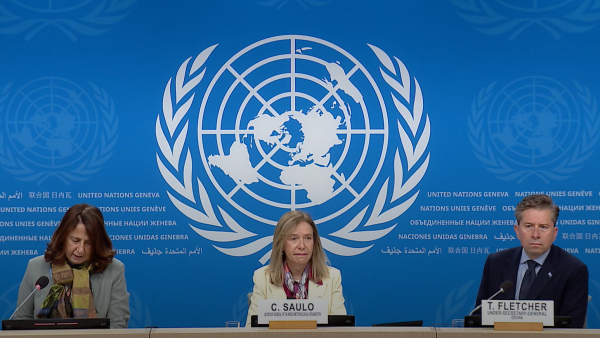
- Interior shot: Briefing room
- SOUNDBITE (English)— Shabia Mantoo, UN Human Rights Office Spokesperson: (OHCHR): “The report details a shocking pattern of sexual violence against civilians and prisoners of war. More than 1,000 cases were documented by our Human Rights Monitoring Mission colleagues - from the 24th of February 2022 to the end of July this year.”
- Cutaways: Briefing room
- SOUNDBITE (English)— Shabia Mantoo, UN Human Rights Office Spokesperson: (OHCHR):“Individual victims recounted deeply distressing experiences to our colleagues. Among violations committed are rape, gang rape, genital mutilation, and other degrading acts of a sexual nature. The youngest documented rape survivor was a four-year-old-girl and the oldest an 82-year-old woman, with both cases perpetrated by Russian authorities.”
- Cutaways: Briefing room
- SOUNDBITE (English)— Shabia Mantoo, UN Human Rights Office Spokesperson: (OHCHR): “UN High Commissioner for Human Rights Volker Türk is deeply alarmed that such abhorrent acts are almost certainly continuing amid the unceasing violence and urges their immediate halt. He is also calling for prompt, thorough and impartial investigations into all credible claims of sexual violence, and for those found responsible to be brought to justice.”
- Cutaways: Briefing room
- SOUNDBITE (English)— Danielle Bell, head of UN Human Rights Monitoring Mission in Ukraine (OHCHR) - from Kyiv: “Yesterday we had 10 air alerts accompanied by explosions with drones, missiles. Throughout the day, more civilians were killed and injured. In the first eight months of this year, compared with all of last year.”
- Cutaways: Briefing room
- SOUNDBITE (English)— Danielle Bell, head of UN Human Rights Monitoring Mission in Ukraine (OHCHR) - from Kyiv: “So, its against this backdrop, the report we released today draws attention to a far less visible dimension of the war that is the conflict-related sexual violence, that Shabia just covered.”
- Cutaways: Briefing room
- SOUNDBITE (English)— Danielle Bell, head of UN Human Rights Monitoring Mission in Ukraine (OHCHR) - from Kyiv: “So, what's important to highlight is that the report covers sexual violence against both Ukrainian and Russian prisoners of war, civilian detainees held by both sides, and civilians in residential territory or residential areas of occupied territory. I'll just touch on a couple of key findings. The key finding of the report is that sexual violence against Ukrainian prisoners of war and Ukrainian civilian detainees, held by the Russian Federation authorities is widespread.”
- Cutaways: Briefing room
- SOUNDBITE (English)— Danielle Bell, head of UN Human Rights Monitoring Mission in Ukraine (OHCHR) - from Kyiv: “Almost three quarters of the Ukrainian POW [prisoners of war] survivors and almost half of civilian detainee survivors, experienced sexual violence more than once. We documented cases at over 164 facilities both official and unofficial, in every region of occupied territory of Ukraine and across 25 regions of the Russian Federation, from the early days of the full-scale invasion through 2026.”
- Cutaways: Briefing room
- SOUNDBITE (English)— Danielle Bell, head of UN Human Rights Monitoring Mission in Ukraine (OHCHR) - from Kyiv: “It occurred throughout captivity from capture, admission procedures, transfer, interrogation in the cells in the shower, even before release or exchange. And we documented the same practices occurring across facilities: Rape, gang rape, beatings while nude, electric shocks or beatings of the genitals, separate sexual degradation and prolonged nudity and forced nudity. These violations involved personnel from multiple Russian State structures, including armed forces.”
- Cutaways: Briefing room
- SOUNDBITE (English)— Danielle Bell, head of UN Human Rights Monitoring Mission in Ukraine (OHCHR) - from Kyiv: “I'm going to give one example over a three-year period, one Ukrainian POW [prisoner of war] describing being subjected to electric shocks to his anus while he was being raped with the same taser. Another time, he was raped with cell keys and forced to lick them. Throughout the three years, he was on multiple occasions subjected to beatings of his genitals, and he was raped with a rubber baton.”
- Cutaways: Briefing room
- SOUNDBITE (English)— Danielle Bell, head of oUN Human Rights Monitoring Mission in Ukraine (OHCHR) - from Kyiv: “The report also covers violations by the Ukrainian authorities, including sexual violence against Russian and third country nationals and conflict-related detainees. These violations are serious and they require accountability. But the pattern is different in scope and scale. Almost half of the 112 cases of sexual violence that we documented, attributed to Ukrainian authorities, exclusively comprised threats.”
Similar Stories
2
17
1
2
Edited News , Press Conferences | OCHA , WMO
Two UN agencies teamed up on Wednesday to issue an appeal for immediate assistance to help communities already being impacted by the strongest El Niño on record.
3
16
2
2
B-roll , Conferences , Edited News | UNITED NATIONS , UNOG
Sixth Consultative Meeting on Enhancing Coordination of Peace Initiatives and Efforts for Sudan

1
1
1
Edited News | UNICEF , WHO , UNHCR
Yemen war continues to force families from homes amid hunger and disease
More than 250,000 people have now fled renewed fighting in Yemen, the UN said on Tuesday, citing particular concern for those sheltering in the southwestern city of Taiz and the wider governorate, where access is “essentially blocked”.

1
1
1
Edited News | UNICEF
A little over one year since a ceasefire agreement was announced between Hamas fighters and Israel, more than 340 children have been reported killed and hundreds more injured, the UN Children’s Fund, UNICEF, said on Friday.

1
1
1
Edited News | UNICEF , IFRC
Six weeks after Nepal’s deadly flooding disaster, communities are still struggling to rebuild their lives, but they will need sustained help as global warming increases the risk of another Himalayan catastrophe, the UN Children’s Fund (UNICEF) said on Friday.

1
1
1
Edited News | WHO
In suspected Russia plague death, testing and monitoring underway – WHO
The death of a lab worker in Russia’s Siberia region has sparked concerns about plague being the cause, the UN World Health Organization (WHO) said on Tuesday, adding that it was following the situation closely.

1
1
Edited News | OHCHR , UNOG
UN Human Rights Chief Volker Türk on Friday provided and oral update to the 63rd session of the Human rights Council on Ukraine.

1
1
1
Edited News | OHCHR , UNOG
UN Human Rights Chief Volker Türk on Friday provided and oral update to the 63rd session of the Human rights Council on the human rights situation in Haiti.

1
1
1
Edited News | WHO
Repeated delays in bringing lifesaving medicines, prosthetics and more from Israel into Gaza risk having devastating consequences on Palestinians who urgently need them in the wartorn enclave, the UN World Health Organization (WHO) said on Friday. “A truck full of non-priority supplies or the right supplies arriving too late, doesn't save lives. That's the question that actually matters," said Dr Reinhilde Van De Weerdt, WHO Representative in the OPT.

1
1
1
Edited News | WHO
DRC: Early access to care and oxygen decisive for Ebola patients’ survival – WHO
In the Democratic Republic of the Congo (DRC), health workers fighting the country’s largest-ever Ebola outbreak are struggling to overcome critical challenges to patient care, the UN World Health Organization (WHO) warned on Tuesday.

1
1
1
Edited News | OCHA , UN
Civilians in Iran are continuing to feel the consequences of months of conflict and military escalation, the UN’s top official in the country has said, as loss of life, damage to civilian infrastructure and mounting economic pressures leave many facing continued uncertainty.

1
1
1
Edited News | WHO , UNICEF
Aid agencies in Yemen highlighted the growing hunger emergency sparked by renewed fighting between Houthi opposition forces and Government troops, after mobile health clinics reported that hundreds of children displaced by the violence are suffering from the most deadly form of malnutrition.