

The United Nations Office at Geneva
Multimedia Newsroom
Powerful El Niño heightens extreme-weather risks through 2027, as countries brace for impact - WMO
Fuelled by extraordinarily warm waters across the tropical Pacific Ocean, the El Niño climate pattern is expected to intensify in the coming months. Forecasters are almost certain that it will persist through February next year, with unusually warm conditions expected across the globe.
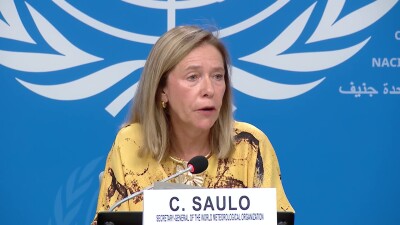
“These forecasts show an exceptionally high likelihood of nearly 100 per cent that El Niño will persist through to February 2027,” said Celeste Saulo, Secretary-General of the World Meteorological Organization (WMO) to journalists in Geneva.
“El Niño is firmly established in the tropical Pacific. Sea surface temperatures in the region are already well above average and are continuing to rise,” warned Ms. Saulo.
Beneath the surface, an enormous reservoir of unusually warm water could further strengthen El Niño. “Sub-surface ocean temperatures are also exceptionally high, and in some areas, more than eight degrees Celsius above normal during July and early August,” the WMO chief said. “This means that there is a huge pool of very warm ocean waters that will fuel the intensity of El Niño.”
El Niño and La Niña are opposite phases of the naturally occurring climate pattern known as the El Niño-Southern Oscillation (ENSO), marked by shifts in sea-surface temperatures in the central and eastern equatorial Pacific and corresponding changes in the atmosphere above.
The phenomena can disrupt weather patterns around the globe. El Niño typically develops every two to seven years, when waters in the central and eastern equatorial Pacific become unusually warm. The warming releases heat into the atmosphere and can bring drought and extreme heat to some regions while increasing the risk of heavy rainfall, flooding and tropical cyclones in others.
The current El Niño is expected to peak towards the end of this year, according to the UN weather agency’s latest report released Thursday, with its climate impacts likely to persist well into next year. “The powerful 2023-2024 El Niño contributed to 2024 being the warmest year on record. We should not be surprised if this record is broken,” said Ms. Saulo.
Scientists have not established that human-caused climate change is making El Niño more frequent or intense. But a warmer atmosphere and ocean can amplify some of its effects by strengthening the heat and moisture that fuel extreme weather.
“This El Niño will deliver a major blow to communities, economies, and supply chains across the globe,” the WMO chief stressed. “Many sectors will be affected: agriculture, trade, fisheries, health, energy, transport, water resources, disaster management, to name but a few.”
“We are already seeing disruption and devastation from droughts and floods and extreme weather,” she insisted.
The UN weather agency has launched a “major mobilization” with National Meteorological and Hydrological Services which are on the frontline of delivering forecasts, early warnings and services to protect lives and livelihoods. The agency is calling for exceptional preparedness and response measures to reduce the risk of deaths, displacement and environmental damage. Early-warning systems have been strengthened, alongside efforts to deploy medical assistance in advance. But the expected strength of El Niño is raising particular concerns for vulnerable communities.
Ms. Saulo explained that preparedness means making decisions before the impacts are felt. Farmers, for example, may opt for crop varieties that can withstand drier conditions, while countries that rely on hydropower can use reservoirs to manage energy supplies and availability.
The duration and severity of El Niño’s impacts in individual countries will depend on their capacity to anticipate risks and adapt decisions accordingly. Ms. Saulo said that across Latin America and the Caribbean, UN partners are rolling out preparedness plans in countries traditionally hit hard by El Niño. Anticipatory measures include cash assistance, drought- and flood-resistant seeds, livestock protection, and flood safeguards.
"El Niño does not have to be a recipe for disaster. We have the focus, the foresight, to save lives and protect livelihoods," the WMO Secretary-General concluded.
Ends
Story: “El Niño Update – WMO” – Thursday 03 September 2026
Speaker: Celeste Saulo, Secretary-General of the World Meteorological Organization (WMO)
TRT: 03’08”
SOURCE: UNTV CH
RESTRICTIONS: NONE
LANGUAGE: ENGLISH / NATS
ASPECT RATIO: 16:9
DATELINE: 03 September 2026 - GENEVA, SWITZERLAND
Geneva Press conference
Story: “El Niño Update – WMO” – Thursday 03 September 2026
Speaker:
- Celeste Saulo, Secretary-General of the World Meteorological Organization (WMO)
TRT: 03’08”
SOURCE: UNTV CH
RESTRICTIONS: NONE
LANGUAGE: ENGLISH / NATS
ASPECT RATIO: 16:9
DATELINE: 03 September 2026 - GENEVA, SWITZERLAND
Geneva Press conference
SHOTLIST
- Exterior medium shot: UN flag alley.
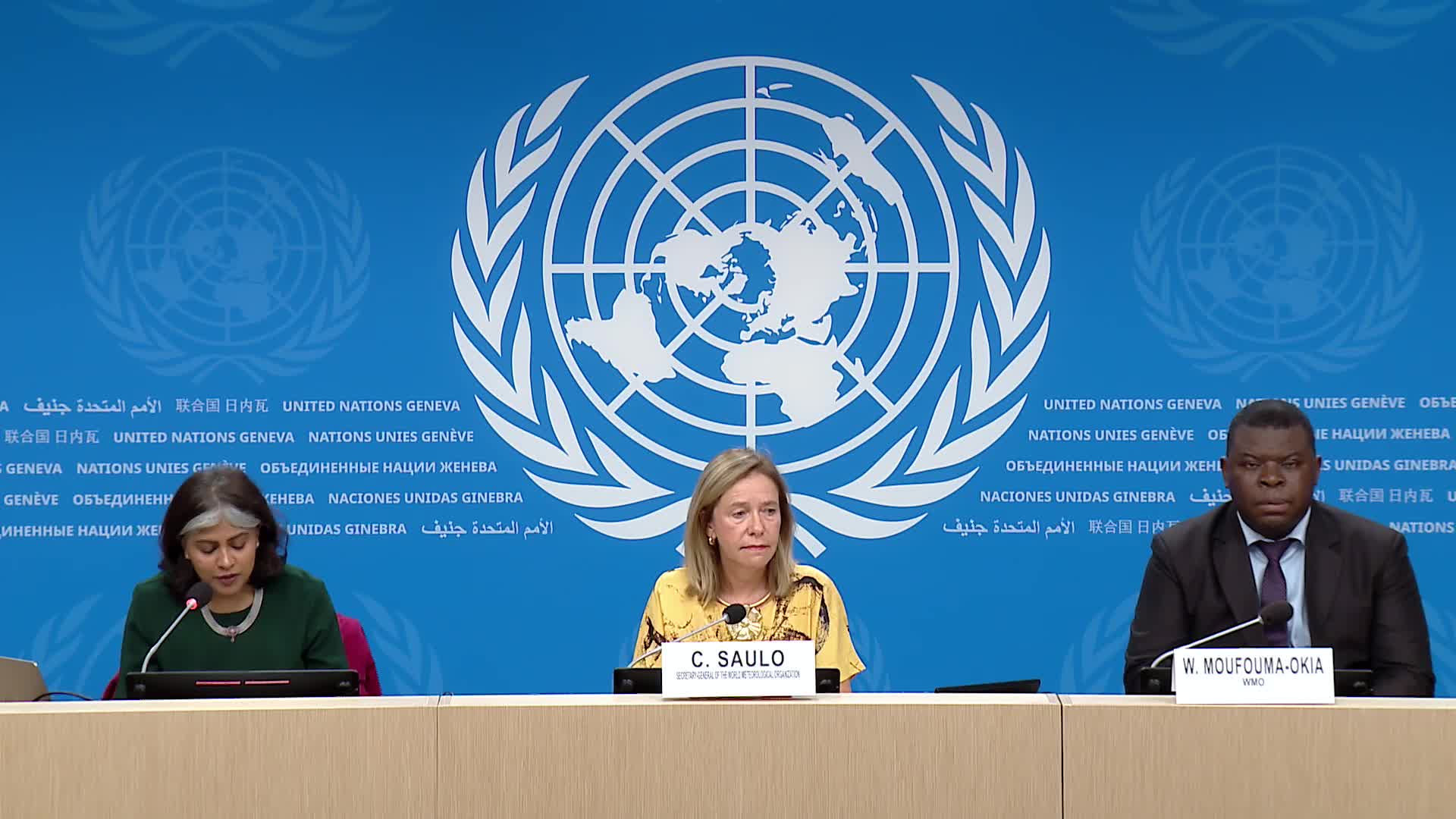
- Wide shot of the podium with speakers at the press conference room.
- SOUNDBITE (English) Celeste Saulo, Secretary-General of the World Meteorological Organization (WMO): “These forecasts show an exceptionally high likelihood of nearly 100 per cent that El Niño will persist through to February 2027.”
- Wide shot of the press conference room.
- SOUNDBITE (English) Celeste Saulo, Secretary-General of the World Meteorological Organization (WMO): “El Niño is firmly established in the tropical Pacific. Sea surface temperatures in the region are already well above average and are continuing to rise.”
- Wide shot of the press conference room.
- SOUNDBITE (English) Celeste Saulo, Secretary-General of the World Meteorological Organization (WMO): “Sub-surface ocean temperatures are also exceptionally high, and in some areas, more than 8 degrees Celsius above normal during July and early August. This means that there is a huge pool of very warm ocean waters that will fuel the intensity of El Niño.”
- Medium shot of the podium with speakers.
- SOUNDBITE (English) Celeste Saulo, Secretary-General of the World Meteorological Organization (WMO): “El Niño will peak towards the end of 2026, but its impacts will be felt long after that, including on global temperatures. The powerful 2023-2024 El Niño contributed to 2024 being the warmest year on record. We should not be surprised if this record is broken.”
- Wide lateral shot of the podium and press conference room.
- SOUNDBITE (English) Celeste Saulo, Secretary-General of the World Meteorological Organization (WMO): “This El Niño will deliver a major blow to communities, economies, and supply chains across the globe. So, many sectors will be affected: agriculture, trade, fisheries, health, energy, transport, water resources, disaster management, to name but a few. We are already seeing disruption and devastation from droughts and floods and extreme weather.”
- Wide lateral shot of the screens in the press conference room.
- SOUNDBITE (English) Celeste Saulo, Secretary-General of the World Meteorological Organization (WMO): “How do you prepare? Well, you make different decisions in terms of what seeds you will plant. You will plant seeds that are capable of supporting less rain. And these are the type of decisions to take in ahead. And when you have hydropower and depend on hydropower, you will use your reservoirs to manage your availability of energy. So, this is the type of impacts and decision-making associated with having this information in advance."
- Medium lateral shot of the podium with speakers.
- SOUNDBITE (English) Celeste Saulo, Secretary-General of the World Meteorological Organization (WMO): "El Niño does not have to be a recipe for disaster. We have the focus, the foresight to save lives and protect livelihoods."
- Various close shots of photo- and video-graphers, journalists in the press conference room.
Similar Stories

1
1
1
Press Conferences | IOM , UNDRR
UN stresses importance of household preparedness for disaster risk reduction.

1
1
1
Edited News | UNICEF , IFRC
Six weeks after Nepal’s deadly flooding disaster, communities are still struggling to rebuild their lives, but they will need sustained help as global warming increases the risk of another Himalayan catastrophe, the UN Children’s Fund (UNICEF) said on Friday.
1
1
1
Statements , Press Conferences | OHCHR
1
1
1
Press Conferences | UNHCR , UNICEF , IFRC , OHCHR , UN WOMEN , IOM , OCHA , WHO
UNHCR – ExCom Meeting, UNICEF – Nepal Recovery, IFRC – Flash Floods, WHO – Mental Health, IOM – South Sudan Floods, OCHA – DRC Humanitarian aid, UNHCR – Sahel Displacement, UNICEF – Yemen Update, IOM – Gaza Shelter, UN Women – Gaza Women, OHCHR – Arrests and detentions of Syrians by Israeli force
2
1
2
Press Conferences | UNCTAD
Presentation of the Trade and Developement Report 2026
Embargoed until 9 October 2026 at 11 a.m. (Geneva Time)
UNCTAD: UNCTAD’s flagship report finds that governments increasingly use industrial, trade, financial and technology policies to pursue economic and national security objectives. Market access and the ability to move into higher-value activities now depend more heavily on technology, finance and geopolitics.
1
1
1
Press Conferences | UPU
Release of the State of the Postal Sector Report 2026

1
1
1
Edited News | WHO
In suspected Russia plague death, testing and monitoring underway – WHO
The death of a lab worker in Russia’s Siberia region has sparked concerns about plague being the cause, the UN World Health Organization (WHO) said on Tuesday, adding that it was following the situation closely.
1
1
1
Press Conferences | IOM , ITU , UNECE , UNICEF , WHO , WMO
UNICEF: Ebola, DRC - children orphans or separating them from parents and caregivers; IOM: Humanitarian needs in Djibouti amid arrivals from Yemen and increased migrant movements; WHO: Darfur, scale of health needs far exceeds available resources; WMO co-sponsored Global Heat Forum, Bangkok, monthly Global Seasonal Climate Update; UNECE: UN Forum of Mayors; ITU Plenipotentiary Conference 2026; WHO: child and adolescent obesity guidelines and new global roadmap to tackle pregnancy hypertension, a leading cause of maternal mortality

1
1
Edited News | OHCHR , UNOG
UN Human Rights Chief Volker Türk on Friday provided and oral update to the 63rd session of the Human rights Council on Ukraine.

1
1
1
Edited News | OHCHR , UNOG
UN Human Rights Chief Volker Türk on Friday provided and oral update to the 63rd session of the Human rights Council on the human rights situation in Haiti.

1
1
1
Edited News | WHO
Repeated delays in bringing lifesaving medicines, prosthetics and more from Israel into Gaza risk having devastating consequences on Palestinians who urgently need them in the wartorn enclave, the UN World Health Organization (WHO) said on Friday. “A truck full of non-priority supplies or the right supplies arriving too late, doesn't save lives. That's the question that actually matters," said Dr Reinhilde Van De Weerdt, WHO Representative in the OPT.
1
1
1
Press Conferences | OCHA , UN WOMEN , UNHCR , WFP , WHO , WTO , UNEP
OCHA – $160M CERF allocation to 12 underfunded crises; UNHCR – 5.8M refugee children remain out of school amid funding cuts; UN Women – Middle East escalation and food security among women/girls; WHO – Gaza supplies and overall situation; WFP – Yemen food insecurity and impact on global hunger ; UNEP - First International Conference of the Global Framework on Chemicals in Geneva | 16-20 November 2026