

The United Nations Office at Geneva
Multimedia Newsroom
Press Conferences | OHCHR , UNHCR , OCHA , WHO , UNOG , UNDP
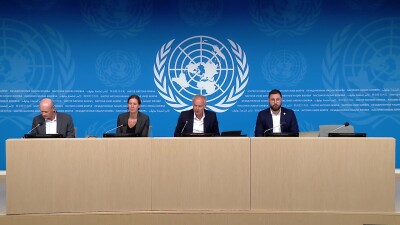
UNOG Bi-weekly press briefing 11 September 2020
Forty-fifth Regular Session of the Human Rights Council
Rolando Gomez, for the Human Rights Council, said the forty-fifth regular session of the Human Rights Council was opening on Monday, 14 September at 10 a.m. in the Assembly Hall. The session would last for just over three weeks, until 6 October. A couple of days were being added to the usual three-week session because it was very busy. Some 40 human rights themes and over 50 country situations would be addressed through report presentations by experts, commissions of inquiries, the High Commissioner and others. A detailed programme for the opening day would be shared later today. However, just to give a preview, following the opening of the session at 10 a.m. on Monday by the President of the Council, Elisabeth Tichy-Fisslberger, High Commissioner for Human Rights Michelle Bachelet would deliver her usual global update which touched upon recent human rights developments throughout the world, citing multiple country situations and themes. Her global update would be followed by three separate speeches on the human rights situations in Nicaragua, Venezuela and Myanmar. The Council would then hear from Nicholas Koumjian, the head of the Independent Investigative Mechanism for Myanmar, outlining progress made by that body, created by the Council back in September 2018. Following Mr. Koumjian's speech, the High Commissioner would return to deliver an oral update on COVID-19 and its impact on human rights.
Mr. Gomez said the general debate on the High Commissioner’s interventions would begin late in the day on Monday and carry over to Tuesday. The media updates would resume with more details, including practical links to reports and to the online app or interface called Sched. With COVID-19 measures still very much in place, the Council would remain in the Assembly Hall, where social distancing and the wearing of masks would be in order. On the last two days of the session (5 and 6 October), the meeting would move to room XX so that voting could take place. Please contact Sarah or myself should you need any help.
In a question on budgetary constraints affecting the Council, Alessandra Vellucci, Director of the United Nations Information Service in Geneva, said hybrid meetings were more expensive than in-person meetings, in terms of organization. They included platform fees and technicians had to operate these hybrid systems. UNOG’s Conference Management Service had made a presentation to Member States to explain the complexity of these virtual or hybrid meetings. For example, the webcast of a meeting had a cost, but the webcast of a hybrid meeting in several languages was much more complicated. She would send journalists a detailed note on the situation in UNOG at the moment. Also meeting summaries would be reduced because of the financial crisis and the hiring freeze.
Mr. Gomez echoed what the President of the Council had said at the briefing on Wednesday, where she had referred to a letter by the High Commissioner for Human Rights to Member States outlining the liquidity crisis and how it was impacting the work of the Council. An annex to that letter listed 13 different mandates which would potentially be compromised should money not be available. He would share them with the journalists.
Ms. Vellucci told journalists later in the briefing that on 3 September, 115 States had paid their dues to the United Nations. The Secretary-General had written to Member States to express his continued concern that United Nations operations were under great pressure due to the deepening cash liquidity crisis. As nations adjusted to the pandemic, the second half of 2020 had started very poorly in terms of funding, with 8.4 million dollars received in July and August, compared to 147.2 million dollars received during the same period last year. The Secretary-General said the liquidity problem was exacerbated by significant uncertainty over both the volume and the timing of the remaining contributions, which currently totalled 1.52 billion dollars. He said he had instructed United Nations programme managers to more drastically curtail non-post spending to the end of the year in order to align expenditure with liquidity forecasts. The Secretary-General wrote that the United Nations needed to collect 950 million dollars to implement the 2020 programme of work reasonably, but this seemed highly improbable. Therefore, the Organization might end 2020 with larger arrears than last year. The Secretary-General had urged the prompt payment of assessments.
Floods in Sudan
Jens Laerke, for the Office for the Coordination of Humanitarian Affairs (OCHA), said there had been torrential rains and flooding in Sudan over the past couple of months, and they continued. Now half a million persons were affected and there had been very extensive damage across the country.
Tinago Chikoto, Deputy Head of Office of OCHA in Khartoum, said over half a million persons had been affected by the floods, with more than 100 deaths. There had been damage to property, with more than 110,000 houses had been affected, and some 5,500 live stock had been killed. Sudan usually was affected by floods every year from June to September, so the floods were ongoing. Planning had already been in place, but the floods this year had affected double the number of people. The Government had declared a state of emergency for 90 days but its resources were already stretched. Partners were also supporting, but their resources were also stretched. Shelter kits needed to be provided to all persons made homeless, and the health aspect also had to be considered because of the flood water. People needed clean water to drink and good sanitation. A lot of focus was on people in Khartoum, but they only made up 20 per cent of people affected. In the western part of the country, which had a large internally displaced population, people in camps were also affected by the rain and floods and needed help. Seventeen out of the 18 states of Sudan were affected by the rain and floods. The numbers of people affected were going to increase.
Fadela Chaib, for the World Health Organization (WHO), said following torrential rains and floods in Sudan this week, WHO was providing surgical medicines and supplies, cholera medicines, and other essential medicines and supplies to affected communities. Almost 30 health facilities were reportedly damaged as a result of the floods, although there has been no major interruption to their services. Sudan’s health system continued to suffer from years of underfunding, staff shortages, weakened infrastructure, and the lack of equipment, essential medicines and supplies. Medical supplies in the country were estimated at about 25 per cent of actual needs, and shortages had significantly increased over the past few months. Supplies had been delivered to ensure water quality, and infection prevention and control measures were in place in affected areas. Sudan was prone to several vector-borne diseases such as dengue, chikungunya and malaria. Ten environmental officers had been deployed across the country to support national efforts in water, sanitation, and vector-control efforts. WHO was also supporting 10 mobile health clinics in Blue Nile, North Darfur, Red Sea, Kassala and Central Darfur, and an additional four clinics would start working in Khartoum in the coming days.
Ms. Chaib said that together with partner agencies and the State Ministry of Health, WHO had identified health needs, and responded to 128 disease alerts, including diarrhoea, measles, COVID-19, and others. Malaria cases were already increasing and there was concern about widespread infection. Further heavy rains were expected in the coming weeks over greater Darfur, and the Ethiopian and Eritrean highlands. Increasing cases of water-borne and vector-borne diseases were set to create an additional burden to an already overstretched health system. In preparation for this year’s rainy season, WHO had prepositioned essential medicines and medical supplies in the country in June 2020 and distribution was ongoing. There were more details in the briefing note.
Asked if this year’s floods were in any way related to Ethiopia’s new dam, Mr. Chikoto said heavy rains in Ethiopia had affected the Blue Nile, which was causing a lot of flooding in several states in Sudan. Also the White Nile was getting more water from South Sudan and Uganda. Based on OCHA’s analysis, the floods were mainly caused by the heavy rains in the region.
In response to a question on COVID-19 in Sudan, Ms. Chaib said that from 14 March to 10 September, there had been 13,437 confirmed cases of COVID-19, including 833 deaths. New cases were reported last week, but the situation was stabilizing in front of COVID-19. Sudan had a very weak health system and to help with COVID-19, WHO had sent diagnostic tests and laboratory equipment to the country, trained technicians and doctors, and disseminated information on the disease. Many other health diseases also affected Sudan.
Occupied Palestinian Territory
Jens Laerke, for the Office for the Coordination of Humanitarian Affairs (OCHA), said the Israeli authorities’ policy of demolishing Palestinian-owned structures had continued even during the COVID-19 outbreak, according to the Humanitarian Coordinator in the occupied Palestinian territory, Jamie McGoldrick. From March to August this year, 389 Palestinian-owned structures in the West Bank had been demolished or confiscated. That was an average of 65 structures per month, the highest average rate in four years. Four hundred and forty-two Palestinians had been left homeless due to these demolitions. Beyond homes, targeted properties included water, hygiene or sanitation assets, and structures used for agriculture. This undermined many people’s access to livelihoods and services. The destruction of property in an occupied territory was prohibited under International Humanitarian Law unless absolutely necessary for military operations. The demolition of essential structures during COVID-19 was particularly worrying. Unlawful demolitions exacerbated these vulnerabilities and must stop immediately, the Humanitarian Coordinator said.
Fires at Moria Asylum Centre in Greece
| Shabia Mantoo, for the United Nations High Commissioner for Refugees (UNHCR), said UNHCR was shocked and saddened at events on Lesvos island this week where a series of fires had destroyed nearly all of Moria asylum centre, leaving thousands of men, women and children, without shelter. With the initial fire, which broke out on the evening of Tuesday 8 September, causing extensive damage to thousands of asylum seekers’ shelters and common areas, more fires were reported on the evening of 9 September and yesterday 10 September. The latest fires had affected the adjacent fields next to Moria Reception and Identification Centre, in what was known as “Olive Grove”, destroying what remaining accommodation was still available. The fires had now left 11,500 asylum seekers, among them 2,200 women and 4,000 children, without adequate shelter, sleeping out in the open over the past few nights in the streets, field and beaches. UNHCR had been offering support to Greek authorities to help protect and assist asylum seekers affected by the fires, mobilizing resources and aid. UNHCR was providing emergency assistance. The coronavirus pandemic was also adding to an already desperate situation. While authorities were working to find immediate shelter arrangements, UNHCR urged that long-term solutions needed to be identified for refugees and asylum seekers in Moria and other sites on the Greek islands. More details were available in the briefing note. The COVID situation was complicating the situation on the ground and needed to be factored into account in any solution. There were 35 confirmed cases of COVID in Moria camp before the fire. |
Fadela Chaib, for the World Health Organization (WHO), said the WHO Representative in Greece had been on the ground in Lesvos together with the government officials since the first hours after the fire. The Government of Greece had asked WHO to support in the response through the deployment of WHO emergency medical teams. Two emergency medical teams, from Belgium and Norway, would be arriving tomorrow and Monday. The WHO/Europe Health Emergency Officer was on his way to Lesvos to help set up the Health Coordination Cell to cover a range of health services people might need. WHO was ready to send medical supplies, as needed. This was to supplement existing services which had been partly disrupted. The WHO office in Copenhagen was taking the lead on this situation.
Cambodia
Ravina Shamdasani, for the Office of the High Commissioner for Human Rights (OHCHR), said that since 31 July, when prominent trade unionist Rong Chhun was arrested at his home in Phnom Penh by around 30 police officers, OHCHR had documented the arrest of 24 human rights defenders in Cambodia – including eight in September alone. Thirteen of those arrested were subsequently released, reportedly after signing agreements under duress to discontinue human rights activities. Twelve remained in detention – including one woman who was arrested immediately after leaving the United Nations Human Rights Office in Cambodia on 7 September.
Most of them faced charges of incitement to commit felony – including three environmental defenders. Two of the environmental rights defenders were arrested after posting on Facebook their plans to walk to the Prime Minister’s house to raise potential biodiversity and flooding concerns regarding the development of Boeng Ta Mauk lake. Numerous individuals had also reported receiving threatening phone calls, including death threats, if they did not cease their human rights activism, and had reported that they are being followed. Numerous human rights defenders were currently in hiding for fear of being arrested.
OHCHR had also witnessed the unnecessary and excessive use of force by security forces against women demonstrators on at least five separate occasions in recent weeks, and the intimidation of those participating in peaceful demonstrations
Ms. Shamdasani said OHCHR called on the Government to immediately and unconditionally release those detained for their exercise of these rights, and to bring an end to the intimidation of civil society actors. It called on the security forces to stop resorting to unnecessary and excessive force and intimidation against those engaged in peaceful protests. Similar calls by OHCHR had been made to Cambodia in recent months. OHCHR had an office in Cambodia and was monitoring the situation closely.
Myanmar
In response to a question on a video in which Myanmar soldiers had confessed to the murder of Rohingya Muslims, Ravina Shamdasani, for the Office of the High Commissioner for Human Rights (OHCHR), said that this video was consistent with the kind of testimony OHCHR had collected on the violations carried out against the Rohngya. As far as the follow-up to such confessions, that was a question for the International Criminal Court.
Lebanon
Nino Karamaoun, Chief Technical Advisor, Rule of Law and Human Rights of the United Nations Development Programme (UNDP) Lebanon Country office, said it was difficult to believe that it had already been more than a month that the 4 August Beirut explosion had shattered so many lives. The path of destruction that it left behind was both visible, in shattered buildings and neighbourhoods, and invisible in the trauma that many children, women and men carried inside—their lives, livelihoods and well-being severely impacted. The blast hit at a moment when the country had already been grappling with a severe socio-economic and governance crisis, as well as a flaring health crisis, putting the spotlight on the many vulnerabilities that had already existed in Lebanon and exacerbated them. More than half of the Lebanese were struggling with poverty. It was important to note that the blast largely took place in a district already under high speculative housing pressure. How and if repairs would be conducted, who would undertake reconstruction works and who would cover the costs remained unclear. If lessons of the past, of the post-civil war recovery efforts were not heeded, the current reconstruction effort could unfairly benefit a few at the expense of many.
Mr. Karamaoun said UNDP was committed to helping people recover, reclaim their lives and livelihoods, and ensure that no one was left behind. This involved recognizing that beyond the figures, the statistics, the dollar cost of the rebuilding, this was a human drama. The UNDP report “Leave No One Behind”, to be launched on September 14, sought to inform post-recovery frameworks in ways that helped reduce the likelihood of compiling losses on vulnerable groups. It underlined the need to tackle the institutional and legal frameworks that had for too long been manufacturing vulnerabilities in Lebanon. UNDP was advocating all stakeholders involved in the recovery process to integrate the “Leave No One Behind” guiding principles in their programming.
In response to a question on whether refugees in Lebanon were being left behind, Mr. Karamaoun said UNHCR was on the ground and very active right now. UNDP was concerned that refugees and all other groups not be left behind. For example, UNDP had set up, along with Lebanon’s Bar Association, legal aid help desks in various neighbourhoods to make sure that the rights of the survivors of the blast were being safeguarded.
Ebola
Fadela Chaib, for the World Health Organization (WHO), said the Ebola outbreak in the Democratic Republic of the Congo (DRC) had now spread into another of Equateur province’s 17 health zones, bringing the total number of affected zones to 12. The most recently affected area, Bomongo, was the second affected health zone that bordered the Republic of the Congo, which heightened the chances of this outbreak spreading into another country. This makes cross border collaboration between the DRC and Congo more important than ever and would require coordination on disease surveillance and efforts to screen travellers. As of 8 September, there were 113 cases (107 confirmed, 6 probable). Forty-eight (48) people had lost their lives. On a more positive note, 52 had recovered and been discharged from Ebola treatment centres. Almost 2,431 contacts had been seen and 27,816 vaccinated. The situation had been further complicated by a local health worker strike that had affected key response activities for nearly four weeks.
The current response was grossly underfunded, adding challenges to the existing logistical barriers. WHO initially provided 1.7 million dollars and subsequently supplemented this with another 600,000 dollars from WHO’s contingency fund for emergencies. The DRC Ministry of Health had presented an integrated plan to donors and partners for about 40 million dollars. WHO urged partners to support this plan. Without extra support, the teams on the ground would find it harder to get ahead of the virus.
Other WHO Announcements
Fadela Chaib, for the World Health Organization (WHO), said the regular press briefing by the WHO Director-General would be held on Monday, 14 September, after 4 p.m. A media invitation would be sent out as usual.
There would be another important event also taking place on Monday, a virtual event from 3 to 4 p.m., where the Global Preparedness Monitoring Board, convened by WHO and the World Bank, would launch their second report about the state of preparedness to the COVID-19 pandemic.
Other Announcements
Alessandra Vellucci, Director of the United Nations Information Service, said the Committee on the Rights of the Child would open its virtual eighty-fifth session on Monday, 14 September, lasting until 1 October, during which it would hold only two public meetings to open and close the session.
The Human Rights Council/Independent International Commission of Inquiry on the Syrian Arab Republic would hold a virtual press conference on Tuesday, 15 September at 2 p.m. to launch the report of the Commission investigating human rights violations in Syria from 11 January to 1 July 2020, which would be presented to the Council on 22 September.
There would also be a virtual press conference on Wednesday, 16 September at 2 p.m. to launch the report of the Independent International Fact-Finding Mission on Venezuela to assess alleged violations committed since 2014.
Similar Stories
1
1
1
Press Conferences | IOM , OHCHR , UN WOMEN , UNFPA , UNHCR , UNOPS , WHO
UN Geneva briefing: Yemen crisis worsens, urgent aid needed across multiple sectors.
1
1
1
Press Conferences | HRC
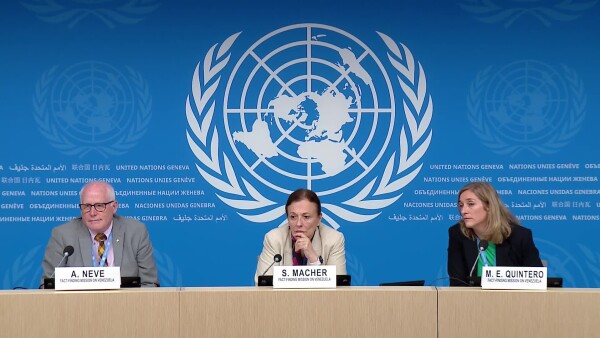
Press conference on the latest report of the Independent International Fact-Finding Mission on the Bolivarian Republic of Venezuela to the UN Human Rights Council
1
1
1
Press Conferences | OHCHR
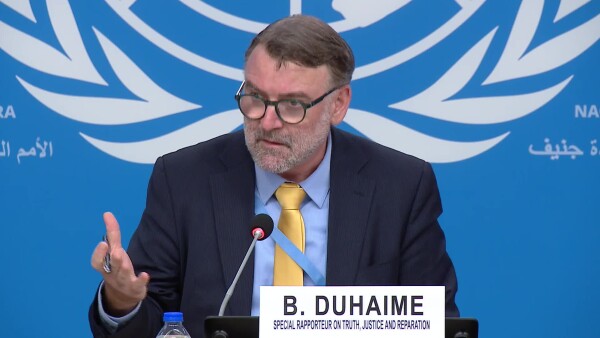
Victims Still Waiting: A Global Briefing on Transitional Justice Around the World
2
1
2
Edited News , Press Conferences | WMO
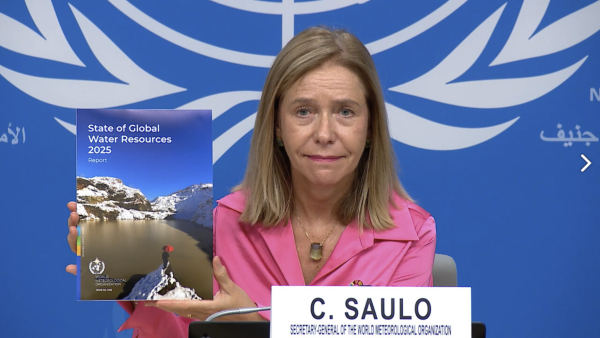
As world’s water reserves change, countries must prepare for a new reality: WMO
New data showing that rivers were at their lowest level for decades last year provides further evidence that the climate crisis is real and countries must act immediately to protect themselves from the increasing threat to communities and livelihoods, the UN World Meteorological Organization (WMO) said on Thursday.
The key findings from WMO’s State of Global Water Resources 2025 report covering the hydrological cycle and extreme events in the five-year period to last year:
- 2025 was one of driest years for river discharge in 35 years
- Past seven years have seen abnorfmal river flows
- Water storage on Earth’s land surface has decreased in past decade
- Widespread glacier loss across all regions for fourth consecutive year
- Asia and Africa are regions most affected by water-related disasters
- Water data availability has improved, but gaps remain in hard-hit areas
Highlighting the long-term decline in the Earth’s freshwater storage and glacier melt, WMO Secretary-General Celeste Saulo explained that the planet’s water reserves used to act as a planetary “savings account” that absorbed the occasional dry season, avoiding a water crisis. “One of the central stories of the 2025 report is what is happening to that savings account? And the simple answer is that we are depleting it,” she told journalists in Geneva.
Groundwater reserves are equally stretched and have been in decline since 2014, WMO’s report states, with nearly two-thirds of monitored wells worldwide showing levels lower than the historical norm and indicating a shift “further toward deficit…not recovery”.
“At the same time, we are seeing more water-related disasters,” Ms. Saulo said, while also stressing that the currently strengthening El Niño “will increase the risk of drought in some areas, and flooding in others”.
Glaciers disappearing
In 2025, for the fourth consecutive year, every major glaciated region on Earth lost ice mass, leading to short-term hazards including floods and long-term water insecurity, according to WMO.
Responding to a question about whether the changing global water cycle might have contributed to the deadly Nepal-China flooding disaster, Ms. Saulo explained that melting ice and rock was just one factor in the chain of events that ultimately sent a massive and deadly wall of water and debris downstream on 26 August, killing at least 1,367 people.
“You asked if it could happen again? Absolutely; the problem in this region is that there’s 63,700 glaciers at the last count,” she told a Press Conference in Geneva. “Even if you’re looking with remote sensing with satellites at these glaciers, you might see some faults, you might see some slight shifting, that does not mean necessarily catastrophic collapse. So, in order to plan for this, it’s very, very difficult. But the international community is looking very hard at ways in which we can bring people together to solve some of these monitoring issues.”
Data indicates that glaciers shrank between 2023 and 2025 with cumulative losses of 1,400 gigatonnes of water – or about one third of annual fresh water needs.
Every major glacier region on Earth lost ice for the fourth consecutive year.
“All 19 glacier regions around the globe lost ice; in Central Asia, Iceland, the Russian Arctic and western Canada and the United States, it was among the three worst years on record,” said Wayne Jenkinson, WMO’s Director of Hydrology and Cryosphere.
Some regions with smaller glaciers such as Central Europe, the Caucasus, the western Canada and the United States may already have reached “peak water”, Mr. Jenkinson warned.
“After this point, the glacier gives less meltwater each year simply because there is less ice left to melt. That matters for every community downstream that relies on water during hot, dry summers,” he explained.
Narelle van der Wel, WMO’s Head of Cryosphere Monitoring, Predictions and Services, stressed that while some further glacier loss is unavoidable, the eventual scale of the decline is not predetermined.
“Some glacier loss is inevitable, but total loss of glaciers is not yet inevitable,” she said, pointing to emissions reductions as central to limiting future losses.
Preparing for moving baselines
The report does not attribute every observed change to climate change alone. WMO says pressure on water resources and natural variability also contribute.
Mr. Jenkinson said governments need to prepare for “moving baselines” as historical patterns become less reliable.
“The situation 30 years ago is not where we are today,” he said. Countries, he added, need to prepare “for those changes that have really already arrived”.
ends
1
1
1
Press Conferences | WMO , OCHA , WHO , UNICEF , UN WOMEN , OHCHR , IOM , UNHCR
Update on Ebola from WHO and OCHA, update on the situation of children with the beginning of school in Ukraine from UNICEF, UN Women on the impact of the settlers and restrictions on women and girls in West Bank, OHCHR on the recovery of extensive human remains in Gaza, IOM and UNHCR on the new wave of displacement in Yemen
2
1
2
Press Conferences , Edited News | WFP
‘Super El Niño’ and converging crises worsen hunger in South Sudan and across the region - WFP
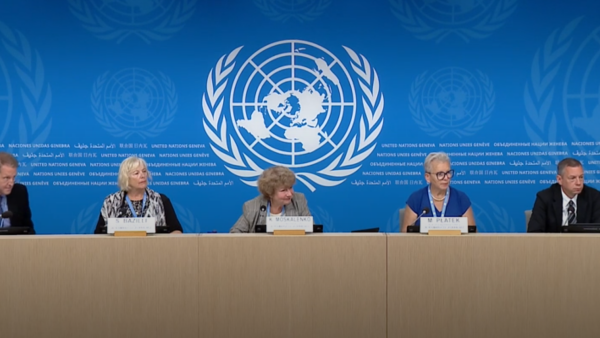
South Sudan’s hunger crisis is becoming increasingly catastrophic as violence, extreme weather and dwindling aid leave millions without enough food, the UN World Food Programme (WFP) warned on Tuesday.
1
1
1
Press Conferences | HRC
Update on the human rights situation in Belarus by the UN Group of Independent Experts on the Human Rights Situation in Belarus
1
1
1
Press Conferences | HRC , OHCHR
Update on the human rights situation in Syria by the Independent International Commission of Inquiry on the Syrian Arab Republic
1
1
1
Press Conferences | UNOG , IOM , UN WOMEN , UNCTAD , WHO , UNECE
IOM Yemen's Western Coast displacement; UN WOMEN on Gaza; UNCTAD Strait of Hormuz disruptions impacts; WHO Ebola logistics in DRC; WHO smoking and infertility; UNECE Data centres and energy.
1
1
1
Press Conferences | UNITAR , WMO
UNITAR: GA resolution on the merger of the United Nations System Staff College into the United Nations Institute for Training and Research; WMO: Air Quality and Climate Bulletin released; WHO: Ukraine update
2
2
2
Press Conferences , Edited News | WMO
Powerful El Niño heightens extreme-weather risks through 2027, as countries brace for impact - WMO
Fuelled by extraordinarily warm waters across the tropical Pacific Ocean, the El Niño climate pattern is expected to intensify in the coming months. Forecasters are almost certain that it will persist through February next year, with unusually warm conditions expected across the globe.
1
1
1
Press Conferences | IFRC , UN WOMEN , WFP , WHO , WMO , OCHA
UN WOMEN/IFRC: Update on the impact of the floods in Nepal, WFP: Food assistance in the West Bank, WHO: Gaza’s rehabilitation needs and continued spread of diseases