

The United Nations Office at Geneva
Multimedia Newsroom
Press Conferences | OCHA , OHCHR , UNCTAD , UNICEF , UNECE
UN Geneva Press Briefing - 20 January 2026
UN GENEVA PRESS BRIEFING
20 January 2026
Humanitarian response to flooding in southern Mozambique
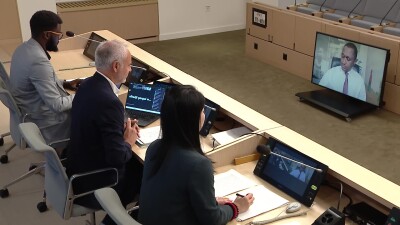
Paola Emerson, Head of the United Nations Office for the Coordination of Humanitarian Affairs Mozambique, speaking from Xai-Xai, Mozambique, said more than half a million people had been affected by severe flooding across southern and central Mozambique, particularly in Gaza, Maputo and Sofala provinces, with Gaza Province accounting for nearly two-thirds of those affected. Heavy and sustained rainfall, combined with ongoing dam water releases to prevent structural failure, had caused extensive flooding that continued to worsen. The damage had been widespread, with many homes collapsing after days of rain. Health facilities, roads and other critical infrastructure had also been heavily impacted. Nearly 5,000 kilometres of roads across nine provinces had been damaged, including the main highway linking the capital, Maputo, to the rest of the country, cutting off access to affected areas and interrupting supply chains. Authorities had reported the loss of more than 27,000 heads of livestock, further undermining food security and household incomes.
The Government of Mozambique was leading the response through the National Disaster Management Authority and had established an Emergency Operations Centre in Gaza Province, supported by provincial emergency centres. Search-and-rescue operations and relocations to safer areas were ongoing with support from humanitarian partners. Currently, 51 temporary accommodation centres were operating nationwide, hosting over 50,000 displaced people, including around 38,000 in Gaza Province alone. Floodwaters had inundated Xai-Xai town near the Limpopo River, prompting evacuations and public safety alerts, including warnings about crocodile risks in flooded areas.
On 17 January, the Government formally requested United Nations support for air transport, rescue operations, logistics, civil engineering, and disaster management expertise to help restore access routes and deliver humanitarian assistance to hard-to-reach areas. Access constraints and limited funding remained the most significant challenges, as major rivers had overflowed and key highways linking ports to affected regions were impassable. Humanitarian partners were therefore exploring alternative access options, including sea routes. Humanitarian partners were scaling up life-saving assistance, focusing on overcrowded accommodation centres, protection services, water and sanitation, and assessments in inaccessible areas. Additional funding was urgently required, with the appeal for 352 million USD to support conflict affected people remaining underfunded.
Guy Taylor, United Nations Children’s Fund (UNICEF) Chief of Communication, speaking from southern Mozambique, said heavy rains had triggered a rapidly escalating emergency in Mozambique, creating a deadly threat for children, with Mozambique’s impending cyclone season creating another crisis. Heavy rains had displaced over 50,000 people and affected more than 513,000, more than half of them children, with many living in overcrowded temporary shelters. Access to clean water, healthcare, nutrition, and education was uncertain in impacted areas, and children faced increased the risk of disease, malnutrition, and protection concerns, particularly for girls.
The situation was worsened by Mozambique’s cyclone season and already high levels of child malnutrition, making waterborne diseases and food shortages especially deadly. UNICEF was working with the government and partners to provide emergency water, sanitation, health, nutrition, education, and child protection services, particularly in the Gaza and Sofala provinces. However, continued heavy rains, flooding rivers, and damaged infrastructure threatened to increase the number of affected children and families. Urgent support was needed to prevent disease, deaths, and long-term harm to children, who made up more than half of Mozambique’s population. When floods and cyclones struck repeatedly, it was the youngest children who were hit hardest.
Responding to a question from the media, Ms. Emerson said river levels were rising and reaching heavily populated urban areas, which were being submerged under water, meaning crocodiles were now able to enter these areas. This was of particular concern in Xai-Xai.
Sudan: High Commissioner warns about intensification in Kordofan
Ravina Shamdasani, for the Office of the High Commissioner for Human Rights (OHCHR), said the UN High Commissioner for Human Rights Volker Türk had just been in Sudan for a five-day visit, where he visited Port Sudan, Northern State and Dongola, visiting volunteers, an internally displaced persons camp, a dam and a power station. On Sunday, the High Commissioner ended his five-day visit to Sudan with a stark warning to the parties to the conflict: the horrific violations and abuses committed during the capture of El Fasher, North Darfur must under no circumstances be repeated in Kadugli and Dilling, in South Kordofan. During his visit to Sudan, particularly the Al Afad site for internally displaced people in Ad Dabba, Northern State, which was sheltering some 20,000 displaced people, the High Commissioner bore witness to the trauma and impact of the brutality that children, men and women suffered in El Fasher and as they attempted to flee.
The capture of El Fasher in late October was marked by widespread summary executions, sexual violence used as a weapon of war, dehumanizing treatment and abductions for ransom. The offensive followed an 18-month siege that deprived civilians of food, healthcare and other basic needs, alongside constant attacks on residential areas and civilian infrastructure. The High Commissioner urged all parties to the conflict, including during a meeting with a Rapid Support Forces delegation, to ensure that crimes committed during and after the takeover of El Fasher were not repeated in Kadugli, Dilling and the wider Kordofan region. The Office had heard reports of relentless military engagements, heavy shelling, drone strikes and airstrikes causing widespread destruction and the collapse of essential services. More than 25,000 people had been displaced across South Kordofan since late October as hostilities intensified. The High Commissioner identified immediate measures for the parties, including safe passage for civilians and their protection from summary executions, reprisal attacks and sexual violence.
In a report to the Security Council yesterday, the International Criminal Court assessed the commission of both war crimes and crimes against humanity around the fall of El Fasher and beyond, which validated the Office’s findings. Having witnessed the destruction of critical civilian infrastructure at the Merowe dam and hydroelectric power station, the High Commissioner said the Rapid Support Forces and the Sudanese Armed Forces must cease intolerable attacks against civilian objects that were indispensable to the civilian population, and must ensure the protection of civilians, and unimpeded access for the delivery of humanitarian aid. All those who had influence, including regional actors and notably those who supplied the arms and benefited economically from the war, need to act urgently to put an end to it.
The full statement is available here.
Responding to questions from the media, Ms. Shamdasani said the High Commissioner had met with the delegation of the Rapid Support Forces as a party to the conflict in Nairobi and was clear that the meeting in no way implied recognition, of their self-declared administration in the areas they controlled. During the meeting, High Commissioner drew their attention to the violations committed, including women who had been gang raped, people who had been looted of all their belongings including educational degrees, and emphasised that their leadership was responsible for the violations committed. The High Commissioner maintained that these were not isolated cases, but there was a systemic use of sexual violence, and asked them to ensure these violations were not replicated. Ms. Shamdasani said the Rapid Support Forces had issued a statement, and ascribed words to the High Commissioner including “welcoming efforts towards accountability”; in reality the High Commissioner had emphasised the need to ensure accountability.
Ms. Shamdasani said it had been rare to sit with people experiencing these violations firsthand, and she would be happy to meet with the media directly share these experiences as well as footage. The High Commissioner had met with people who were undeterred and doing what they could to rebuild communities and help people.
Bulldozing of UNRWA headquarters
Rolando Gómez, Chief of Press and External Relations Section, UNIS, drawing from a statement recently earlier in the day by Philippe Lazzarini, Commissioner-General of the United Nations Relief and works Agency for Palestine Refugees in the Near East (UNRWA), said early this morning, the Israeli forces stormed the UNRWA headquarters, a United Nations site in East Jerusalem. This marked a new level of open and deliberate defiance of international law, including of the privileges and immunities of the United Nations by the State of Israel. The demolition constituted an unprecedented attack against a United Nations agency and premises, in the wake of other steps taken by Israeli authorities to erase the Palestinian Palestine refugee identity. On 12 January, Israeli forces stormed into an UNRWA Health Center in East Jerusalem and ordered it to close. These actions, coupled with previous arson attacks in a large-scale disinformation campaign, flew in the face of the ruling in October by the International Court of Justice, which restated that Israel was obliged under international law to facilitate unresolved operations do not hinder or prevent them. The court also stressed that Israel had no jurisdiction over East Jerusalem. The UN would be following these developments and would keep the media updated.
Ravina Shamdasani, for the Office of the High Commissioner for Human Rights (OHCHR), expressed outrage on behalf of the High Commissioner at the incident, which compounded what had been seen for a while: attacks on UN and aid actors who were trying to help.
Ukraine: More attacks on energy infrastructure amid extreme cold
Ravina Shamdasani, for the Office of the High Commissioner for Human Rights (OHCHR), said the High Commissioner for Human Rights Volker Türk had expressed outrage at the repeated large-scale attacks by the Russian Federation on energy infrastructure in Ukraine, following further strikes last night that shut down heating and electricity in major urban areas, including in Kyiv and Odesa, as temperatures plunged below minus 10 degrees Celsius at night. Last night’s attacks with long-range weapons caused emergency power and heating outages in several regions. In Kyiv City, the mayor reported that 5,635 multi-storey residential buildings were left without heating this morning, nearly 80 percent of which had only recently had heating restored after outages caused by a similar attack on 9 January. This meant hundreds of thousands of families were now without heating and several areas, including Kyiv, were also without water, particularly affecting the most vulnerable.
Since October last year, Russian armed forces had renewed systematic large-scale attacks against Ukraine's energy infrastructure, with strikes recorded in at least 20 regions of the country. These attacks had degraded Ukraine's energy system resulting in rolling power outages across most regions of Ukraine, routinely lasting up to 18 hours per day over recent months. Mr. Türk called on the Russian authorities to immediately cease attacks.
The full statement can be viewed here.
Situation in Syria
Responding to a question from the media, Rolando Gómez, Chief of Section, Public Information, said the situation in Syria, where hundreds of families remained unable to leave certain areas, was very worrying. The UN and its partners were continuing to respond where they had access and provide trauma care. They would continue to provide updates once they had received information from colleagues on the ground.
Ravina Shamdasani, for the Office of the High Commissioner for Human Rights (OHCHR), said the Office was concerned about reports of renewed fighting between the Syrian army and the Syrian Defence Forces, despite the 18 January ceasefire agreement, but she did not have specific information on ISIS.
Situation in Iran
Responding to a question from the media, Pascal Sim, for the Office of the High Commissioner for Human Rights (OHCHR), Human Rights Council Branch, said the UN Human Rights Council would hold a special session to address the deteriorating human rights session on the Islamic Republic of Iran on 23 January in the Assembly Hall at the Palais des Nations, to run until 6pm. The session had been requested by Iceland, Germany, North Macedonia, the Republic of Moldova and the United Kingdom. This would be the 39th special session of the Council and would be webcast live.
UNECE to showcase cross-border cooperation under UN Water Convention at Dakar High-level Preparatory Meeting for 2026 UN Water Conference
Thomas Croll-Knight, for the United Nations Economic Commission for Europe, said with less than a year until the UN Water Conference in December 2026, co-hosted by the United Arab Emirates and Senegal, global leaders would meet in Dakar on 26–27 January 2026 to accelerate progress on Sustainable Development Goal 6. This was not a UNECE meeting but a system-wide UN meeting. Despite progress since 2015, major challenges remained: billions still lacked safe drinking water and sanitation, only 56 percent of wastewater was treated, water stress was critical in several regions, freshwater ecosystems were declining, and cooperation over shared water resources was limited. The Dakar meeting would review progress and gaps on SDG 6 and promote solutions and partnerships. A key focus would be the UN Water Convention, highlighted as a successful example of multilateral cooperation on shared water resources. Since opening globally in 2016, the Convention had grown to 57 Parties, with strong participation from Africa and rising global interest, positioning it as an important tool for peace, climate resilience, and conflict prevention. 30 countries were currently considering joining the Convention.
Following the meeting, negotiations would resume on 28–29 January for a joint management agreement of the Senegal–Mauritania Aquifer Basin, shared by four West African countries. Supporting over 20 million people, the basin was vital for water security and climate resilience. The talks aimed to finalise a draft agreement for adoption ahead of the 2026 UN Water Conference. UNECE would be present in Dakar and invited the media to connect them with colleagues covering in the region.
UN Trade and Development publication of the Global Investment Trends Monitor
Catherine Huissoud, for the United Nations Trade and Development (UNCTAD), said UNCTAD would publish its 2025 update on global foreign direct investment shortly.
Global foreign direct investment grew by 14 percent in 2025, but real investment rose only by five percent. The difference counted financial flows through global financial centres. This meant real investment remained fragile and divides between developed and developing countries widened. In the analysis, experts showed that data centres reshaped the global investment landscape, accounting for more than one fifth of new global projects in 2025 in value. International infrastructure projects fell by 10 percent, largely due to sharp pullback in renewable energy as investors reassessed revenue risks and regulatory uncertainty cooperation and refocused policies on productive, sustainable projects.
Responding to a question from the media on whether UNCTAD Secretary-General Rebeca Grynspan was running for the position of Secretary-General, Ms. Huissoud said that the paperwork was still in the pipeline.
Announcements
Rolando Gómez, Chief of Press and External Relations Section, UNIS, said unfortunately the Secretary-General had to cancel his participation at the World Economic Forum Annual Meeting in Davos, scheduled for tomorrow, due to a bad cold. He had been in Switzerland in recent days where he met with his special and personal envoys and would soon be enroute back to New York.
Mr. Gómez also said the Universal Periodic Review (UPR) process had begun yesterday afternoon and was today reviewing Mauritania, followed by Nauru; tomorrow the UPR Working would review Rwanda and Nepal. He also noted that the Committee on the Rights of the Child had postponed their review of Ethiopia until Monday, and the Conference of Disarmament had held its first public plenary of 2026 this morning, under the Presidency of Mongolia.
Mr. Gómez said on Thursday 22 January at 10 am there would be a press conference to introduce the new members of the Commission of Inquiry on the Occupied Palestinian Territory, including Srinivasan Muralidhar, Florence Mumba, and returning member Chris Sidoti.
Responding to a question from the media, Mr. Gómez said the Board of Peace was an intergovernmental body proposed by President Trump to implement part of its 20-point peace plan. This was not a UN plan but had been authorised by the Security Council strictly for its work in Gaza; the UN’s engagement was strictly limited to this area. The UN welcomed the ceasefire and would continue to work with all parties on the ground to ensure it was upheld.
***
ANNOUNCEMENTS
UNECE Thomas Croll-Knigt (PR)
- UNECE to showcase cross-border cooperation under UN Water Convention at Dakar High-level Preparatory Meeting for 2026 UN Water Conference
UNCTAD Catherine Huissoud (PR)
· UN Trade and Development publication of the Global Investment Trends Monitor later today
TOPICS
OCHA Jens Laerke (PR) with Paola Emerson, Head of Office OCHA Mozambique (from Xai-Xai, Mozambique)
· Flooding in southern Mozambique and the scaling up of humanitarian response.
UNICEF Ricardo Pires (Zoom) with Guy Taylor, UNICEF Chief of Communication (From southern Mozambique)
- How ongoing heavy floods are turning unsafe water and malnutrition into a deadly threat for children.
OHCHR Ravina Shamdasani (PR)
· Sudan: Warn about intensification in Kordofan
· Ukraine: More attacks on energy infra-structure amid extreme cold
Similar Stories
1
1
1
Press Conferences | UNHCR
End of UNHCR's 77th Annual Executive Committee (ExCom) meeting week
1
1
1
Press Conferences | UNICEF , IOM , UNHCR
UN Special Assistant to the Personal Envoy Office (SUDAN): Peace Initiatives and Efforts in Sudan; UNICEF: Dire situation of children in Gaza; IOM: Damaged Homes and Energy Attacks Risk Displacing Ukrainians for this winter; UNHCR: update on EXCOM week
1
1
1
Press Conferences | IOM , UNDRR
UN stresses importance of household preparedness for disaster risk reduction.
1
1
1
Statements , Press Conferences | OHCHR
1
1
1
Press Conferences | UNHCR , UNICEF , IFRC , OHCHR , UN WOMEN , IOM , OCHA , WHO
UNHCR – ExCom Meeting, UNICEF – Nepal Recovery, IFRC – Flash Floods, WHO – Mental Health, IOM – South Sudan Floods, OCHA – DRC Humanitarian aid, UNHCR – Sahel Displacement, UNICEF – Yemen Update, IOM – Gaza Shelter, UN Women – Gaza Women, OHCHR – Arrests and detentions of Syrians by Israeli force
2
1
2
Press Conferences | UNCTAD
Presentation of the Trade and Developement Report 2026
Embargoed until 9 October 2026 at 11 a.m. (Geneva Time)
UNCTAD: UNCTAD’s flagship report finds that governments increasingly use industrial, trade, financial and technology policies to pursue economic and national security objectives. Market access and the ability to move into higher-value activities now depend more heavily on technology, finance and geopolitics.
1
1
1
Press Conferences | UPU
Release of the State of the Postal Sector Report 2026
1
1
1
Press Conferences | IOM , ITU , UNECE , UNICEF , WHO , WMO
UNICEF: Ebola, DRC - children orphans or separating them from parents and caregivers; IOM: Humanitarian needs in Djibouti amid arrivals from Yemen and increased migrant movements; WHO: Darfur, scale of health needs far exceeds available resources; WMO co-sponsored Global Heat Forum, Bangkok, monthly Global Seasonal Climate Update; UNECE: UN Forum of Mayors; ITU Plenipotentiary Conference 2026; WHO: child and adolescent obesity guidelines and new global roadmap to tackle pregnancy hypertension, a leading cause of maternal mortality
1
1
1
Press Conferences | OCHA , UN WOMEN , UNHCR , WFP , WHO , WTO , UNEP
OCHA – $160M CERF allocation to 12 underfunded crises; UNHCR – 5.8M refugee children remain out of school amid funding cuts; UN Women – Middle East escalation and food security among women/girls; WHO – Gaza supplies and overall situation; WFP – Yemen food insecurity and impact on global hunger ; UNEP - First International Conference of the Global Framework on Chemicals in Geneva | 16-20 November 2026
1
1
1
Press Conferences | UNHCR , WHO
Yemen's health system nears collapse amid conflict, causing rising casualties and medicine shortages.
1
1
1
Press Conferences | HRC
Update by the Expert Mechanism to Advance Racial Justice and Equality in Law Enforcement
1
1
1
Press Conferences | WIPO , WHO , UNICEF , UNHCR , IOM , WFP , FAO
WIPO Global Innovation Index 2026 launch and press conference, WHO Composition of influenza vaccines for the 2027 Southern Hemisphere flu season, UNICEF Yemen hunger and malnutrition; UNHCR Sudan displacement into Chad; IOM Ebola and population movements in DRC; WFP emergency food assistance in Nepal; and FAO food loss and waste.