

The United Nations Office at Geneva
Multimedia Newsroom
Press Conferences | UNICEF , OHCHR , OCHA , WHO , WMO
UN Geneva Press Briefing - 13 January 2026
UN INFORMATION SERVICE GENEVA PRESS BRIEFING
13 January
Ongoing deadly dangers for children in Gaza 90 days into the ceasefire
From Gaza City, James Elder for United Nations Children's Fund (UNICEF), presented the latest situation.
More than 100 children have been killed in Gaza since the ceasefire of early October — roughly one girl or boy killed every day. Bombings and shootings have slowed but not stopped. Severe restrictions on essentials persist, including medical supplies and fuel.
The ceasefire enabled progress: expanded primary health services, removal of 1,000 tons of solid waste monthly, distribution of nearly one million thermal blankets and winter clothing kits, repairs to water and sewerage networks, and addition of 70+ nutrition facilities. Education remains critical: 130,000 children in temporary learning spaces, but 700,000 still in need of support.
Asked whether the children were killed due to Israeli army attacks, Mr. Elder said most deaths were from military means (airstrikes, drones, tank shells, live ammunition) and noted six children died of hypothermia.
In response to a question on humanitarian access, he stressed that bans on NGOs obstruct lifesaving aid. He also called for more pressure to allow international journalists into Gaza.
Replying to a question on medical evacuation, Mr. Elder said over 4,000 people require evacuation, including 2,000 children, but approvals remain blocked; WHO later explained the process is extremely slow and often lethal.
Iran protests
Jeremy Laurence for the Office of the United Nations High Commissioner for Human Rights (OHCHR) conveyed the High Commissioner’s concern over mounting violence against protesters in Iran, with reports of hundreds killed and thousands arrested. Internet shutdowns severely hamper verification, though some telephone services were partially restored.
Asked whether OHCHR could verify casualty figures, Mr. Laurence said reliable sources indicate hundreds killed and thousands arrested, but precise verification is impossible without access. He warned of possible death penalty as seen after 2022 protests.
In response to a question on US intervention, he stressed protests must not be instrumentalized and dialogue is the way forward.
Read the full statement here.
Sri Lanka: Report on conflict-related sexual violence
Jeremy Laurence presented the findings of the new OHCHR report highlighting that conflict-related sexual violence in Sri Lanka remains largely unaddressed, with survivors still denied justice. The report underscores long-standing impunity, stigma, and the need for survivor-centred reforms and reparations.
Asked whether sexual violence has stopped, Mr. Laurence said it remains a concern beyond the conflict context.
Read the full report here.
In response to a question about the use of force by U.S. security forces during recent protests, including events in Minneapolis, Mr. Laurence recalled that, under international human rights law, the intentional use of lethal force is permissible only as a measure of last resort against an individual posing an imminent threat to life. He said that OHCHR takes note of the FBI investigation and urged a prompt, independent and transparent investigation into the killing of Ms. Good.
Launch of the 2026 UN-coordinated humanitarian response plan in Ukraine
Jens Laerke for the United Nations Office for the Coordination of Humanitarian Affairs (OCHA) announced the launch of the 2026 Humanitarian Response Plan amid reports of new strikes in Kyiv, Kharkiv and Odesa. The plan seeks US$2.3 billion and aims to reach 4.1 million people with life‑saving assistance, including food, health care, shelter, protection and cash support. Overall, an estimated 10.8 million people across Ukraine will require humanitarian aid in 2026.
He added that winter disruptions “create a crisis within a crisis”.
Asked about access in areas of Ukraine currently under the control of the Russian Federation, Mr. Laerke said the United Nations does not have the access it would like, noting that around one million people there are believed to need assistance they are currently not receiving. He added that some NGOs operate in those areas, but not at the scale required.
Read the full plan here.
Announcements
Christian Lindmeier for the World Health Organization (WHO) announced that WHO will hold a virtual press conference today, Tuesday, 13 January 2026 at 13:30 CET, with Director-General Dr. Tedros.
The briefing will launch new reports on taxes on sugary drinks and alcoholic beverages and provide an update on cervical cancer prevention and control.
Jeremy Laurence for the Office of the High Commissioner for Human Rights (OHCHR) announced that High Commissioner Volker Türk will visit Sudan from 14 to 18 January.
During the visit, he is scheduled to meet with authorities in Port Sudan, as well as civil society representatives and the UN country team. The High Commissioner will also visit Northern State, including the Al Afad gathering site, and engage with people displaced by the conflict in Darfur and Kordofan, along with meetings with humanitarian partners.
Clare Nullis for the World Meteorological Organization (WMO) announced that on 14 January, WMO will issue a press release on the consolidated global temperature figure for 2025.
The release is prepared in collaboration with eight data set providers, including Copernicus Climate Change Service, the UK Met Office, NASA, NOAA, and the Japan Meteorological Agency.
The press release will be under embargo until 15:00 CET on 14 January, coordinated with NASA and NOAA releases.
Michele Zaccheo, for the United Nations Information Service, said that the Committee on the Rights of the Child, which opened yesterday its 100th session (12-30 January, Palais Wilson), is concluding this morning its review of the report of Maldives. It will begin this afternoon the review of the report of Ghana. He added that the review on Uganda had been cancelled.
***
TOPICS
UNICEF James Elder (From Gaza City)
- Ongoing deadly dangers for children in Gaza 90 days into the ceasefire
OHCHR Jeremy Laurence (PR)
- Sri Lanka: Report on conflict-related sexual violence
- Iran protests
OCHA Jens Laerke (PR)
Launch of the 2026 UN-coordinated humanitarian response plan in Ukraine.
ANNOUNCEMENTS
WHO Christian Lindmeier (Zoom)
- Virtual PC on Global Health Issues with DG Dr Tedros - New reports on taxes on sugary drinks and alcoholic beverages will be launched, and WHO will update on cervical cancer prevention and control – Tuesday, 13 January 2026 at 13.30 CET
WMO Clare Nullis (Zoom)
- Global temperature press release on 2025
Similar Stories
1
1
1
Press Conferences | IOM , UNDRR
UN stresses importance of household preparedness for disaster risk reduction.
1
1
1
Statements , Press Conferences | OHCHR
1
1
1
Press Conferences | UNHCR , UNICEF , IFRC , OHCHR , UN WOMEN , IOM , OCHA , WHO
UNHCR – ExCom Meeting, UNICEF – Nepal Recovery, IFRC – Flash Floods, WHO – Mental Health, IOM – South Sudan Floods, OCHA – DRC Humanitarian aid, UNHCR – Sahel Displacement, UNICEF – Yemen Update, IOM – Gaza Shelter, UN Women – Gaza Women, OHCHR – Arrests and detentions of Syrians by Israeli force
2
1
2
Press Conferences | UNCTAD
Presentation of the Trade and Developement Report 2026
Embargoed until 9 October 2026 at 11 a.m. (Geneva Time)
UNCTAD: UNCTAD’s flagship report finds that governments increasingly use industrial, trade, financial and technology policies to pursue economic and national security objectives. Market access and the ability to move into higher-value activities now depend more heavily on technology, finance and geopolitics.
1
1
1
Press Conferences | UPU
Release of the State of the Postal Sector Report 2026
1
1
1
Press Conferences | IOM , ITU , UNECE , UNICEF , WHO , WMO
UNICEF: Ebola, DRC - children orphans or separating them from parents and caregivers; IOM: Humanitarian needs in Djibouti amid arrivals from Yemen and increased migrant movements; WHO: Darfur, scale of health needs far exceeds available resources; WMO co-sponsored Global Heat Forum, Bangkok, monthly Global Seasonal Climate Update; UNECE: UN Forum of Mayors; ITU Plenipotentiary Conference 2026; WHO: child and adolescent obesity guidelines and new global roadmap to tackle pregnancy hypertension, a leading cause of maternal mortality
1
1
1
Press Conferences | OCHA , UN WOMEN , UNHCR , WFP , WHO , WTO , UNEP
OCHA – $160M CERF allocation to 12 underfunded crises; UNHCR – 5.8M refugee children remain out of school amid funding cuts; UN Women – Middle East escalation and food security among women/girls; WHO – Gaza supplies and overall situation; WFP – Yemen food insecurity and impact on global hunger ; UNEP - First International Conference of the Global Framework on Chemicals in Geneva | 16-20 November 2026
1
1
1
Press Conferences | UNHCR , WHO
Yemen's health system nears collapse amid conflict, causing rising casualties and medicine shortages.
1
1
1
Press Conferences | HRC
Update by the Expert Mechanism to Advance Racial Justice and Equality in Law Enforcement
1
1
1
Press Conferences | WIPO , WHO , UNICEF , UNHCR , IOM , WFP , FAO
WIPO Global Innovation Index 2026 launch and press conference, WHO Composition of influenza vaccines for the 2027 Southern Hemisphere flu season, UNICEF Yemen hunger and malnutrition; UNHCR Sudan displacement into Chad; IOM Ebola and population movements in DRC; WFP emergency food assistance in Nepal; and FAO food loss and waste.
2
1
2
Press Conferences | UNCTAD
Gaza reconstruction needs reach $71.5 billion as Palestinian economy and public finances face severe strain. Latest UNCTAD report documents the loss of decades of development gains, economic collapse in Gaza and tightening economic constraints in the West Bank.
The report identifies three immediate priorities: transferring withheld Palestinian revenues, safeguarding the banking system and aligning reconstruction support with the documented scale of damage and economic losses.
1
1
1
Press Conferences | HRC
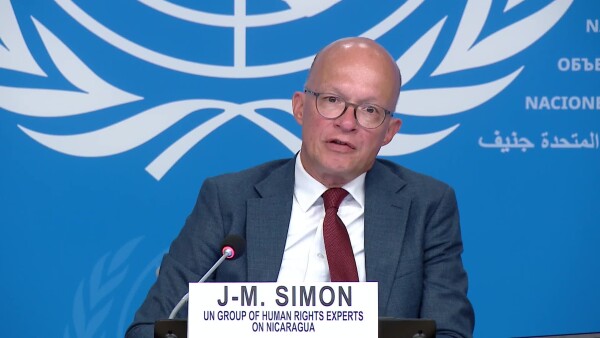
Press conference on the situation of human rights in Nicaragua by the UN Group of Human Rights Experts