

The United Nations Office at Geneva
Multimedia Newsroom
Ahead of fresh talks in Geneva, UN Syria envoy appeals for progress on detainees, wider ceasefire
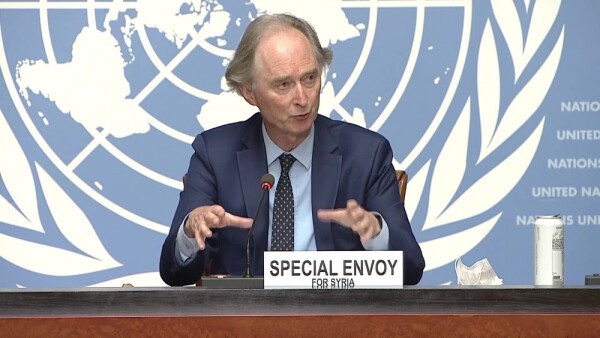
Success in next week’s UN-led talks aimed at securing a peaceful future for Syria depends on making progress on a series of thorny issues, UN Special Envoy Geir Pedersen said on Friday, in an appeal to belligerents to extend a fragile ceasefire and release detainees.
Speaking in Geneva, the UN negotiator also urged the international community to show the people of the war-torn country that they have not been forgotten, after almost a decade of war that has reduced large swaths to rubble and likely claimed hundreds of thousands of lives.
Their “frustration” about the lack of progress on a politically agreed end to the fighting was clear, he told journalists, two days after addressing the UN Security Council in New York.
“I told the Security Council that, and I said that many times, that when I meet with Syrians from across the board, they all express to me a deep, deep frustration about the lack of progress on the political front. And as I said, the meeting here in Geneva of the Small Body of the Constitutional Committee will of course not change that, but if it is handled correctly, it can start to build confidence, and it can be the beginning of something that can send hope also to the Syrian people. And this is indeed my hope.”
The convening on Monday of the Small Group of the Syrian Constitutional Committee brings together 15 representatives from Syria’s Government, 15 from the Syrian Negotiations Commission (SNC) and 15 more civil society participants, known as the “middle third”.
A larger group of 150 delegates is also part of the process, but only the smaller group is meeting in Geneva on Monday for a week.
Both bodies meet on the basis of an agreement between the Government of Syria and the opposition to implement a key part of Security Council resolution 2254 (from 2015), which called for setting a schedule and process for drafting a new constitution.
Monday’s gathering will be the first time that delegates will have met after a hiatus of nine months, caused by differences over the agenda which were resolved by March – and then by COVID restrictions – Mr. Pedersen said.
He added that he had been “very pleased when I listened to the Members of the Security Council on Wednesday to hear that they were unanimous in their support for the work we are doing and for the meeting of the Small body of the Constitutional Committee that will start here on Monday. And as I have said many times, if we are to be successful, we also need the support of the international community.”
Highlighting the difficulties associated with conducting the meeting amid the ongoing COVID-19 pandemic, the Special Envoy insisted that necessary precautions will be taken to avoid transmission of possible infection by delegates.
These include moving the venue of discussions to a room with capacity for 200 people, four times the number expected, and ensuring physical distancing. “Obviously, they will all be tested – they are all tested - before they arrive in Geneva, and they will be tested on arrival in Geneva,” Mr. Pedersen said. “Then, of course, they will all be wearing masks.”
In order to make substantive progress during discussions, the Special Envoy insisted that there needs to be “progress when it comes to abductees, to detainees and we need information on missing persons. This I think could perhaps be the one key important development that could help to build trust and confidence and I repeat my strong appeal to the parties on this again.”
Addressing other matters was also crucial, he continued, including the “ceasefire holding in Idlib in the northwest; I’ve asked that this could be strengthened by what I call a nationwide ceasefire in line with Security Council Resolution 2254. This is something I still believe is extremely relevant. And then of course, it goes without saying that at this this very critical time for the Syrian people, with the economy, with the economic collapse, with the pandemic, that everything is done that is possible from the international community to support the Syrian people.”
Highlighting the Syrian-led nature of the constitutional discussions, with the co-chairs of the Government and opposition effectively presiding side by side as co-chairs, the UN Special Envoy noted that the October session had featured some “shouting and screaming”.
But he added: “I’m confident that in my dialogue with the two co-chairs, that the two co-chairs will be able to handle the challenges of the meetings. You know, obviously in the meeting we had late October with the (Larger Group) of 150, it went very well, there were obviously very different narratives, very different perspectives.”
In parallel with the Syrians’ discussions, Mr. Pedersen underscored the keen international interest in the proceedings.
“I’ve been informed that there will be in Geneva during this time most probably, representatives from Russia, Iran and Turkey - the so-called Astana Three - and I believe also from the United States. There may also be others that will be here. But let me emphasise that the Constitutional Committee is of course, the work of that, is of course completely independent.”
- Exterior wide shot, Palais des Nations flag alley, UN Geneva, nations’ flags flying, a beautiful day.
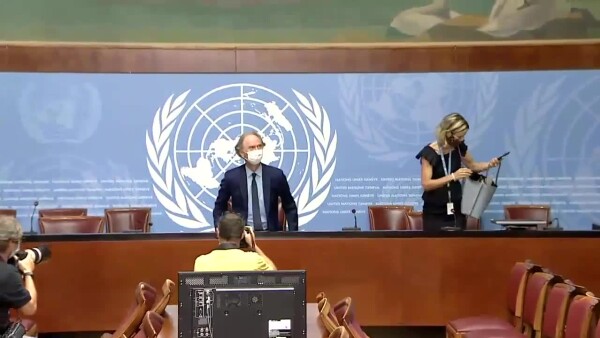
- Medium shot, UN Geneva Press Room III, a mask-wearing UN Special Envoy for Syria Geir Pedersen arriving, journalists (also masked) seated apart from one another, typing on laptops. Mr. Pedersen is followed by his spokesperson Jenifer Fenton (masked); both sit apart at podium. Press photographers take photographs of the Special Envoy.
- Wide shot, UN Geneva Press Room III, showing UN Special Envoy for Syria Geir Pedersen sitting at podium, flanked by spokesperson Jenifer Fenton with a Press photographer seated nearby checking his camera.
- SOUNDBITE (English) — Geir Pedersen, UN Special Envoy for Syria: “I told the Security Council that, and I said that many times, that when I meet with Syrians from across the board, they all express to me a deep, deep frustration about the lack of progress on the political front. And as I said, the meeting here in Geneva of the Small Body of the Constitutional Committee will of course not change that, but if it is handled correctly, it can start to build confidence, and it can be the beginning of something that can send hope also to the Syrian people. And this is indeed my hope.”
- Medium shot, UN Geneva Press Room III, journalists sitting in front of shot, typing on laptops, UN Special Envoy to rear, Press Room III, Palais des Nations.
- SOUNDBITE (English) — Geir Pedersen, UN Special Envoy for Syria: “I was very pleased when I listened to the Members of the Security Council on Wednesday to hear that they were unanimous in their support for the work we are doing and for the meeting of the Small body of the Constitutional Committee that will start here on Monday. And as I have said many times, if we are to be successful, we also need the support of the international community.”
- Medium shot, journalists sitting at table, one has his mask lowered, Press Room III, Palais des Nations.
- SOUNDBITE (English) — Geir Pedersen, UN Special Envoy for Syria: “Obviously, they will all be tested – they are all tested - before they arrive in Geneva, and they will be tested on arrival in Geneva. Then, of course, they will all be wearing masks.”
- Medium close-up, journalist’s hands shown typing and laptop screen showing notes of Special Envoy’s comments, Press Room III, Palais des Nations.
- SOUNDBITE (English) — Geir Pedersen, UN Special Envoy for Syria: “We need to see progress when it comes to abductees, to detainees and we need information on missing persons. This I think could perhaps be the one key important development that could help to build trust and confidence and I repeat my strong appeal to the parties on this again.”
- Medium close-up, rows of empty chairs in foreground, journalists to rear, Press Room III, Palais des Nations.
- SOUNDBITE (English) — Geir Pedersen, UN Special Envoy for Syria: “Then of course it’s the issue about the ceasefire holding in Idlib in the northwest; I’ve asked that this could be strengthened by what I call a nationwide ceasefire in line with Security Council Resolution 2254. This is something I still believe is extremely relevant. And then of course, it goes without saying that at this this very critical time for the Syrian people, with the economy, with the economic collapse, with the pandemic, that everything is done that is possible from the international community to support the Syrian people.”
- Medium close-up, masked journalist checking mobile phone, seated, Press Room III, Palais des Nations.
- SOUNDBITE (English) — Geir Pedersen, UN Special Envoy for Syria: “I’m confident that in my dialogue with the two co-chairs, that the two co-chairs will be able to handle the challenges of the meetings. You know, obviously in the meeting we had late October with the (larger group) of 150, it went very well, there were obviously very different narratives, very different perspectives.”
- Medium shot, journalists seated in foreground, UN Special Envoy to rear, Press Room III, Palais des Nations.
- SOUNDBITE (English) — Geir Pedersen, UN Special Envoy for Syria: “I’ve been informed that there will be in Geneva during this time most probably, representatives from Russia, Iran and Turkey - the so-called Astana Three - and I believe also from the United States. There may also be others that will be here. But let me emphasise that the Constitutional Committee is of course, the work of that, is of course completely independent.”
Similar Stories
1
1
1
Press Conferences | OCHA , UN WOMEN , UNHCR , WFP , WHO , WTO , UNEP
OCHA – $160M CERF allocation to 12 underfunded crises; UNHCR – 5.8M refugee children remain out of school amid funding cuts; UN Women – Middle East escalation and food security among women/girls; WHO – Gaza supplies and overall situation; WFP – Yemen food insecurity and impact on global hunger ; UNEP - First International Conference of the Global Framework on Chemicals in Geneva | 16-20 November 2026
1
1
1
Press Conferences | UNHCR , WHO
Yemen's health system nears collapse amid conflict, causing rising casualties and medicine shortages.
1
1
1
Press Conferences | HRC
Update by the Expert Mechanism to Advance Racial Justice and Equality in Law Enforcement
1
1
1
Press Conferences | WIPO , WHO , UNICEF , UNHCR , IOM , WFP , FAO
WIPO Global Innovation Index 2026 launch and press conference, WHO Composition of influenza vaccines for the 2027 Southern Hemisphere flu season, UNICEF Yemen hunger and malnutrition; UNHCR Sudan displacement into Chad; IOM Ebola and population movements in DRC; WFP emergency food assistance in Nepal; and FAO food loss and waste.
2
1
2
Press Conferences | UNCTAD
Gaza reconstruction needs reach $71.5 billion as Palestinian economy and public finances face severe strain. Latest UNCTAD report documents the loss of decades of development gains, economic collapse in Gaza and tightening economic constraints in the West Bank.
The report identifies three immediate priorities: transferring withheld Palestinian revenues, safeguarding the banking system and aligning reconstruction support with the documented scale of damage and economic losses.
1
1
1
Press Conferences | HRC
Press conference on the situation of human rights in Nicaragua by the UN Group of Human Rights Experts
1
1
1
Press Conferences | ITU , UNHCR , WHO , WMO
YEMEN - UNHCR: Escalating conflict in Yemen could fuel more displacement, refugee movement
CLIMATE - WHO / WMO: Health and Climate impact of El Niño
1
1
1
Press Conferences | HRC , OHCHR
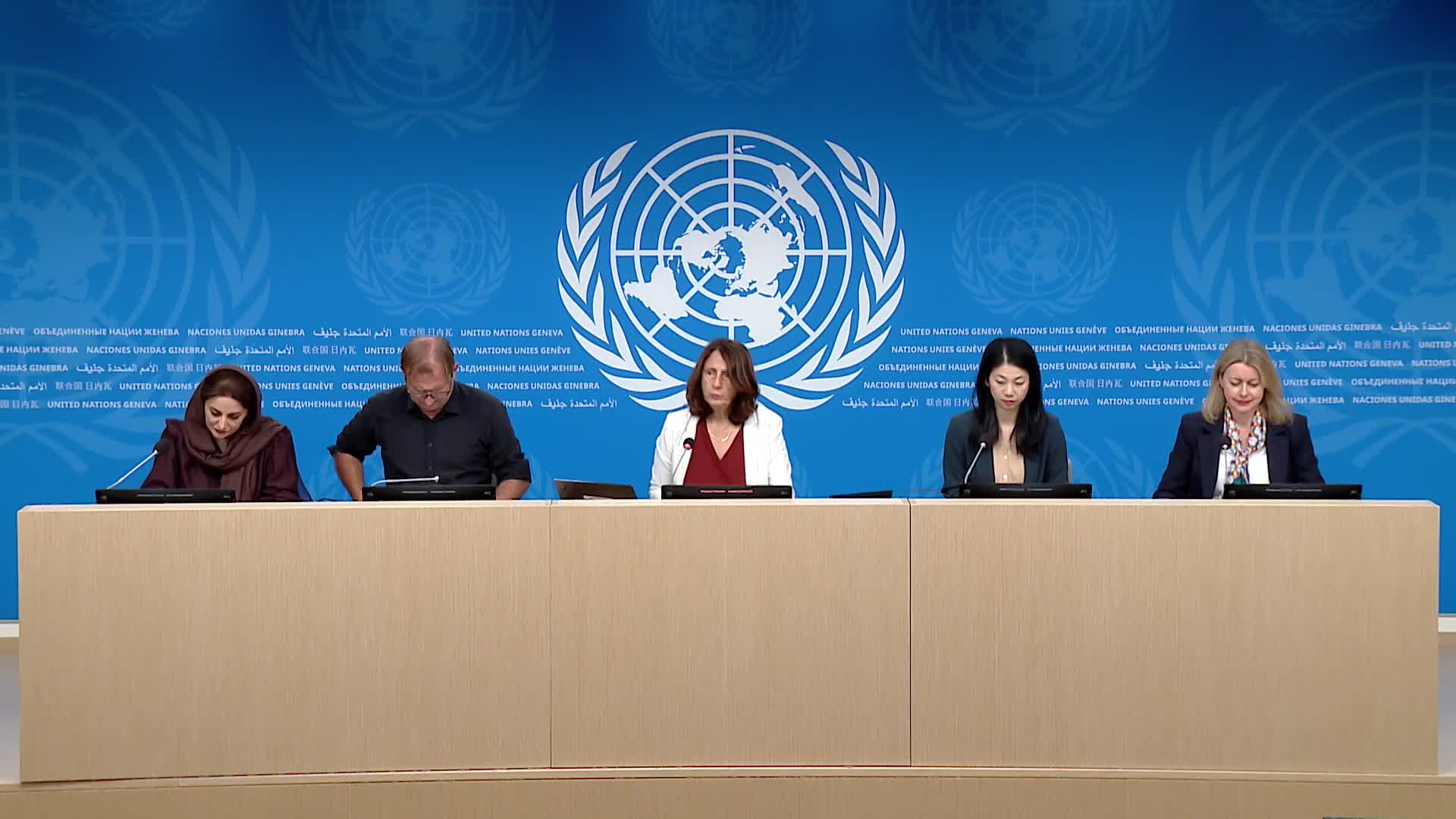
Mariana Katzarova discusses human rights in Russia as a UN Special Rapporteur.
1
1
1
Press Conferences | IOM , OHCHR , UN WOMEN , UNFPA , UNHCR , UNOPS , WHO
UN Geneva briefing: Yemen crisis worsens, urgent aid needed across multiple sectors.
1
1
1
Press Conferences | HRC
Press conference on the latest report of the Independent International Fact-Finding Mission on the Bolivarian Republic of Venezuela to the UN Human Rights Council
1
1
1
Press Conferences | OHCHR
Victims Still Waiting: A Global Briefing on Transitional Justice Around the World
2
1
2
Edited News , Press Conferences | WMO
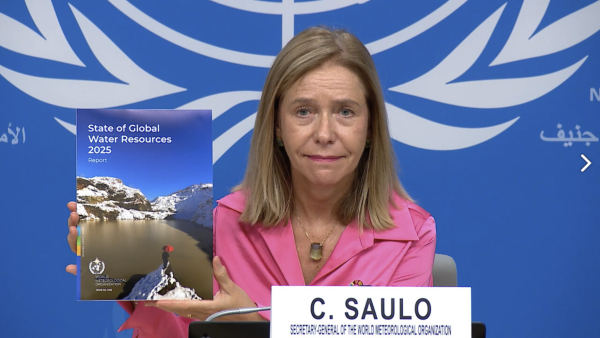
As world’s water reserves change, countries must prepare for a new reality: WMO
New data showing that rivers were at their lowest level for decades last year provides further evidence that the climate crisis is real and countries must act immediately to protect themselves from the increasing threat to communities and livelihoods, the UN World Meteorological Organization (WMO) said on Thursday.
The key findings from WMO’s State of Global Water Resources 2025 report covering the hydrological cycle and extreme events in the five-year period to last year:
- 2025 was one of driest years for river discharge in 35 years
- Past seven years have seen abnorfmal river flows
- Water storage on Earth’s land surface has decreased in past decade
- Widespread glacier loss across all regions for fourth consecutive year
- Asia and Africa are regions most affected by water-related disasters
- Water data availability has improved, but gaps remain in hard-hit areas
Highlighting the long-term decline in the Earth’s freshwater storage and glacier melt, WMO Secretary-General Celeste Saulo explained that the planet’s water reserves used to act as a planetary “savings account” that absorbed the occasional dry season, avoiding a water crisis. “One of the central stories of the 2025 report is what is happening to that savings account? And the simple answer is that we are depleting it,” she told journalists in Geneva.
Groundwater reserves are equally stretched and have been in decline since 2014, WMO’s report states, with nearly two-thirds of monitored wells worldwide showing levels lower than the historical norm and indicating a shift “further toward deficit…not recovery”.
“At the same time, we are seeing more water-related disasters,” Ms. Saulo said, while also stressing that the currently strengthening El Niño “will increase the risk of drought in some areas, and flooding in others”.
Glaciers disappearing
In 2025, for the fourth consecutive year, every major glaciated region on Earth lost ice mass, leading to short-term hazards including floods and long-term water insecurity, according to WMO.
Responding to a question about whether the changing global water cycle might have contributed to the deadly Nepal-China flooding disaster, Ms. Saulo explained that melting ice and rock was just one factor in the chain of events that ultimately sent a massive and deadly wall of water and debris downstream on 26 August, killing at least 1,367 people.
“You asked if it could happen again? Absolutely; the problem in this region is that there’s 63,700 glaciers at the last count,” she told a Press Conference in Geneva. “Even if you’re looking with remote sensing with satellites at these glaciers, you might see some faults, you might see some slight shifting, that does not mean necessarily catastrophic collapse. So, in order to plan for this, it’s very, very difficult. But the international community is looking very hard at ways in which we can bring people together to solve some of these monitoring issues.”
Data indicates that glaciers shrank between 2023 and 2025 with cumulative losses of 1,400 gigatonnes of water – or about one third of annual fresh water needs.
Every major glacier region on Earth lost ice for the fourth consecutive year.
“All 19 glacier regions around the globe lost ice; in Central Asia, Iceland, the Russian Arctic and western Canada and the United States, it was among the three worst years on record,” said Wayne Jenkinson, WMO’s Director of Hydrology and Cryosphere.
Some regions with smaller glaciers such as Central Europe, the Caucasus, the western Canada and the United States may already have reached “peak water”, Mr. Jenkinson warned.
“After this point, the glacier gives less meltwater each year simply because there is less ice left to melt. That matters for every community downstream that relies on water during hot, dry summers,” he explained.
Narelle van der Wel, WMO’s Head of Cryosphere Monitoring, Predictions and Services, stressed that while some further glacier loss is unavoidable, the eventual scale of the decline is not predetermined.
“Some glacier loss is inevitable, but total loss of glaciers is not yet inevitable,” she said, pointing to emissions reductions as central to limiting future losses.
Preparing for moving baselines
The report does not attribute every observed change to climate change alone. WMO says pressure on water resources and natural variability also contribute.
Mr. Jenkinson said governments need to prepare for “moving baselines” as historical patterns become less reliable.
“The situation 30 years ago is not where we are today,” he said. Countries, he added, need to prepare “for those changes that have really already arrived”.
ends