

The United Nations Office at Geneva
Multimedia Newsroom
Press Conferences | OHCHR , UNHCR , OCHA , WHO , WFP , IOM , UNDP
UNOG Bi-weekly press briefing 21 August 2020
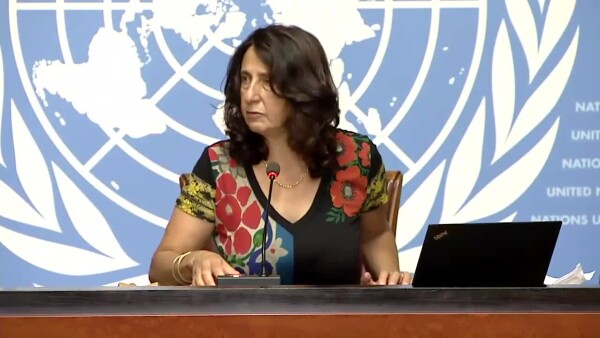
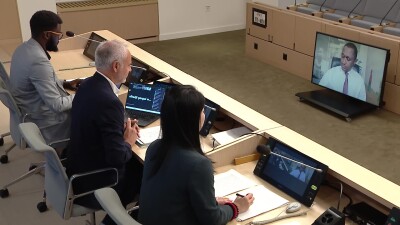
Alessandra Vellucci, Director of the United Nations Information Service (UNIS), chaired the hybrid briefing, attended by the spokespersons of the Office for the Coordination of Humanitarian Affairs, the United Nations Refugee Agency, the World Food Programme, the United Nations Children’s Fund, the International Organization for Migration, the World Health Organization, and the Office of the High Commissioner for Human Rights.
COVID-19 safety measures
Alessandra Vellucci, for the United Nations Information Service, informed that all those who participated in press events in room III were required to wear masks.
Meeting of the Syrian Constitutional Committee
Alessandra Vellucci, for the United Nations Information Service, said that, on Monday 24 August, the Syrian Constitutional Committee would reconvene at the Palais des Nations in Geneva under the auspices of the United Nations Special Envoy for Syria, Mr. Geir O. Pedersen. The UN Special Envoy for Syria would give a press briefing in Room III on the work of the Syrian Constitutional Committee today at 12 noon, right after the regular bi-weekly briefing.
The briefing would be carried live on webtv.un.org. Because of COVID-19 safety measures, attendance would be limited to 27 people, the maximum capacity for Room III. Others would be able to watch the press briefing with Arabic interpretation on webtv.un.org
World Humanitarian Day
Jens Laerke, for the Office for the Coordination of Humanitarian Affairs (OCHA), said that Wednesday on World Humanitarian Day, OCHA had highlighted the high number of aid workers being killed, injured or kidnapped while doing their jobs and commemorated those lost in the line of duty. OCHA had thanked frontline workers, local responders, national staff, and humanitarians everywhere – the real-life heroes. Its message remained that the best way to pay tribute to them was by supporting their work and ensuring their safety. The support and enthusiasm for getting this message out all over the world had been extraordinary. For example, Twitter mentions of World Humanitarian Day hashtags had increased by 435 per cent compared to last year, with more than 150,000 tweets viewed 140 million times on social channels in 136 countries. The World Humanitarian Day video had been viewed a million times - and the campaign was far from over. OCHA thanked the humanitarian organizations and the media for their coverage. OCHA appreciated the support from governments and social media influencers. But mostly it thanked all the people who had spent a moment reading and viewing the stories of the extraordinary commitment, courage, and humanity of frontline humanitarian workers and sharing these stories with their friends and followers. This shows that people agreed that this was a message the world needed to hear.
Lebanon
Arkan el-Seblani, Regional Chief Technical Advisor and Manager of the Regional Project on Anti-Corruption and Integrity in Arab Countries for the United Nations Development Programme, said the explosion at the Port of Beirut on 4 August had brought to the forefront the deep accountability deficit and widespread and systemic corruption in the country. Lebanon consistently scored poorly on all related international indicators. On the 2019 Corruption Perception Index for example, Lebanon scored 28/100 compared to the Arab states regional average of 33 points and a global average of 43 points. Unfortunately, this deficit was also likely to have an impact on response and recovery efforts, including related international assistance.
Leakage and embezzlement of money and goods, bribes and kickbacks in reconstruction projects, as well as political co-optation of related efforts were real risks in the context of Lebanon. UNDP had sought to raise awareness on the deep gaps in existing laws and procedures and support multi-stakeholder platforms that worked to identify and pursue systemic solutions. This had resulted in the country adopting its first-ever national anti-corruption strategy in May 2020 and beginning its implementation in June. In parallel, UNDP had supported the formulation and adoption of key legislation including on the access to information and whistle-blower protection.
Sarah Bel, for the United Nations Development Programme (UNDP), said that, starting in September, UNDP would organize a webinar series covering four topics: transparency and accountability in internal aid to Lebanon; integrity guarantees in election processes and financing; constitutional gaps hindering efforts to curb corruption; and means to address corruption in public sector institutions. She would provide the links to register, as the webinars were open to journalists.
Jens Laerke, for the Office for the Coordination of Humanitarian Affairs (OCHA), said OCHA in Lebanon had begun the disbursement of US$ 8.5 million from the Lebanon Humanitarian Fund to provide rapid support to families affected by the devastating Beirut Port explosions. The Humanitarian Coordinator in Lebanon, Ms. Najat Rochdi, had stressed the importance of expediting funding to immediately begin the process of rebuilding people’s lives and support their recovery. The funding would support five international and three local non-governmental organizations in Beirut that were already working closely with vulnerable communities, ensuring that assistance reaches the people who need it most. More than 180,000 people would be reached with critical health, food and protection assistance.
Marixie Mercado, for the United Nations Children’s Fund (UNICEF), noting that psychosocial support was a major programmatic priority, said that in a rapid needs assessment conducted by UNICEF and partners between 10 and 17 August, half of respondents reported that children in their households were showing changes in behaviour or signs of trauma or extreme stress following the explosions. These behaviours and symptoms could include severe anxiety; quietness or withdrawing from parents and families; nightmares and trouble sleeping; and aggressive behaviour. It was clear the needs were immense. UNICEF’s psychosocial support came in the form of psychosocial kits for children and parents; setting up child-friendly spaces in affected areas; and the provision of more specialized, intensive, and longer-term support for those who needed it. So far, with partners, UNICEF had reached hundreds of children with psycho-social first aid, and hundreds of caregivers with health counselling and referrals; re-connected over 60 buildings to the public water system and installed 109 water tanks in damaged households; brought in three shipments of humanitarian supplies including US$ 3.5 milllion in PPE supplies; and, supported over 1,100 young people to clean and do minor repairs of damaged homes, and to distribute food and masks. UNICEF required $46.7 million to respond to the immediate needs of children and families over the next three months. It had received US$ 1.3 million, with more in the pipeline. It was grateful for these timely and flexible contributions and further support was vital now.
Human rights defenders killed in Philippines
Liz Throssell, for the Office of the High Commissioner for Human Rights, said the UN Human Rights Office was saddened and appalled by the ongoing violence and threats against human rights defenders in the Philippines, including the killing of two human rights defenders over the past two weeks. Randall “Randy” Echanis, an agrarian reform advocate and peace consultant, had been killed in his home in Quezon City on 10 August. Reports indicated he had suffered brutal treatment before he died. Another long-standing human rights defender, Zara Alvarez had been shot dead in Bacolod City on Negros Island. Both Echanis and Alvarez had been repeatedly “red-tagged” – labelled as communists or terrorists – in relation to their work. The UN Human Rights Office stressed the need for independent, thorough and transparent investigations into the killings and for those responsible to be held to account. Effective measures must to be taken to protect other at-risk human rights defenders and to halt and condemn incitement to hatred against them. It also called on the Government to ensure that relevant agencies cooperated fully with investigations by the Commission on Human Rights of the Philippines. The UN Human Rights Office had raised its concerns with the Government and the Commission on Human Rights on these cases and looked forward to continuing to engage with them.
Responding to questions, Ms. Throssell said the UN Human Rights Office had welcomed a statement from the Presidential Palace denouncing any form of violence against citizens, including activists. With regards to investigations, the Department of Justice had announced it would lead an inter-agency body to investigate the murder of Randall “Randy” Echanis and look into the killing of Zara Alvarez. However, the High Commissioner’s report to the Human Rights Council had noted that the effectiveness of this body remained limited because of a perceived lack of independence, transparency and powers: since 2001, only 13 out of 308 cases investigated by this body had resulted in convictions.
Concerns over arbitrary detentions in Belarus
Liz Throssell, for the Office of the High Commissioner for Human Rights, said the UN Human Rights Office was continuing to follow developments in Belarus which had seen protests and strikes since the presidential election on 9 August. While noting that most of the several thousand people reported to have been detained in connection with the protests had now been released, it remained seriously concerned that over 100 people were reportedly still detained, including approximately 60 individuals who were accused of criminal acts, which could carry heavy prison sentences, in connection with their participation in largely peaceful demonstrations. There were still reports of people being detained yesterday. The UN Human Rights Office reminded the Belarus authorities of the absolute prohibition on torture, and reiterated the call made last week by the High Commissioner for prompt, thorough, independent and impartial investigations into all allegations of human rights violations. These include the deaths of four people as a result of injuries they sustained during the protests. Victims had the right to redress. As the situation in Belarus continued to evolve, the government should take steps to facilitate and not repress the right to freedom of expression and of peaceful assembly. The UN Human Rights Office encouraged the Belarussian authorities to reconsider their stance of not engaging with the UN Special Rapporteur on Belarus.
Other human rights issues
Responding to questions about the Russian political activist Alexei Navalny, Liz Throssell, for the Office of the High Commissioner for Human Rights said reports were very concerning. The UN Human Rights Office stressed that it was important that he get all the adequate care he needed to make a speedy and full recovery.
On the situation in Mali, Liz Throssell, for the Office of the High Commissioner for Human Rights said staff of UN Human Rights Office in Mali had had access to all the people, including the President, who had been detained by those who had conducted the coup. There were no indications that these people had been subjected to ill-treatment. The UN Human Rights Office stressed, like the UN Secretary-General, that people who had been illegally detained should be unconditionally released.
Rohingya crisis
Andrej Mahecic, for the Office of the High Commissioner for Refugees, the UN Refugee Agency, said it was calling for renewed support and solutions for displaced and stateless Rohingya communities both within and outside of Myanmar.Three years on from the latest exodus of Rohingya refugees who had fled Myanmar and sought sanctuary in Bangladesh from August 2017 onwards, challenges persisted and continued to evolve. The COVID-19 pandemic had added additional complexities. The international community must not only maintain support for refugees and their host communities, but also adapt to critical needs and expand the search for solutions. The UN Refugee Agency and the Government of Bangladesh had individually registered over 860,000 Rohingya refugees in the refugee settlements in Cox’s Bazar. Bangladesh had demonstrated a profound humanitarian commitment to Rohingya refugees. This generosity must be acknowledged through continued investment in both Rohingya refugees and Bangladeshi host communities.
A briefing note is available here.
Responding to questions, Mr. Mahecic said testing capacities were run by a national laboratory which had been conducting tests since 2 April. 3,849 positive cases had been reported in total in the Coz Bazar’s district, including 84 refugees.
Flooding in Yemen
Andrej Mahecic, for the Office of the High Commissioner for Refugees, the United Nations Refugee Agency, said an estimated 300,000 people in Yemen had lost their homes, crops, livestock and personal belongings in the last three months because of torrential rains and severe flash floods. Amongst the newly displaced were people who had previously been forced to flee their homes by the conflict. They were once again having to rebuild their lives and communities. The UN Refugee Agency was rushing to provide emergency shelter support and core relief items such as blankets and mattresses to thousands of people, as well as counselling support to those struggling to cope with the loss of their homes and loved ones. Together with partners, it was engaging the displaced communities to raises awareness of COVID-19 protection and prevention measures. However, its capacities continued to be constrained by severe underfunding. On current levels, its stocks of shelter and emergency relief items would run out in a matter of weeks, leaving with some of their most basic needs unmet.
A briefing note is available here.
Voluntary humanitarian return flights from Libya
Safa Msehli, for the International Organization for Migration (IOM), said one hundred and eighteen Ghanaian migrants stranded in Libya due to COVID-19 restrictions had boarded a flight home yesterday, IOM’s first Voluntary Humanitarian Return Programme movement since a temporary hold had begun five months ago. Among those aboard Thursday’s charter to Accra were seven women, three children and two infants. All had been medically screened by IOM prior to departure and had received personal protective equipment like masks, gloves and hand sanitizers, as well as psychosocial assistance. The Organization would continue to provide support during a 14-day quarantine period in Ghana and later, reintegration assistance.
COVID-19 had added a whole new layer of complexity to the Voluntary Humanitarian Return programme, a critical lifeline for migrants wishing to return home since it began in late 2015.
In the face of sweeping COVID-19 mobility restrictions and intensified conflict in Libya, IOM had received many new requests for Voluntary Humanitarian Return assistance. The Organization operated an information hotline for migrants and had maintained communications with governments of countries of origin to facilitate consular support. More than 2,300 migrants had been registered for voluntary return to their countries of origin since March.
A press release is available here.
Responding to questions, Ms. Msehli said all concerned migrants were in the city of Tripoli, where many of them had been working for years. Because of the COVID-19 pandemic, they had found themselves out of a job, and the IOM had provided shelter to some of them. IOM expected that there would be more flights because of the backlog of people who had registered to the programme in hopes of returning to their country of origin. It was difficult to assess how many migrants were making their way to Libya because of the lack of monitoring at the borders. While the number of arrivals of migrants to Europe had increased compared to 2019, it was significantly lower than in previous years.
Food security in Burkina Faso
Elisabeth Byrs, for the World Food Programme (WFP), said food security in Burkina Faso was worsening dramatically. More than 3.2 million people were struggling to feed themselves during the current lean season – a 50% rise since March. Immediate and sustained actions were needed to assist those who are worst hit. Two provinces in the Sahel region – Oudalan and Soum – had been driven into the Emergency phase of food insecurity, as defined by the Cadre Harmonisé food security assessment. These assessments indicated that more than 11,000 people in these northern areas may be experiencing catastrophic levels of food insecurity. WFP was racing against the clock to prevent a hunger catastrophe. Over the last two years, it had continued to ramp up its assistance, to keep up with the deepening humanitarian crisis. In August, WFP was set to reach 1.2 million people. But funding fell short of the needs, and this may jeopardize efforts to save lives. WFP urgently needed US$ 51 million to quickly respond to the growing needs. Without immediate funding, WFP would have no choice but to begin reducing food rations.
Independent Panel for Pandemic Preparedness and Response
Margaret Harris, for the World Health Organization (WHO), said WHO briefings were taking place on Mondays and Thursdays.
Ms. Harris added that the Secretariat of the Independent Panel for Pandemic Preparedness and Response was being set up, and its staff would include a press officer.
Geneva Announcements
Alessandra Vellucci, for the United Nations Information Service, recalled that today was the International Day of Remembrance and Tribute to the Victims of Terrorism. Tomorrow, the international community would mark the International Day Commemorating the Victims of Acts of Violence Based on Religion or Belief; on 23 August, it would mark the International Day for the Remembrance of the Slave Trade and its Abolition.
An embargoed press briefing would take place on Tuesday, 25 August at 8 a.m. New York time (2 p.m. Geneva time), ahead of the release of the Secretary-General’s Report on Digital Financing, which would be launched on Wednesday, 26 July at 10 a.m. The briefers would be Achim Steiner, United Nations Development Programme Administrator and Co-Chair of the Task Force on Digital Financing of the Sustainable Development Goals, and Simon Zadek, head of the Task Force Secretariat.
Ms. Vellucci added the Committee on the Rights of Persons with Disabilities had opened its virtual 23rd session this week. The only public meeting still scheduled for this session would take place at 3.30 p.m. on the 4th of September, for the closure of the session. It would be broadcast on webtv.un.org
Similar Stories
1
1
1
Press Conferences | UNHCR
End of UNHCR's 77th Annual Executive Committee (ExCom) meeting week
1
1
1
Press Conferences | UNICEF , IOM , UNHCR
UN Special Assistant to the Personal Envoy Office (SUDAN): Peace Initiatives and Efforts in Sudan; UNICEF: Dire situation of children in Gaza; IOM: Damaged Homes and Energy Attacks Risk Displacing Ukrainians for this winter; UNHCR: update on EXCOM week
1
1
1
Press Conferences | IOM , UNDRR
UN stresses importance of household preparedness for disaster risk reduction.
1
1
1
Statements , Press Conferences | OHCHR
1
1
1
Press Conferences | UNHCR , UNICEF , IFRC , OHCHR , UN WOMEN , IOM , OCHA , WHO
UNHCR – ExCom Meeting, UNICEF – Nepal Recovery, IFRC – Flash Floods, WHO – Mental Health, IOM – South Sudan Floods, OCHA – DRC Humanitarian aid, UNHCR – Sahel Displacement, UNICEF – Yemen Update, IOM – Gaza Shelter, UN Women – Gaza Women, OHCHR – Arrests and detentions of Syrians by Israeli force
2
1
2
Press Conferences | UNCTAD
Presentation of the Trade and Developement Report 2026
Embargoed until 9 October 2026 at 11 a.m. (Geneva Time)
UNCTAD: UNCTAD’s flagship report finds that governments increasingly use industrial, trade, financial and technology policies to pursue economic and national security objectives. Market access and the ability to move into higher-value activities now depend more heavily on technology, finance and geopolitics.
1
1
1
Press Conferences | UPU
Release of the State of the Postal Sector Report 2026
1
1
1
Press Conferences | IOM , ITU , UNECE , UNICEF , WHO , WMO
UNICEF: Ebola, DRC - children orphans or separating them from parents and caregivers; IOM: Humanitarian needs in Djibouti amid arrivals from Yemen and increased migrant movements; WHO: Darfur, scale of health needs far exceeds available resources; WMO co-sponsored Global Heat Forum, Bangkok, monthly Global Seasonal Climate Update; UNECE: UN Forum of Mayors; ITU Plenipotentiary Conference 2026; WHO: child and adolescent obesity guidelines and new global roadmap to tackle pregnancy hypertension, a leading cause of maternal mortality
1
1
1
Press Conferences | OCHA , UN WOMEN , UNHCR , WFP , WHO , WTO , UNEP
OCHA – $160M CERF allocation to 12 underfunded crises; UNHCR – 5.8M refugee children remain out of school amid funding cuts; UN Women – Middle East escalation and food security among women/girls; WHO – Gaza supplies and overall situation; WFP – Yemen food insecurity and impact on global hunger ; UNEP - First International Conference of the Global Framework on Chemicals in Geneva | 16-20 November 2026
1
1
1
Press Conferences | UNHCR , WHO
Yemen's health system nears collapse amid conflict, causing rising casualties and medicine shortages.
1
1
1
Press Conferences | HRC
Update by the Expert Mechanism to Advance Racial Justice and Equality in Law Enforcement
1
1
1
Press Conferences | WIPO , WHO , UNICEF , UNHCR , IOM , WFP , FAO
WIPO Global Innovation Index 2026 launch and press conference, WHO Composition of influenza vaccines for the 2027 Southern Hemisphere flu season, UNICEF Yemen hunger and malnutrition; UNHCR Sudan displacement into Chad; IOM Ebola and population movements in DRC; WFP emergency food assistance in Nepal; and FAO food loss and waste.