

The United Nations Office at Geneva
Multimedia Newsroom
UN GENEVA PRESS BRIEFING
11 March 2025
Recent violence in Syrian coastal areas
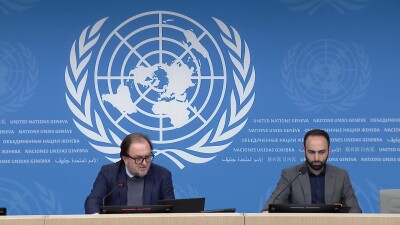
Thameen Al-Kheetan, for the Office of the High Commissioner for Human Rights (OHCHR), said that reports continued to emerge of the distressing scale of violence in Syria’s coastal region since 6 March. The UN Human Rights Office had so far documented the killing of 111 civilians, but the process of verification was ongoing, and the actual number of people killed was believed to be significantly higher. Many of the cases documented were of summary executions. They appeared to have been carried out on a sectarian basis, in Tartus, Latakia and Hama governorates - reportedly by unidentified armed individuals, members of armed groups allegedly supporting the caretaker authorities’ security forces, and by elements associated with the former government. In several extremely disturbing instances, entire families - including women, children and individuals hors de combat - were killed, with predominantly Alawite cities and villages targeted in particular. According to many testimonies collected by OHCHR, perpetrators raided houses, asking residents whether they were Alawite or Sunni before proceeding to either kill or spare them accordingly. Some survivors told the Office that many men were shot dead in front of their families.
Between 6 and 7 March, armed individuals reportedly affiliated with the former government’s security forces also raided several hospitals in Latakia, Tartus and Baniyas. They clashed with security forces of the caretaker authorities and affiliated armed groups. This reportedly resulted in dozens of civilian casualties, including patients, doctors and medical students, and damage to the hospitals. Other violations and abuses recorded in recent days included widespread looting of homes and shops, mainly by unidentified individuals who appeared to have taken advantage of the chaotic situation on the ground. Many civilians had fled their homes to rural areas, while a number also reportedly sought refuge at an airbase controlled by Russian forces in the area. The caretaker authorities announced the end of security operations in the coastal areas on 10 March. However, intermittent clashes continued to be reported.
OHCHR had documented accounts and footage of violations and abuses. But tensions had also been fueled by mounting hate speech, online and offline, and widespread dissemination of misinformation, including footage taken out of context, which further exacerbated fear among the population. The Office was concerned that the significant spike in hate speech and misinformation risked further inflaming tensions and damaging social cohesion in Syrian society.
UN High Commissioner for Human Rights Volker Türk urged accountability for all these crimes. He welcomed the announcement by the caretaker authorities of an independent investigation committee, and called on them to ensure that the investigations undertaken were prompt, thorough, independent and impartial. All those found responsible for violations must be held to account, regardless of their affiliation, in line with international law norms and standards. Victims and their families had the right to truth, justice and reparations. To ensure such harrowing violations and abuses were not repeated, it was imperative that the process of vetting and integrating armed factions into Syria’s military structures was in line with the country’s obligations under international human rights and humanitarian law, and fully addressed the responsibility of all those who were involved in past or recent violations of human rights in Syria.
Answering questions, Thameen Al-Kheetan stressed that a total of 90 men, 18 women, one boy and two girls, all civilians, were killed. These numbers were verified by the Syria Office of OHCHR, but it was believed that the actual number of civilians killed was significantly higher.
He informed that High-Commissioner Volker Türk, while meeting the Syrian caretaker authorities in January, offered the full support of his office to the transitional justice process. He added that the office, currently based in Beirut, Lebanon, was in the process of moving to Damascus, and engaging with the authorities in this regard.
Answering about the involvement of OHCHR in possible investigations about the violences committed since 6 March, Mr. Al-Kheetan said that the caretaker authorities had the responsibility in the conduction of all the necessary investigations and in the protection of the Syrian population. The OHCHR was not asked to be part of the investigations.
OHCHR had faced huge challenges in the process of verifying offline and online information, partly because misinformation and fake news were rapidly and heavily spreading. The Office also noted a huge demand among the Syrian population to address the United Nations in the documentation of the violences. Hundreds of emails containing photos and videos were sent by Syrian civilians to OHCHR, trying to reach out and report violations. A huge effort of corroboration and verification of this material was still ongoing. Another challenge was to verify the identity of the unidentified armed individuals present on photos and videos.
About the attacks on hospitals, Mr. Al-Kheetan emphasized that they were a clear violation of international humanitarian law. These tragic events should have never happened and should stop. Proper accountability and investigations should be conducted to understand the circumstances of these violences and to know who the perpetrators of such attacks on civilians were.
Michele Zaccheo, for the United Nations Information Service, informed that the UN Resident Coordinator and Humanitarian Coordinator for Syria, Adam Abdelmoula, had stated that contrary to reports circulating in the social media and in some international media outlets, the United Nations had not to date deployed any fact-finding or investigative mission to the Syrian coastal area. Such missions could only be mandated by the UN Human Rights Council or the UN Security Council. The UN’s efforts on the ground remained focused on providing life-saving humanitarian assistance to those in need.
Arrest of former Philippine’s President Rodrigo Duterte
In answer to a question, OHCHR spokesperson Ravina Shamdasani stated that OHCHR was aware that authorities in the Philippines had announced the arrest of former President Rodrigo Duterte on a warrant issued by the International Criminal Court (ICC). The severe human rights impacts of the so-called war on drugs in the Philippines had long been documented by OHCHR, she said. A report issued in 2020 found credible allegations of widespread and systematic extrajudicial killings as well as arbitrary detention. OHCHR welcomed the positive changes in the area of drug policy that the current government had pursued on accountability. However, only four cases had so far resulted in convictions. It was crucial to address such impunity and that the next steps were undertaken in full accordance with the law, including applicable international human rights obligations. The need to protect victims and witnesses, and preventing reprisals of any kind, was also stressed. As this important process moved forward, the families of those affected had shown great courage in pursuing justice over many years, and their protection was crucial.
U.S. funding cuts
Responding to the media, spokesperson Ravina Shamdasani said that OHCHR received stop work orders for ongoing agreements with USAID and the U.S. Department of State for seven countries: Bangladesh, Colombia, Equatorial Guinea, Ethiopia, Irak, Peru, and Ukraine. An immediate impact was the shutdown of a program funded by the United States in Irak, which involved working with torture victims and families of disappeared persons. In Colombia -- where OHCHR had been working the authorities, human rights defenders and communities since 1997 -- U.S. contributions represented 40 per cent of the budget.
Now was time for more investment in human rights, not less, to help in preventing conflicts and resolving crises, Ms. Shamdasani said. High Commissioner Volker Türk had called on all states to step up their investments on human rights.
In 2024 the United States was the top donor of OHCHR, with contributions as high as USD 36 million, representing about 13.5 per cent of extra budgetary resources.
Starting in October 2022, OHCHR had started a process of structural change to maximize efficiencies. That process had been going on ever since, and had now entered the contingency planning phase, with a review of the 2025 budget. An effort was being made to reduce costs where it was possible, minimizing the impact on OHCHR’s core work. Parallel to that, the High Commissioner had launched for funding human rights work, encouraging all actors, including states, foundations and private sector philanthropists to “step in and step up”.
U.S. policy change on discrimination and freedom of speech
Answering questions, Ravina Shamdasani, for the Office of the High Commissioner for Human Rights (OHCHR) said that OHCHR’s mandate was on the protection of human rights and insisted that nobody should face discrimination of violence based on identity, sexual orientation, nationality, migration status, skin color, or gender. Nondiscrimination was a fundamental tenet of international human rights law. Now was crucial that we ensured that every segment of society was included, bearing in mind historical injustices people had been subjected to as well and that governments globally acted to fight racism, bigotry and hate speech. On the topic of freedom of expression, High Commissioner Volker Türk also emphasized his concerns about disinformation and called on the U.S. to ensure that freedom of expression was protected.
Malnutrition tightening its grip on children in Rohingya refugee camps, amid funding cuts
Rana Flowers, United Nations Children’s Fund (UNICEF) Representative in Bangladesh, speaking from Dhaka, stated that admissions for severe acute malnutrition treatment surged by over 27 per cent in February this year, compared to the same month last year. In just one month this year, more than 38 children under five that were admitted for emergency care every single day. Several compounding crises were driving this surge: first, the 2024 monsoon season that lasted a full month longer than usual -- worsening unsanitary conditions and triggering a surge in childhood diseases like severe diarrhea and outbreaks of cholera and dengue, which fuel malnutrition. Secondly, escalating violence over the border had displaced even more families, so more of them were seeking shelter in the camps. Third, intermittent reductions in food rations over the past two years had forced families to survive on meagre diets. And last, now, a global funding crisis was forcing humanitarian agencies to look at urgent measures to preserve access to the very basics of life, including clean water, enough food to survive, and medical treatment to dangerously sick children.
Any further reductions in humanitarian support risked pushing families into extreme desperation, heightening tensions and instability inside the overcrowded camps – creating a catastrophe that would not only deepen their suffering but would also make it more challenging for UNICEF to and provide help. More than 500,000 children were living in the camps in Cox’s Bazar. More than 15 per cent were now malnourished – an emergency threshold. This past month, food rations had reached a critical point. According to the World Food Programme (WFP), without immediate funding, rations could soon be reduced to just six USD a month. Pregnant and breastfeeding mothers, along with their infants, would be among the most vulnerable to the consequences. The flow-on effect to children was quick, and lethal. These families could not yet safely return home, they had no legal right to work, so sustained humanitarian support was essential.
Amidst this global aid funding crisis, UNICEF was determined to stay and deliver for children. But without guaranteed and sustained funding, critical services would be at risk. UNICEF was calling on all donors to sustain support for the critical work for children. Until now this community had survived thanks to the solidarity of the international humanitarian community, but today an aid funding crisis risked becoming a child survival crisis.
Answering questions from the media, Rana Flowers underlined that the current situation was rapidly evolving, with about 500,000 children in need of critical assistance. Every donor mattered as there was no replacement for the valuable partnership with the United States. As UNICEF was determined to stay and deliver for children, these children were at risk of severe malnutrition. Unless additional resources were secured, only half of the children in need would have access to treatment against severe acute malnutrition this year, and that was going to leave about 7,000 children at risk, with the expectation of a rise in morbidity and mortality for babies.
The funds lost were equivalent to about a quarter of UNICEF’s Rohingya refugee response costs, as they were in 2024. And without alternative funding services for these children, their survival, safety and future would be put at risk. It was not only about nutrition, but also about access to safe water and sanitation services, as well as education. Without further funding, children would be left in unsafe situation. If the funding was not addressed urgently, starting 1st April, food would be cut in half rations for children.
Ms. Flowers emphasized that Bangladesh had shown extraordinary leadership and immense generosity in hosting the Rohingya population, welcoming 1.1 million Rohingyas in Cox’s Bazar for the last seven years. As this population could not return home because of safety concerns, there was no alternative for the international community but to look at finding solutions. Now was not the time to turn away from Bangladesh, as the country was at a critical juncture in its own history and development.
Finally, there was a significant number of highly supportive governments to the Rohingya situation, and UNICEF was currently assessing how these donations could be implemented.
Full statement can be found here.
Michele Zaccheo, for the United Nations Information Service (UNIS), stated that the Secretary-General’s visit to Bangladesh from 13 to 16 March would help bringing back attention to the underfund crises in Bangladesh.
Funding cuts at the United Nations
Answering questions, Michele Zaccheo, for the United Nations Information Service (UNIS), said that the UN Secretariat was an international organization whose budget contributions come from Member States, not from other entities.
Margaret Harris, for the World Health Organization (WHO), stated that WHO was in a process of making its funding in a more sustainable way. Contributions from other entities than Member States was extremely important. She added that Dr. Tedros Adhanom Ghebreyesus, WHO Director-General, made a pillar of his mandate to find more sustainable ways to fund WHO, including a much broader donor base. What was happening right now was critical, since the cuts had impacted the programs in the most needed countries.
Five years since the Covid-19 pandemic
Margaret Harris, for the World Health Organization (WHO), said that today marked five years since Dr. Tedros Adhanom Ghebreyesus characterized the Covid 19 epidemic as a pandemic. Today was a difficult date for a lot of people across the world because they were still mourning those they lost that they couldn't even say goodbye to. It was a day that we would not mark, but we understood the pain and the suffering. Some good things had still come out of the pandemic, such as the change of the international health regulations to have a pandemic emergency as a thing.
Announcements
Michele Zaccheo, for the United Nations Information Service (UNIS), informed that Office of the High Commissioner for Human Rights would hold a press conference on 12 March at 2:30 pm in Geneva to update on the situation in occupied Palestinian territory. The speakers would be Ben Saul, Special Rapporteur on the promotion and protection of human rights and fundamental freedoms while countering terrorism (in person), Francesca Albanese, Special Rapporteur on the situation of human rights in the Palestinian territories occupied since 1967 (online), Michael Fakhri, Special Rapporteur on the right to food (in person), and Meg Satterthwaite, Special Rapporteur on the independence of judges and lawyers (online).
Navi Pillay and Chris Sidoti, respectively Chair and Member of the Independent International Commission of Inquiry on the Occupied Palestinian Territory, including East Jerusalem, and Israel, for the Human Rights Council, would hold a press conference on 13 March at 11 am in Geneva. The briefing would provide information about the Launch of the latest report of the Commission.
Mr. Zaccheo also announced that Stefan Uhlenbrook, Director of Water and Chryosphere for the World Meteorological Organization (WMO) and Michael Zemp, Director of World Glacier Monitoring Service, would hold a press conference on 13 March at 2 pm in Geneva, to update on the state of world’s glaciers. The briefing would be embargoed until 00:01 CET on 21 March (World Glacier Day).
Sara Hossain, Chair of the Independent International Fact-Finding Mission on the Islamic Republic of Iran, for the Human Rights Council, Shaheen Sardar Ali, Expert Member of the Fact-Finding Mission, and Viviana Krsticevic, Expert Member of the Fact-Finding Mission, would hold a press conference on 14 March at 2 pm in Geneva, for the launch of the Iran Fact-Finding Mission’s latest report.
The Commission of Inquiry about sexual and gender-based violence perpetrated in the occupied Palestinian Territory was ongoing today and tomorrow. Open portions of testimonies would be available on UN web TV.
The Human Rights Council was continuing its 58th session.
Mr. Zaccheo informed that the Human Rights Committee, which continued its 143rd session from 3 to 28 March at Palais Wilson, was concluding this morning its review of the report of Mongolia. Other countries reviewed would be Albania and Haiti.
The 32nd session of the Committee on the Rights of Persons with Disabilities, from 3 to 21 March, was concluding this morning its review of the report of Canada. Other countries reviewed would be European Union and Palau.
Finally, Michele Zaccheo announced that the Conference on Disarmament was meeting this morning at 10 am in Tempus, under the presidency of Japan.
***
Similar Stories
1
1
1
Press Conferences | OCHA , UN WOMEN , UNHCR , WFP , WHO , WTO , UNEP
OCHA – $160M CERF allocation to 12 underfunded crises; UNHCR – 5.8M refugee children remain out of school amid funding cuts; UN Women – Middle East escalation and food security among women/girls; WHO – Gaza supplies and overall situation; WFP – Yemen food insecurity and impact on global hunger ; UNEP - First International Conference of the Global Framework on Chemicals in Geneva | 16-20 November 2026
1
1
1
Press Conferences | UNHCR , WHO
Yemen's health system nears collapse amid conflict, causing rising casualties and medicine shortages.
1
1
1
Press Conferences | HRC
Update by the Expert Mechanism to Advance Racial Justice and Equality in Law Enforcement
1
1
1
Press Conferences | WIPO , WHO , UNICEF , UNHCR , IOM , WFP , FAO
WIPO Global Innovation Index 2026 launch and press conference, WHO Composition of influenza vaccines for the 2027 Southern Hemisphere flu season, UNICEF Yemen hunger and malnutrition; UNHCR Sudan displacement into Chad; IOM Ebola and population movements in DRC; WFP emergency food assistance in Nepal; and FAO food loss and waste.
2
1
2
Press Conferences | UNCTAD
Gaza reconstruction needs reach $71.5 billion as Palestinian economy and public finances face severe strain. Latest UNCTAD report documents the loss of decades of development gains, economic collapse in Gaza and tightening economic constraints in the West Bank.
The report identifies three immediate priorities: transferring withheld Palestinian revenues, safeguarding the banking system and aligning reconstruction support with the documented scale of damage and economic losses.
1
1
1
Press Conferences | HRC
Press conference on the situation of human rights in Nicaragua by the UN Group of Human Rights Experts
1
1
1
Press Conferences | ITU , UNHCR , WHO , WMO
YEMEN - UNHCR: Escalating conflict in Yemen could fuel more displacement, refugee movement
CLIMATE - WHO / WMO: Health and Climate impact of El Niño
1
1
1
Press Conferences | HRC , OHCHR
Mariana Katzarova discusses human rights in Russia as a UN Special Rapporteur.
1
1
1
Press Conferences | IOM , OHCHR , UN WOMEN , UNFPA , UNHCR , UNOPS , WHO
UN Geneva briefing: Yemen crisis worsens, urgent aid needed across multiple sectors.
1
1
1
Press Conferences | HRC
Press conference on the latest report of the Independent International Fact-Finding Mission on the Bolivarian Republic of Venezuela to the UN Human Rights Council
1
1
1
Press Conferences | OHCHR
Victims Still Waiting: A Global Briefing on Transitional Justice Around the World
2
1
2
Edited News , Press Conferences | WMO
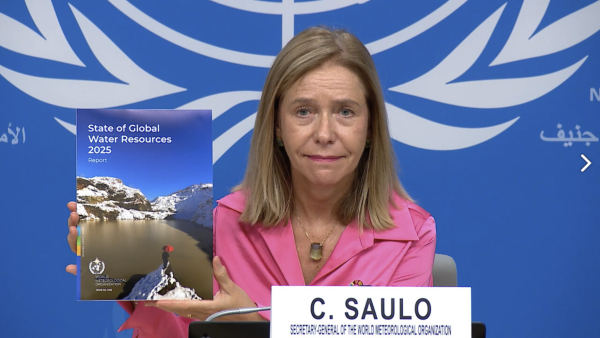
As world’s water reserves change, countries must prepare for a new reality: WMO
New data showing that rivers were at their lowest level for decades last year provides further evidence that the climate crisis is real and countries must act immediately to protect themselves from the increasing threat to communities and livelihoods, the UN World Meteorological Organization (WMO) said on Thursday.
The key findings from WMO’s State of Global Water Resources 2025 report covering the hydrological cycle and extreme events in the five-year period to last year:
- 2025 was one of driest years for river discharge in 35 years
- Past seven years have seen abnorfmal river flows
- Water storage on Earth’s land surface has decreased in past decade
- Widespread glacier loss across all regions for fourth consecutive year
- Asia and Africa are regions most affected by water-related disasters
- Water data availability has improved, but gaps remain in hard-hit areas
Highlighting the long-term decline in the Earth’s freshwater storage and glacier melt, WMO Secretary-General Celeste Saulo explained that the planet’s water reserves used to act as a planetary “savings account” that absorbed the occasional dry season, avoiding a water crisis. “One of the central stories of the 2025 report is what is happening to that savings account? And the simple answer is that we are depleting it,” she told journalists in Geneva.
Groundwater reserves are equally stretched and have been in decline since 2014, WMO’s report states, with nearly two-thirds of monitored wells worldwide showing levels lower than the historical norm and indicating a shift “further toward deficit…not recovery”.
“At the same time, we are seeing more water-related disasters,” Ms. Saulo said, while also stressing that the currently strengthening El Niño “will increase the risk of drought in some areas, and flooding in others”.
Glaciers disappearing
In 2025, for the fourth consecutive year, every major glaciated region on Earth lost ice mass, leading to short-term hazards including floods and long-term water insecurity, according to WMO.
Responding to a question about whether the changing global water cycle might have contributed to the deadly Nepal-China flooding disaster, Ms. Saulo explained that melting ice and rock was just one factor in the chain of events that ultimately sent a massive and deadly wall of water and debris downstream on 26 August, killing at least 1,367 people.
“You asked if it could happen again? Absolutely; the problem in this region is that there’s 63,700 glaciers at the last count,” she told a Press Conference in Geneva. “Even if you’re looking with remote sensing with satellites at these glaciers, you might see some faults, you might see some slight shifting, that does not mean necessarily catastrophic collapse. So, in order to plan for this, it’s very, very difficult. But the international community is looking very hard at ways in which we can bring people together to solve some of these monitoring issues.”
Data indicates that glaciers shrank between 2023 and 2025 with cumulative losses of 1,400 gigatonnes of water – or about one third of annual fresh water needs.
Every major glacier region on Earth lost ice for the fourth consecutive year.
“All 19 glacier regions around the globe lost ice; in Central Asia, Iceland, the Russian Arctic and western Canada and the United States, it was among the three worst years on record,” said Wayne Jenkinson, WMO’s Director of Hydrology and Cryosphere.
Some regions with smaller glaciers such as Central Europe, the Caucasus, the western Canada and the United States may already have reached “peak water”, Mr. Jenkinson warned.
“After this point, the glacier gives less meltwater each year simply because there is less ice left to melt. That matters for every community downstream that relies on water during hot, dry summers,” he explained.
Narelle van der Wel, WMO’s Head of Cryosphere Monitoring, Predictions and Services, stressed that while some further glacier loss is unavoidable, the eventual scale of the decline is not predetermined.
“Some glacier loss is inevitable, but total loss of glaciers is not yet inevitable,” she said, pointing to emissions reductions as central to limiting future losses.
Preparing for moving baselines
The report does not attribute every observed change to climate change alone. WMO says pressure on water resources and natural variability also contribute.
Mr. Jenkinson said governments need to prepare for “moving baselines” as historical patterns become less reliable.
“The situation 30 years ago is not where we are today,” he said. Countries, he added, need to prepare “for those changes that have really already arrived”.
ends