

The United Nations Office at Geneva
Multimedia Newsroom
UN GENEVA PRESS BRIEFING
7 February 2025
Impact of US funding cuts on global HIV/AIDS fight
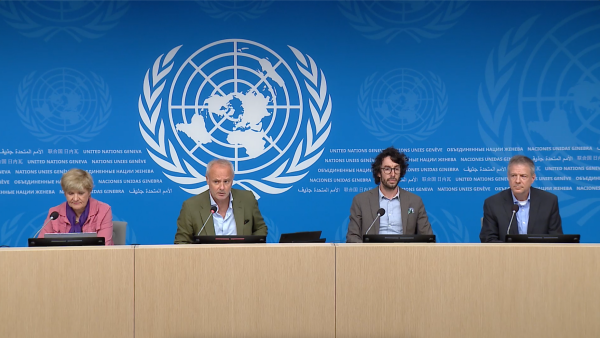
Christine Stegling, Deputy Executive Director of UNAIDS, stated that the sudden pause to US foreign assistance was a shockwave to the AIDS response and the global health infrastructure. While the Emergency Humanitarian Waiver issued by the US Secretary of State was welcome, there was still a lot of confusion. The waiver should mean that 20 million people living with HIV that depended on US aid for their treatment could continue to receive their medication during the 90-day assessment. There were still ten million HIV-positive people in the world living without treatment, reminded Ms. Stegling.
Many services that supported the delivery of treatment had stopped, such as counselling services or the community delivery of medication. The biggest impact would be on community health services, which were at the heart of UNAIDS’s successful drive against HIV/AIDS. UNAIDS estimated that if US President's Emergency Plan for AIDS Relief (PEPFAR) was not reauthorized between 2025 and 2029, and other resources were not found for the HIV response, there would be a 400 percent increase in AIDS deaths, or 6.3 million AIDS-related deaths. Ms. Stegling quoted Richard Lusimbo, Director of the Ugandan Key Populations Consortium, who said that foreign aid had been more than financial support in the fight against HIV/AIDS, discrimination, and systemic inequalities; it had been a lifeline.
Ms. Stegling reminded that the US had been a huge supporter of global health and UNAIDS was hopeful that it would stay present. The biggest danger was losing the hard-won gains and abandoning human rights protection for the most marginalized. She concluded by stressing that the world was at a critical moment in the AIDS response, as in 2024, long-acting medicines for HIV prevention and treatment had proven over 95 percent effective in stopping new HIV infections. This could be a game changing moment but only if there was global solidarity and a true global commitment to end AIDS by 2030.
Responding to questions from the media, Ms. Stegling said it was becoming gradually clear what the US waiver would cover, but everyone was still analyzing and seeking guidance. UNAIDS was doing live monitoring with country offices to see where bottlenecks might be. UNAIDS was concerned about the long-term impact of HIV prevention, as well as treatment interruption, which would lead to an increase in new HIV infections. In many countries, governments had stepped in, so it was still too early to evaluate the impact, which was most felt by health community groups. Ms. Stegling specified that in Ethiopia, 5,000 public health workers’ contracts funded by US assistance from all regions had been terminated; 10,000 data clerks had also been let go. It was hoped that the US would continue its critical aid, which had been provided over the decades, with bipartisan support. The global community had to come together, with national governments, to see how best to fill in the gaps at the community health level. There were many ongoing conflicts in the world right now, reminded Ms. Stegling, which already adversely affected provision of HIV prevention and treatment services. On another question, Ms. Stegling explained that in 2024, UNAIDS had been USD 8 billion short on global HIV/AIDS response. Current donors ought to step up and new donors were needed to step in, she stressed.
Situation in eastern Democratic Republic of the Congo
Alessandra Vellucci, for the United Nations Information Service (UNIS), said that the Human Rights Council was holding today a special session on the human rights situation in the east of the Democratic Republic of the Congo. The Council was hearing from Volker Türk, the High Commissioner of Human Rights; Bintou Keita, Chief of the United Nations Organization Stabilization Mission in the DRC (MONUSCO); and Surya Deva, Chair of the Coordination Committee of the Special Procedures. A draft resolution would be considered for adoption this afternoon. Ms. Vellucci reminded that the previous day, the Secretary-General had once again appealed for a swift, peaceful resolution to the ongoing conflict.
Dr. Boureima Hama Sambo, World Health Organization (WHO) Representative for the Democratic Republic of the Congo, speaking from Kinshasa, said that the recent surge in violence had exacerbated an already dire situation for millions of people, which remained tense and volatile, and the health needs were immense. WHO remained on the ground and was providing lifesaving medical supplies, supporting health workers, and coordinating the emergency response. Hospitals and morgues are overwhelmed in and around Goma. In North Kivu, there were reports of at least 3,082 injured and 843 dead from 31 health facilities, while in South Kivu, more than 65 injuries had been reported from three hospitals. Attacks on health were a violation of international law, reminded Dr. Sambo. Over 70 of the health facilities in North Kivu had been damaged or destroyed. A WHO-supported health clinic in North Kivu had been temporarily occupied by armed groups, and many health workers had fled.
Infectious disease risks had multiplied: close to 600 suspected cases of cholera and 14 deaths had been reported from North Kivu between 1 and 27 January. Regarding mpox, before the escalation there had been 143 patients in isolation units in North Kivu, but then over 90 percent of them had fled. Malaria continued to be a major killer. Continuity of health care for chronical diseases was also in question, including cancer, diabetes, and hypertension. Malnutrition was a health concern with over one out of four people in the region facing acute food insecurity (IPC 3+). Before the airport at Goma closed on 25 January, WHO had been able to send critical medical supplies to treat 2,000 injured people and 10,000 cholera patients; and bring in emergency health supplies, including IV fluids, anesthetics, antibiotics and more, for 320,000 patients. WHO needed USD 50 million of additional resources to meet essential health needs and save lives. WHO was calling for humanitarian access, and an end to attacks on health care. Finally, what the region needed was peace, which would end the unimaginable suffering of the people there.
Answering questions, Dr. Sambo said that there was a lab in Goma with highly dangerous pathogens. The biobank in the lab, which could be locked remotely, was very well kept and safe, with a generator running despite power shortages. There was no danger, for now, coming out of the lab. Regarding questions on US funding cuts, Dr. Sambo said that in 2024 the US had contributed as much as 70 percent of the country’ humanitarian response and was also a major contributor to fighting mpox. While the WHO response in the region relied on other donors as well, reduction in overall aid would inevitably have impact on the health of people in the region. WHO would do its utmost to maintain its response to infectious diseases, stressed Christian Lindmeier, also for the WHO.
Dire conditions for children in Haiti
James Elder, for the United Nations Children’s Fund (UNICEF), who had just returned from Haiti, said that Haiti had seen a staggering 1,000% increase in sexual violence against children in Haiti, in the chaos that had turned their bodies into battlegrounds. Armed groups continued to inflict unimaginable horrors on children. Almost equally staggering was how little coverage this gruesome statistic had received. Mr. Elder then spoke of a 16-year-old girl, who late last year had been abducted by armed men, extensively beaten and relentlessly raped. When the armed groups had realized that she had not had anyone to pay the kidnapping ransom, she was released. She was currently in a UNICEF-supported safe house with more than a dozen other young girls receiving care.
Mr. Elder said that armed groups now controlled 85 percent of Port au Prince, the capital city. In 2024 alone, child recruitment had surged by 70 percent, so right now, up to half of all armed group members were children, some as young as eight years old. Many were taken by force, others were manipulated. Many were driven by extreme poverty. Some 1.2 million children in the country lived under the constant threat of violence. Essential services had collapsed in Haiti, hospitals were overwhelmed, more than half a million children had been displaced. Some 3 million people in Haiti required humanitarian assistance this year.
UNICEF had created 32 mobile safe spaces to prevent and respond to gender-based violence, deployed more than 380 health care professionals across more than 105 institutions, distributed cash to 30,000 families and treated more than 80,000 children for moderate and severe wasting. Programs that met children's needs could disrupt the cycles of violence and reduce children becoming victims or children becoming perpetrator Mr. Elder regretted that UNICEF's funding appeal for Haiti for 2024 of USD 221 million was 72 percent unfunded. That starkly contrasted with the urgent need for education, for protection and development opportunities to prevent children being drawn into violence. Without these, violence was going to continue to consume this generation and future generations.
Announcements
On behalf of United Nations Relief and Works Agency for Palestine Refugees in the Near East (UNRWA), Alessandra Vellucci read the following statement: “The rights of the Palestinians continue to be violated. Since the war began, people in Gaza have undergone systematic dehumanization. Palestinians do matter, including those in Gaza. Their rights, lives and futures matter. Human rights cannot be applied selectively. As the UN Secretary-General said: ‘Peace requires ending the occupation, and the establishment of an independent Palestinian State, with Gaza as an integral part; a viable and sovereign Palestinian State side-by-side with Israel’. At UNRWA, our teams are committed to continue providing critical assistance to Palestine Refugees who need us most until empowered Palestinian institutions become a lasting and viable alternative.” The statement is also available here.
Ms. Vellucci, for the UN Information Service (UNIS), informed that the Committee on the Elimination of Discrimination Against Women was reviewing today the report of Luxembourg.
The Committee on Economic, Social and Cultural Rights was going to open on 10 February its 77th session (10-28 February), during which it would review the reports of Croatia, Peru, United Kingdom, Rwanda, Philippines, and Kenya.
***
TOPICS
- UNAIDS Charlotte Sector (PR) with Christine Stegling, UNAIDS Deputy Executive Director: US Funding cuts and impact on the ground and for the organization.
- WHO Christian Lindmeier (Zoom) with Dr Boureima Hama Sambo, WHO Representative for the DRC (From Kinshasa): Alarming health crisis in eastern DRC
-UNICEF James Elder: Haiti’s Children Under Siege
Similar Stories
1
12
1
1
Press Conferences , Images | UNOG
Closing Press Conference following the Sixth Consultative Meeting on Enhancing Coordination of Peace Initiatives and Efforts in Sudan

2
17
1
2
Edited News , Press Conferences | OCHA , WMO
Two UN agencies teamed up on Wednesday to issue an appeal for immediate assistance to help communities already being impacted by the strongest El Niño on record.
1
1
1
Press Conferences | CITES
Wildlife trade and conservation policy discussions at the 81st meeting of the CITES Standing Committee (SC81)
1
1
1
Press Conferences | UNHCR , UNCTAD , WMO , OCHA , UNICEF , WHO
UNHCR Hungary’s 1956 Refugee Crisis: 70 Years On, UNCTAD World Investment Forum 2026, Doha, WMO Greenhouse Gas Bulletin and Climate Update for COP31, OCHA Afghanistan: Malnutrition, Girls’ Education and Recovery, UNICEF Yemen: Child Malnutrition and Unsafe Water in Taiz, WHO Inequalities in Noncommunicable Diseases and Risk Factors

1
1
1
Press Conferences | UNHCR
End of UNHCR's 77th Annual Executive Committee (ExCom) meeting week

1
1
1
Press Conferences | UNICEF , IOM , UNHCR
UN Special Assistant to the Personal Envoy Office (SUDAN): Peace Initiatives and Efforts in Sudan; UNICEF: Dire situation of children in Gaza; IOM: Damaged Homes and Energy Attacks Risk Displacing Ukrainians for this winter; UNHCR: update on EXCOM week

1
1
1
Press Conferences | IOM , UNDRR
UN stresses importance of household preparedness for disaster risk reduction.

1
1
1
Statements , Press Conferences | OHCHR

1
1
1
Press Conferences | UNHCR , UNICEF , IFRC , OHCHR , UN WOMEN , IOM , OCHA , WHO
UNHCR – ExCom Meeting, UNICEF – Nepal Recovery, IFRC – Flash Floods, WHO – Mental Health, IOM – South Sudan Floods, OCHA – DRC Humanitarian aid, UNHCR – Sahel Displacement, UNICEF – Yemen Update, IOM – Gaza Shelter, UN Women – Gaza Women, OHCHR – Arrests and detentions of Syrians by Israeli force

2
1
2
Press Conferences | UNCTAD
Presentation of the Trade and Developement Report 2026
Embargoed until 9 October 2026 at 11 a.m. (Geneva Time)
UNCTAD: UNCTAD’s flagship report finds that governments increasingly use industrial, trade, financial and technology policies to pursue economic and national security objectives. Market access and the ability to move into higher-value activities now depend more heavily on technology, finance and geopolitics.

1
1
1
Press Conferences | UPU
Release of the State of the Postal Sector Report 2026
1
1
1
Press Conferences | IOM , ITU , UNECE , UNICEF , WHO , WMO
UNICEF: Ebola, DRC - children orphans or separating them from parents and caregivers; IOM: Humanitarian needs in Djibouti amid arrivals from Yemen and increased migrant movements; WHO: Darfur, scale of health needs far exceeds available resources; WMO co-sponsored Global Heat Forum, Bangkok, monthly Global Seasonal Climate Update; UNECE: UN Forum of Mayors; ITU Plenipotentiary Conference 2026; WHO: child and adolescent obesity guidelines and new global roadmap to tackle pregnancy hypertension, a leading cause of maternal mortality