

The United Nations Office at Geneva
Multimedia Newsroom
UN GENEVA PRESS BRIEFING
15 November 2024
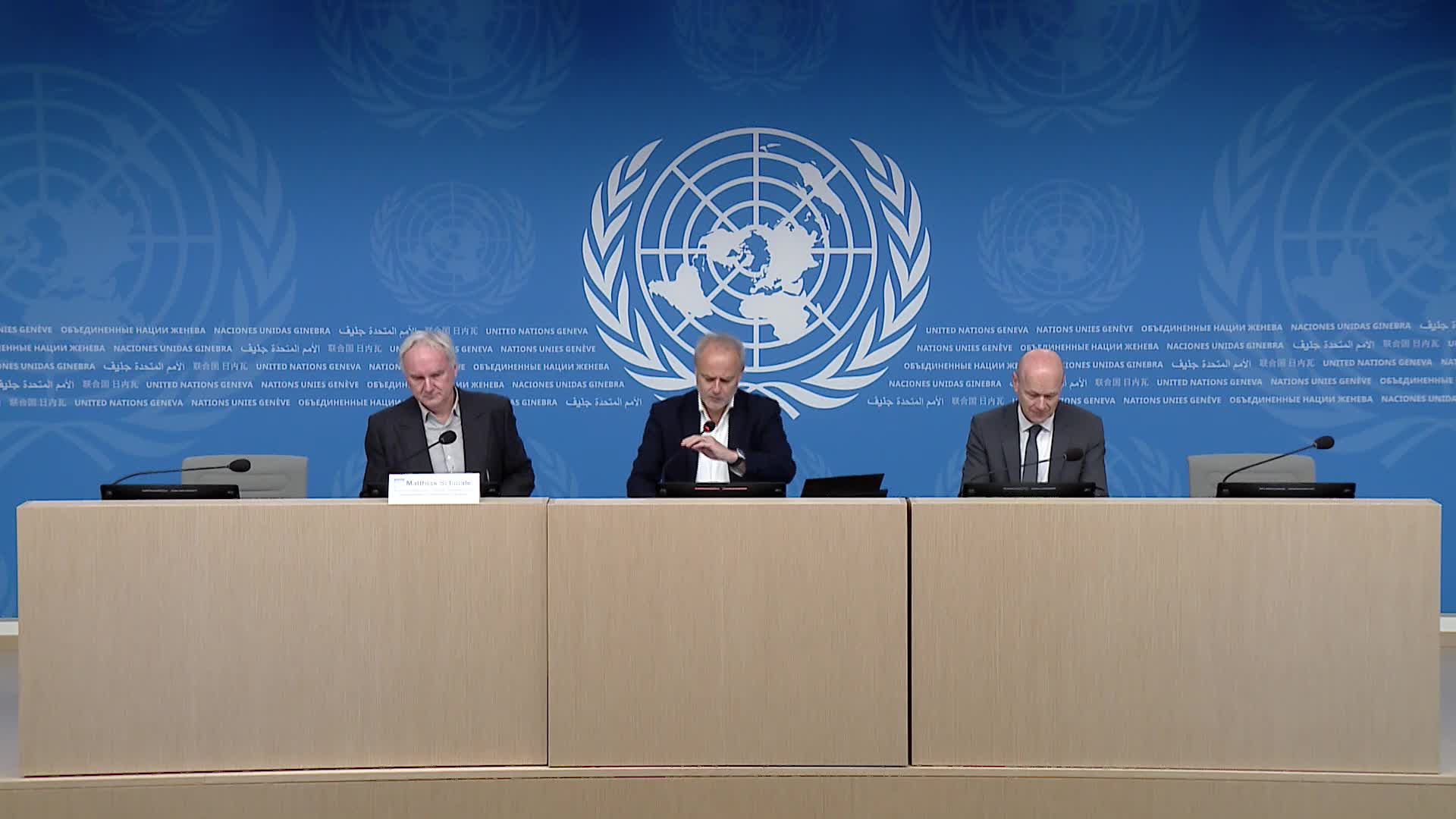
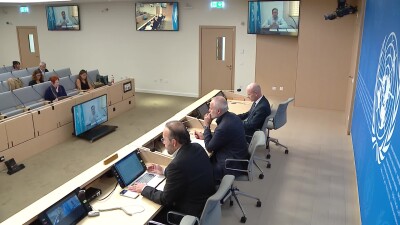
Rolando Gómez, Chief of the Press and External Relations Section of the United Nations Information Service in Geneva, chaired a hybrid briefing, which was attended by the Resident and Humanitarian Coordinator in Ukraine, and the spokespersons of the World Health Organization and the Office for the Coordination of Humanitarian Affairs.
Humanitarian situation in Ukraine
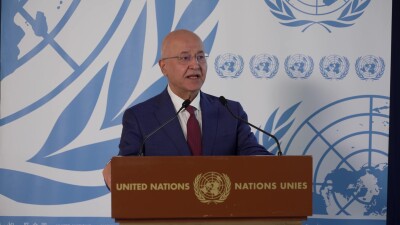
Matthias Schmale, Resident and Humanitarian Coordinator in Ukraine, said that, as the 1,000-day mark was approaching since the Russian Federation’s full-scale invasion in 2022, more than 12,000 people had been killed and almost 40 per cent of the people in Ukraine were in need of humanitarian assistance, including 3.6 million internally displaced people. The Humanitarian Response Plan aimed to deliver assistance and protection to 8.5 million people. Civilian infrastructure had been decimated, with over 2,000 attacks on health-care facilities and two million damaged homes since February 2022. The prolonged war had led to widespread trauma and psychological distress among civilians, emphasizing the need for mental health support as the war continued. The systematic attacks on energy infrastructure might pose an additional risk in winter (with an estimated 65 percent of Ukraine’s energy infrastructure affected), especially for already vulnerable people, if power cuts extended more than a few days in subzero temperatures.
The UN, national and international NGOs and volunteer organizations had reached 7.2 million people with at least one type of aid thanks to the USD 1.8 billion received for the humanitarian response in Ukraine. As temperatures started to drop, the humanitarian actors in Ukraine were implementing the Humanitarian Winter Response Plan, to address emergency needs by delivering solid fuel, ensuring water systems can continue to work and providing cash for winter, among other activities to ensure people can stay warm. Mr. Schmale said that increased hostilities along the front line posed severe security risks for civilians and humanitarians working in those areas. In 2024, nine humanitarian workers had lost their life in the line of duty and humanitarian facilities had been damaged. There was a high concentration of people with disabilities and older people remaining in front line communities in Donetsk, Kharkiv, and Kherson regions that needed humanitarian assistance, whether they stayed or chose to evacuate. Mr. Schmale said that he was impressed by the commitment of the authorities and the people of Ukraine to rebuild and move forward. He gave an example of a demined field where the Food and Agriculture Organization and the World Food Programme were helping with replanting seeds and restarting food production. The war in Ukraine could not be normalized, concluded Mr. Schmale.
Answering questions from the media, Mr. Schmale stated that large numbers of people in big cities lived in high-rise buildings where fuel could not be easily delivered. There existed so-called « invincibility points » in big cities where people could gather, have warm drinks, and be safe. There were a lot of worries that the Russian military might strike the energy sector again, which could be another tipping point for mass movement both within and outside the country. Mr. Schmale reminded that recently an ICRC truck had been hit, and three Ukrainian employees had been killed. The donor supply was inevitably waning, explained Mr. Schmale, but while the trend was downwards, the Ukraine crisis appeal still received enough money compared to some other crises. It was hoped that the significant humanitarian support from the United States, individually the largest contributor, would continue under the next administration. Responding to another question, Mr. Schmale reiterated that 65 per cent of Ukraine’s energy infrastructure had been damaged, but there had also been a lot of rebuilding and identifying alternative solutions. The UN was working with the Ukrainian authorities on scenario mapping, trying to prepare for various developments.
The increased use of drones created by the Russian forces would have an increasingly damaging impact on the civilian population in Ukraine, said Mr. Schmale. The central government and regional governments were all preparing for various winter scenarios; the main concern was more massive attacks on the energy infrastructure which would further deteriorate the situation. The conditions were already much worse than the previous winter, given the significant damage inflected this year. Deliberately attacking energy infrastructure on which civilians depended was a violation of international law and it had to stop. There was war-weariness among people in Ukraine; they all wanted the war to end, but not at all costs; he was not sure that the Ukrainian people were ready to bring the war to an end if it meant giving up the Ukrainian territory.
Answering a question on the health situation in the country, Margaret Harris, for the World Health Organization (WHO), confirmed that attacks on healthcare in Ukraine were an ongoing problem. Health was not a target, but it was increasingly, and worryingly, under attack in conflicts around the world. Mental health of Ukrainians was also a matter of serious concern.
Questions to the World Health Organization
Responding to a question on the announcement that Robert F. Kennedy Jr. would be nominated for the Health and Human Services Secretary in the United States, Margaret Harris, for the World Health Organization (WHO), stated that it was up to each Member State to decide whom to appoint to senior posts. The United States was a vital partner of the World Health Organization, and their cooperation had contributed to improving the health of both Americans and people abroad. It was hoped that such cooperation would continue in the coming period.
On a question related to measles, Ms. Harris explained that it was not clear whether the surge of measles was due to vaccine hesitancy or limited access, partly related to the COVID19 pandemic. The causes were multiple, but vaccine hesitancy was a problem that the WHO was working to address.
Speaking of Gaza, Ms. Harris reminded that Gaza used to have an excellent vaccination record. Vaccines were the reason so many people around the world had survived to adulthood than they otherwise would, she stressed. Vaccine-preventable diseases had disappeared from communities where vaccinations were widely implemented, reminded Ms. Harris.
Questions to the Office for the Coordination of Humanitarian Affairs
Answering questions, Jens Laerke, for the Office for the Coordination of Humanitarian Affairs (OCHA), said that from OCHA’s perspective, all possible indicators in Gaza were going in the wrong direction. Access was at a low point, while chaos, suffering, displacement, and death were all at a high point. Humanitarians were expected to deliver and help alleviate the suffering but were not allowed access or guaranteed safety.
The new head of OCHA, Tom Fletcher, was scheduled to take up his new position on 17 November.
Announcements
Rolando Gómez, for the United Nations Information Service (UNIS), informed that the UN Secretary-General was on the way to Rio de Janeiro, where he would address the G20 summit.
He reminded of the statement about the visit of UN Peacekeeping chief Jean Pierre Lacroix, who was visiting Lebanon and Israel this week.
On 18 November at 1 pm, Philippe Lazzarini, Commissioner-General of the United Nations Relief and Works Agency (UNRWA) would hold a hybrid press conference to provide an update on the situation in the occupied Palestinian territories. Mr. Lazzarini would be joined by Antón Leis, Secretary General and Executive Director of the Spanish Agency for International Cooperation and Development.
The Committee Against Torture would hold on 18 November at 10 am a public meeting devoted to the follow-up of concluding observations, views on individual complaints, and the question of reprisals.
The Universal Periodic Review was ending its 47th session today.
Today was the International Day against Transnational Organized Crime, while 17 November would be the Day of Remembrance for Road Traffic Victims.
***
Similar Stories
1
1
1
Press Conferences | UN WOMEN , WFP , WHO
UN WOMEN: Sudan Women and girls one year after the fall of El Fasher; increasing drone attacks across the country; WFP: DRC - Ebola spreads to eighth DRC province as WFP delivers food, builds treatment centres and keeps supplies moving; WHO - Update on Ebola (Bundibugyo Virus Disease)
1
12
1
1
Press Conferences , Images | UNOG
Closing Press Conference following the Sixth Consultative Meeting on Enhancing Coordination of Peace Initiatives and Efforts in Sudan

2
17
1
2
Edited News , Press Conferences , Images | OCHA , WMO
Two UN agencies teamed up on Wednesday to issue an appeal for immediate assistance to help communities already being impacted by the strongest El Niño on record.
1
1
1
Press Conferences | CITES
Wildlife trade and conservation policy discussions at the 81st meeting of the CITES Standing Committee (SC81)
1
1
1
Press Conferences | UNHCR , UNCTAD , WMO , OCHA , UNICEF , WHO
UNHCR Hungary’s 1956 Refugee Crisis: 70 Years On, UNCTAD World Investment Forum 2026, Doha, WMO Greenhouse Gas Bulletin and Climate Update for COP31, OCHA Afghanistan: Malnutrition, Girls’ Education and Recovery, UNICEF Yemen: Child Malnutrition and Unsafe Water in Taiz, WHO Inequalities in Noncommunicable Diseases and Risk Factors
1
1
1
Press Conferences | UNHCR
End of UNHCR's 77th Annual Executive Committee (ExCom) meeting week
1
1
1
Press Conferences | UNICEF , IOM , UNHCR
UN Special Assistant to the Personal Envoy Office (SUDAN): Peace Initiatives and Efforts in Sudan; UNICEF: Dire situation of children in Gaza; IOM: Damaged Homes and Energy Attacks Risk Displacing Ukrainians for this winter; UNHCR: update on EXCOM week
1
1
1
Press Conferences | IOM , UNDRR
UN stresses importance of household preparedness for disaster risk reduction.
1
1
1
Statements , Press Conferences | OHCHR
1
1
1
Press Conferences | UNHCR , UNICEF , IFRC , OHCHR , UN WOMEN , IOM , OCHA , WHO
UNHCR – ExCom Meeting, UNICEF – Nepal Recovery, IFRC – Flash Floods, WHO – Mental Health, IOM – South Sudan Floods, OCHA – DRC Humanitarian aid, UNHCR – Sahel Displacement, UNICEF – Yemen Update, IOM – Gaza Shelter, UN Women – Gaza Women, OHCHR – Arrests and detentions of Syrians by Israeli force
2
1
2
Press Conferences | UNCTAD
Presentation of the Trade and Developement Report 2026
Embargoed until 9 October 2026 at 11 a.m. (Geneva Time)
UNCTAD: UNCTAD’s flagship report finds that governments increasingly use industrial, trade, financial and technology policies to pursue economic and national security objectives. Market access and the ability to move into higher-value activities now depend more heavily on technology, finance and geopolitics.
1
1
1
Press Conferences | UPU
Release of the State of the Postal Sector Report 2026