

The United Nations Office at Geneva
Multimedia Newsroom
Human Rights Council picks up again after COVID suspension, to hold racism debate
After a three month long COVID-19-enforced break, the Human Rights Council resumed its work at UN Geneva on Monday, giving the green light to a rare Urgent Debate on racism, alleged police brutality and violence against protesters sickened by the killing of American George Floyd in police custody.
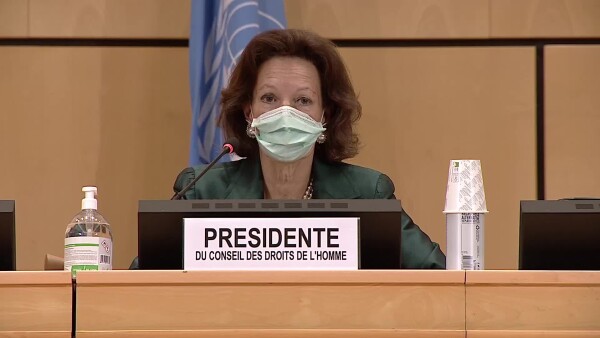
Opening the 35th meeting of the 43rd session of the Council in the unusual setting of the Assembly Hall to comply with social distancing requirements – rather than the HumanRights and Alliance of Civilizations Room – the current Council President, Elisabeth Tichy-Fisslberger, gave the floor to Burkina Faso, coordinator of the African Group.
“The tragic events of 25 May in Minneapolis in the US which led to the death of George Floyd led to protests throughout the world against injustice and police brutality that persons of African descent face on a daily basis in many regions of the world,” said Dieudonné W. Désiré Sougouri, Permanent Representative of Burkina Faso to the United Nations Office and other international organizations in Geneva. “The death of George Floyd is unfortunately not an isolated incident.”
Insisting that many other persons of African descent had “faced the same fate because of their origin and police violence”, Mr Sougouri said that it would be “inconceivable” if the Council did not address the issue.
“This is why the African Group calls upon the Human Rights Council to organise an Urgent Debate on current violations of human rights that are based on racism, systemic racism, police brutality against persons of African descent and violence against peaceful demonstrations to call for an end to be put to these injustices,” he said.
After endorsement of the African Group’s request, Ambassador Tichy-Fisslberger fixed the provisional date of the Urgent Debate on “current racially inspired human rights violations, systematic racism, police brutality and the violence against peaceful protests” for Wednesday 17 June at 3pm.
Speaking later to journalists, the Council President confirmed that the request from the African Group came after “what happened in America with George Floyd and the whole tragedy which showed the problems of racism, of police violence and the follow-up to that”.
It was not clear whether any members of Mr Floyd’s family had been invited to address the Council, but a draft resolution would be prepared by the Group, she added.
The group’s initiative came after a call from more than 600 rights groups last Monday to investigate alleged police violence after the killing of Mr Floyd.
The issue was universal, the Ambassador maintained, highlighting the large number of Black Lives Matter protests that have been held in many countries. “As you have seen with demonstrations all over the world, including here in Geneva, so this is a topic that is not about just one country, it goes well beyond that,” she explained.
“When I said it’s not against the United States, I mean there is complaints about a lot of racism in many countries of this world, of course in Europe, but not only; you find it all over the world.”
Asked about the significance of the development – which is only the fifth Urgent Debate to take place in the Council’s 14-year history – she added in her view that the African Group “thought that the situation was such, and also with demonstrations and the intensity of the public debate was such that we shouldn’t just have a regular HumanRights Council session and we should really put some focus on that topic.”
For seasoned Council-watchers, the day will also be remembered for the fact that Member States and non-governmental organisations convened in the cavernous Assembly Hall, where the near 2,000-seat capacity had to be slashed by around 90 per cent in line with Swiss government health directives.
In more normal times, deliberations happen in the Council’s altogether more colourful - if smaller - home elsewhere in the Palais des Nations, in the Human Rights and Alliance of Civilizations Room – although voting on some 40 draft resolutions is expected to be held there on Thursday afternoon and Friday.
To further prevent possible transmission of the respiratory disease, facemasks – and a few pairs of protective gloves - were almost universally in evidence.
Delegations were also parsed to just one representative rather than the usual two or three people in line with coronavirus social distancing measures.
Some delegations preferred to participate remotely, no mean feat in six languages, the unflappable Ambassador Tichy-Fisslberger conceded, describing the exercise as “fairly complicated”.
The decision to resume the Council’s work mirrors deconfinement moves in Switzerland and beyond, as the country reopens its borders with Austria, France and Germany on Monday 15 June.
To date, Switzerland has confirmed more than 31,000 cases of COVID-19 infection and more than 1,670 deaths, according to latest WHO data.
- Wide shot: exterior, flag alley, Palais des Nations, United Nations Geneva.
- Wide shot: Human Rights Council meeting in the Assembly Hall, Palais des Nations, United Nations Geneva.
- SOUNDBITE (EN) - Ambassador Elisabeth Tichy-Fisslberger (Austria), President of the HumanRights Council (14th cycle): “I hereby declare open this 35th meeting of the 43rd session of the Human Rights Council.”
- Medium: delegates wearing masks looking up at podium (out of shot).
- SOUNDBITE (FR) - Dieudonné W. Désiré Sougouri, Permanent Representative of Burkina Faso to the United Nations Office and other international organizations in Geneva (Coordinator of the African Group): “Les evènements tragiques du 25 mai à Minneapolis aux Etats-Unis qui ont entrainé la mort de George Floyd ont déclenché des protestations dans le monde entier contre l’injustice et la brutalité policière auxquelles les personnes de d’ascendance africaine sont confrontées quotidiennement dans de nombreuses régions du monde. La mort de George Floyd n’est malheureusement pas un incident isolé.”EN - “The tragic events of 25 May in Minneapolis in the US which led to the death of George Floyd led to protests throughout the world against injustice and police brutality that persons of African descent face on a daily basis in many regions of the world. The death of George Floyd is unfortunately not an isolated incident.
- Medium shot: delegates wearing masks, looking at laptop screens, sitting back.
- SOUNDBITE (FR) - Dieudonné W. Désiré Sougouri, Permanent Representative of Burkina Faso to the United Nations Office and other international organizations in Geneva (Coordinator of the African Group): “De nombreuses autres cas de personnes de d’ascendance africaine ayant subi le même sort en raison de leurs origines et de violences policières existent. Après l’indignation unanime et générale soulevée par cette situation, il serait inconcevable que le Conseil des droits de l’homme ne se saisisse pas de cette question d’actualité, conformément à son mandat. C’est la raison pour laquelle le Groupe Africain demande au Conseil des droits de l’homme d’organiser un débat urgent sur « les violations actuelles des droits de l’homme d’inspiration raciale, du racisme systémique, la violence policière contre les personnes d’ascendance africaine, et la violence contre les manifestations pacifiques » pour appeler à mettre un terme à ces injustices.”EN- “Many other cases of persons of African descent having faced the same fate because of their origin and police violence exist. After the widespread of indignation over this situation, it would be inconceivable that the Human Rights Council not deal with these questions which are very relevant in accordance with its mandate and this is why the African Group calls upon the Human Rights Council to organise an Urgent Debate on current violations of human rights that are based on racism, systemic racism, police brutality against persons of African descent and violence against peaceful demonstrations to call for an end to be put to these injustices.”
- Medium shot: delegates wearing masks listening to declarations, some standing at rear of room.
- SOUNDBITE (EN) - Ambassador Elisabeth Tichy-Fisslberger (Austria), President of the HumanRights Council (14th cycle): “Can I now therefore take it that the Council wishes to endorse the Bureau’s proposal to hold the Urgent Debate on the ‘current racially inspired human rights violations, systematic racism, police brutality and the violence against peaceful protests’ on Wednesday 17 June at 3pm? I can see no objection; it is therefore so decided. Thank you very much.”
- Wide shot: UN Geneva Press Room III; various journalists, seated far apart from one another, with Ambassador Tichy-Fisslberger sitting at podium to rear of shot.
- SOUNDBITE (EN) - Ambassador Elisabeth Tichy-Fisslberger (Austria), President of the HumanRights Council (14th cycle): “We got a request from the African Group to have an urgent debate in the follow-up to what happened in America with George Floyd and the whole tragedy which showed the problems of racism, of police violence and the follow-up to that.”
- Close-up: UN Geneva Press Room III, photographer wearing facemask, lining up shot.
- SOUNDBITE (EN) - Ambassador Elisabeth Tichy-Fisslberger (Austria), President of the HumanRights Council (14th cycle): “As you have seen with demonstrations all over the world, including here in Geneva, so this is a topic that is not about just one country, it goes well beyond that.”
- Medium shot: UN Geneva Press Room III; journalists, seated and event organisers looking on, standing.
- SOUNDBITE (EN) - Ambassador Elisabeth Tichy-Fisslberger (Austria), President of the HumanRights Council (14th cycle): “When I said it’s not against the United States, I mean there is complaints about a lot of racism in many countries of this world, of course in Europe, but not only; you find it all over the world.”
- Medium shot: UN Geneva Press Room III; journalist wearing facemask, looking at document.
- SOUNDBITE (EN) - Ambassador Elisabeth Tichy-Fisslberger (Austria), President of the HumanRights Council (14th cycle): “I think that the African countries – that’s the way I understand it – they thought that the situation was such, and also with demonstrations and the intensity of the public debate was such that we shouldn’t just have a regular Human Rights Council session and we should really put some focus on that topic.”
- Medium shot: UN Geneva Press Room III; journalist wearing facemask, typing.
- Medium-wide shot: UN Geneva Press Room III; photographer crouching to take picture of Ambassador Tichy-Fisslberger.
Similar Stories

1
1
1
Edited News | WHO
DRC: Early access to care and oxygen decisive for Ebola patients’ survival – WHO
In the Democratic Republic of the Congo (DRC), health workers fighting the country’s largest-ever Ebola outbreak are struggling to overcome critical challenges to patient care, the UN World Health Organization (WHO) warned on Tuesday.

1
1
1
Edited News | OCHA , UN
Civilians in Iran are continuing to feel the consequences of months of conflict and military escalation, the UN’s top official in the country has said, as loss of life, damage to civilian infrastructure and mounting economic pressures leave many facing continued uncertainty.
1
1
1
Edited News | WHO , UNICEF
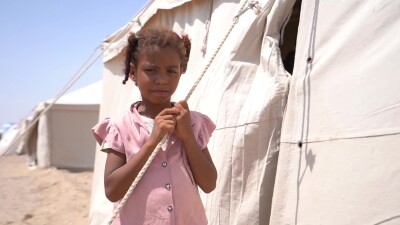
Aid agencies in Yemen highlighted the growing hunger emergency sparked by renewed fighting between Houthi opposition forces and Government troops, after mobile health clinics reported that hundreds of children displaced by the violence are suffering from the most deadly form of malnutrition.
1
1
1
Edited News | UNHCR
Displacement on the rise in Yemen as fighting continues - UNHCR
As hostilities worsen in Yemen, more people have been fleeing their homes, further intensifying the humanitarian crisis within the region, the UN Refugee Agency (UNHCR) warned on Tuesday.
1
1
1
Edited News | IOM , OHCHR , UNFPA , UNOG , UNHCR , WHO
Yemen’s humanitarian crisis growing by the hour amid spike in displacement
Yemenis displaced by renewed fighting have described fleeing for their lives amid shelling and gunfire, aid agencies reported on Friday, while highlighting the dramatic increase in humanitarian needs in the country and in Djibouti, where thousands have sought shelter.
1
1
1
Edited News | OHCHR , UNOG
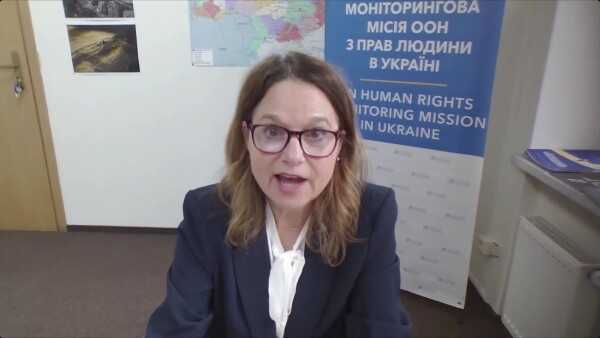
The UN Human Rights Office issued on Friday a report documenting a shocking pattern of sexual violence amid Russia’s full-scale armed attack on Ukraine.
2
1
2
Edited News , Press Conferences | WMO
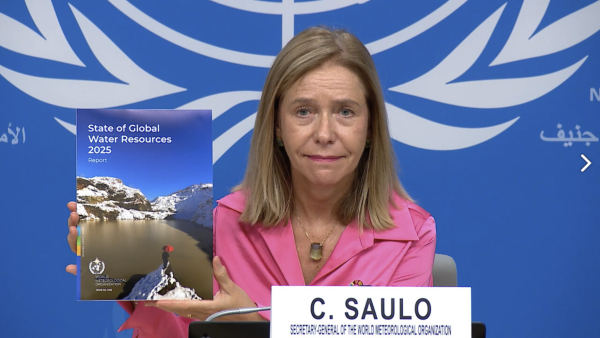
As world’s water reserves change, countries must prepare for a new reality: WMO
New data showing that rivers were at their lowest level for decades last year provides further evidence that the climate crisis is real and countries must act immediately to protect themselves from the increasing threat to communities and livelihoods, the UN World Meteorological Organization (WMO) said on Thursday.
The key findings from WMO’s State of Global Water Resources 2025 report covering the hydrological cycle and extreme events in the five-year period to last year:
- 2025 was one of driest years for river discharge in 35 years
- Past seven years have seen abnorfmal river flows
- Water storage on Earth’s land surface has decreased in past decade
- Widespread glacier loss across all regions for fourth consecutive year
- Asia and Africa are regions most affected by water-related disasters
- Water data availability has improved, but gaps remain in hard-hit areas
Highlighting the long-term decline in the Earth’s freshwater storage and glacier melt, WMO Secretary-General Celeste Saulo explained that the planet’s water reserves used to act as a planetary “savings account” that absorbed the occasional dry season, avoiding a water crisis. “One of the central stories of the 2025 report is what is happening to that savings account? And the simple answer is that we are depleting it,” she told journalists in Geneva.
Groundwater reserves are equally stretched and have been in decline since 2014, WMO’s report states, with nearly two-thirds of monitored wells worldwide showing levels lower than the historical norm and indicating a shift “further toward deficit…not recovery”.
“At the same time, we are seeing more water-related disasters,” Ms. Saulo said, while also stressing that the currently strengthening El Niño “will increase the risk of drought in some areas, and flooding in others”.
Glaciers disappearing
In 2025, for the fourth consecutive year, every major glaciated region on Earth lost ice mass, leading to short-term hazards including floods and long-term water insecurity, according to WMO.
Responding to a question about whether the changing global water cycle might have contributed to the deadly Nepal-China flooding disaster, Ms. Saulo explained that melting ice and rock was just one factor in the chain of events that ultimately sent a massive and deadly wall of water and debris downstream on 26 August, killing at least 1,367 people.
“You asked if it could happen again? Absolutely; the problem in this region is that there’s 63,700 glaciers at the last count,” she told a Press Conference in Geneva. “Even if you’re looking with remote sensing with satellites at these glaciers, you might see some faults, you might see some slight shifting, that does not mean necessarily catastrophic collapse. So, in order to plan for this, it’s very, very difficult. But the international community is looking very hard at ways in which we can bring people together to solve some of these monitoring issues.”
Data indicates that glaciers shrank between 2023 and 2025 with cumulative losses of 1,400 gigatonnes of water – or about one third of annual fresh water needs.
Every major glacier region on Earth lost ice for the fourth consecutive year.
“All 19 glacier regions around the globe lost ice; in Central Asia, Iceland, the Russian Arctic and western Canada and the United States, it was among the three worst years on record,” said Wayne Jenkinson, WMO’s Director of Hydrology and Cryosphere.
Some regions with smaller glaciers such as Central Europe, the Caucasus, the western Canada and the United States may already have reached “peak water”, Mr. Jenkinson warned.
“After this point, the glacier gives less meltwater each year simply because there is less ice left to melt. That matters for every community downstream that relies on water during hot, dry summers,” he explained.
Narelle van der Wel, WMO’s Head of Cryosphere Monitoring, Predictions and Services, stressed that while some further glacier loss is unavoidable, the eventual scale of the decline is not predetermined.
“Some glacier loss is inevitable, but total loss of glaciers is not yet inevitable,” she said, pointing to emissions reductions as central to limiting future losses.
Preparing for moving baselines
The report does not attribute every observed change to climate change alone. WMO says pressure on water resources and natural variability also contribute.
Mr. Jenkinson said governments need to prepare for “moving baselines” as historical patterns become less reliable.
“The situation 30 years ago is not where we are today,” he said. Countries, he added, need to prepare “for those changes that have really already arrived”.
ends
1
1
1
Edited News | OCHA , WHO
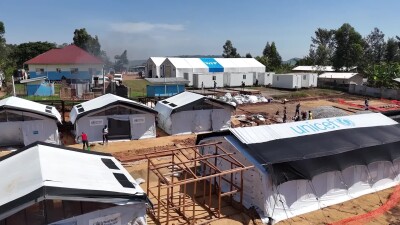
The deadly Ebola virus outbreak in DR Congo continues to spread across the vast country despite some success in containing it, aid officials said on Tuesday, in a renewed call for international support to help responders on the ground.
2
1
2
Press Conferences , Edited News | WFP
‘Super El Niño’ and converging crises worsen hunger in South Sudan and across the region - WFP
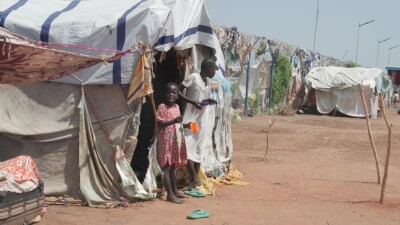
South Sudan’s hunger crisis is becoming increasingly catastrophic as violence, extreme weather and dwindling aid leave millions without enough food, the UN World Food Programme (WFP) warned on Tuesday.
1
1
1
Edited News | UN WOMEN
In war-torn Gaza, a growing number of women-headed households face “impossible decisions” every day, amid ongoing Israeli airstrikes and still-scarce resources, UN humanitarians said on Tuesday.
1
1
1
Edited News | OHCHR , UNOG
UN Human Rights Chief Volker Türk made the following remarks to the Enhanced Interactive Dialogue on the Independent Investigative Mechanism for Myanmar at the 63rd Human Rights Council.
1
Edited News | OHCHR , UNOG
UN Human Rights Chief Volker Türk today delivered an update on the global human rights situation to the 63rdsession of the Human Rights Council in Geneva.