

The United Nations Office at Geneva
Multimedia Newsroom
Press Conferences | OHCHR , OCHA , WHO , UNOG , WFP , UNCTAD , WMO , IOM , IPU
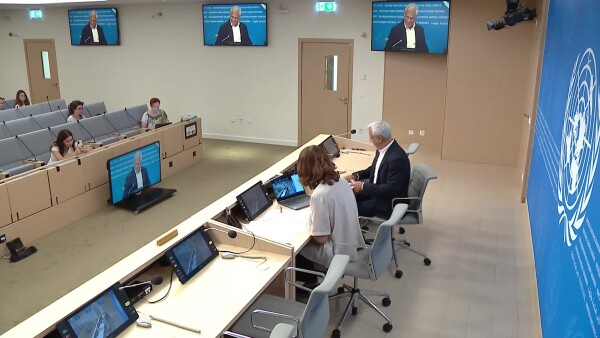
UNOG Bi-weekly press briefing 05 June 2020
Alessandra Vellucci, Director of the United Nations Information Service, chaired the virtual briefing, which was attended by the spokespersons and representatives for the World Food Programme, the Office of the High Commissioner for Human Rights, the Office for the Coordination of Humanitarian Affairs, the World Health Organization, the International Organization for Migration, the World Meteorological Organization, the International Parliamentary Union, and the United Nations Conference on Trade and Development.
The topics addressed included COVID-19, the killings of civilians in the Democratic Republic of the Congo, human rights violations against parliamentarians, the situation in Cameroon, the return of stranded migrants from Niger to Mali, global carbon dioxide and temperature levels, and the impact of tropical storm Amanda in El Salvador.
Democratic Republic of the Congo
Liz Throssell, for the Office of the High Commissioner for Human Rights, said that around 1,300 civilians had been killed in a number of separate conflicts involving armed groups and government forces in the Democratic Republic of the Congo over the past eight months. Some of the incidents involving killings and other abuses and violations may amount to crimes against humanity or war crimes. In Ituri, between 1 October 2019 and 31 May 2020, at least 531 civilians were killed by armed groups in Ituri - 375 of them since March. In North Kivu, the launch of military operations by the government forces in November 2019 led to retaliatory attacks against civilians by the main armed group, the ADF. The High Commissioner for Human Rights, Michelle Bachelet, was calling on the Congolese authorities to do the utmost to establish the State’s authority in both these conflict areas, including by introducing or expanding the presence of security forces, and to ensure such forces protect civilians rather than prey on them. She had added that the protection of civilians was the responsibility of the state, and when the state leaves a vacuum, others tend to fill it.
A press release was available here.
Responding to questions, Ms. Throssell noted there had been a proliferation of arm groups, which added to a very complex situation, generating a heightened sense of insecurity.
Brazil
Answering a question on the President of Brazil’s calling protesters terrorists, Liz Throssell, for the Office of the High Commissioner for Human Rights, said calling people terrorists was not helpful, and that it was incredibly important to uphold the right to peaceful protest.
Human rights violations against parliamentarians
Thomas Fitzsimons, for the International Parliamentary Union (IPU), said the IPU was increasingly concerned about parliamentarians in detention during the COVID-19 pandemic due to greater risks of infection in overcrowded and confined spaces.
Rogier Huizenga, Manager of the International Parliamentary Union Human Rights Programme, said the Committee on the Human Rights of Parliamentarians was particularly concerned about the situation in Venezuela, Côte d’Ivoire, and Turkey. In Venezuela, the IPU was now monitoring the cases of 139 members of parliament in the National Assembly from the coalition of Democratic Unity Roundtable (MUD) that oppose the government of Nicolás Maduro. In Côte d’Ivoire, the IPU was currently examining the cases of 10 opposition members of parliament who have allegedly suffered violations of their fundamental rights since 2018, including arbitrary arrest and detention. In Turkey, the IPU was examining alleged human rights violations against 57 current or former parliamentarians, of whom 27 were women, from the People’s Democratic Party (HDP). The Committee was calling on the authorities to free the members of parliament as soon as possible.
A press release was available here.
Responding to questions, Mr. Huizenga said that, while the Committee was in contact with all three countries, the type of cooperation varied. The Committee had been wanting to go to Venezuela, but the Government had yet to accept, and this posed a significant challenge. On several occasions, the Committee had asked the Venezuelan authorities to provide details on the facts that would support the charges brought against members of parliament, but details were still sorely lacking. There was nothing at the moment that could dispel the concern of the Committee that members of parliament were being detained merely for exercising their political mandate.
As regards Turkey, the Committee was in regular contact with the Turkish authorities, which were however quick to respond that the HDP opposition members of parliaments were working in tandem with the Kurdistan Workers' Party (PKK), considered a terrorist organization. Yet, the information the Committee had clearly showed that these members of parliament were being prosecuted for having exercised their freedom of expression.
Cameroon
Jens Laerke, for the Office for the Coordination of Humanitarian Affairs (OCHA), said that aid deliveries had been scaled back in the North West and South West regions of Cameroon because of increased harassment, attacks, abductions and extortion of humanitarian workers. Six aid agencies had reported having had their workers kidnapped or illegally detained in life-threatening incidents. All staff involved in these incidents had been released, but they had been traumatized because of threats of being killed. There were also some reports of staff being beaten. Motives for these kidnappings were mostly predatory: kidnapping for ransom or theft. Cameroon security forces had also reportedly delayed the movement of humanitarian cargo. All this constrained the operation of humanitarian organizations, and that had consequences for the people they helped. The Humanitarian Coordinator in Cameroon, Allegra Baiocchi, had called on all actors to protect civilians and ensure the safety of aid workers and the unimpeded delivery of assistance to the most vulnerable women, children and men. She had said that the increase of attacks was troubling as it came at a time when efforts were focused on the scaling up to fight the COVID-19 pandemic.
Return of stranded migrants from Niger to Mali
Paul Dillon, for the International Organization for Migration (IOM), said that, yesterday, the IOM had assisted 179 Malian nationals stranded in Niger with their voluntary return home. The migrants had been waiting at IOM’s transit centres in Niamey and Agadez for almost three months due to COVID-19-related border closures. This first air movement had been made possible by an agreement between the Governments of Niger and Mali. In the past two weeks, IOM Niger had organized land movements that saw the return of 43 migrants to Burkina Faso and 58 migrants to Benin. IOM had documented roughly 30,000 stranded migrants in West and Central Africa. This figure included nearly 18,000 foreigners unable to cross borders to return home, and people like Mauritanian herders who needed to cross into neighboring countries to graze their cattle. An additional 1,400 migrants from several, mainly west African, countries remained in six IOM transit centres and quarantine sites in Niger waiting for travel restrictions to lift so they, too, could return to their countries of origin.
Global carbon dioxide and temperature levels
Claire Nullis, for the World Meteorological Organization (WMO), said that, today 5 June, on World Environment Day and ahead of World Oceans Day on 8 June, important new information showed that the causes and indicators of climate change had reached new heights. Carbon dioxide concentrations measured at Mauna Loa observing station in Hawaiihad reached a new record in May. According to the Copernicus Climate Change Service (C3S), implemented by the European Centre for Medium-Range Weather Forecasts on behalf of the European Commission, May 2020 had been the warmest May on record. This was obviously having a major impact on biodiversity and nature – the theme of World Environment Day – as well as on socio-economic development and human well-being. As WMO Secretary-General Petteri Taalas had said repeatedly, the industrial and economic slowdown from COVID-19 was not a substitute for sustained and coordinated climate action to reduce greenhouse gas emissions.
Responding to a question, Ms. Nullis explained that, globally, the collection of CO2 data was continuing despite the pandemic. However, when it came to temperatures, surface-based weather observations had been affected especially in Africa and parts of Central and South America where many stations were manually operated.
Impact of tropical storm Amanda in El Salvador
Elisabeth Byrs, for the World Food Programme (WFP), said that, amidst a country lockdown due to COVID-19, tropical storm Amanda had hit El Salvador on May 31, causing considerable damages to main roads and infrastructure nationwide. Whilst search and rescue operations continued, 20 deaths and several missing people had been reported so far. 34 major floods and 154 landslides had been reported with 3 major bridges having collapsed, more than 490 houses damaged and 83 destroyed. The government estimated that at least 125,000 people had been directly affected. Eight million USD were required for emergency food assistance to 153,500 food insecure and storm affected people over the next two months to support the emergency response efforts of the government. This was in addition to the USD 19 million required for the COVID-19 response. WFP estimated that 336,300 people located in the areas most affected by the storm were severely food insecure. The preliminary impact was concentrated in the western and central zones, and affected both urban and rural lives and livelihoods.
COVID-19
Responding to a series of questions, Margaret Harris, for the World Health Organization (WHO), said WHO had put forward a series of criteria for lockdown restrictions, which included having a strategy to manage movement across borders, and having measures in place to ensure social distancing and prevent transmission.
On hydroxychloroquine, Dr. Harris explained that there were solidarity trials for various treatments which were based on uniform protocols. When there had been reports expressing concerns, the trials had been paused. Afterwards, following a review of the data, they had been resumed. This meant that patients could now be randomized to hydroxychloroquine treatment.
Dr. Harris also said that there were several factors related to COVID-19 that had affected vaccination campaigns for other diseases. In such a context, GAVI, the Vaccine Alliance, was a crucial partner; funding remained an issue to ensure that adults and children received the vaccines that protected and saved lives.
Alessandra Vellucci, for the United Nations Information Service, recalled that in a video message to GAVI’s Global Vaccine Summit yesterday, the UN Secretary-General had said that twenty million children were missing their full complement of vaccines, and that now, under the shadow of COVID-19, their plight was even more desperate. The Secretary-General had stressed the need to find safe ways to continue delivering vaccinations, even as COVID-19 spread.
Responding to questions on Latin America being the epicentre of the pandemic, Dr. Harris said the situation was deeply concerning. The essence of WHO’s recommendations remained the same: test, track, trace and isolate. It was important to identify the areas where the virus could circulate quickly, implement social distancing measures to the extent possible, promote handwashing, and partner with communities to help people understand how to protect themselves. There were countries that were no longer reporting any cases. The world knew what measures had worked; now, these measures had to be implemented everywhere.
Geneva announcements
Catherine Huissoud, for the United Nations Conference on Trade and Development (UNCTAD), informed that the World Investment Report 2020 would be published on 16 June at 5 a.m. GMT, 7 a.m. Geneva time [PLEASE NOTE THE NEW EMBARGO TIME, as announced by Ms. Huissoud after the press briefing]. This 30th edition of the report looked at the prospects for foreign direct investment and international production during and beyond the COVID-19 crisis. The report not only projected the immediate impact of the current crisis on investment flows, but also assessed how the COVID-19 pandemic could affect long-term structural transformation of international production. A virtual press conference would present the report on Friday, 12 June at 2:30 p.m.
Ms. Huissoud also said that the UN would explore the role of science and technology policies in COVID-19 recovery at the upcoming meeting of the UN Commission on Science and Technology. Science, technology and innovation (STI) policies would play a key role not only in post-COVID-19 recovery plans, but also in the decade of action to deliver on the 2030 Agenda for Sustainable Development. Shaping these future policies was a key focus of the UN’s virtual meeting from 10 to 12 June. The meeting would also explore space technologies for sustainable development and the benefits of international research collaboration in this context.
Alessandra Vellucci, for the United Nations Information Service, reminded that the international community was marking World Environment Day today. On this occasion, Ciné-ONU Brussels, Vienna and Geneva were organizing a panel discussion on Rob Stewart's award-winning film, Sharkwater Extinction, today at 5 p.m. CET. Journalists had received the link to watch the movie online ahead of the discussion.
Liz Throssell, for the Office of the High Commissioner for Human Rights, said the High Commissioner was launching theUN Human Rights Report 2019, which presented results achieved under significant funding constraints. The cash flow crisis that the UN faced, had led to further cuts in OHCHR’s regular budget in 2019, of around 16% compared to 2018. This situation had made it impossible for the Office to honour all its mandated activities and had made it more dependent on voluntary contributions. Unfortunately, voluntary income in 2019 had also decreased by 4.3% compared to 2018. As the UN’s financial crisis continued in 2020, while the demands for its expertise and support kept growing, OHCHR was asking States for more flexible, timely and predictable voluntary contributions, in order to deliver what was expected of it.
Similar Stories
1
1
1
Press Conferences | HRC
Press conference on the situation of human rights in Nicaragua by the UN Group of Human Rights Experts
1
1
1
Press Conferences | ITU , UNHCR , WHO , WMO
YEMEN - UNHCR: Escalating conflict in Yemen could fuel more displacement, refugee movement
CLIMATE - WHO / WMO: Health and Climate impact of El Niño
1
1
1
Press Conferences | HRC , OHCHR
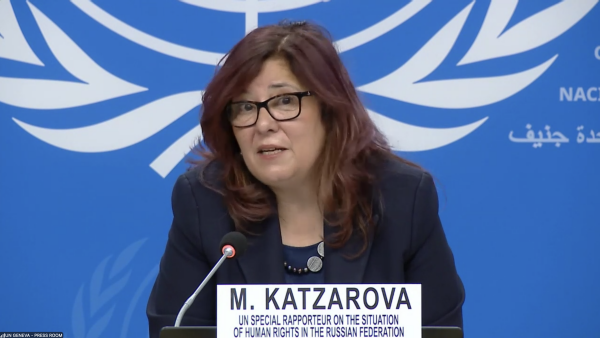
Mariana Katzarova discusses human rights in Russia as a UN Special Rapporteur.
1
1
1
Press Conferences | IOM , OHCHR , UN WOMEN , UNFPA , UNHCR , UNOPS , WHO
UN Geneva briefing: Yemen crisis worsens, urgent aid needed across multiple sectors.
1
1
1
Press Conferences | HRC
Press conference on the latest report of the Independent International Fact-Finding Mission on the Bolivarian Republic of Venezuela to the UN Human Rights Council
1
1
1
Press Conferences | OHCHR
Victims Still Waiting: A Global Briefing on Transitional Justice Around the World
2
1
2
Edited News , Press Conferences | WMO
As world’s water reserves change, countries must prepare for a new reality: WMO
New data showing that rivers were at their lowest level for decades last year provides further evidence that the climate crisis is real and countries must act immediately to protect themselves from the increasing threat to communities and livelihoods, the UN World Meteorological Organization (WMO) said on Thursday.
The key findings from WMO’s State of Global Water Resources 2025 report covering the hydrological cycle and extreme events in the five-year period to last year:
- 2025 was one of driest years for river discharge in 35 years
- Past seven years have seen abnorfmal river flows
- Water storage on Earth’s land surface has decreased in past decade
- Widespread glacier loss across all regions for fourth consecutive year
- Asia and Africa are regions most affected by water-related disasters
- Water data availability has improved, but gaps remain in hard-hit areas
Highlighting the long-term decline in the Earth’s freshwater storage and glacier melt, WMO Secretary-General Celeste Saulo explained that the planet’s water reserves used to act as a planetary “savings account” that absorbed the occasional dry season, avoiding a water crisis. “One of the central stories of the 2025 report is what is happening to that savings account? And the simple answer is that we are depleting it,” she told journalists in Geneva.
Groundwater reserves are equally stretched and have been in decline since 2014, WMO’s report states, with nearly two-thirds of monitored wells worldwide showing levels lower than the historical norm and indicating a shift “further toward deficit…not recovery”.
“At the same time, we are seeing more water-related disasters,” Ms. Saulo said, while also stressing that the currently strengthening El Niño “will increase the risk of drought in some areas, and flooding in others”.
Glaciers disappearing
In 2025, for the fourth consecutive year, every major glaciated region on Earth lost ice mass, leading to short-term hazards including floods and long-term water insecurity, according to WMO.
Responding to a question about whether the changing global water cycle might have contributed to the deadly Nepal-China flooding disaster, Ms. Saulo explained that melting ice and rock was just one factor in the chain of events that ultimately sent a massive and deadly wall of water and debris downstream on 26 August, killing at least 1,367 people.
“You asked if it could happen again? Absolutely; the problem in this region is that there’s 63,700 glaciers at the last count,” she told a Press Conference in Geneva. “Even if you’re looking with remote sensing with satellites at these glaciers, you might see some faults, you might see some slight shifting, that does not mean necessarily catastrophic collapse. So, in order to plan for this, it’s very, very difficult. But the international community is looking very hard at ways in which we can bring people together to solve some of these monitoring issues.”
Data indicates that glaciers shrank between 2023 and 2025 with cumulative losses of 1,400 gigatonnes of water – or about one third of annual fresh water needs.
Every major glacier region on Earth lost ice for the fourth consecutive year.
“All 19 glacier regions around the globe lost ice; in Central Asia, Iceland, the Russian Arctic and western Canada and the United States, it was among the three worst years on record,” said Wayne Jenkinson, WMO’s Director of Hydrology and Cryosphere.
Some regions with smaller glaciers such as Central Europe, the Caucasus, the western Canada and the United States may already have reached “peak water”, Mr. Jenkinson warned.
“After this point, the glacier gives less meltwater each year simply because there is less ice left to melt. That matters for every community downstream that relies on water during hot, dry summers,” he explained.
Narelle van der Wel, WMO’s Head of Cryosphere Monitoring, Predictions and Services, stressed that while some further glacier loss is unavoidable, the eventual scale of the decline is not predetermined.
“Some glacier loss is inevitable, but total loss of glaciers is not yet inevitable,” she said, pointing to emissions reductions as central to limiting future losses.
Preparing for moving baselines
The report does not attribute every observed change to climate change alone. WMO says pressure on water resources and natural variability also contribute.
Mr. Jenkinson said governments need to prepare for “moving baselines” as historical patterns become less reliable.
“The situation 30 years ago is not where we are today,” he said. Countries, he added, need to prepare “for those changes that have really already arrived”.
ends
1
1
1
Press Conferences | WMO , OCHA , WHO , UNICEF , UN WOMEN , OHCHR , IOM , UNHCR
Update on Ebola from WHO and OCHA, update on the situation of children with the beginning of school in Ukraine from UNICEF, UN Women on the impact of the settlers and restrictions on women and girls in West Bank, OHCHR on the recovery of extensive human remains in Gaza, IOM and UNHCR on the new wave of displacement in Yemen
2
1
2
Press Conferences , Edited News | WFP
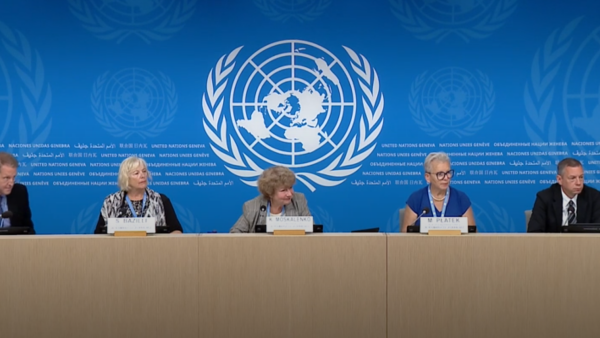
‘Super El Niño’ and converging crises worsen hunger in South Sudan and across the region - WFP
South Sudan’s hunger crisis is becoming increasingly catastrophic as violence, extreme weather and dwindling aid leave millions without enough food, the UN World Food Programme (WFP) warned on Tuesday.
1
1
1
Press Conferences | HRC
Update on the human rights situation in Belarus by the UN Group of Independent Experts on the Human Rights Situation in Belarus
1
1
1
Press Conferences | HRC , OHCHR
Update on the human rights situation in Syria by the Independent International Commission of Inquiry on the Syrian Arab Republic
1
1
1
Press Conferences | UNOG , IOM , UN WOMEN , UNCTAD , WHO , UNECE
IOM Yemen's Western Coast displacement; UN WOMEN on Gaza; UNCTAD Strait of Hormuz disruptions impacts; WHO Ebola logistics in DRC; WHO smoking and infertility; UNECE Data centres and energy.