

The United Nations Office at Geneva
Multimedia Newsroom
UN GENEVA PRESS BRIEFING
9 April 2024
Alessandra Vellucci, Director of the United Nations Information Service in Geneva, chaired a hybrid briefing, which was attended by the Secretary-General of the United Nations Conference on Trade and Development, as well as spokespersons and representatives for the UN Trade and Development, the UN Refugee Agency, the Office for the Coordination of Humanitarian Affairs, and the UN Development Programme.
UNCTAD’s 60th anniversary and rebranding
Rebeca Grynspan, Secretary-General of the United Nations Conference on Trade and Development (UNCTAD), said that today represented a milestone for UNCTAD, which was marking the beginning of its 60th anniversary and rebranding itself as “UN Trade and Development”. The organization was committed to expanding its reach and amplifying its voice as a firm advocate for developing countries in the global economy. UNCTAD wanted its mission to be better understood, and its voice to be heard in all global economic debates where decisions affecting developing countries were made. Today, explained Ms. Grynspan, the need for renewal could not be clearer, as the world today was very different from that in 1964. In 2024, the cascading geopolitical crises and climate change were having a profound and disruptive effect on global trade and economy. Global debt had soared, in developing countries trade in services growth now outstripped trade in goods, and the digital economy was both an opportunity and a major disruptor. The challenges were complex and urgent, and at the same time they were both old and new. It was essential for UNCTAD to stay true to its funding principles while adjusting to the demands of the present.
Ms. Grynspan informed that between 12 and 14 June, a Global Leaders Forum on “Charting a new development course in a changing world” would gather in Geneva leaders from across countries and industries to catalyze a new course for development. The Forum would be attended by the UN Secretary-General, heads of state and government, Nobel prize laureates, and many others. It would consist of thematic sessions, including on reshaping foreign direct investments, data for development and digital revolution, and finding a new momentum for the development of least developed countries and small island developing states. The UN Trade and Development remained, as much as ever, the cornerstone of the United Nations system, and now more than ever, remained committed to promoting the interests of developing countries in the global economy, fostering dialogue, and providing invaluable insights and support remained the same.
A video on the history of UNCTAD was shown.
Responding to questions from the media, Ms. Grynspan explained that the reform of the organization would build upon many good things done in its long history, while the changes would be visible in the way they addressed the problems. A recent example of UNCTAD’s involvement in current challenges were the two agreements of 22 July 2022, the Black Sea Grain Initiative and the Memorandum of Understanding between the Russian Federation and the UN, to facilitate unimpeded exports of food and fertilizer. In recent years, the organization had also strengthened its statistical and analytical capacities, while paying much-needed attention to the intersections of climate change, environment, trade, and development. Ms. Grynspan said that the rebranding was the final step in the reform she had undertaken since starting as the head of the organization. UNCTAD had organized an audit on communications and branding of the organization; at the time of the audit, the organization, for example, had over 30 different logos and as many as 29 websites. The rebranding was putting an end to this fragmentation. It meant to strengthen the organization’s voice and make its messaging clearer and more effective, in line with the organization’s mandate.
Also answering questions, Ms Grynspan said that despite the liquidity crisis, UNCTAD had been able to work effectively and respond quickly to crisis situations around the world. Regarding the move of UNCTAD’s premises to a different building, Ms. Grynspan explained that the decision had been taken to cut costs due to the ongoing liquidity crisis, which would be a disruption for the organization’s work and inevitably affect the staff. However, everything will be done to minimize the impact, so as to ensure that the performance and delivery of UNCTAD would be maintained in such an important moment for the organization.
The intersection of trade and environment would continue to grow in importance, Ms Grynspan stressed. She reminded that 80 percent of the global trade was done via maritime transport, which was also an issue to which UNCTAD was dedicating ever more attention, in cooperation with the International Maritime Organization. Ms. Grynspan explained that she did not expect a single outcome document from the Forum in June, but a strong and meaningful conversation on the future of trade and development. Between five and eight heads of state were expected at the Forum, along many ministers and over 500 other participants.
On another question, Ms. Grynspan stressed that the UN would continue to do whatever possible to facilitate export of foodstuffs and fertilizers from Ukraine and Russia. A free navigation agreement in the Black Sea would be important to everyone as it would bring transaction costs and overall prices down.
Amalia Navarro, head of UNCTAD’s communications, specified that communications was part of the organization’s mandate delivery. While an external agency had been contracted initially, the two-year introspection and rebranding exercise had been largely led by UNCTAD staff.
Thousands still fleeing Sudan daily
Olga Sarrado, for the United Nations Refugee Agency (UNHCR), stated that, a year on, the war in Sudan continued to rage, with the country and its neighbours experiencing one of the largest and most challenging humanitarian and displacement crises in the world. The number of Sudanese forced to flee had now surpassed 8.5 million people, with 1.8 million of them having crossed borders. Access constraints, security risks and logistical challenges were hampering the humanitarian response. Without incomes, and amid disrupted aid deliveries and harvests, people could not get food, prompting warnings of worsening hunger and malnutrition in parts of the country. In South Sudan, on average over 1,800 people were still arriving every day, increasing pressure on overstretched infrastructure, and exacerbating the vast humanitarian needs. The country had received the most people from Sudan – nearly 640,000 people – many of them South Sudanese returning after many years.
Full statement can be found here.
Marie-Helene Verney, UNHCR representative in South Sudan, speaking from Juba, said with the rainy season, the risks of diseases such as cholera were increasing. The total funding needed for 2024 was 283 million USD, 18 percent of which was currently funded. She explained that the refugees arriving from Sudan now tended to be quite urban and educated, bringing with them professional skills which could have been put to use in their country; they were reluctant to live in refugee camps. The biggest challenge was the seeming endlessness of the crisis, with close to 1,800 people still crossing into South Sudan on a daily basis. The impact on South Sudan went way beyond the sheer number of arrivals. The economy of South Sudan was very much linked to that of Sudan, so the former was suffering from the repercussions of the war in the latter. About half million South Sudanese nationals had also “returned” home, but in reality, they had never lived in South Sudan. Some 75 percent of the country’s population needed humanitarian assistance, and the economic situation was deteriorating further, as the main oil pipeline transporting oil from South Sudan to Sudan had now been closed. The only solution was to have peace as quickly as possible.
Answering questions from the media, Ms. Verney said that the fact that there were other crises in the world, such as in Ukraine and Gaza, helped explain why Sudan and South Sudan were not getting the attention they deserved. While we could not speak of complete indifference by the global community, much more attention and support were needed. The conflict in Sudan had to end as soon as possible, and even then, the reconstruction of the country would take a long time. Ms. Verney explained that people in South Sudan very much identified by their ethnic origin and tribe; those South Sudanese nationals coming to the country from Sudan sometimes went to the areas of origin of their families, but many ended up in urban areas. There had been no recorded instances of hostility against the “returnees”. Successful integration of these people remained a major challenge, but the Government of South Sudan deserved to be praised as it was doing all it could, for example by generously welcoming the arriving people and often giving them employment in public sector. Ms. Sarrado added that integrating refugees in public services and their children in schools was a major element of integration; however, resources were still lacking. She informed that the International Humanitarian Conference to support Sudan, convened by France, Germany, and the European Union, would be held in Paris on 15 April. UNHCR High Commissioner Filippo Grandi and OCHA Assistant Secretary-General Joyce Msuya would participate, together with other UN representatives. Some 95 percent of revenues of South Sudan came from oil, explained Ms. Verney. Because of the conflict in Sudan, the oil pipeline was not adequately maintained, and oil could not flow properly.
Situation in Gaza
Replying to a question about the number of trucks getting into Gaza, Jens Laerke, for the United Nations Office for the Coordination of Humanitarian Affairs (OCHA), said that the Israeli Coordination of Government Activities in the Territories (COGAT) counted trucks which they had screened, and which crossed the border. For its part, OCHA counted tracks which arrived to their warehouses, which was why the numbers were different. Trucks screened by COGAT were usually half full, in line with a COGAT requirement. Counting day-to-day and comparing numbers did not make sense, as this did not consider delays in crossing and arriving to warehouses. Restrictions imposed by the Israeli authorities prohibited Egyptian drivers and trucks to be in the same place as Palestinian drivers and trucks which had to continue the transportation of aid. Mr. Laerke said that UN-coordinated food deliveries were much more likely than other humanitarian convoys to be denied access to north Gaza, where people were facing famine. No clear explanation for this limitation was provided by the Israeli authorities. The warring parties, and especially Israel as the occupying power of Gaza, were obliged to secure access of humanitarian aid to reach those in need. As of the previous night, there had been no information of the opening of the Erez crossing, said Mr. Laerke.
Announcements
Sarah Bel, for the United Nations Development Programme (UNDP), informed that UNDP would launch a new report on the socio-economic situation in Myanmar, another forgotten crisis. The report would be embargoed until 6:01 am Geneva time on 11 April. This was one of the largest household surveys to date, covering 12,000 people, focusing on poverty levels. It showed a dramatic increase of poverty, with the brunt of the crisis disproportionately falling on women and children. UNDP regional director, Kanni Wignaraja, would present the report at the noon briefing in New York the same day (6 pm Geneva time).
Alessandra Vellucci, for the for the United Nations Information Service (UNIS), informed that on 15 April at 2:30 pm, UNFPA, the UN sexual and reproductive health agency, would launch its State of World Population 2024 report, “Interwoven Lives, Threads of Hope: Ending inequalities in sexual and reproductive health and rights”. Natalia Kanem, UNFPA Executive Director, would present the report. The report under embargo could be requested in advance and one-to-one interviews could be organized by reaching out to Eddie Wright, ewright@unfpa.org, +1 917 831 2074. Everything related to this report – press conference, documents, interviews – were under strict embargo until 17 April at 6:01 am Geneva time.
Ms Vellucci also informed that the World Trade Organization was holding an embargoed press conference on 10 April at 2 pm on its new Global Trade Outlook and Statistics report, which covered the trade growth forecast for 2024 and 2025 and trade performance for 2023. The embargo would lift on the same day at 3 pm. Advance copies and news item would be made available under embargo this afternoon on the WTO's online media newsroom and via email. Journalists would be able to attend in person at WTO headquarters or virtually.
On 15 April, at 4 pm, a commemoration of the 30th anniversary of the genocide in Rwanda would be held in Room XX of the Palais des Nations.
She also reminded of the International Geneva at Balexert week, starting on 16 April.
The Committee on the Elimination of Racial Discrimination, which had opened its 112th session the day before, was reviewing today the report of Mexico.
Finally, Ms. Vellucci informed that the Palais des Nations would be closed the following day, 10 April, because of an official holiday, Eid al-Fitr.
Similar Stories
1
1
1
Press Conferences | IOM , UNDRR
UN stresses importance of household preparedness for disaster risk reduction.
1
1
1
Statements , Press Conferences | OHCHR
1
1
1
Press Conferences | UNHCR , UNICEF , IFRC , OHCHR , UN WOMEN , IOM , OCHA , WHO
UNHCR – ExCom Meeting, UNICEF – Nepal Recovery, IFRC – Flash Floods, WHO – Mental Health, IOM – South Sudan Floods, OCHA – DRC Humanitarian aid, UNHCR – Sahel Displacement, UNICEF – Yemen Update, IOM – Gaza Shelter, UN Women – Gaza Women, OHCHR – Arrests and detentions of Syrians by Israeli force
2
1
2
Press Conferences | UNCTAD
Presentation of the Trade and Developement Report 2026
Embargoed until 9 October 2026 at 11 a.m. (Geneva Time)
UNCTAD: UNCTAD’s flagship report finds that governments increasingly use industrial, trade, financial and technology policies to pursue economic and national security objectives. Market access and the ability to move into higher-value activities now depend more heavily on technology, finance and geopolitics.
1
1
1
Press Conferences | UPU
Release of the State of the Postal Sector Report 2026
1
1
1
Press Conferences | IOM , ITU , UNECE , UNICEF , WHO , WMO
UNICEF: Ebola, DRC - children orphans or separating them from parents and caregivers; IOM: Humanitarian needs in Djibouti amid arrivals from Yemen and increased migrant movements; WHO: Darfur, scale of health needs far exceeds available resources; WMO co-sponsored Global Heat Forum, Bangkok, monthly Global Seasonal Climate Update; UNECE: UN Forum of Mayors; ITU Plenipotentiary Conference 2026; WHO: child and adolescent obesity guidelines and new global roadmap to tackle pregnancy hypertension, a leading cause of maternal mortality
1
1
1
Press Conferences | OCHA , UN WOMEN , UNHCR , WFP , WHO , WTO , UNEP
OCHA – $160M CERF allocation to 12 underfunded crises; UNHCR – 5.8M refugee children remain out of school amid funding cuts; UN Women – Middle East escalation and food security among women/girls; WHO – Gaza supplies and overall situation; WFP – Yemen food insecurity and impact on global hunger ; UNEP - First International Conference of the Global Framework on Chemicals in Geneva | 16-20 November 2026
1
1
1
Press Conferences | UNHCR , WHO
Yemen's health system nears collapse amid conflict, causing rising casualties and medicine shortages.
1
1
1
Press Conferences | HRC
Update by the Expert Mechanism to Advance Racial Justice and Equality in Law Enforcement
1
1
1
Press Conferences | WIPO , WHO , UNICEF , UNHCR , IOM , WFP , FAO
WIPO Global Innovation Index 2026 launch and press conference, WHO Composition of influenza vaccines for the 2027 Southern Hemisphere flu season, UNICEF Yemen hunger and malnutrition; UNHCR Sudan displacement into Chad; IOM Ebola and population movements in DRC; WFP emergency food assistance in Nepal; and FAO food loss and waste.
2
1
2
Press Conferences | UNCTAD
Gaza reconstruction needs reach $71.5 billion as Palestinian economy and public finances face severe strain. Latest UNCTAD report documents the loss of decades of development gains, economic collapse in Gaza and tightening economic constraints in the West Bank.
The report identifies three immediate priorities: transferring withheld Palestinian revenues, safeguarding the banking system and aligning reconstruction support with the documented scale of damage and economic losses.
1
1
1
Press Conferences | HRC
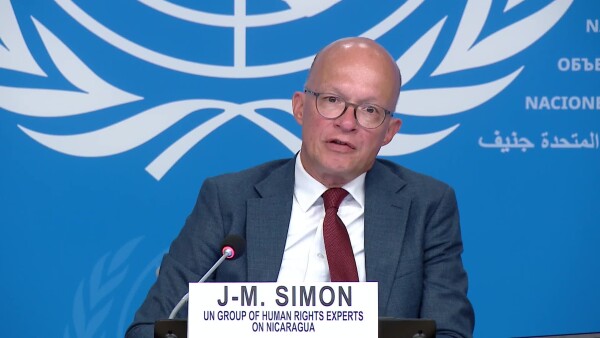
Press conference on the situation of human rights in Nicaragua by the UN Group of Human Rights Experts