

The United Nations Office at Geneva
Multimedia Newsroom
PRESS BRIEFING BY THE UNITED NATIONS INFORMATION SERVICE
19 January 2024
Alessandra Vellucci, Director of the United Nations Information Service in Geneva, chaired a hybrid briefing, which was attended by spokespersons and representatives of the Office for the Coordination of Humanitarian Affairs, the Office of the High Commissioner for Human Rights, the World Health Organization, the United Nations Children’s Fund, and the World Meteorological Organization.
Situation in Gaza
Ajith Sunghay, representative of the Office of the High Commissioner for Human Rights (OHCHR) in the Occupied Palestinian Territory, speaking from Gaza, said that another staggering milestone was being reached in Gaza, with almost 25,000 people reported to have been killed, majority of them women and children. In Raffah since 15 January, Mr. Sunghay had witnessed people arriving from various places in their thousands, in desperate situations, setting up makeshift shelters with any material they could get their hands on. It was a massive humanitarian crisis, and a large scaling-up of humanitarian aid was necessary now. The communications blackout was continuing since 12 January, contributing to fear and confusion. Bombings of Middle Gaza and Khan Younis was audible in Raffah. Mr. Sunghay had managed to meet a number of released Palestinian detainees. Those kept in captivity by the Israeli Security Forces described being blindfolded for long periods, beaten, and possibly subjected to what could amount to torture. Some of the released men were found wearing diapers only and no adequate clothes. The families of detainees, believed to be in thousands, had not been provided with any information on their fate. Mr. Sunghay said that Israel had to ensure that all those detained were treated in line with the international standards. Those held in detention had to be either charged or released, unless Israel could demonstrate pressing, imperative security needs to keep each individual detainee. Accountability into alleged torture and mistreatment was necessary. A humanitarian ceasefire was urgently needed, and all hostages had to be released without delay, stressed Mr. Sunghay.
Tess Ingram, for the United Nations Children’s Fund (UNICEF), speaking from Amman, said that almost 20,000 babies had been born in Gaza in over 105 days of the conflict, which meant one baby was born into horror every ten minutes. Having spent one week in Gaza, Ms. Ingram provided examples of new mothers, some of whom had lost their babies, others with serious injuries or illnesses. She spoke of a nurse who had performed numerous cesarean sections on dead women in recent weeks. The already precarious situation of mother and newborn mortality had been further exacerbated by the hostilities; more miscarriages were reported than usual, due to bombing and unhealthy air and smoke related to it. The Emirati Hospital in Raffah was now catering to most pregnant women in Gaza and was overwhelmed; new mothers had to be released hours after undergoing a C-section. Some 135,000 children under the age of two were in severe risk of malnutrition. In the north of Gaza, the situation was even worse, stressed Ms. Ingram. In the time Ms. Ingram had made her statement, another baby had likely been born in Gaza in terrible circumstances. Mothers and newborns in Gaza Strip needed a humanitarian ceasefire now.
Alessandra Vellucci, for the United Nations Information Service (UNIS), mentioned the previous day’s statement by Philippe Lazzarini, UNRWA Commissioner-General, who had just completed his fourth visit to Gaza since the start of the war.
Responding to a question, Ms. Ingram, for UNICEF, said that it was difficult to establish the exact infant mortality rate at the moment, due to the difficult conditions and limited access. What was certain was that babies were dying of hunger, illness, cold, and bombardment, and had no access to adequate aid. On another question, Mr. Sunghay, for the OHCHR, said that it was impossible to ascertain an exact number of Palestinians currently in detention, but this number was certainly in the thousands. Most released detainees claimed that they had also been taken to detention centres in Israel, but, as they had been mostly blindfolded, it was difficult to know where exactly those locations were. Mr. Sunghay informed that there were at least 4,700 Palestinians from the West Bank who were detained, the highest ever-registered number. The conditions of detention were horrific, whether those were detainees from the West Bank or Gaza, he said. The detainees were categorized differently based on their profile; some had undergone interrogations and others had not. Ravina Shamdasani, also for the OHCHR, confirmed that the engagement of her Office with the Israeli authorities continued. She said that the OHCHR had repeatedly raised with the Israeli authorities the issue of ill-treatment of Palestinian detainees, including before 7 October 2023. She reiterated that the UN was calling for a durable solution to this long-lasting conflict. Answering questions on the Israeli’s declaration against the two-state solution, the UN was fully supportive of it. The Secretary-General’s backing of the two-state solution was unchanged, added Ms. Vellucci, for UNIS.
Ms. Ingram, for UNICEF, in a response to another question, informed that UNICEF was delivering medical supplies, including obstetric supplies and anesthetics, nutrition supplies for pregnant women and ready-to-use infant formula. UNICEF was working with implementing partners on the ground to deliver aid directly to local communities. Ms. Shamdasani informed that the Human Rights High Commissioner had not had direct engagement with the Israeli Prime Minister; his access to Israel and the OPT was requested. She said that the High Commissioner was closely following the proceedings on genocide claims at the International Court of Justice and was looking forward to the outcome of the process.
Answering a question from the media, Tarik Jašarević, for the World Health Organization (WHO), stated that the previous day Dr. Tedros had spoken of Hepatitis A among children in Gaza, which, while a mild disease, demonstrated how bad the living conditions were, including a lack of clean water and sanitation. Since mid-October 2023, 223,600 cases of upper respiratory infections had been reported in displaced people shelters, 158,300 cases of diarrhoea, including 84,000 among children under the age of five, 68,700 cases of lice and scabies, 6,600 cases of chickenpox, and 44,550 cases of skin rashes, among others. The number of diarrhoea cases among children under five years of age cases recorded during the last three months of 2023 were 26 times higher than reports from the same period in 2022. Health system and surveillance had to be supported and rehabilitated, stressed Mr. Jašarević. A ceasefire was as needed as ever.
Anti-terrorism bill in Sri Lanka
Ravina Shamdasani, for the Office of the High Commissioner for Human Rights (OHCHR), stated that the OHCHR was seriously concerned by the revised Anti-Terrorism Bill currently being considered in the Sri Lankan Parliament to replace the draconian Prevention of Terrorism Act. Repeal of the Prevention of Terrorism Act should be a turning point for meaningful reform of Sri Lanka’s approach to its internal security, but this proposed law instead risked perpetuating patterns of violations from the past.
The proposed law was substantially identical to previous drafts that were withdrawn after widespread criticism. It defined acts of “terrorism” overly broadly, restricted the scope of judicial guarantees, especially with respect to challenging the lawfulness of detention orders, and curtailed the ability of the Human Rights Commission to visit places of detention, among other problematic provisions. OHCHR urged the authorities to meaningfully engage with civil society and other stakeholders to substantively revise the Bill and bring it fully into line with Sri Lanka’s international human rights obligations.
Answering a question from the press corps, Ms. Shamdasani said that the OHCHR had raised very detailed concerns with the authorities, and it was hoped that the OHCHR’s calls would be heeded.
Flood response in the Republic of the Congo (Brazzaville)
Jens Laerke, for the Office for the Coordination of Humanitarian Affairs (OCHA), informed that in the Republic of the Congo (Brazzaville), the United Nations was responding to a flood disaster, unprecedented in scale for six decades, and with hundreds of thousands of people in need of humanitarian assistance. Extreme rainfall since October 2023 had led the banks around the Ubangi River - a tributary to the Congo river - to burst. A flood emergency had been officially declared by the Government on 29 December. Some three weeks later, nine out of the country's 12 departments remained under water and a total of 1.8 million people were affected.
Mr. Laerke specified that more than 350,000 people urgently needed humanitarian assistance, but access was a challenge because of the floods and many villages could only be reached by boat or canoe. UN agencies had developed a response plan with the Government with a total budget of some USD 26 million. Priority sectors included shelter, food security, nutrition, health, and water, sanitation, and hygiene. To support the initial response, an allocation of USD 3.6 million from the Central Emergency Response Fund had been made to address the most pressing needs of 270,000 people. However, to implement the response, more international funding would be needed, concluded Mr. Laerke.
In response to questions from the media, Mr. Laerke said that the UN was still assessing the situation, a slow process because the infrastructure was not working well. The official death toll as of now stood as 23, while over 6,000 people were displaced. This was a long-term disaster, as in mid-to-long term food security would be compromised, and children would need to go back to school. He called for more international support. Logistics was a major challenge.
Clare Nullis, for the World Meteorological Organization (WMO), informed that Jean Bienvenu Dinga of the Congo Hydrological Service said this was the most exceptional event since the catastrophic floods in 1961, when there had been a measured discharge of 80,000 cubic meters per second. On 9 January 2024, the discharge had reached 75,000 cubic meters per second. The Congo was trying to improve their early warning system, which was one of the priorities of the WMO’s new Secretary-General, concluded Ms. Nullis.
Announcements
Tarik Jašarević, for the World Health Organization (WHO), informed that the 154th meeting of the Executive Board of the WHO would be held from 22 to 27 January. He reminded that this body of 34 elected Member States implemented decisions and policies of the World Health Assembly and facilitated its work. All documents were available on the WHO website, and the proceedings would be webcast. WHO Director-General would deliver his report on the opening day at 10 am. Appointments of regional directors for Eastern Mediterranean, South-East Asia and Western Pacific would be considered by the Board on 23 January. While journalists could not enter the meeting room, they could observe the proceedings from a nearby overflow room. On 22 January at 1 pm there would be an informal briefing by the Board on the negotiation process on the future pandemic preparedness treaty.
Alessandra Vellucci, for the United Nations Information Service, informed that the Committee on the Rights of the Child was continuing this morning its review of the report of Senegal, which would be concluded this afternoon.
On 22 January, the Human Rights Council’s Universal Periodic Review would commence. The States to be reviewed by the UPR Working Group during this 45th session would be, in order of scheduled review: Saudi Arabia, Senegal, China, Nigeria, Mauritius, Mexico, Jordan, Malaysia, the Central African Republic, Monaco, Belize, Chad, the Congo, and Malta.
The Conference on Disarmament would hold the first public plenary of its 2024 session on 23 January, at 10am, under the Presidency of India.
Similar Stories
1
1
1
Press Conferences | OCHA , UN WOMEN , UNHCR , WFP , WHO , WTO , UNEP
OCHA – $160M CERF allocation to 12 underfunded crises; UNHCR – 5.8M refugee children remain out of school amid funding cuts; UN Women – Middle East escalation and food security among women/girls; WHO – Gaza supplies and overall situation; WFP – Yemen food insecurity and impact on global hunger ; UNEP - First International Conference of the Global Framework on Chemicals in Geneva | 16-20 November 2026
1
1
1
Press Conferences | UNHCR , WHO
Yemen's health system nears collapse amid conflict, causing rising casualties and medicine shortages.
1
1
1
Press Conferences | HRC
Update by the Expert Mechanism to Advance Racial Justice and Equality in Law Enforcement
1
1
1
Press Conferences | WIPO , WHO , UNICEF , UNHCR , IOM , WFP , FAO
WIPO Global Innovation Index 2026 launch and press conference, WHO Composition of influenza vaccines for the 2027 Southern Hemisphere flu season, UNICEF Yemen hunger and malnutrition; UNHCR Sudan displacement into Chad; IOM Ebola and population movements in DRC; WFP emergency food assistance in Nepal; and FAO food loss and waste.
2
1
2
Press Conferences | UNCTAD
Gaza reconstruction needs reach $71.5 billion as Palestinian economy and public finances face severe strain. Latest UNCTAD report documents the loss of decades of development gains, economic collapse in Gaza and tightening economic constraints in the West Bank.
The report identifies three immediate priorities: transferring withheld Palestinian revenues, safeguarding the banking system and aligning reconstruction support with the documented scale of damage and economic losses.
1
1
1
Press Conferences | HRC
Press conference on the situation of human rights in Nicaragua by the UN Group of Human Rights Experts
1
1
1
Press Conferences | ITU , UNHCR , WHO , WMO
YEMEN - UNHCR: Escalating conflict in Yemen could fuel more displacement, refugee movement
CLIMATE - WHO / WMO: Health and Climate impact of El Niño
1
1
1
Press Conferences | HRC , OHCHR
Mariana Katzarova discusses human rights in Russia as a UN Special Rapporteur.
1
1
1
Press Conferences | IOM , OHCHR , UN WOMEN , UNFPA , UNHCR , UNOPS , WHO
UN Geneva briefing: Yemen crisis worsens, urgent aid needed across multiple sectors.
1
1
1
Press Conferences | HRC
Press conference on the latest report of the Independent International Fact-Finding Mission on the Bolivarian Republic of Venezuela to the UN Human Rights Council
1
1
1
Press Conferences | OHCHR
Victims Still Waiting: A Global Briefing on Transitional Justice Around the World
2
1
2
Edited News , Press Conferences | WMO
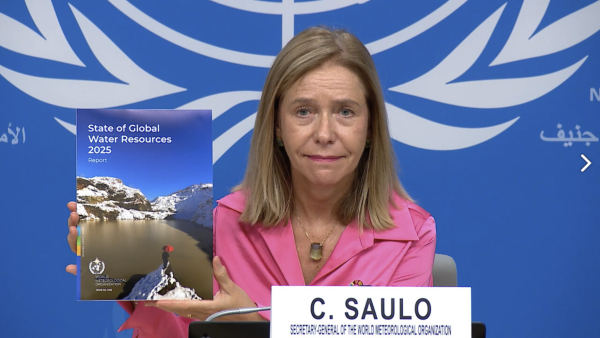
As world’s water reserves change, countries must prepare for a new reality: WMO
New data showing that rivers were at their lowest level for decades last year provides further evidence that the climate crisis is real and countries must act immediately to protect themselves from the increasing threat to communities and livelihoods, the UN World Meteorological Organization (WMO) said on Thursday.
The key findings from WMO’s State of Global Water Resources 2025 report covering the hydrological cycle and extreme events in the five-year period to last year:
- 2025 was one of driest years for river discharge in 35 years
- Past seven years have seen abnorfmal river flows
- Water storage on Earth’s land surface has decreased in past decade
- Widespread glacier loss across all regions for fourth consecutive year
- Asia and Africa are regions most affected by water-related disasters
- Water data availability has improved, but gaps remain in hard-hit areas
Highlighting the long-term decline in the Earth’s freshwater storage and glacier melt, WMO Secretary-General Celeste Saulo explained that the planet’s water reserves used to act as a planetary “savings account” that absorbed the occasional dry season, avoiding a water crisis. “One of the central stories of the 2025 report is what is happening to that savings account? And the simple answer is that we are depleting it,” she told journalists in Geneva.
Groundwater reserves are equally stretched and have been in decline since 2014, WMO’s report states, with nearly two-thirds of monitored wells worldwide showing levels lower than the historical norm and indicating a shift “further toward deficit…not recovery”.
“At the same time, we are seeing more water-related disasters,” Ms. Saulo said, while also stressing that the currently strengthening El Niño “will increase the risk of drought in some areas, and flooding in others”.
Glaciers disappearing
In 2025, for the fourth consecutive year, every major glaciated region on Earth lost ice mass, leading to short-term hazards including floods and long-term water insecurity, according to WMO.
Responding to a question about whether the changing global water cycle might have contributed to the deadly Nepal-China flooding disaster, Ms. Saulo explained that melting ice and rock was just one factor in the chain of events that ultimately sent a massive and deadly wall of water and debris downstream on 26 August, killing at least 1,367 people.
“You asked if it could happen again? Absolutely; the problem in this region is that there’s 63,700 glaciers at the last count,” she told a Press Conference in Geneva. “Even if you’re looking with remote sensing with satellites at these glaciers, you might see some faults, you might see some slight shifting, that does not mean necessarily catastrophic collapse. So, in order to plan for this, it’s very, very difficult. But the international community is looking very hard at ways in which we can bring people together to solve some of these monitoring issues.”
Data indicates that glaciers shrank between 2023 and 2025 with cumulative losses of 1,400 gigatonnes of water – or about one third of annual fresh water needs.
Every major glacier region on Earth lost ice for the fourth consecutive year.
“All 19 glacier regions around the globe lost ice; in Central Asia, Iceland, the Russian Arctic and western Canada and the United States, it was among the three worst years on record,” said Wayne Jenkinson, WMO’s Director of Hydrology and Cryosphere.
Some regions with smaller glaciers such as Central Europe, the Caucasus, the western Canada and the United States may already have reached “peak water”, Mr. Jenkinson warned.
“After this point, the glacier gives less meltwater each year simply because there is less ice left to melt. That matters for every community downstream that relies on water during hot, dry summers,” he explained.
Narelle van der Wel, WMO’s Head of Cryosphere Monitoring, Predictions and Services, stressed that while some further glacier loss is unavoidable, the eventual scale of the decline is not predetermined.
“Some glacier loss is inevitable, but total loss of glaciers is not yet inevitable,” she said, pointing to emissions reductions as central to limiting future losses.
Preparing for moving baselines
The report does not attribute every observed change to climate change alone. WMO says pressure on water resources and natural variability also contribute.
Mr. Jenkinson said governments need to prepare for “moving baselines” as historical patterns become less reliable.
“The situation 30 years ago is not where we are today,” he said. Countries, he added, need to prepare “for those changes that have really already arrived”.
ends