

The United Nations Office at Geneva
Multimedia Newsroom
Press Conferences | UNICEF , UNHCR , WHO , UNCTAD , UNDP , UNITAID , OSE
Bi-weekly press briefing - 28 November 2023
PRESS BRIEFING BY THE UNITED NATIONS INFORMATION SERVICE
28 November 2023
Alessandra Vellucci, Director of the United Nations Information Service in Geneva, chaired a hybrid briefing, which was attended by spokespersons and representatives of the United Nations Children’s Fund, the World Health Organization, the United Nations Refugee Agency, the United Nations Conference on Trade and Development, the United Nations Development Programme, and Unitaid.
Humanitarian situation in Gaza
Responding to questions from the media, James Elder, for the United Nations Children’s Fund (UNICEF), speaking from Gaza, said that the situation in Gaza was devastating. The current moment of respite provided a chance to get aid in and for people to look for their loved ones. Mr. Elder spoke of seeing people drink the water the very moment it was delivered to them. Sorrow and stress were visible all over, said Mr. Elder. Cramped in temporary accommodation, people were waiting for hours just to go to the bathroom. The right type of aid was getting in now, but the necessary quantities could be secured only if the humanitarian truce was expanded and turned into a permanent ceasefire. In the absence of sufficient fuel, trees were being chopped off for heating and cooking. There were a lot of humanitarian workers on the ground, particularly UNRWA staff, whose bravery had to be highlighted, said Mr Elder. Still, there were nearly not enough programmes to address children’s psychological traumas, for example. Conditions in which children were living in were not fit for their recovery. Most children who had lost their parents had been absorbed by extended families and communities, and their stories were heartbreaking.
Answering further questions, Mr. Elder said that fuel meant access to clean drinking water because desalination plants needed fuel to operate. The aid coming in these days was just a start. If the fighting were to start again, there was no way that there would be sufficient fuel to run the plants. All the aid coming in now was but a triage, he reiterated. Mr. Elder further said that the situation in Gaza was worse than he had anticipated before going there. He spoke of having seen children receiving health care while lying on mattresses in parking lots. Everything in Gaza was emergency care right now. Lack of access to safe water was crippling, leading to many gastrointestinal health problems. If the hostilities continued at the same scale as in the past eight weeks, it would mean allowing this horror to proceed. What happened to the human instinct to protect children? asked Mr. Elder.
Margaret Harris, for the World Health Organization (WHO), said that for weeks now, hospitals had managed to accept and treat patients thanks to the bravery of the health workers, but the conditions in health facilities were simply dismal. On 24 November, the WHO had carried out an assessment mission to UNRWA shelters in the north, where it had noted problems with waste disposal and the lack of safe water, hygiene, food, and medical care. There was a rise in diarrheal and respiratory diseases. There were many cases of diarrhea among infants but no adequate treatment, which could mean a death sentence to those children. UNRWA staff were conducting surveillance in this regard. Chronic health conditions would become acute conditions which would kill those patients; eventually, more people could die of diseases than of bombardment. Dr. Harris stressed that the needs were massive, and the amount of aid coming in, while increasing, was still only a trickle. Vaccinations could not be conducted unless there was safety, she explained.
A continuing, true ceasefire was needed, stressed Dr. Harris. The neutrality of health care ought to be respected at all times, and health workers had to be neutral. She spoke of “patient transfer” rather than “evacuations” of patients, as some patients were simply being moved from hospitals where they could no longer receive medical support to places where they could possibly receive at least some care. ON the matter of the health workers in custody, Dr Harris said that during the transfer of critically ill patients from Al Shifa, the convoy had been kept at a checkpoint between the north and the south parts of the Gaza Strip for six hours; some medical personnel who had been in the convoy had been detained by the Israeli Defense Forces. Dr. Harris said that the human rights of those medical workers had to be respected. The loss of the Al Shifa Hospital, Gaza’s most advanced hospital, was devastating. It should be restored to its full functionality as the Strip’s main tertiary level health institution. Ms. Harris said that there were some 20,000 health workers in the Gaza Strip; the skills where there, but what was needed were safety and more functioning hospitals. There was need for continuity of the fuel and the safety to do necessary repairs and for medical personnel to know that they would not be hurt or killed while doing their jobs. Safe, functioning, well-equipped places where doctors and nurses could perform their tasks were an absolute necessity.
New findings on climate change and health products
Herve Verhoosel, for Unitaid, said that Unitaid welcomed that for the first time ever, the organizers of COP would include an official Health Day on 3 December to draw attention to the interconnection between climate and health. This was a key moment to put health at the core of climate action. The climate crisis was putting pressure on an already overstretched global health system and bringing access to basic healthcare in danger once more. The irony was that a sector that strived to keep people well was also contributing to the problem, accounting for approximately 4.6 percent of global net carbon emissionsNew Unitaid report with findings on climate change and health products drew attention to the fact that key health products and medicines used by practitioners every day around the world to respond to diseases like HIV, tuberculosis, and malaria, improve women's and child's health, and respond to global emergencies, might not be fit for purpose in a changing climate.
Unitaid was calling on the global health industry, policymakers, governments, research institutions and major buyers of pharmaceutical products to act now, before it was too late. Key health products had to remain accessible as the climate changes, or else we risked backsliding on hard-earned gains in responding to infectious disease and improving healthcare in low- and middle-income countries. Unitaid had already begun advancing these solutions with a goal of introducing 30 key health products by 2030 that are more “climate-smart” as part of its new Climate and Health strategy, which would be launched at COP28 on 3 December.
Vincent Bretin, Unitaid Director of Results, said that it was known that climate change put health system under stress, the health sector contributed significant emissions, and health supply chains impacted the environment. In its study, Unitad had looked at ten key health products in global health, the absolutely vital products in global health, such as medicines for HIV, TB or malaria, malaria bed nets, diagnostics for TB, or oxygen facilities. Key findings showed that the absolute quantities of carbons emitted in the atmosphere from those ten supply chains was very large – over 3.5m tons/year, which, for a comparison, was bigger than the emissions of the city of Geneva. Unitaid’s research showed that a main source of impact related to the release of toxic chemical waste at the point of manufacturing. Significant impact was also linked to waste at the point of use of disposal; for example, bed nets alone generated 57,000 tons of plastic waste every year with currently almost no recycling solutions in place.
The last series of findings, informed Mr. Bretin, related to climate risks on supply chain. He provided an example of malaria treatment, a product used by hundreds of millions of people every year, whose supply chain risks had to be addressed. Mr. Bretin reiterated that Unitaid would present these key findings at COP 28. Unitaid’s Board had just approved a Climate and Health strategy last week, which was centered on the concept of climate-smart products. Unitaid called on our partners to support broader action around this agenda, as many solutions existed, and a concerted effort could go a long way in addressing the issues identified in the report.
Nansen Refugee Awards
Matthew Saltmarsh, for the United Nations Refugee Agency (UNHCR), informed that the UNHCR had just announced the winners of the annual Nansen Refugee Awards. Those were individuals who went above and beyond to help refugees, displaced, and stateless people. The 2023 winner was Abdullahi Mire, a former refugee and journalist who had championed the right to education while putting 100,000 books in the hands of refugee children in Kenya. The four regional winners were: Elizabeth Moreno Barco (Americas), a human rights defender who advocated for communities affected by armed internal conflict in Colombia; Asia Al-Mashreqi (Middle East and North Africa), founder and chairperson of the Sustainable Development Foundation, which had assisted nearly two million individuals in Yemen affected by conflict; Abdullah Habib, Sahat Zia Hero, Salim Khan, and Shahida Win (Asia-Pacific), four Rohingya storytellers documenting the experiences of stateless Rohingya refugees; and Lena Grochowska and Władysław Grochowski (Europe), a Polish couple whose hotel chain and foundation provide shelter and training to refugees. The Awards would be presented in Geneva on 13 December during the Global Refugee Forum. UNHCR press release can be found here.
UNDP : Human Climate Horizons
Sarah Bel, for the United Nations Development Programme (UNDP), informed that UNDP was launching today its Human Climate Horizons - a data platform providing localized information across 24,000 regions in the world on future impacts of climate change across several dimensions of human development and human security. The platform provided multiple policy scenarios through the end of the century on the potential human costs of climate change to influence behavior and support to accelerate mitigation and adaptation. Full press release is available here.
Announcements
Catherine Huissoud, for the United Nations Conference on Trade and Development (UNCTAD), said that from 30 November to 12 December, UNCTAD would participate in COP28, where UNCTAD would highlight the close links between climate change and the dynamics of global trade and finance. UNCTAD would also advocate green trade and industrial strategies that not only accelerated the global transition to low-carbon energy but also ensure a fair and equitable transition for the most vulnerable. UNCTAD, the International Chamber of Commerce, the International Trade Centre, and the World Trade Organization were organizing a pavilion dedicated to trade, "The House of Trade", dedicated to finding solutions to make trade a gas pedal of climate and sustainable development efforts, and to ensure a just transition to a low-carbon economy. Ms. Huissoud reminded that UNCTAD’s main reports of 2023 had all dealt with economic issues in relation to COP28, and their main messages would form the basis of the organization’s participation at COP28. More details can be found here.
Alessandra Vellucci, for the United Nations Information Service, informed about the dedicated UN page, which would be regularly updated with news and developments from COP28: https://www.un.org/climatechange/cop28.
Alessandra Vellucci, speaking on behalf of the Office of the Special Envoy for Syria (OSE), informed that today at 4 pm Geneva time, Deputy Special Envoy for Syria Najat Rochdi would brief the Security Council. Her remarks would be distributed afterwards.
Ms. Vellucci informed that on 6 December at 11 am, United Nations High Commissioner for Human Rights Volker Türk would hold his end-of-year press conference.
On 29 November, an event to mark the International Day of Solidarity with the Palestinian People would be held at the Palais des Nations, in Room XVII at 11 am. More information is available here, and the event would be webcast at webtv.un.org.
The Committee on the Elimination of Racial Discrimination was concluding this morning its review of the report of South Africa.
The Committee on the Protection of the Rights of All Migrant Workers and Members of their Families was revieing today the report of Uruguay.
Similar Stories
1
1
1
Press Conferences | IOM , UNDRR
UN stresses importance of household preparedness for disaster risk reduction.
1
1
1
Statements , Press Conferences | OHCHR
1
1
1
Press Conferences | UNHCR , UNICEF , IFRC , OHCHR , UN WOMEN , IOM , OCHA , WHO
UNHCR – ExCom Meeting, UNICEF – Nepal Recovery, IFRC – Flash Floods, WHO – Mental Health, IOM – South Sudan Floods, OCHA – DRC Humanitarian aid, UNHCR – Sahel Displacement, UNICEF – Yemen Update, IOM – Gaza Shelter, UN Women – Gaza Women, OHCHR – Arrests and detentions of Syrians by Israeli force
2
1
2
Press Conferences | UNCTAD
Presentation of the Trade and Developement Report 2026
Embargoed until 9 October 2026 at 11 a.m. (Geneva Time)
UNCTAD: UNCTAD’s flagship report finds that governments increasingly use industrial, trade, financial and technology policies to pursue economic and national security objectives. Market access and the ability to move into higher-value activities now depend more heavily on technology, finance and geopolitics.
1
1
1
Press Conferences | UPU
Release of the State of the Postal Sector Report 2026
1
1
1
Press Conferences | IOM , ITU , UNECE , UNICEF , WHO , WMO
UNICEF: Ebola, DRC - children orphans or separating them from parents and caregivers; IOM: Humanitarian needs in Djibouti amid arrivals from Yemen and increased migrant movements; WHO: Darfur, scale of health needs far exceeds available resources; WMO co-sponsored Global Heat Forum, Bangkok, monthly Global Seasonal Climate Update; UNECE: UN Forum of Mayors; ITU Plenipotentiary Conference 2026; WHO: child and adolescent obesity guidelines and new global roadmap to tackle pregnancy hypertension, a leading cause of maternal mortality
1
1
1
Press Conferences | OCHA , UN WOMEN , UNHCR , WFP , WHO , WTO , UNEP
OCHA – $160M CERF allocation to 12 underfunded crises; UNHCR – 5.8M refugee children remain out of school amid funding cuts; UN Women – Middle East escalation and food security among women/girls; WHO – Gaza supplies and overall situation; WFP – Yemen food insecurity and impact on global hunger ; UNEP - First International Conference of the Global Framework on Chemicals in Geneva | 16-20 November 2026
1
1
1
Press Conferences | UNHCR , WHO
Yemen's health system nears collapse amid conflict, causing rising casualties and medicine shortages.
1
1
1
Press Conferences | HRC
Update by the Expert Mechanism to Advance Racial Justice and Equality in Law Enforcement
1
1
1
Press Conferences | WIPO , WHO , UNICEF , UNHCR , IOM , WFP , FAO
WIPO Global Innovation Index 2026 launch and press conference, WHO Composition of influenza vaccines for the 2027 Southern Hemisphere flu season, UNICEF Yemen hunger and malnutrition; UNHCR Sudan displacement into Chad; IOM Ebola and population movements in DRC; WFP emergency food assistance in Nepal; and FAO food loss and waste.
2
1
2
Press Conferences | UNCTAD
Gaza reconstruction needs reach $71.5 billion as Palestinian economy and public finances face severe strain. Latest UNCTAD report documents the loss of decades of development gains, economic collapse in Gaza and tightening economic constraints in the West Bank.
The report identifies three immediate priorities: transferring withheld Palestinian revenues, safeguarding the banking system and aligning reconstruction support with the documented scale of damage and economic losses.
1
1
1
Press Conferences | HRC
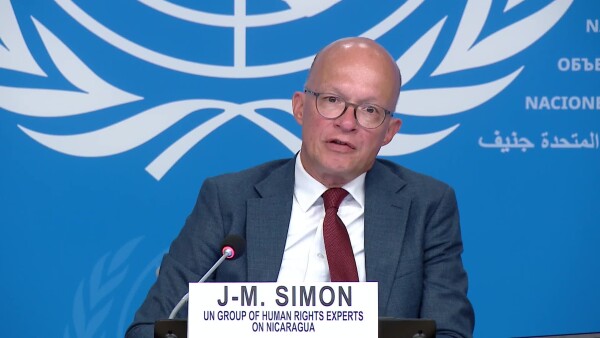
Press conference on the situation of human rights in Nicaragua by the UN Group of Human Rights Experts