

The United Nations Office at Geneva
Multimedia Newsroom
Press Conferences | FAO , HRC , OHCHR , UNCTAD , WHO , WIPO
Bi-weekly press briefing - 22 September 2023
PRESS BRIEFING BY THE UNITED NATIONS INFORMATION SERVICE
22 September 2023
Health situation in the eastern Democratic Republic of the Congo
Dr. Boureima Hama Sambo, World Health Organization (WHO) Representative in the Democratic Republic of the Congo (DRC), speaking from the DRC, said that increasing violence from armed conflict and intercommunal clashes in the eastern part of the country, with entire villages being burned to the ground, forced displacements, and devastating floods and landslides contributed to rising risk of deadly outbreaks of measles, cholera, malaria, COVID-19, polio, meningitis, mpox, and plague.
Within this increasingly difficult context, it was very challenging for humanitarians to make a difference, but the WHO was committed to serve the local population. For example, in the Tshopo province, which had witnessed a concerning escalation of violence, killings, and displacement, WHO was one of the main actors present and had recently finalized the installation of water points, latrines and solar panels. Dr. Sambo also said that the country was battling the largest epidemic of measles recorded since 2019. WHO had deployed experts to the affected areas to support the authorities in investigating and responding to those outbreaks, delivered medical supplies for cholera treatment, supported transportation of samples to labs for testing, and built treatment centers to make sure more people affected with cholera can get treated on time.
Dr. Sambo stated that around 23,000 cases of gender-based violence had been reported in the six provinces from January to August 2023, certainly an understatement, considering the low reporting by the victims and the weakness of the system to capture this data in a more exhaustive way. WHO focused on increasing health services to the victims, including access to mental health and psychosocial support, medical care, and Post-Exposure Prophylaxis. Dr. Sambo stressed that the DRC ought not be forgotten. Support of donors and partners was much needed to continue delivering these much-needed health services to the people of DRC. WHO’s response was only 14 percent funded so far.
Health situation in Derna, Libya
Dr. Ahmed Zouiten, for the World Health Organization (WHO) in Libya, speaking from Libya, shared his impressions after seeing the effects of the disaster in Derna. Thousands of people had lost their family members and livelihoods. The magnitude of the mental health trauma the people had gone through was unspeakable. Efforts were continuing to clean up and secure access to the affected areas, and WHO had delivered emergency medicine, including cholera kits. WHO was working together with the local authorities on providing access to health care. WHO would be using mobile clinics, he informed, which were necessary to provide help to some hard-to-reach areas. Preparedness efforts and surveillance were under way for any possible epidemic.
Replying to questions, Dr. Zouiten said that there were several hundred reported cases of diarrhea, which was not out of ordinary for a city of such size. No epidemics had been detected at the moment, he confirmed. Dr. Zouiten explained that dead bodies would not transmit any diseases of epidemic concern, unless before death those people had already been carrying pathogens in their organisms. Most of the bodies had been washed ashore, and the majority of them had been recovered already.
Passing of Women’s Reservation Bill in India
Ravina Shamdasani, for the Office of the High Commissioner for Human Rights (OHCHR), informed that the High Commissioner welcomes the passage of the Women’s Reservation Bill in India, which would reserve one third of seats in national and state parliaments for women.
This landmark bill, passed by both houses of parliament, would also constitutionally entrench women’s representation in parliament, and be a transformative move in upholding the right to participation for women and gender equality in India.
The Bill required ratification by at least 50 percent of the states, and the OHCHR called for their swift support. The High Commissioner called on the Government to implement the new system as soon as possible, alongside the existing reservation for ‘scheduled castes’ and ‘scheduled tribes’.
Full statement is available here.
Concerns over Chastity and Hijab Bill in Iran
Ravina Shamdasani, for the Office of the High Commissioner for Human Rights (OHCHR), stated that the OHCHR deeply regretted the Iranian parliament’s passing of the new Chastity and Hijab Bill which vastly increased jail terms and provides for crushing fines on women and girls who did not obey the compulsory dress code. In that context, the Bill also targeted vague notions of promotion of “nudity” or “indecency”. The High Commissioner reiterated that this draconian bill flagrantly flew in the face of international law, and that it had to be shelved.
Ms. Shamdasani said that the decree, fully named the Bill to Support the Family by Promoting the Culture of Chastity and Hijab, was both repressive and demeaning. Women and girls should not be treated as second class citizens. The authorities had a duty to respect, protect and fulfil – equally - the rights of all Iranians.
OHCHR statement can be read here.
Ms. Shamdasani, responding to questions, confirmed that the new law imposed much stricter rules than what had been in place before.
“Water at the Heart” programme
Jeanette Elsworth, for the United Nations Office for Disaster Risk Reduction (UNDRR), said that the UNDRR’s research showed that 90 percent of major disasters were related to water. The new project took knowledge of water threats from local communities and combined it with global knowledge. The project was focused on the countries of the Nile River basin. The aim of the collaboration was to address climate-related risks that too often fall between the cracks of most country-level water, sanitation, and hygiene (WASH) policies. It would focus on practical, locally driven action to better anticipate disasters and prepare communities well in advance. The project was a collaboration of several partners, including UNDRR, the International Federation of Red Cross and Red Crescent Societies, The Netherlands Red Cross, the World Meteorological Organization, and the Systematic Observations Financing Facility; the project was funded by the Netherlands.
Maren Striker, for the Netherlands Red Cross, speaking from The Hague, stressed the importance of collaboration. He said the programme would support Sudan, South Sudan, Ethiopia, and Uganda. Early warning systems were critical and needed to be present everywhere. It was not only about early warning, but also about early action, he said. The objective was to catalyse systemic change; strategies had to be tailored for each unique context. This way of working could then be replicated and scaled up for other contexts around the world.
More information on the “Water at the Heart” programme can be found here.
Call for a sustainable transformation of livestock systems
Thanawat Tiensin, Director of the Animal Production and Health Division at the Food and Agriculture Organization (FAO), speaking from Rome, said that the FAO would host the Global Conference on Sustainable Livestock Transformation from 25 to 27 September.
Global population growth was expected to reach almost 10 billion people by 2050. As a result, the global demands for animal food products (meat, eggs, dairy products) would increase by 20 percent by 2050. While sustainability was imperative, it was equally essential to recognize the role of livestock in meeting our dietary needs. For many communities, especially in low- and middle-income countries, livestock represented a crucial source of livelihoods and driving force behind economic development. However, the environmental and ethical implications of current livestock practices could no longer be ignored.
Mr. Tiensin stated that focus ought to be on improving the efficiency of livestock systems, which included optimizing feed conversion, reducing waste, enhancing nutrient utilization, reducing the degradation of land and water resources, decreasing greenhouse gas emissions, and mitigating environmental degradation. This Global Conference was only the first step in our journey towards striking a balance between livestock sustainability and global food security.
Human Rights Council
Pascal Sim, for the Human Rights Council (HRC), said that this morning the Council would start an interactive dialogue with the Commission on Syria, to be followed by a discussion on the situation of human rights in Burundi, and the situation of human rights in Belarus. At the end of the day, the HRC would discuss its complaint procedures. On 25 September, the Council would hold a panel discussion on gender parity, to be followed by the presentation by the Commission on Ukraine. Finally, on 25 September, the Council would hear from the Fact-Finding Mission on Venezuela.
On 25 September at 1:30 pm, the Independent International Commission of Inquiry on Ukraine would hold a press conference on its oral update to the Council. Speakers would be the three Commissioners: Erik Møse, Pablo de Greiff, and Vrinda Grover.
Announcements
Edward Harris, for the World Intellectual Property Organization (WIPO), gave details about its embargoed press conference for the 2023 edition of the Global Innovation Index, whose ranking documented the leaders in worldwide innovative activity. The virtual press conference would be held on 25 September at 5 pm. Speakers would be Daren Tang, Director General, WIPO, and Sacha Wunsch-Vincent GII co-editor. The embargo would be lifted on 27 September 27 at 9:30 am.
Catherine Huissoud, for the United Nations Conference on Trade and Development (UNCTAD), reminded that UNCTAD would launch its Review of Maritime Transport 2023 on 27 September at 11:30 am Geneva time from London International Maritime Organization HQ, with UNCTAD Secretary-General Rebeca Grynspan and Shamika Sirimanne, Director of the Division on Technology and Logistics of UNCTAD. The team was available for interviews in several languages.
Alessandra Vellucci, for the UN Information Service, informed that the Committee on the Rights of the Child would close its 94th session this afternoon at 5 pm and issue its concluding observations on the six reports reviewed during the session: Albania, Dominican Republic, Andorra, Liechtenstein, Kyrgyzstan, and Togo.
The following week, the Committee on Enforced Disappearances would have public meetings with National Human Rights Institutions, States, and NGOs and intergovernmental organizations, as well as a public meeting to launch its General Comment on Enforced Disappearances in the context of migration.
The Committee on Economic, Social and Cultural Rights would open on 25 September at 10 am its 74th session, during which it would review the reports of Chad, Palestine, Brazil, France, Qatar, and Armenia.
Ms. Vellucci reminded about today’s Ciné-ONU screening at Cinerama Empire at 6:30 pm of a National Geographic movie “Fish Pirate”, to be followed by a debate.
This night, UN Geneva would also join the local manifestation “The Night is Beautiful” by switching off the lights at the Palais des Nations.
Finally, Ms. Vellucci gave updates on the High-level Week at the General Assembly, particularly focusing on the High-level meeting on Fight against Tuberculosis and the SDG Media Zone.
***
Similar Stories
1
1
1
Press Conferences | IOM , UNDRR
UN stresses importance of household preparedness for disaster risk reduction.
1
1
1
Statements , Press Conferences | OHCHR
1
1
1
Press Conferences | UNHCR , UNICEF , IFRC , OHCHR , UN WOMEN , IOM , OCHA , WHO
UNHCR – ExCom Meeting, UNICEF – Nepal Recovery, IFRC – Flash Floods, WHO – Mental Health, IOM – South Sudan Floods, OCHA – DRC Humanitarian aid, UNHCR – Sahel Displacement, UNICEF – Yemen Update, IOM – Gaza Shelter, UN Women – Gaza Women, OHCHR – Arrests and detentions of Syrians by Israeli force
2
1
2
Press Conferences | UNCTAD
Presentation of the Trade and Developement Report 2026
Embargoed until 9 October 2026 at 11 a.m. (Geneva Time)
UNCTAD: UNCTAD’s flagship report finds that governments increasingly use industrial, trade, financial and technology policies to pursue economic and national security objectives. Market access and the ability to move into higher-value activities now depend more heavily on technology, finance and geopolitics.
1
1
1
Press Conferences | UPU
Release of the State of the Postal Sector Report 2026
1
1
1
Press Conferences | IOM , ITU , UNECE , UNICEF , WHO , WMO
UNICEF: Ebola, DRC - children orphans or separating them from parents and caregivers; IOM: Humanitarian needs in Djibouti amid arrivals from Yemen and increased migrant movements; WHO: Darfur, scale of health needs far exceeds available resources; WMO co-sponsored Global Heat Forum, Bangkok, monthly Global Seasonal Climate Update; UNECE: UN Forum of Mayors; ITU Plenipotentiary Conference 2026; WHO: child and adolescent obesity guidelines and new global roadmap to tackle pregnancy hypertension, a leading cause of maternal mortality
1
1
1
Press Conferences | OCHA , UN WOMEN , UNHCR , WFP , WHO , WTO , UNEP
OCHA – $160M CERF allocation to 12 underfunded crises; UNHCR – 5.8M refugee children remain out of school amid funding cuts; UN Women – Middle East escalation and food security among women/girls; WHO – Gaza supplies and overall situation; WFP – Yemen food insecurity and impact on global hunger ; UNEP - First International Conference of the Global Framework on Chemicals in Geneva | 16-20 November 2026
1
1
1
Press Conferences | UNHCR , WHO
Yemen's health system nears collapse amid conflict, causing rising casualties and medicine shortages.
1
1
1
Press Conferences | HRC
Update by the Expert Mechanism to Advance Racial Justice and Equality in Law Enforcement
1
1
1
Press Conferences | WIPO , WHO , UNICEF , UNHCR , IOM , WFP , FAO
WIPO Global Innovation Index 2026 launch and press conference, WHO Composition of influenza vaccines for the 2027 Southern Hemisphere flu season, UNICEF Yemen hunger and malnutrition; UNHCR Sudan displacement into Chad; IOM Ebola and population movements in DRC; WFP emergency food assistance in Nepal; and FAO food loss and waste.
2
1
2
Press Conferences | UNCTAD
Gaza reconstruction needs reach $71.5 billion as Palestinian economy and public finances face severe strain. Latest UNCTAD report documents the loss of decades of development gains, economic collapse in Gaza and tightening economic constraints in the West Bank.
The report identifies three immediate priorities: transferring withheld Palestinian revenues, safeguarding the banking system and aligning reconstruction support with the documented scale of damage and economic losses.
1
1
1
Press Conferences | HRC
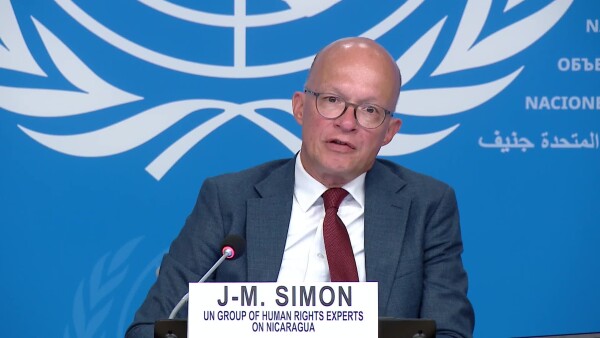
Press conference on the situation of human rights in Nicaragua by the UN Group of Human Rights Experts