

The United Nations Office at Geneva
Multimedia Newsroom
PRESS BRIEFING BY THE UNITED NATIONS INFORMATION SERVICE
25 August 2023
War and hunger could destroy Sudan
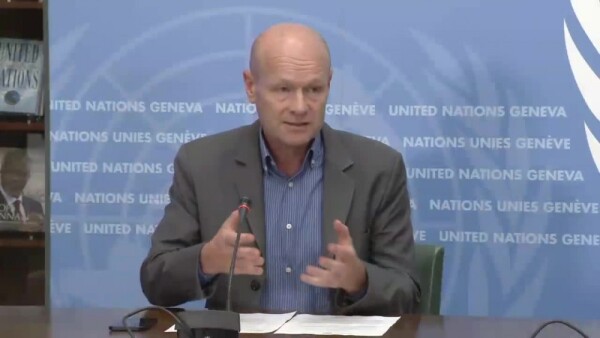
Jens Laerke, for the Office for the Coordination of Humanitarian Affairs (OCHA), read the statement by Martin Griffiths, the United Nations Emergency Relief Coordinator on how war and hunger could consume Sudan unless those fighting put the people of Sudan above their own interests.
The longer the fighting continued, the more devastating its impact would be. Some places had already run out of food. Hundreds of thousands of children were severely malnourished and at imminent risk of death if left untreated. Vector-borne diseases were spreading, posing a lethal risk, especially to those already weakened by malnutrition. Cases of measles, malaria, whooping cough, dengue fever, and acute watery diarrhea were being reported across the country. Most people had no access to medical treatment.
The statement further read that millions of people had been displaced inside Sudan, and nearly one million others had fled across its borders. A long conflict would almost certainly lead to a lost generation of children as millions missed out on education, endured trauma, and bore the physical and psychological scars of war.
Full statement is available here.
Responding to questions from the media, Mr. Laerke emphasized that the conflict was not getting the international attention it deserved, and those fighting did not abide by the rules of war. The entire country was at risk of being consumed by the war. The main reason the UN did not have access to those in need was primarily the fighting itself, as well as road blockages and bureaucratic impediments. Among other issues, visas for Sudan were sometimes not processed fast enough. UN could not understand why those hurdles were necessary.
Mr. Laerke reminded that there was a large humanitarian appeal in place (USD 2.6 billion for 2023), which was currently only 26 percent funded, which amounted to USD 666 million. The US provided 58 percent of the money received, followed by 12 percent by the European Commission, and 6 percent by the Central Emergency Response Fund. That was the money committed and received, explained Mr. Laerke. It was hoped that other pledges would be sped up and come through shortly. The UN remained in the country and tried to help and deliver aid as much as it could. The region was already very strongly feeling the impact of the war, with over one million Sudanese having fled to other countries. Responding to another question, Mr. Laerke specified that the total global humanitarian appeal for 2023 stood at USD 55 billion, of which USD 15.2 billion had been received, or 27.6 percent.
Tarik Jašarević, for the World Health Organization (WHO), said that 67 percent of all main hospitals in the affected areas of Sudan had been out of service already at the end of May. It was very difficult for the population to receive even basic health care. There were also widespread blackouts in some areas, which were affecting hospitals. Until 11 August, the WHO had arrived 53 attacks against health care, which were strongly condemned. He also spoke of logistical difficulties to deliver medical supplies to those in need.
James Elder, for the United Nations Children’s Fund (UNICEF), said that two million boys and girls had been displaced since the beginning of the conflict. Lack of access and supplies was becoming a death sentence, completely avoidable. Children were being attacked and used to attack, in a clear contravention of the international humanitarian law.
Rolando Gómez, for the UN Information Service (UNIS), reminded that the UN Secretary-General had been calling for an immediate cessation of hostilities. He stressed that the UN had a presence in the country, with the basis in Port Sudan; the Special Representative Volker Perthes, while not in the country, was still actively seized on the issue.
Release of the Fukushima wastewater
Answering a question from a journalist, Tarik Jašarević, for the World Health Organization (WHO), said that the Japanese standards were based on international safety standards, cosponsored by the WHO and seven other international organizations.
Emergency closure of the Palais des Nations
Responding to questions from the media, Rolando Gómez, for the UN Information Service, said that there had been a perimeter intrusion of the Palais des Nations grounds this morning, around 7:30 am, which was why Palais des Nations had been briefly shut down. The issue had been resolved within 30 minutes, and the Palais had reopened shortly afterwards.
Announcements
Rolando Gómez, for the UN Information Service, informed that the Committee on the Elimination of Racial Discrimination would close its session on 31 August, at 4 pm, when it would issue its concluding observations on the six countries reviewed: Italy, Croatia, Uruguay, Namibia, Senegal, and Turkmenistan.
The Committee on the Rights of Persons with Disabilities was concluding this morning its review of the report of Mauritania.
The next public plenary of the Conference on Disarmament would be announced at a later stage.
The Secretary-General’s remarks at the BRICS Summit in Johannesburg had been shared, informed Mr. Gómez. UN Spokesperson’s statement on the latest ballistic missile launch by the DPRK had also been shared
Finally, Mr. Gómez informed that from 29 August, press briefings would be held in the new press room, in the renovated Palais des Nations, in the vicinity of Door VI. Further details, including a map, would be shared later in the day.
Similar Stories
1
12
1
1
Press Conferences , Images | UNOG
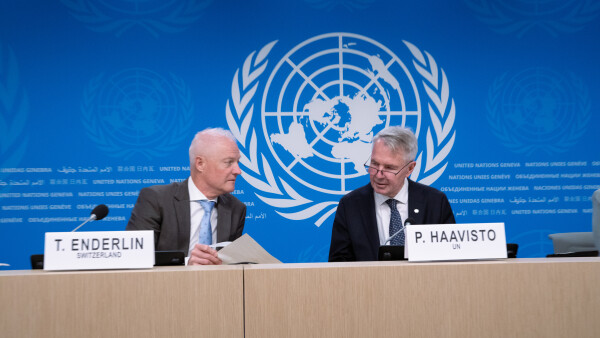
Closing Press Conference following the Sixth Consultative Meeting on Enhancing Coordination of Peace Initiatives and Efforts in Sudan

2
17
1
2
Edited News , Press Conferences | OCHA , WMO
Two UN agencies teamed up on Wednesday to issue an appeal for immediate assistance to help communities already being impacted by the strongest El Niño on record.
1
1
1
Press Conferences | CITES
Wildlife trade and conservation policy discussions at the 81st meeting of the CITES Standing Committee (SC81)
1
1
1
Press Conferences | UNHCR , UNCTAD , WMO , OCHA , UNICEF , WHO
UNHCR Hungary’s 1956 Refugee Crisis: 70 Years On, UNCTAD World Investment Forum 2026, Doha, WMO Greenhouse Gas Bulletin and Climate Update for COP31, OCHA Afghanistan: Malnutrition, Girls’ Education and Recovery, UNICEF Yemen: Child Malnutrition and Unsafe Water in Taiz, WHO Inequalities in Noncommunicable Diseases and Risk Factors
1
1
1
Press Conferences | UNHCR
End of UNHCR's 77th Annual Executive Committee (ExCom) meeting week
1
1
1
Press Conferences | UNICEF , IOM , UNHCR
UN Special Assistant to the Personal Envoy Office (SUDAN): Peace Initiatives and Efforts in Sudan; UNICEF: Dire situation of children in Gaza; IOM: Damaged Homes and Energy Attacks Risk Displacing Ukrainians for this winter; UNHCR: update on EXCOM week
1
1
1
Press Conferences | IOM , UNDRR
UN stresses importance of household preparedness for disaster risk reduction.

1
1
1
Statements , Press Conferences | OHCHR
1
1
1
Press Conferences | UNHCR , UNICEF , IFRC , OHCHR , UN WOMEN , IOM , OCHA , WHO
UNHCR – ExCom Meeting, UNICEF – Nepal Recovery, IFRC – Flash Floods, WHO – Mental Health, IOM – South Sudan Floods, OCHA – DRC Humanitarian aid, UNHCR – Sahel Displacement, UNICEF – Yemen Update, IOM – Gaza Shelter, UN Women – Gaza Women, OHCHR – Arrests and detentions of Syrians by Israeli force
2
1
2
Press Conferences | UNCTAD
Presentation of the Trade and Developement Report 2026
Embargoed until 9 October 2026 at 11 a.m. (Geneva Time)
UNCTAD: UNCTAD’s flagship report finds that governments increasingly use industrial, trade, financial and technology policies to pursue economic and national security objectives. Market access and the ability to move into higher-value activities now depend more heavily on technology, finance and geopolitics.
1
1
1
Press Conferences | UPU
Release of the State of the Postal Sector Report 2026
1
1
1
Press Conferences | IOM , ITU , UNECE , UNICEF , WHO , WMO
UNICEF: Ebola, DRC - children orphans or separating them from parents and caregivers; IOM: Humanitarian needs in Djibouti amid arrivals from Yemen and increased migrant movements; WHO: Darfur, scale of health needs far exceeds available resources; WMO co-sponsored Global Heat Forum, Bangkok, monthly Global Seasonal Climate Update; UNECE: UN Forum of Mayors; ITU Plenipotentiary Conference 2026; WHO: child and adolescent obesity guidelines and new global roadmap to tackle pregnancy hypertension, a leading cause of maternal mortality