

The United Nations Office at Geneva
Multimedia Newsroom
Lebanon not spared global food and fuel crisis made worse by Ukraine war: UN senior aid official
Veteran UN aid coordinator Najat Rochdi on Friday signalled grave concerns about rising humanitarian needs across Lebanon linked to the global food insecurity crisis, which is affecting “everyone, everywhere”.
Since last year, the number of people in urgent need of support has risen by 46 per cent, said the UN Deputy Special Coordinator for Lebanon and UN Resident Coordinator and Humanitarian Coordinator for Lebanon, speaking in Geneva.
“Lebanon’s crisis is affecting everyone, everywhere across the country, with women bearing the brunt of the profound impact of this multi-layered crisis…2.2 million vulnerable Lebanese, 86,000 migrants and 200,000 Palestine refugees in Lebanon currently require emergency aid; in addition to 1.5 million Syrian refugees that are unable to afford or even access health, food, electricity, water, education and waste-water management, not to mention lifesaving protection services.”
Asked specifically about the fallout on global food and fuel insecurity in already struggling Lebanon from Russia’s invasion of Ukraine on 24 February, Ms. Rochdi told journalists that the country was “no exception”, after suffering a spike in fuel prices, greater food insecurity and difficulties importing food.
Even hospitals had been affected, faced with an “acute shortage in medical supplies and power shortages, at a time when over 40 per cent of Lebanon’s doctors and 30 per cent of nurses have left country, since the beginning of the economic meltdown”, she added.
Unemployment – and in particular growing youth unemployment – has forced many of the country’s youngest and brightest jobseekers to leave Lebanon, she noted, with almost one-third of the population out of work now, compared with 11.4 per cent before COVID-19.
Women are also facing an alarming rise in sexual exploitation, in inverse proportion to the country’s “economic meltdown”, the UN official said, pointing to widespread reports of women and children “feeling unsafe in public spaces, such as streets, markets or when using public transport”.
To help meet these and many other challenges, Ms. Rochdi issued a revised humanitarian appeal for $546 million for more than one million Lebanese, refugees and migrants.
Highlighting how the UN and its partners have taken action to help, she noted that emergency fuel supplies had been distributed to more than 600 health facilities and water pumping stations “to ensure the provision of lifesaving services to the most vulnerable populations affected by this ongoing energy crisis and maintain the provision of basic services across Lebanon”.
ends
STORY: Lebanon Humanitarian Update – OCHA
TRT: 2 mins 52s
SOURCE: UNTV CH
RESTRICTIONS: NONE
LANGUAGE: FRENCH/ENGLISH/NATS
ASPECT RATIO: 16:9
DATELINE: 1 July 2022, GENEVA, SWITZERLAND
SHOTLIST
- Wide shot, UN Geneva flag alley.
- Wide shot, Press room, UN Geneva.
- SOUNDBITE (FRENCH): Najat Rochdi, Deputy Special Coordinator for Lebanon, UN Resident Coordinator and Humanitarian Coordinator for Lebanon: “L’impact de la guerre en Ukraine sur le Liban est le même qu’ailleurs, il faut le dire, l’impact de la guerre en Ukraine sur les pays, c’est bien évidemment les prix, comme vous l’avez si bien dit, du fioul, etcetera, c’est aussi un impact par rapport à la sécurité alimentaire, c’est aussi un impact par rapport à l’approvisionnement; donc le Liban n’est pas une exception.”
- Mid shot, TV camera operators.
- SOUNDBITE (ENGLISH): Najat Rochdi, Deputy Special Coordinator for Lebanon, UN Resident Coordinator and Humanitarian Coordinator for Lebanon: “Lebanon’s crisis is affecting everyone, everywhere across the country, with women bearing the brunt of the profound impact of this multi-layered crisis.”
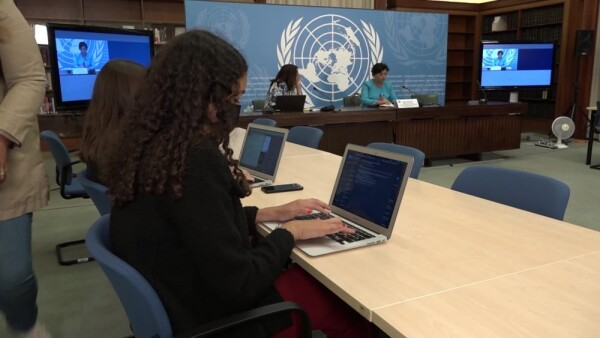
- Mid shot, journalists, participants typing on laptops.
- SOUNDBITE (ENGLISH): Najat Rochdi, Deputy Special Coordinator for Lebanon, UN Resident Coordinator and Humanitarian Coordinator for Lebanon: “2.2 million vulnerable Lebanese, 86,000 migrants and 200,000 Palestine refugees in Lebanon currently require emergency aid; in addition to 1.5 million Syrian refugees that are unable to afford or even access health, food, electricity, water, education and waste water management, not to mention lifesaving protection services.”
- Close-up, pen in hand, notes being written on notepad.
- SOUNDBITE (ENGLISH): Najat Rochdi, Deputy Special Coordinator for Lebanon, UN Resident Coordinator and Humanitarian Coordinator for Lebanon: “Hospitals suffer from an acute shortage in medical supplies and power shortages, at a time when over 40 per cent of Lebanon’s doctors and 30 per cent of nurses have left country, since the beginning of the economic meltdown”
- Close-up, microphones in foreground, blurred, Najat Rochdi in focus, side shot.
- SOUNDBITE (ENGLISH): Najat Rochdi, Deputy Special Coordinator for Lebanon, UN Resident Coordinator and Humanitarian Coordinator for Lebanon: “Alarmingly, gender exploitation and sexual exploitation and abuse are on the rise. We have received widespread reports of women and children feeling unsafe in public spaces, such as streets, markets or when using public transport.”
- Close-up, hands typing on laptop keyboards.
- SOUNDBITE (ENGLISH): Najat Rochdi, Deputy Special Coordinator for Lebanon, UN Resident Coordinator and Humanitarian Coordinator for Lebanon: “Through the emergency fuel provision, we have been able to support over 600 health facilities and water pumping stations to ensure the provision of lifesaving services to the most vulnerable populations affected by this ongoing energy crisis and maintain the provision of basic services across Lebanon.”
- Medium shot, participants typing on laptops, podium speakers to rear.
- Close-up, TV viewfinder showing Ms. Rochdi in frame and to rear.
- Medium shot, participant writing on notepad, microphone on desk, TV camera and tripod to rear.
Similar Stories
1
1
1
Press Conferences | WMO , UNHCR , WHO , ILO
WMO: Greenhouse Gas Bulletin; UNHCR: As attacks intensify UNHCR urges support for war ravaged Ukrainians; WHO: Clinical trials in DRC: vaccines and beyond; ILO: New global and regional estimates on domestic work, informality and working conditions

1
1
1
Edited News | OCHA , UNICEF , WFP
Aid agencies warned on Friday of the fast-developing humanitarian emergency inside Taiz City in Yemen, which has been encircled by de facto Houthi forces fighting government troops along the country’s west coast.
1
1
1
Press Conferences | UN WOMEN , WFP , WHO
UN WOMEN: Sudan Women and girls one year after the fall of El Fasher; increasing drone attacks across the country; WFP: DRC - Ebola spreads to eighth DRC province as WFP delivers food, builds treatment centres and keeps supplies moving; WHO - Update on Ebola (Bundibugyo Virus Disease)
1
12
1
1
Press Conferences , Images | UNOG
Closing Press Conference following the Sixth Consultative Meeting on Enhancing Coordination of Peace Initiatives and Efforts in Sudan

2
17
1
2
Edited News , Press Conferences , Images | OCHA , WMO
Two UN agencies teamed up on Wednesday to issue an appeal for immediate assistance to help communities already being impacted by the strongest El Niño on record.

3
16
2
2
Edited News , B-roll , Conferences , Images | UNITED NATIONS , UNOG
Sixth Consultative Meeting on Enhancing Coordination of Peace Initiatives and Efforts for Sudan
1
1
1
Press Conferences | CITES
Wildlife trade and conservation policy discussions at the 81st meeting of the CITES Standing Committee (SC81)

1
1
1
Edited News | UNICEF , WHO , UNHCR
Yemen war continues to force families from homes amid hunger and disease
More than 250,000 people have now fled renewed fighting in Yemen, the UN said on Tuesday, citing particular concern for those sheltering in the southwestern city of Taiz and the wider governorate, where access is “essentially blocked”.
1
1
1
Press Conferences | UNHCR , UNCTAD , WMO , OCHA , UNICEF , WHO
UNHCR Hungary’s 1956 Refugee Crisis: 70 Years On, UNCTAD World Investment Forum 2026, Doha, WMO Greenhouse Gas Bulletin and Climate Update for COP31, OCHA Afghanistan: Malnutrition, Girls’ Education and Recovery, UNICEF Yemen: Child Malnutrition and Unsafe Water in Taiz, WHO Inequalities in Noncommunicable Diseases and Risk Factors

1
1
1
Press Conferences | UNHCR
End of UNHCR's 77th Annual Executive Committee (ExCom) meeting week

1
1
1
Edited News | UNICEF
A little over one year since a ceasefire agreement was announced between Hamas fighters and Israel, more than 340 children have been reported killed and hundreds more injured, the UN Children’s Fund, UNICEF, said on Friday.

1
1
1
Press Conferences | UNICEF , IOM , UNHCR
UN Special Assistant to the Personal Envoy Office (SUDAN): Peace Initiatives and Efforts in Sudan; UNICEF: Dire situation of children in Gaza; IOM: Damaged Homes and Energy Attacks Risk Displacing Ukrainians for this winter; UNHCR: update on EXCOM week