

The United Nations Office at Geneva
Multimedia Newsroom
War in Ukraine
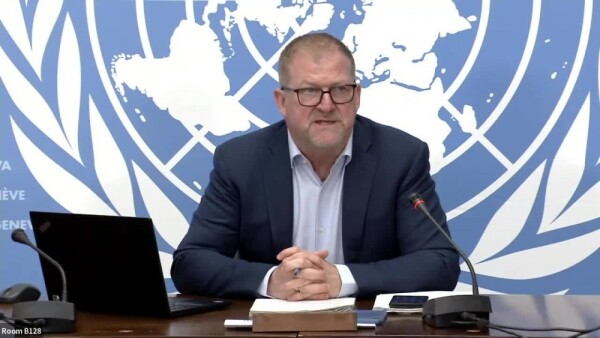
Tomson Phiri, for the World Food Programme (WFP), connecting from Lviv, Ukraine, said that humanitarian needs were worsening with each day. One month into the conflict, the WFP had provided life-saving assistance to one million people affected by the crisis. People’s capacities were stretched, and they were running out of options. WFP planned to support more people and to reach at least three million people in the coming months, as well as 300,000 refugees and asylum seekers who had fled to neighbouring countries. WFP had so far prepositioned close to 40,000 metric tons of bulk food, wheat flour and food rations. Despite the very volatile security situation, the WFP had managed to provide support to families in Kharkiv and Sumy, as part of the humanitarian convoys to those two cities. Moreover, the WFP had launched cash assistance for vulnerable refugees and families who hosted them. WFP was continuing to build up its stocks in several cities, including Dnipro and Vynnitsia. One challenge was that many humanitarian partners were not able to work in besieged areas; in the areas that were not directly affected by the war, the WFP continued to provide cash support and vouchers, also with the view of sustaining the local economy. WFP would be purchasing food from within Ukraine whenever possible.
Ewan Watson, for the International Committee of the Red Cross (ICRC), spoke about the safe passage operation from Mariupol. ICRC had three cars and nine staff members heading from Zaporizhzhia to Mariupol today, but it was not clear whether the safe passage would happen today. The ICRC’s role would be to lead the convoy from Mariupol to another city in Ukraine; the destination city was not specified yet. There would be as many as 54 buses and numerous personal vehicles. The ICRC would put clear Red Cross markers on the convoy to identify them as a purely humanitarian, civilian movement. Open communication channels existed with parties to the conflict to make sure all details were agreed with all sides and passed on down the chain of command and communicated with the citizens of Mariupol. It had to be secured that the ceasefire would hold during the evacuation. People’s voluntary consent was a paramount prerequisite for the evacuation to take place.
Responding to questions from the media, Mr. Watson said the ICRC did not have a clear idea of the number of people who wanted to leave Mariupol, but it would certainly be thousands. There was no plan B, and time was running out for people of Mariupol, stressed Mr. Watson. He confirmed that there was approval from the top level of both parties for the convoy to take place. He explained that the Ukrainian authorities were providing the 54 buses. Speaking about the previous, botched evacuation effort at the beginning of March, Mr. Watson said it had turned out that the route was not safe. For today’s operation, assurance ought to be present that the route was safe, that the ceasefire was holding, and that the destination had to be agreed. On the ongoing misinformation campaign against the ICRC, Mr. Watson said that it was troubling and potentially dangerous for the ICRC staff on the ground. The campaign had not affected the ICRC’s ability to do its work, but the concern certainly remained. Mr. Watson explained that the ICRC had not received a permission to bring the prepositioned aid trucks into Mariupol; its role today was to act as a neutral intermediary to help people leave the city.
Mr. Phiri, in reply to a question, said that it was extremely challenging to come up with a proper assessment of the damage made. It was hard to have a full picture of what was happening, particularly in the active conflict areas.
Rhéal LeBlanc, for the United Nations Information Service (UNIS), referred to the message of the UN Secretary-General on the Day of Mine Awareness, in which he said that in Ukraine, “the legacy of a single month of war – in the form of unexploded ordnance, landmines, and cluster munitions – would take decades to tackle, threatening lives long after the guns fall silent. Already today, they restricted emergency humanitarian aid delivery and prevented people fleeing to safety.”
Thousands flee from DRC to Uganda
Joel Boutroue, the United Nations Refugee Agency (UNHCR) Representative in Uganda, connecting from Kampala, said he had visited the border between the Democratic Republic of Congo and Uganda two days ago. UNHCR, alongside the Government of Uganda and humanitarian partners, was currently assisting some 10,000 refugees in the country’s southwest Kisoro district after they had fled violent clashes in the Democratic Republic of the Congo. Thousands of children, women, and men had arrived from Rutchuru territory in the DRC, some 8 kilometers from the Bunagana border crossing in Uganda’s Kisoro district. As people had arrived in Uganda on 28 and 29 March, artillery fire and gunshots could be heard from across the border, indicating that clashes were ongoing. Six people had arrived with gunshot wounds and had been subsequently taken for treatment.
As long as the military operations continued – and there was no indication that they would end soon – the influx of people was likely to continue, said Mr. Boutroue.
Full briefing note is available here.
Second Forum of Mayors
Jean Rodriguez, for the United Economic Commission for Europe (UNECE), informed that the second Forum of Mayors would take place in Room XVII at the Palais des Nations on 4 and 5 April, and could be watched at webtv.un.org. The Forum would facilitate exchange and mutual learning as mayors from across the pan-European region and North America – together with a number of mayors from Africa, Asia, the Middle East and Latin America – present their efforts to tackle key challenges in their cities, under the theme “Recovering from the COVID-19 pandemic while advancing the implementation of the SDGs”. Mayors would learn from each other’s best practices in the areas of housing and climate-neutral buildings, green cities and nature-based solutions, sustainable urban transport and safer roads, and smart urban development solutions.
On 6-7 March, the UNECE would also hold a regional forum on sustainable development. The progress report on the region had been released the previous week, reminded Mr. Rodriguez, and the overall situation was alarming, while the data did not yet fully account for the impacts of the pandemic and the ongoing war in Ukraine.
Paola Deda, Director of the Forests, Land and Housing Division at the United Nations Economic Commission for Europe (UNECE), said there would be four sessions: sustainable urban transport, shared mobility and safer roads; vibrant public spaces, green cities and nature-based solutions; resilient, healthy and climate-neutral buildings and
affordable and adequate housing; and sustainable urban planning, the 15-minute city and smart urban development solutions. Some 45 mayors would attend the meeting. On 5 April in the morning, the mayor of Kharkiv, Ukraine, would connect live from his city. One of the outcomes expected would be to specify how cities could more actively participate in the work of the United Nations, part of the new multilateralism.
Replying to a question, Ms. Deda confirmed that the UNECE Executive Committee (EXCOM) had decided to rescind the invitations sent out to one city in Russia and one in Belarus. Mr. Rodriguez said that sanctions at the United Nations could be decided only by the Security Council; the EXCOM decision could not be associated with the term “sanctions”. EXCOM was in charge of institutional decision-making power in between the biannual meetings of the Commission, he explained.
More details on the Forum of Mayors available here.
Announcements
Rhéal LeBlanc, for the United Nations Information Service (UNIS), speaking for the World Health Organization (WHO), said the WHO would launch its air quality database in the lead up to World Health Day. A virtual press briefing would be held on 4 April at 2 p.m. The WHO air quality database would focus global attention on urgent actions needed to keep humans and the planet healthy and foster a movement to create societies focused on well-being.
On World Health Day, 7 April, under the theme “Our Planet, our Health”, there would be different events around the world, on which more information would be shared by the WHO.
Mr. LeBlanc, now speaking for the Human Rights Council (HRC), said that the HRC was scheduled to conclude its five-week session today. There remained 18 draft resolutions for action today; 16 resolutions had been adopted the previous day. After the adoption of those texts, the President of the Council would mandate holders for various vacant positions for human rights experts. Thereafter, the Council would adopt the report for the 49th session and then conclude the session.
Today at 12 noon, there would be a hybrid press briefing by Sara Beysolow Nyanti, Humanitarian Coordinator for South Sudan.
On 4 April at 2 p.m., Abdallah Al Dardari, UNDP Resident Representative in Afghanistan, would hold a press conference on how to respond to Afghanistan crisis, support livelihoods and mitigate fragility, complementing humanitarian action on the ground.
Mr. LeBlanc announced that World Autism Awareness Day would be held on 2 April. On that occasion, the Secretary-General said that many persons with autism still live in isolation, discriminated against and disconnected from their communities, in institutions or even in their own homes. He said the solution lies in more community-based support systems for persons with autism. Inclusive education systems and training programmes were needed to enable students with autism to access the educational path of their choice.
Finally, to mark the beginning of the Muslim holy month of Ramadan, the Secretary-General was sending his warmest wishes as millions of Muslims begin the holy month of Ramadan. “In this holy month and every day, let us take inspiration by working hand in hand for the safety, dignity and prosperity of all women and men. Let us learn from each other and, together, build a peaceful world,” he said in his message.
Similar Stories
1
1
1
Press Conferences | IOM , UNDRR
UN stresses importance of household preparedness for disaster risk reduction.
1
1
1
Statements , Press Conferences | OHCHR
1
1
1
Press Conferences | UNHCR , UNICEF , IFRC , OHCHR , UN WOMEN , IOM , OCHA , WHO
UNHCR – ExCom Meeting, UNICEF – Nepal Recovery, IFRC – Flash Floods, WHO – Mental Health, IOM – South Sudan Floods, OCHA – DRC Humanitarian aid, UNHCR – Sahel Displacement, UNICEF – Yemen Update, IOM – Gaza Shelter, UN Women – Gaza Women, OHCHR – Arrests and detentions of Syrians by Israeli force
2
1
2
Press Conferences | UNCTAD
Presentation of the Trade and Developement Report 2026
Embargoed until 9 October 2026 at 11 a.m. (Geneva Time)
UNCTAD: UNCTAD’s flagship report finds that governments increasingly use industrial, trade, financial and technology policies to pursue economic and national security objectives. Market access and the ability to move into higher-value activities now depend more heavily on technology, finance and geopolitics.
1
1
1
Press Conferences | UPU
Release of the State of the Postal Sector Report 2026
1
1
1
Press Conferences | IOM , ITU , UNECE , UNICEF , WHO , WMO
UNICEF: Ebola, DRC - children orphans or separating them from parents and caregivers; IOM: Humanitarian needs in Djibouti amid arrivals from Yemen and increased migrant movements; WHO: Darfur, scale of health needs far exceeds available resources; WMO co-sponsored Global Heat Forum, Bangkok, monthly Global Seasonal Climate Update; UNECE: UN Forum of Mayors; ITU Plenipotentiary Conference 2026; WHO: child and adolescent obesity guidelines and new global roadmap to tackle pregnancy hypertension, a leading cause of maternal mortality
1
1
1
Press Conferences | OCHA , UN WOMEN , UNHCR , WFP , WHO , WTO , UNEP
OCHA – $160M CERF allocation to 12 underfunded crises; UNHCR – 5.8M refugee children remain out of school amid funding cuts; UN Women – Middle East escalation and food security among women/girls; WHO – Gaza supplies and overall situation; WFP – Yemen food insecurity and impact on global hunger ; UNEP - First International Conference of the Global Framework on Chemicals in Geneva | 16-20 November 2026
1
1
1
Press Conferences | UNHCR , WHO
Yemen's health system nears collapse amid conflict, causing rising casualties and medicine shortages.
1
1
1
Press Conferences | HRC
Update by the Expert Mechanism to Advance Racial Justice and Equality in Law Enforcement
1
1
1
Press Conferences | WIPO , WHO , UNICEF , UNHCR , IOM , WFP , FAO
WIPO Global Innovation Index 2026 launch and press conference, WHO Composition of influenza vaccines for the 2027 Southern Hemisphere flu season, UNICEF Yemen hunger and malnutrition; UNHCR Sudan displacement into Chad; IOM Ebola and population movements in DRC; WFP emergency food assistance in Nepal; and FAO food loss and waste.
2
1
2
Press Conferences | UNCTAD
Gaza reconstruction needs reach $71.5 billion as Palestinian economy and public finances face severe strain. Latest UNCTAD report documents the loss of decades of development gains, economic collapse in Gaza and tightening economic constraints in the West Bank.
The report identifies three immediate priorities: transferring withheld Palestinian revenues, safeguarding the banking system and aligning reconstruction support with the documented scale of damage and economic losses.
1
1
1
Press Conferences | HRC
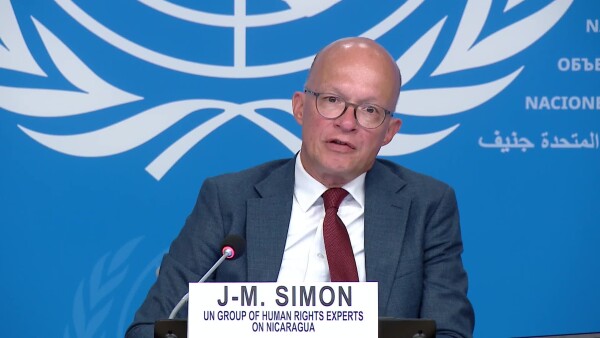
Press conference on the situation of human rights in Nicaragua by the UN Group of Human Rights Experts