

The United Nations Office at Geneva
Multimedia Newsroom
Edited News | UNHCR
Bi-Weekly Press Briefing Aid for Displaced in Myanmar UNHCR 11 February 2022
The number of internally displaced people due to the conflict in Myanmar has doubled since last year’s military coup and currently amounts to more than 800,000 people, the UN Refugee Agency (UNHCR) informed today while scaling up its emergency response to assist.
“Security is deteriorating rapidly across the country as fighting and armed conflict intensifies with no sign of abating”, said UNHCR’s spokesperson Matthew Saltmarsh speaking today at a news briefing at the United Nations in Geneva. “UNHCR forecasts an accelerating trend of displacements in the coming weeks and months”, he added.
As conflict and insecurity is raging in many parts of the country, UNHCR and partners are stepping up operations and deploying additional resources to support as conflict intensifies.
According to Mr. Saltmarsh, “some 440,000 people have been newly displaced since February 2021, according to our data, adding to an existing 370,000 who had fled their homes previously”.
In the South-East of the country, Kayin, Kayah, Mon and Shan (South) states as well as Bago (East) and Tanintharyi regions collectively account for more than half of the 440,000 newly displaced civilians. Hostilities between various armed groups have triggered large-scale displacements. Kayin and Kayah states remain the most affected ones.
“Another conflict-affected area with pressing humanitarian needs is Myanmar’s North-West, where about 190,000 people remain displaced in Chin State, Magway Region and Sagaing Region”, said UNHCR’s Matthew Saltmarsh.
The displaced people are living in appalling conditions, many in camps and displacement sites, others with host communities, and some have crossed the borders with Thailand and India or have sought refuge in the jungle without adequate food, shelter, sanitation, protection or medical care.
UNHCR and partners distributed relief items including tarpaulins, ropes, blankets, kitchen sets, mosquito nets, buckets, sleeping mats, sanitary kits, COVID-19 personal protective equipment, solar lamps, and winterization kits for adults and children.
“Humanitarian access in many parts of Myanmar remains restricted due to insecurity, roadblocks and challenges in obtaining access approvals”, said Mr. Saltmarsh. ”As a result, host communities and local responders continue to play a leading role in assisting displaced populations”.
The humanitarian situation in Myanmar remains precarious with increased vulnerabilities linked to rising commodity prices, job and income losses, disruptions to basic services and prolonged insecurity. The majority of IDPs are consequently dependent on humanitarian support for survival.
“Some 600,000 stateless Rohingya in Rakhine State, including some 148,000 displaced in camps, villages and displacement sites, also remain highly vulnerable and require humanitarian support”. noted Mr. Saltmarsh.
In 2022, UNHCR requires a total of US$56.7 million to ensure adequate humanitarian assistance and support vulnerable communities.
-ends-
- Exterior wide shot, United Nations Palace of Nations, Geneva. UN flag flying.
- Wide shot, press room UN Geneva.
- SOUNDBITE (English): Matthew Saltmarsh, Spokesperson for the UN Refugee Agency (UNHCR): “Security is deteriorating rapidly across the country as fighting and armed conflict intensifies with no sign of abating. UNHCR forecasts an accelerating trend in displacements in the coming weeks and months.”
- Wide shot, press room UN Geneva with podium speakers on the rear.
- SOUNDBITE (English): Matthew Saltmarsh, Spokesperson for the UN Refugee Agency (UNHCR): “Some 440,000 people have been newly displaced since February 2021, according to our data, adding to an existing 370,000 who had fled their homes previously.”
- Medium shot, masked participant listening with podium speaker on the TV screen on the rear.
- SOUNDBITE (English): Matthew Saltmarsh, Spokesperson for the UN Refugee Agency (UNHCR): “Humanitarian access in many parts of Myanmar remains restricted due to insecurity, roadblocks, and challenges in attaining access approvals. As a result, host communities and local responders continue to play a leading role in assisting displaced populations, demonstrating solidarity with each other by donating what they can.”
- Medium-wide shot, participating listening and taking notes.
- SOUNDBITE (English): Matthew Saltmarsh, Spokesperson for the UN Refugee Agency (UNHCR): “Some 600,000 stateless Rohingya in Rakhine State, including some 148,000 displaced in camps, villages and displacement sites, also remain highly vulnerable and require humanitarian support.”
- Medium shot, TV screen showing spokesperson, podium speakers on the rear.
- SOUNDBITE (English): Matthew Saltmarsh, Spokesperson for the UN Refugee Agency (UNHCR): “Another conflict-affected area with pressing needs is Myanmar’s North-West, where about 190,000 people remain displaced in Chin State, Magway Region and Sagaing Region.”
- Wide shot, press room in Geneva. Participants listening with podium speakers on the rear.
- Close-up shot, masked participant listening besides the tripod of camera.
- Medium shot, one participant listening and another rising hand up to ask questions.
- Wide shot, masked participants sitting and listening.
- Wide shot, masked participant taking notes besides the tripod of camera.
- Medium shot, masked participants listening carefully.
Similar Stories
1
1
1
Edited News | OCHA , UNICEF , WFP
Aid agencies warned on Friday of the fast-developing humanitarian emergency inside Taiz City in Yemen, which has been encircled by de facto Houthi forces fighting government troops along the country’s west coast.

2
17
1
2
Edited News , Press Conferences , Images | OCHA , WMO
Two UN agencies teamed up on Wednesday to issue an appeal for immediate assistance to help communities already being impacted by the strongest El Niño on record.
3
16
2
2
Edited News , B-roll , Conferences , Images | UNITED NATIONS , UNOG
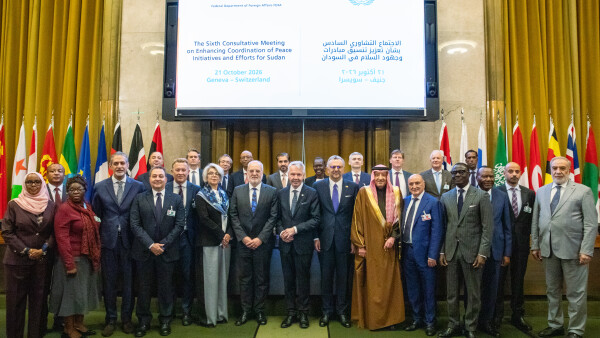
Sixth Consultative Meeting on Enhancing Coordination of Peace Initiatives and Efforts for Sudan

1
1
1
Edited News | UNICEF , WHO , UNHCR
Yemen war continues to force families from homes amid hunger and disease
More than 250,000 people have now fled renewed fighting in Yemen, the UN said on Tuesday, citing particular concern for those sheltering in the southwestern city of Taiz and the wider governorate, where access is “essentially blocked”.

1
1
1
Edited News | UNICEF
A little over one year since a ceasefire agreement was announced between Hamas fighters and Israel, more than 340 children have been reported killed and hundreds more injured, the UN Children’s Fund, UNICEF, said on Friday.

1
1
1
Edited News | UNICEF , IFRC
Six weeks after Nepal’s deadly flooding disaster, communities are still struggling to rebuild their lives, but they will need sustained help as global warming increases the risk of another Himalayan catastrophe, the UN Children’s Fund (UNICEF) said on Friday.

1
1
1
Edited News | WHO
In suspected Russia plague death, testing and monitoring underway – WHO
The death of a lab worker in Russia’s Siberia region has sparked concerns about plague being the cause, the UN World Health Organization (WHO) said on Tuesday, adding that it was following the situation closely.

1
1
Edited News | OHCHR , UNOG
UN Human Rights Chief Volker Türk on Friday provided and oral update to the 63rd session of the Human rights Council on Ukraine.

1
1
1
Edited News | OHCHR , UNOG
UN Human Rights Chief Volker Türk on Friday provided and oral update to the 63rd session of the Human rights Council on the human rights situation in Haiti.

1
1
1
Edited News | WHO
Repeated delays in bringing lifesaving medicines, prosthetics and more from Israel into Gaza risk having devastating consequences on Palestinians who urgently need them in the wartorn enclave, the UN World Health Organization (WHO) said on Friday. “A truck full of non-priority supplies or the right supplies arriving too late, doesn't save lives. That's the question that actually matters," said Dr Reinhilde Van De Weerdt, WHO Representative in the OPT.

1
1
1
Edited News | WHO
DRC: Early access to care and oxygen decisive for Ebola patients’ survival – WHO
In the Democratic Republic of the Congo (DRC), health workers fighting the country’s largest-ever Ebola outbreak are struggling to overcome critical challenges to patient care, the UN World Health Organization (WHO) warned on Tuesday.

1
1
1
Edited News | OCHA , UN
Civilians in Iran are continuing to feel the consequences of months of conflict and military escalation, the UN’s top official in the country has said, as loss of life, damage to civilian infrastructure and mounting economic pressures leave many facing continued uncertainty.