

The United Nations Office at Geneva
Multimedia Newsroom
Edited News , Press Conferences | UNOG , UNITED NATIONS , WMO
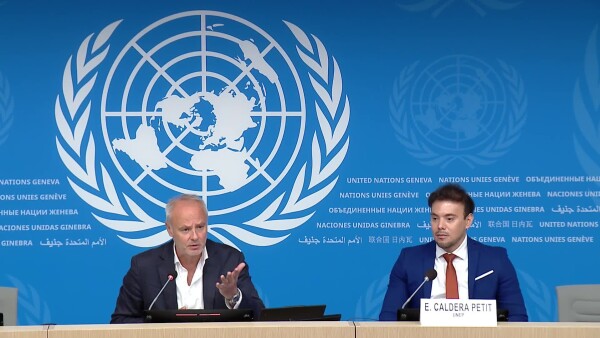
WMO Press conference: United in Science multi-agency report on greenhouse gases and climate change
World Meteorological Organization (WMO)
Subject: Release of the United in Science multi-agency report on greenhouse gases and climate change
Speakers:
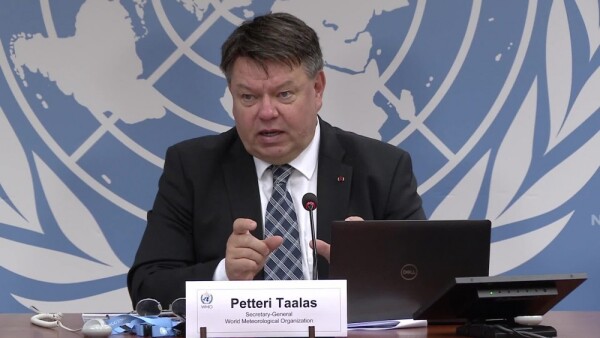
- Prof. Petteri Taalas, Secretary-General of the WMO
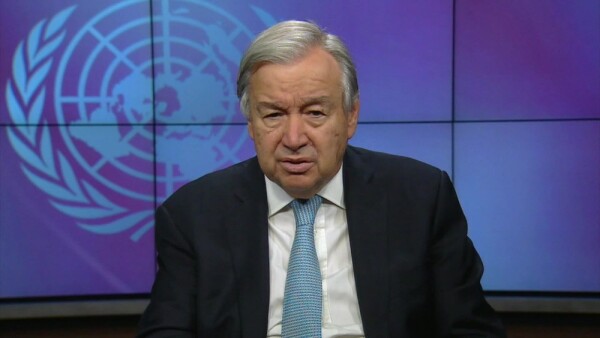
- United Nations Secretary-General António Guterres (video message)
‘Tipping point’ for climate action: Time’s running out to avoid catastrophic heating said head of UN weather agency Prof. Petteri Taalas
STORYLINE
The temporary reduction in carbon emissions caused by global COVID-19 lockdowns did not slow the relentless advance of climate change. Greenhouse gas concentrations are at record levels, and the planet is on path towards dangerous overheating, a multi-agency climate report published on Thursday warns. According to the landmark United in Science 2021, there “is no sign of growing back greener”, as carbon dioxide emissions are rapidly accelerating, after a temporary blip in 2020 due to COVID, and nowhere close to the targets set by the Paris Agreement. “We are not yet on track towards the Paris (Agreement) 1.5 to 2 degrees’ limit, although positive things have started to happen and the political interest to mitigate climate change is clearly growing. But to be successful in this effort, we have to start acting now. We cannot wait for decades to act. We have to start acting already in this decade” said WMO Secretary-General Prof. Petteri Taalas, who was spekaing in Geneva following the release of the document.
According to scientists, the rising global temperatures are already fueling devastating extreme weather events around the world, with escalating impacts on economies and societies. “We had this temperature anomaly in western Canada and the United States, where we were up to 15 degrees warmer temperatures than normally, and that led to a record breaking forest fires and major health problems, especially amongst elderly people” said Prof. Taalas, who also noted the flooding in western Germany that led to almost 200 casualties. “These kind of events that used to happen every 100 years, they may happen nowadays every 20 years and in the future even more often. So the risk of these kind of events is growing because of climate change” he warned.
The report echoes some of the data and warnings from experts in the last year: the average global temperature for the past five years was among the highest on record, and there is an increasing likelihood that temperatures will temporarily breach the threshold of 1.5° Celsius above the pre-industrial era, in the next five years. The picture painted by United in Science is bleak: even with ambitious action to slow greenhouse gas emissions, sea levels will continue to rise and threaten low-lying islands and coastal populations throughout the world.
The 2021 United Nations Climate Change Conference, also known as COP26, is scheduled to be held in the city of Glasgow, Scotland between 31 October and 12 November 2021. The pivotal meeting is expected to set the course of climate action for the next decade. The report also cites the conclusions of the most recent IPCC report: the scale of recent changes across the climate system are unprecedented over many centuries to many thousands of years, and it is unequivocal that human influence has warmed the atmosphere, ocean and land.
Greenhouse gas emissions
Concentrations of the major greenhouse gases – carbon dioxide (CO2), methane (CH4) and nitrous oxide (N2 O) continued to increase in 2020 and the first half of 2021.
Referring to the covid-19 pandemic, Prof. Taalas pointed out that despite an “estimated drop of 5.6 per cent” in emissions, “ the lifetime of carbon dioxide is so long,” therefore, “ this one year anomaly in emissions doesn't change the big picture”. While some improvements in air quality was observed, “we have returned more or less back to the 2019 emission levels,” he said.
According to WMO, reducing atmospheric methane (CH4) in the short term, could support the pledges of 193 Member States made in Paris. This measure does not reduce the need for strong, rapid and sustained reductions in CO2 and other greenhouse gases. Meanwhile, the UN Environment Program (UNEP), warns that five years after the adoption of the Paris Agreement, the emissions gap (the difference between where emissions are heading and where science indicate they should be in 2030) is as large as ever. Although the increasing number of countries committing to net-zero emission goals is encouraging, to remain feasible and credible, these goals urgently need to be reflected in near-term policy and in significantly more ambitious actions, the agency highlights.
A warmer future
The report explains that the annual global average temperature is likely to be at least 1 °C warmer than pre-industrial levels (defined as the 1850–1900 average) in each of the coming five years and is very likely to be within the range of 0.9 °C to 1.8 °C. There is also a 40% chance that the average temperature in one of the next five years, will be at least 1.5 °C warmer than pre-industrial levels. “We are heading towards 2 to 3 degrees warming instead of 1.5 to 2 degrees”, said Prof. Taalas “and it has been shown clearly that it would be beneficial for the welfare of us human beings and the welfare of the biosphere and the planet to reach even the lower limit of Paris Agreement, 1.5 degrees”. High latitude regions, and the Sahel, are likely to be wetter in the next five years, the report also warns.
Sea level rise is inevitable
Global sea levels rose 20 cm from 1900 to 2018, and at an accelerated rate from 2006 to 2018. Even if emissions are reduced to limit warming to well below 2 °C, the global average sea level would likely rise by 0.3–0.6 m by 2100 and could rise 0.3–3.1 m by 2300. According to Prof. Taalas “in the worst case we could see up to two meters of sea level rise by the end of this century if the melting of the Antarctic glacier happens in a speedier manner.” Adaptation to the rise will be essential, especially along low-lying coasts, small islands, deltas and coastal cities, the report explains.
World’s health also at risk
The World Health Organization (WHO) warns that rising temperatures are linked to increased heat-related mortality and work impairment, with an excess of 103 billion potential work hours lost globally in 2019 compared with those lost in 2000. Moreover, COVID-19 infections and climate hazards such as heatwaves, wildfires and poor air quality, combine to threaten human health worldwide, putting vulnerable populations at particular risk. According to the UN health agency, the COVID-19 recovery efforts should be aligned with national climate change and air quality strategies to reduce risks from cascading climate hazards, and gain health co-benefits.
The United in Science 2021 report, the third in a series, is coordinated by the World Meteorological Organization (WMO), with input from the UN Environment Programme (UNEP), the World Health Organization (WHO), the Intergovernmental Panel on Climate Change (IPCC), the Global Carbon Project (GCP), the World Climate Research Programme (WCRP) and the Met Office (UK). It presents the very latest scientific data and findings related to climate change to inform global policy and action.
ENDS
SHOTLIST OF THE EDITED STORY:
STORY : Climate Change Report WMO
TRT : 03:50’’
SOURCE : UNTV CH
LANGUAGE : ENGLISH
ASPECT RATIO : 16:9
DATELINE : 16 Sept 2021, GENEVA, Switzerland
SHOTLIST
- Exterior wide shot, United Nations flag flying.
- Medium shot, Interior, Conference room.
- SOUNDBITE (English): Secretary-General World Meteorological Organization, Petteri Taalas: “Last year, we estimated that there was 5.6 per cent drop in emissions and since the lifetime of carbon dioxide is so long, this one-year anomaly in emissions doesn't change the big picture. We saw some improvements in air quality, these short-lived gases, which are affecting air quality. We saw positive evolution there. But now we have returned more or less back to the 2019 emission levels.”
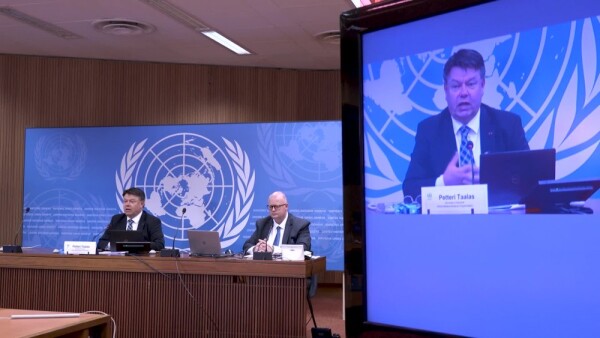
- Medium shot of the speakers, view from behind.
- SOUNDBITE (English): Secretary-General World Meteorological Organization, Petteri Taalas: “We had this temperature anomaly in western Canada and the United States, where we were up to 15 degrees warmer temperatures than normally. And that led to a record breaking, forest fires and major health problems, especially amongst elderly people.”
- Medium shot of the audience and the speakers.
- SOUNDBITE (English): Secretary-General World Meteorological Organization, Petteri Taalas: “And also, there's a flooding event in western Germany that was very unusual and led also to almost 200 casualties. And because of climate change, these kind of events that used to happen every 100 years, they may happen nowadays every 20 years and in the future even more often. So the risk of these kind of events is growing because of climate change.”
- Medium shot of the speakers and the screen broadcasting the Zoom meeting.
- SOUNDBITE (English): Secretary-General World Meteorological Organization, Petteri Taalas: “We don't know what's going to happen to the Antarctic glacier, where we have the biggest mass of ice worldwide and in the worst case, we could see up to two meters of sea level rise by the end of this century if the melting of the Antarctic glacier happens in a speedier manner.”
- Medium shot of the audience and the cameras.
- SOUNDBITE (English): Secretary-General World Meteorological Organization, Petteri Taalas: “We are not yet on track towards the Paris 1.5 to 2 degrees’ limit, although positive things have started to happen and the political interest to mitigate climate change is clearly growing but to be successful in this effort, we have to start acting now. We cannot wait for decades to act, we have to start acting already in this decade.”
- Close shot from below of the speakers.
- SOUNDBITE (English): Secretary-General World Meteorological Organization, Petteri Taalas: “Now we are heading towards 2 to 3 degrees warming instead of 1.5 to 2 degrees, and it has been shown clearly that it would be beneficial for the welfare of us human beings and the welfare of the biosphere and the planet to reach even the lower limit of Paris Agreement, 1.5 degrees.”
- Close of a photographer taking pictures.
- Medium shot of the speakers.
Similar Stories

1
1
1
Edited News | UNICEF , IFRC
Six weeks after Nepal’s deadly flooding disaster, communities are still struggling to rebuild their lives, but they will need sustained help as global warming increases the risk of another Himalayan catastrophe, the UN Children’s Fund (UNICEF) said on Friday.
1
1
1
Statements , Press Conferences | OHCHR
1
1
1
Press Conferences | UNHCR , UNICEF , IFRC , OHCHR , UN WOMEN , IOM , OCHA , WHO
UNHCR – ExCom Meeting, UNICEF – Nepal Recovery, IFRC – Flash Floods, WHO – Mental Health, IOM – South Sudan Floods, OCHA – DRC Humanitarian aid, UNHCR – Sahel Displacement, UNICEF – Yemen Update, IOM – Gaza Shelter, UN Women – Gaza Women, OHCHR – Arrests and detentions of Syrians by Israeli force
2
1
2
Press Conferences | UNCTAD
Presentation of the Trade and Developement Report 2026
Embargoed until 9 October 2026 at 11 a.m. (Geneva Time)
UNCTAD: UNCTAD’s flagship report finds that governments increasingly use industrial, trade, financial and technology policies to pursue economic and national security objectives. Market access and the ability to move into higher-value activities now depend more heavily on technology, finance and geopolitics.
1
1
1
Press Conferences | UPU
Release of the State of the Postal Sector Report 2026

1
1
1
Edited News | WHO
In suspected Russia plague death, testing and monitoring underway – WHO
The death of a lab worker in Russia’s Siberia region has sparked concerns about plague being the cause, the UN World Health Organization (WHO) said on Tuesday, adding that it was following the situation closely.
1
1
1
Press Conferences | IOM , ITU , UNECE , UNICEF , WHO , WMO
UNICEF: Ebola, DRC - children orphans or separating them from parents and caregivers; IOM: Humanitarian needs in Djibouti amid arrivals from Yemen and increased migrant movements; WHO: Darfur, scale of health needs far exceeds available resources; WMO co-sponsored Global Heat Forum, Bangkok, monthly Global Seasonal Climate Update; UNECE: UN Forum of Mayors; ITU Plenipotentiary Conference 2026; WHO: child and adolescent obesity guidelines and new global roadmap to tackle pregnancy hypertension, a leading cause of maternal mortality

1
1
Edited News | OHCHR , UNOG
UN Human Rights Chief Volker Türk on Friday provided and oral update to the 63rd session of the Human rights Council on Ukraine.

1
1
1
Edited News | OHCHR , UNOG
UN Human Rights Chief Volker Türk on Friday provided and oral update to the 63rd session of the Human rights Council on the human rights situation in Haiti.

1
1
1
Edited News | WHO
Repeated delays in bringing lifesaving medicines, prosthetics and more from Israel into Gaza risk having devastating consequences on Palestinians who urgently need them in the wartorn enclave, the UN World Health Organization (WHO) said on Friday. “A truck full of non-priority supplies or the right supplies arriving too late, doesn't save lives. That's the question that actually matters," said Dr Reinhilde Van De Weerdt, WHO Representative in the OPT.
1
1
1
Press Conferences | OCHA , UN WOMEN , UNHCR , WFP , WHO , WTO , UNEP
OCHA – $160M CERF allocation to 12 underfunded crises; UNHCR – 5.8M refugee children remain out of school amid funding cuts; UN Women – Middle East escalation and food security among women/girls; WHO – Gaza supplies and overall situation; WFP – Yemen food insecurity and impact on global hunger ; UNEP - First International Conference of the Global Framework on Chemicals in Geneva | 16-20 November 2026

1
1
1
Edited News | WHO
DRC: Early access to care and oxygen decisive for Ebola patients’ survival – WHO
In the Democratic Republic of the Congo (DRC), health workers fighting the country’s largest-ever Ebola outbreak are struggling to overcome critical challenges to patient care, the UN World Health Organization (WHO) warned on Tuesday.