

The United Nations Office at Geneva
Multimedia Newsroom
Press Conferences , Edited News | WMO
WMO Press Conference: 'United in Science' 2024 report - 18 September 2024
Climate crisis: New technologies offer hope for global action, says UN weather agency
Amid renewed warnings from leading climate scientists that global warming could reach 3°C above pre-industrial levels this century, the head of the UN World Meteorological Organization (WMO) insisted on Wednesday that new technologies and AI offer the opportunity to implement the drastic action needed to resist the existential crisis.
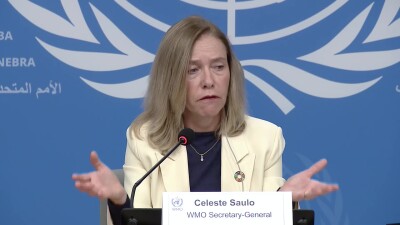
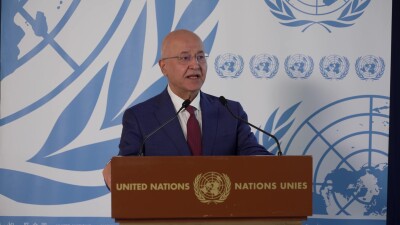
“The science is clear: we are far off track from achieving global climate goals,” said Celeste Saulo, the UN World Meteorological Organization (WMO) Secretary-General. Speaking to journalists in Geneva, she noted that 2023 was the warmest year on record “by a huge margin. Leading international data sets say that the first eight months of 2024 are also the warmest on record.”
Ms. Saulo’s warning coincided with the publication of the latest multi-agency United in Science annual report. Its release comes as huge wildfires rage across Latin America and Portugal, while central European countries battle deadly flooding in the wake of Storm Boris, with Italy now on high alert following mass evacuations in Poland, Czech Republic, Austria and Romania.
Despite progress made in mitigating global greenhouse gas emissions, “the emissions gap remains high”, the WMO-partnered report notes. It further warns that if there is no change to current policies, there is a 66 per cent probability that global warming will reach 3°C this century.
Despite the troubling clarity of science, the report offers grounds for hope. “When the Paris Agreement was adopted, greenhouse gas emissions were projected to increase by 16 per cent by 2030, relatively to 2015,” explained the WMO chief. “Now, that projected increase is three per cent. So, progress has been made, but we need to be much more ambitious. The gap between aspiration and reality is a glaring one.”
New technologies and innovation are potential game-changers
In a call for global and urgent action coinciding with the upcoming Summit of the Future at UN headquarters in New York on 22-23 September, the UN weather agency underscored the untapped potential of natural and social sciences, new technology and innovation to help countries develop, reduce their vulnerability to disaster and adapt to climate change.
Space-based Earth observations are part of the solutions highlighted in the report, as they are crucial for effective weather forecasting, climate prediction and environmental monitoring. “Satellites are improving our ability to monitor greenhouse gas emissions, which is crucial for informing our efforts to mitigate emissions and to achieve the goals of the Paris Agreement,” explained Lauren Stuart, scientific coordinator at WMO.
Another example is “immersive technologies, which are bridging the digital and the physical worlds. And an example of this is what we call ‘digital twins’, which is basically a digital replication of the Earth.” Digital twins create a virtual real-world system to simulate how reality would respond in any given situation. The metaverse gather virtual worlds into an “integrative system” that provides immersive experiences from simulating flood and drought events to predicting water flow and impacts on land. These technologies enable experts to take decisions towards achieving the universally agreed Sustainable Development Goals.
Ms. Saulo insisted that technology alone will not be enough to solve climate change and disaster risk reduction as she urged all countries to share their expertise and experiences at the Summit of the Future. “I do trust in governments. I do trust in multilateralism. I do trust in the Summit of the Future and how this will help us address, use the technology for the better while controlling the negative impacts of technology,” she emphasized.
The UN weather agency chief underscored the need for a “transdisciplinary approach”, where a diversity of actors including scientists, policymakers, indigenous communities and civil society groups create solutions together. “Science should not be kept in a box for a few of us. Science should be the driving mechanism all around the world to really transform and give more opportunities for the generations to come.”
Ends.
Story: “'United in Science' report - WMO” – 18 September 2024
Speakers:
- Celeste Saulo, Secretary-General of the UN World Meteorological Organization (WMO)
- Lauren Stuart, scientific coordinator at the UN World Meteorological Organization (WMO)
TRT: 02’26”
SOURCE: UNTV CH
LANGUAGE: ENGLISH / NATS
ASPECT RATIO: 16:9
DATELINE: 18 September 2024 - GENEVA, SWITZERLAND
Geneva Press briefing
SHOTLIST
- Exterior medium shot: UN flag alley.
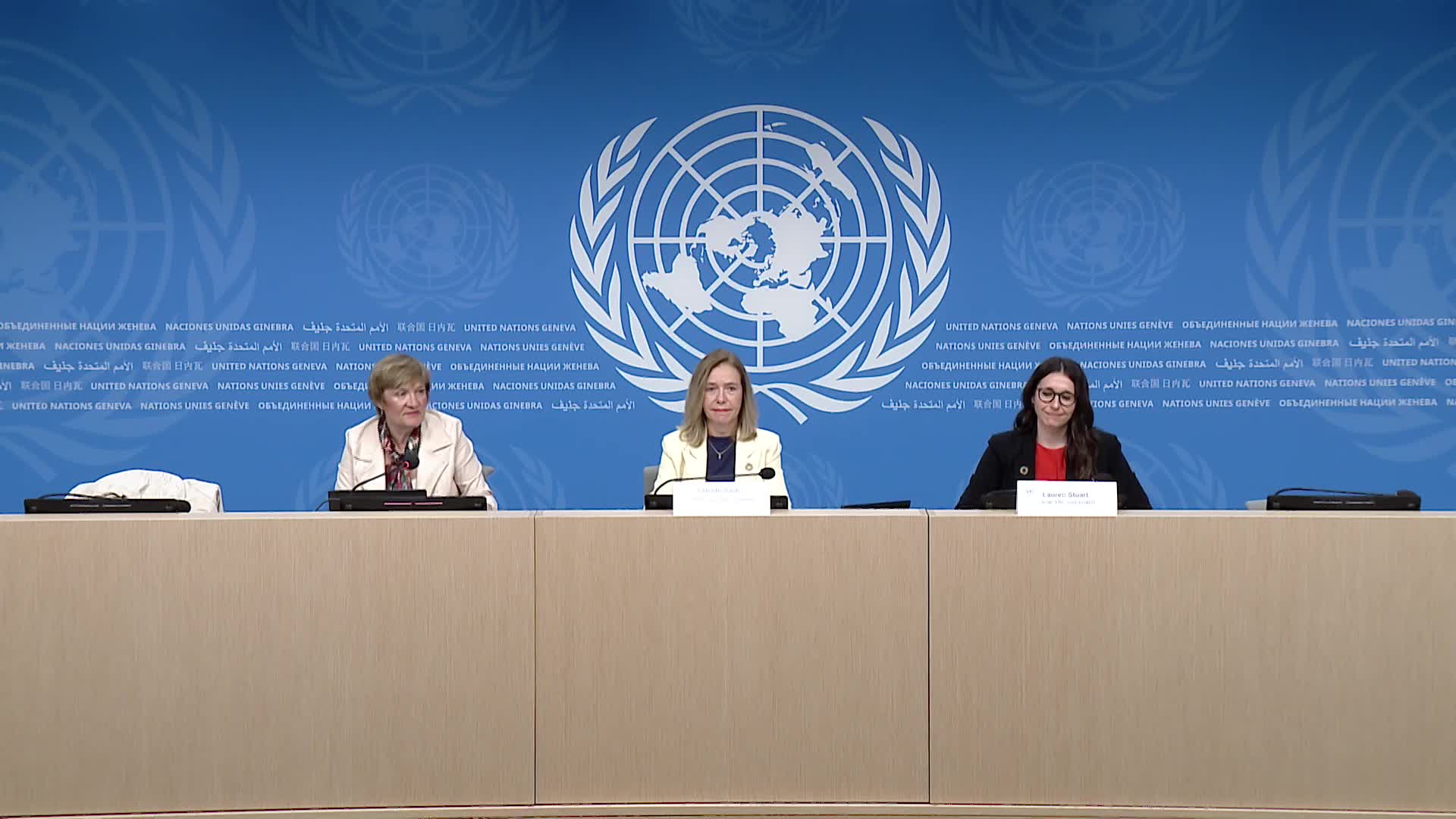
- Wide shot of the press conference room with speakers at the podium.
- SOUNDBITE (English) Celeste Saulo, Secretary-General of the World Meteorological Organization (WMO): “The science is clear: we are far off track from achieving global climate goals. 2023 was the warmest year on record by a huge margin. Leading international data sets say that the first eight months of 2024 are also the warmest on record.”
- Medium shot of the podium with speakers.
- SOUNDBITE (English) Celeste Saulo, WMO Secretary-General: “When the Paris Agreement was adopted, greenhouse gas emissions were projected to increase by 16 per cent by 2030 relatively to 2015. Now, that projected increase is three per cent. So, progress has been made, but we need to be much more ambitious. The gap between aspiration and reality is a glaring one.”
- Medium shot of the speakers from the back and press conference room.
- SOUNDBITE (English) Lauren Stuart, scientific coordinator at the World Meteorological Organization (WMO): “Satellites are improving our ability to monitor greenhouse gas emissions, which is crucial for informing our efforts to mitigate emissions and to achieve the goals of the Paris Agreement. Another example we highlight is immersive technologies, which are really bridging the digital and the physical worlds. And an example of this is what we call ‘digital twins’, which is basically a digital replication of the earth.”
- Wide lateral shot: journalists at the press conference room.
- SOUNDBITE (English) Celeste Saulo, WMO Secretary-General: “I do trust in governments. I do trust in multilateralism. I do trust in the Summit of the Future and how this will help us address, use the technology for the better while controlling the negative impacts of technology.”
- Wide shot of the press conference room.
- SOUNDBITE (English) Celeste Saulo, WMO Secretary-General: “Science should not be kept in a box for a few of us. Science should be the driving mechanism all around the world to really transform and give more opportunities for the generations to come.”
- Various shots of the press conference room with journalists taking notes and cameraperson.
Similar Stories
1
1
1
Press Conferences | WMO , UNHCR , WHO , ILO
WMO: Greenhouse Gas Bulletin; UNHCR: As attacks intensify UNHCR urges support for war ravaged Ukrainians; WHO: Clinical trials in DRC: vaccines and beyond; ILO: New global and regional estimates on domestic work, informality and working conditions
1
1
1
Edited News | OCHA , UNICEF , WFP
Aid agencies warned on Friday of the fast-developing humanitarian emergency inside Taiz City in Yemen, which has been encircled by de facto Houthi forces fighting government troops along the country’s west coast.
1
1
1
Press Conferences | UN WOMEN , WFP , WHO
UN WOMEN: Sudan Women and girls one year after the fall of El Fasher; increasing drone attacks across the country; WFP: DRC - Ebola spreads to eighth DRC province as WFP delivers food, builds treatment centres and keeps supplies moving; WHO - Update on Ebola (Bundibugyo Virus Disease)
1
12
1
1
Press Conferences , Images | UNOG
Closing Press Conference following the Sixth Consultative Meeting on Enhancing Coordination of Peace Initiatives and Efforts in Sudan

2
17
1
2
Edited News , Press Conferences , Images | OCHA , WMO
Two UN agencies teamed up on Wednesday to issue an appeal for immediate assistance to help communities already being impacted by the strongest El Niño on record.

3
16
2
2
Edited News , B-roll , Conferences , Images | UNITED NATIONS , UNOG
Sixth Consultative Meeting on Enhancing Coordination of Peace Initiatives and Efforts for Sudan
1
1
1
Press Conferences | CITES
Wildlife trade and conservation policy discussions at the 81st meeting of the CITES Standing Committee (SC81)

1
1
1
Edited News | UNICEF , WHO , UNHCR
Yemen war continues to force families from homes amid hunger and disease
More than 250,000 people have now fled renewed fighting in Yemen, the UN said on Tuesday, citing particular concern for those sheltering in the southwestern city of Taiz and the wider governorate, where access is “essentially blocked”.
1
1
1
Press Conferences | UNHCR , UNCTAD , WMO , OCHA , UNICEF , WHO
UNHCR Hungary’s 1956 Refugee Crisis: 70 Years On, UNCTAD World Investment Forum 2026, Doha, WMO Greenhouse Gas Bulletin and Climate Update for COP31, OCHA Afghanistan: Malnutrition, Girls’ Education and Recovery, UNICEF Yemen: Child Malnutrition and Unsafe Water in Taiz, WHO Inequalities in Noncommunicable Diseases and Risk Factors
1
1
1
Press Conferences | UNHCR
End of UNHCR's 77th Annual Executive Committee (ExCom) meeting week

1
1
1
Edited News | UNICEF
A little over one year since a ceasefire agreement was announced between Hamas fighters and Israel, more than 340 children have been reported killed and hundreds more injured, the UN Children’s Fund, UNICEF, said on Friday.
1
1
1
Press Conferences | UNICEF , IOM , UNHCR
UN Special Assistant to the Personal Envoy Office (SUDAN): Peace Initiatives and Efforts in Sudan; UNICEF: Dire situation of children in Gaza; IOM: Damaged Homes and Energy Attacks Risk Displacing Ukrainians for this winter; UNHCR: update on EXCOM week