

The United Nations Office at Geneva
Multimedia Newsroom
Alessandra Vellucci, Director of the United Nations Information Service (UNIS) in Geneva, chaired the hybrid briefing, attended by the spokespersons and representatives of the Office of the High Commissioner for Human Rights, the World Meteorological Organization, the International Labour Organization and the World Health Organization.
Deteriorating human rights situation in Tunisia
Elizabeth Throssell, for the Office of the High Commissioner for Human Rights (OHCHR), said that recent developmentsin Tunisia had deepened the Office’s already serious concerns about the human rights situation in the country.
On the morning of 31 December 2021, men in civilian clothing had bundled Noureddine Bhiri, a member of parliament for the Ennahdha party and a former justice minister, into a car outside his home, without a warrant and without explanation. He had been taken to a number of undisclosed places of detention, and his family and lawyer had not been told of his whereabouts for several hours. Subsequently he had been placed under house arrest and, in the light of pre-existing health conditions, transferred to hospital, where he remained under guard. Officials had indicated that he was suspected of terrorism-related offences; however, OHCHR understood that his lawyers had not been formally informed of any charges against him. On the same day, a second man had been detained in similar circumstances, with his location unknown until 4 January 2022. Although the men’s families and OHCHR officials had since been able to visit them, the two incidents echoed practices last seen in the Ben Ali era and raised serious questions about abduction, enforced disappearance and arbitrary detention. OHCHR urged the authorities to promptly release the two men or charge them in accordance with due process standards.
Over the past decade, Tunisia had made tremendous progress towards promoting and realizing human rights, and it was vital that those gains should be preserved. Accordingly, OHCHR urged the Tunisian authorities to continue their dialogue with OHCHR and other United Nations human rights mechanisms to ensure that the badly needed reforms of the security and justice sectors were fully compliant with Tunisia’s international human rights obligations.
The full briefing note can be found here: OHCHR | Press briefing notes on Tunisia
Update on Kazakhstan
Elizabeth Throssell, for the Office of the High Commissioner for Human Rights (OHCHR), responding to journalists, said that on 6 January, the Office had issued a press release expressing its concern at the unrest in Kazakhstan (OHCHR | Kazakhstan unrest: Bachelet urges peaceful resolution of grievances). Since then, Internet services in the country had been partially restored and more information had come to light. The Ministry of the Interior had announced that some 9,900 people were in detention as at 11 January.
OHCHR stressed that under international law, people should not be detained for exercising their rights to protest peacefully and to express their opinions. Those who had been detained solely for exercising their rights should be released immediately. It seemed likely, given the news images of burned-out buildings in Almaty, that some people had been arrested and charged for causing criminal damage. OHCHR recalled that prompt access to a lawyer was a fundamental human rights safeguard for all detainees, including those who had not yet been charged. It was especially important that the ombudsperson’s office should be allowed to fulfil its mandate, as the national preventive mechanism, to visit places of deprivation of liberty in order to properly monitor the situation of detainees and prevent torture and ill-treatment.
The Kazakh authorities had informed OHCHR of the deaths of 18 law enforcement officers during the unrest. OHCHR had also noted that there were reports, citing official sources, that 164 people had died, including 103 in the main city of Almaty. It was particularly important that prompt, independent and impartial investigations should be conducted into the killings to determine whether there had been any unnecessary or disproportionate use of force by the security forces, taking into account that some armed individuals appeared to have taken to the streets. The OHCHR Regional Office for Central Asia would continue to monitor developments and to engage with the Kazakh authorities as appropriate.
Global temperature ranking
Clare Nullis, for the World Meteorological Organization (WMO), said that the Organization would next week publish a consolidated global temperature ranking for 2021, drawing on six leading international datasets from the European Union, Japan, the United States and the United Kingdom.
The Copernicus Climate Change Service of the European Union had on Monday released its annual findings, which showed that globally 2021 had been the fifth warmest year on record, while the past seven years had been the seven warmest years on record. Europe had experienced a summer of extremes, with heatwaves in the Mediterranean and floods in central Europe. It had also been the warmest summer on record.
In the United States, the National Aeronautics and Space Administration and the National Oceanic and Atmospheric Administration (NOAA) were expected to issue consolidated global rankings on 13 January 2022. On 10 January, NOAA had issued a national report on the state of the climate, finding that in 2021 the contiguous United States had experienced their fourth-warmest year on record and that the six warmest years on record had all occurred since 2012. According to the same report, there had been 20 separate billion-dollar weather and climate disasters in 2021. United States disaster costs for 2021 exceeded USD 145 billion, the third-highest cost on record.
A press release in all official languages would be issued in the week beginning 17 January 2022.
Update on Covid-19 and WHO activities
Fadela Chaib, for the World Health Organization (WHO), said that the 10th meeting of the COVID-19 IHR Emergency Committee would take place on Thursday, 13 January 2022 from 12 noon until 5 p.m. As per its usual practice, the Committee would make recommendations and prepare a statement that would be sent to the media after the meeting, subject to approval by the WHO Director-General.
A press conference on COVID-19, with the participation of WHO Director-General Dr. Tedros Adhanom Ghebreyesus and other experts, would take place on Wednesday, 12 January 2022 at 4.30 p.m.
The WHO Technical Advisory Group on COVID-19 Vaccine Composition would today issue an interim statement on COVID-19 vaccines in the context of the circulation of the Omicron SARS-CoV-2 variant. Ms Chaib recalled that the Technical Advisory Group had been established to review and assess the public health implications of emerging SARS-CoV-2 variants of concern on the performance of COVID-19 vaccines and to provide recommendations to WHO on COVID-19 vaccine composition.
The 150th session of the Executive Board of WHO would be held from 24 to 29 January 2022. Regarding the election of the WHO Director-General, she understood that the Executive Board would discuss the candidacy of Dr. Tedros Adhanom Ghebreyesus to serve for another term at its meeting on 25 January. The Executive Board would then submit its nomination to the seventy-fifth World Health Assembly, to be held from 22 to 28 May 2022.
Update on ILO activities
Rosalind Yarde, for the International Labour Organization (ILO), said that on Monday, 17 January 2020, ILO would publish its annual report World Employment and Social Outlook: Trends 2022, which looked at the effects of the COVID-19 pandemic on the global labour market. The report covered the extent and consequences of the disruption caused by the crisis and analysed global patterns, regional differences and outcomes across economic sectors and groups of workers. It also offered labour market projections for 2022 and 2023 and outlined principles for a recovery strategy based on the global call to action adopted at the 2021 International Labour Conference.
ILO Director-General Guy Ryder and Director of Research Richard Samans would present the findings at an embargoed virtual press briefing on Monday, 17 January at 10 a.m. Geneva time. A media advisory would be circulated later today and embargoed copies of the report, the press release and other materials by Friday, 14 January.
Human Rights Council
Alessandra Vellucci, Director of the United Nations Information Service (UNIS), on behalf of the Human Rights Council, said that on Wednesday, 12 January 2022 at 3 p.m. the Council would hold an organizational meeting to draw by lot the groups of three States – known as “troikas” – that would act as rapporteurs for its universal periodic review sessions in 2022. The Council was also expected to elect a Vice-President from the Eastern European Group to complete its Bureau for 2022. The meeting, which would be webcast live in the six official languages, would be the Council’s first meeting of the year and the first to be presided over by Federico Villegas, the President for 2022.
The fortieth session of the Working Group on the Universal Periodic Review would be held from 24 January to 4 February 2022. The 12 countries under review would be Togo, the Syrian Arab Republic, Iceland, the Bolivarian Republic of Venezuela, Zimbabwe, Lithuania, Uganda, Timor-Leste, Moldova, South Sudan, Haiti and Sudan. The session would be held in hybrid mode and the meetings would be webcast.
Other announcements
Alessandra Vellucci, Director of the United Nations Information Service (UNIS), said that the press conference to launch the UN Archives Geneva platform, which had been scheduled for Friday, 14 January at 9.30 a.m., had been postponed.
Ms. Vellucci ended by drawing attention to the virtual event that was due to commence at 11.30 a.m., at which the Office for the Coordination of Humanitarian Affairs and the United Nations Refugee Agency would launch a humanitarian appeal for Afghanistan. Speakers would include Martin Griffiths, Under-Secretary-General for Humanitarian Affairs and Emergency Relief Coordinator; Filippo Grandi, United Nations High Commissioner for Refugees; and Nansen Award winner Dr. Saleema Rehman. The event would be broadcast on UN Web TV.
Similar Stories
1
1
1
Edited News | OCHA , UNICEF , WFP
Aid agencies warned on Friday of the fast-developing humanitarian emergency inside Taiz City in Yemen, which has been encircled by de facto Houthi forces fighting government troops along the country’s west coast.
1
1
1
Press Conferences | UN WOMEN , WFP , WHO
UN WOMEN: Sudan Women and girls one year after the fall of El Fasher; increasing drone attacks across the country; WFP: DRC - Ebola spreads to eighth DRC province as WFP delivers food, builds treatment centres and keeps supplies moving; WHO - Update on Ebola (Bundibugyo Virus Disease)
1
12
1
1
Press Conferences , Images | UNOG
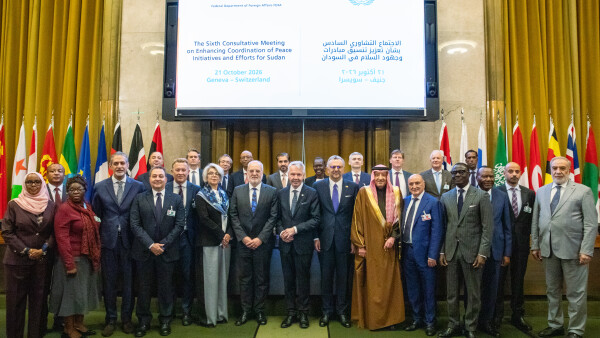
Closing Press Conference following the Sixth Consultative Meeting on Enhancing Coordination of Peace Initiatives and Efforts in Sudan

2
17
1
2
Edited News , Press Conferences , Images | OCHA , WMO
Two UN agencies teamed up on Wednesday to issue an appeal for immediate assistance to help communities already being impacted by the strongest El Niño on record.
3
16
2
2
Edited News , B-roll , Conferences , Images | UNITED NATIONS , UNOG
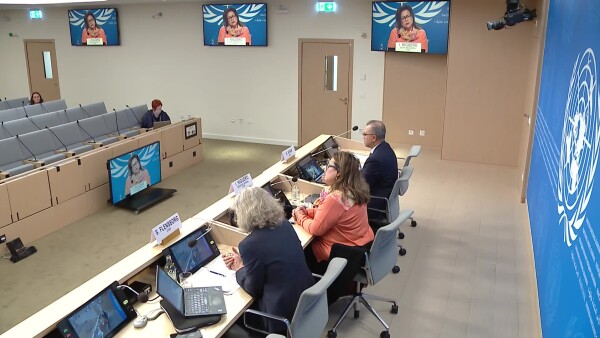
Sixth Consultative Meeting on Enhancing Coordination of Peace Initiatives and Efforts for Sudan
1
1
1
Press Conferences | CITES
Wildlife trade and conservation policy discussions at the 81st meeting of the CITES Standing Committee (SC81)

1
1
1
Edited News | UNICEF , WHO , UNHCR
Yemen war continues to force families from homes amid hunger and disease
More than 250,000 people have now fled renewed fighting in Yemen, the UN said on Tuesday, citing particular concern for those sheltering in the southwestern city of Taiz and the wider governorate, where access is “essentially blocked”.
1
1
1
Press Conferences | UNHCR , UNCTAD , WMO , OCHA , UNICEF , WHO
UNHCR Hungary’s 1956 Refugee Crisis: 70 Years On, UNCTAD World Investment Forum 2026, Doha, WMO Greenhouse Gas Bulletin and Climate Update for COP31, OCHA Afghanistan: Malnutrition, Girls’ Education and Recovery, UNICEF Yemen: Child Malnutrition and Unsafe Water in Taiz, WHO Inequalities in Noncommunicable Diseases and Risk Factors
1
1
1
Press Conferences | UNHCR
End of UNHCR's 77th Annual Executive Committee (ExCom) meeting week

1
1
1
Edited News | UNICEF
A little over one year since a ceasefire agreement was announced between Hamas fighters and Israel, more than 340 children have been reported killed and hundreds more injured, the UN Children’s Fund, UNICEF, said on Friday.
1
1
1
Press Conferences | UNICEF , IOM , UNHCR
UN Special Assistant to the Personal Envoy Office (SUDAN): Peace Initiatives and Efforts in Sudan; UNICEF: Dire situation of children in Gaza; IOM: Damaged Homes and Energy Attacks Risk Displacing Ukrainians for this winter; UNHCR: update on EXCOM week
1
1
1
Press Conferences | IOM , UNDRR
UN stresses importance of household preparedness for disaster risk reduction.