

The United Nations Office at Geneva
Multimedia Newsroom
Press Conferences | UNHCR , OCHA , WHO , UNOG , UNITED NATIONS , WFP , UNCTAD
Bi-Weekly Press Briefing 07 December 2021
Food security in the Sahel and West Africa
Ollo Sib, Senior Research, Assessment and Monitoring Officer for West and Central Africa Region, World Food Programme (WFP), said that the latest “Cadre Harmonisé’’ analysis of food security in the Sahel and Western African countries had been released, revealing a record 38 million people experiencing food insecurity in West and Central Africa. The number of people in the emergency category had increased to 2.6 million, and there were 13,600 people in the catastrophe category in north-east Nigeria. Concerns were high due to food insecurity, compounded by a poor rainy season and insufficient water and pastures for livestock, the high cost of food and persistent insecurity, not to mention the long-term effects of the coronavirus disease (COVID-19) pandemic. Moreover, extreme poverty had increased by 3 percentage points. Action must be taken immediately to step up the response before the next lean season.
Amadou Diop, Food and Agriculture Organization of the United Nations (FAO) and Integrated Food Security Phase Classification (IPC-CH) Regional Advisor for Sahel and West Africa, said that among the 26 million people in acute food insecurity, 800,000 were in an emergency situation. It should not be forgotten that many of those households had already been under stress, resorting to coping mechanisms to meet their non-food needs. Investments must be scaled up to ensure off-season production and safeguard pastoralists’ livelihoods. Reduced availability of pastures and limited mobility due to insecurity would pose tremendous challenges to pastoralists in the next few months. In parallel, adequate investment in preparing for the next agricultural season would be necessary as of early 2022. Ensuring immediate access to food, sustaining food production and preserving food systems were the most cost-effective humanitarian response.
Replying to journalists, Mr. Sib said that admissions to the health-care centre he had visited in Burkina Faso had doubled, though the recent harvest meant that no hunger-induced deaths had yet to be recorded. The lean season typically began in June, but in 2022 it was expected to start as early as March. Through satellite imagery, WFP estimated that 35 per cent of villages had suffered severe crop loss due to conflict and massive displacement. In coastal countries, the food production system was also being adversely affected by climate change. WFP would need over USD 70 million to meet urgent needs over the next six months.
Mr. Diop, in response to the same questions, said that the poorest households would likely enter the lean season earlier than usual, possibly in March in the case of pastoralists. Households were already resorting to selling productive assets such as female livestock to meet their needs. Providing assistance to 1.7 people in the central Sahel alone would require USD 73 million.
Humanitarian situation in West Darfur
Paola Emerson, Head of Office – Sudan, Office for the Coordination of Humanitarian Affairs (OCHA), said that the humanitarian situation in Darfur was worsening as internally displaced persons and refugees had yet to find durable solutions and the economic crisis was deepening their needs and deprivation, while vulnerable residents were also struggling to meet their basic needs. Some 6.2 million people across Darfur, in other words half the population, would need humanitarian assistance in 2022.
The situation in Jebel Moon was tense and needs had increased due to the sudden onset of conflicts around land, resources and property. Fighting between nomads and farmers on 17 November had resulted in 50 deaths, the displacement of nearly 10,000 people, including some 2,260 to Chad, and the burning and looting of over 770 houses. Humanitarian assistance had begun to be distributed to address priority needs in the areas of education, food, health, sanitation and hygiene, shelter, non-food items, protection and water.
The United Nations had called on regional and national authorities to immediately step up efforts to de-escalate tensions, investigate recent incidents and prevent further violence. Given the increasing and worsening needs, early and flexible humanitarian aid would be needed going into 2022. While the Government had the lead, the international community could play an important role in fostering conditions for durable solutions for the 2.4 million people who remained displaced in Darfur.
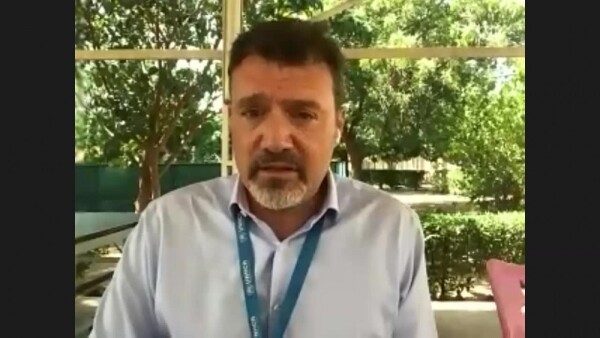
Toby Harward, Principal Situation Coordinator for Darfur, United Nations Refugee Agency (UNHCR), said that El Geneina and surrounding areas had been experiencing a cyclical series of intercommunal clashes that had had an extremely serious humanitarian impact on local populations, including widespread displacement. Most recently, there had been a significant escalation of criminality, killings and intercommunal violence in north Darfur, specifically in Jebel Moon, Kuraynik and, that morning, in the state capital, which had jeopardized the vital harvest period and threatened fragile social peace. UNHCR had also received alarming reports from other parts of Darfur concerning the burning of villages, attacks on public transport, sexual violence and deliberate crop destruction. The intercommunal violence, coupled with a poor rainy season and a pest infestation, had led to what some displaced farmers reported as a total failure of that year’s harvest.
With a growing number of civilians at risk, UNHCR and partners were meeting with state authorities and community leaders to urge them to take additional measures to protect civilians, ensure safe access to affected areas and strengthen coordination of the humanitarian response. The state-level protection of civilian committees, which the central Government had tasked with implementing its national plan, had carried out valuable work, building trust between the security authorities and the displaced communities. But much remained to be done – a task made more difficult by the deteriorating security situation and deliberate targeting of United Nations and other official vehicles.
UNHCR and its partners had been facilitating a series of community-led workshops on durable solutions, building on studies of the root causes of conflict, in key hotspots and would continue to do their utmost to deliver life-saving humanitarian assistance.
The UNHCR briefing note is available here.
In response to a question from a journalist, Ms. Emerson said that the Juba Peace Agreement remained in force and, though not all groups had signed it, still provided a pathway to stability, which the international community should support.
Mr. Harward added that, while the Government had taken steps to expand its presence, the roots of the conflict lay in multiple factors, including changing demographics, climate change, diminishing resources and the breakdown of cultural practices and customary laws. Accordingly, the United Nations could play a decisive role in supporting a return to stability through peacebuilding and seeking durable solutions.
WHO recommendation against use of convalescent plasma as treatment for COVID-19
Janet Diaz, Head of Clinical Care, World Health Organization (WHO) Emergencies Programme, said that WHO had published that day the seventh update of its living guideline for COVID-19 therapeutics, which was based on information from 16 studies that had included more than 16,000 patients. The guideline contained a strong recommendation against the use of convalescent plasma for the treatment of non-severe COVID-19 based on high certainty evidence that convalescent plasma did not result in an important reduction in mortality. It also contained a recommendation against the use of convalescent plasma in patients with severe or critical COVID-19 outside of clinical trials based on very low certainty evidence that the treatment had little or no impact on mortality. Nevertheless, WHO believed that it was important to continue clinical trials in that subgroup of patients given that their risk of death was higher and therefore the potential benefit of convalescent plasma would outweigh the resource implications of using that treatment.
Replying to journalists, Dr. Diaz said that there was no indication that using convalescent plasma had caused harm to patients of either subgroup. While some previous studies had concluded that convalescent plasma was effective in treating COVID-19, the totality of the evidence pointed to a minor impact on mortality. The similar recommendation not to use ivermectin outside of clinical trials remained valid, but data was being continuously reviewed.
Margaret Harris, for the World Health Organization (WHO), Strategic Advisory Group of Experts (SAGE) on immunization was meeting today to discuss a range of topics, chiefly the evidence on the use of heterologous vaccines. Outcomes would be communicated at a press conference on Thursday, 9 December, at 10.15 am.
The 10th Global Conference on Health Promotion would be held on 13–15 December. Journalists could request interviews ahead of time.
Replying to questions, Dr. Harris said that SAGE examined data on all the vaccines, not only on those approved for emergency use. The position of WHO was that vaccination should be carried out in cooperation with local communities rather than unilaterally imposed. Nevertheless, she stressed that vaccines were effective at keeping people out of hospital and should be widely taken up. A press conference on the current COVID situation was expected in the afternoon of 8 December.
UNCTAD announcements
Catherine Huissoud, for the United Nations Conference on Trade and Development (UNCTAD), said that a hybrid press conference would be held on Wednesday, 8 December at noon in relation to the publication of the Economic Development in Africa Report 2021: Reaping the Potential Benefits of the African Continental Free Trade Area for Inclusive Growth (under embargo until 7 p.m. on 8 December). Speakers would include: Rebeca Grynspan, UNCTAD Secretary General; Paul Akiwumi, UNCTAD, Director, Division for Africa, LDCS and Special Programmes; and Wamkele Mene, Secretary-General of the African Continental Free Trade Area Secretariat.
The annual handbook of statistics would be published on Thursday, 9 December.
During the week of 13 December, UNCTAD would be publishing an analysis of the Regional Comprehensive Economic Partnership, which would enter into force in January 2022. Entitled “A New Centre of Gravity: The Regional Comprehensive Economic Partnership and its trade effects”, the report (under embargo until 7 a.m. on 15 December) was focused on the trading effects of the agreement on both signatory and non-signatory countries. A press conference was planned for Monday afternoon.
Announcements
Alessandra Vellucci, for the United Nations Information Service (UNIS), on behalf of FAO, said that the High-Level Launch of "The state of the world's land and water resources for food and agriculture 2021: Systems at breaking point (SOLAW 2021)" would take place on Thursday, 9 December, from 12.30 p.m. to 2 p.m., during the Land and Water Days on 8 and 9 December 2021. More information on the Land and Water Days and the FAO report was available on the FAO website: https://www.fao.org/land-water/events/solaw2021-lwd2021/en/.
International Mountain Day would be observed on 11 December on the theme of “Sustainable Mountain Tourism”. The observance would include a joint publication of FAO, the Mountain Partnership Secretariat and the World Tourism Organization on sustainable development of mountain tourism, with a foreword by FAO Director-General Dr. Qu Dongyu and UNWTO Secretary General Zurab Pololikashvili.
Ms. Vellucci, on behalf of the International Telecommunication Union (ITU), said that, from noon to 4.30 p.m. on 13 to 15 December, ITU would be holding the first inter-regional workshop ahead of the next World Radiocommunication Conference (WRC-23), to take place in the United Arab Emirates on 20 November–15 December 2023. At the workshop, delegates from around the world would review ongoing studies of key issues, including mobile broadband, international mobile telecommunication and broadcasting, aeronautical, maritime and satellite services. UNOG-accredited media could register to attend as observers by email at itu-r-communications@itu.int.
Ms. Vellucci, in reference to International Civil Aviation Day on 7 December, recalled the Secretary-General’s message in which he stated that COVID-19 continued to put stress on international aviation, made recommendations for the safe resumption of air travel and called for a new set of ambitious targets for the industry to reach net-zero carbon emissions by 2050.
Ms. Vellucci also recalled that 9 December marked International Day of Commemoration and Dignity of the Victims of the Crime of Genocide and of the Prevention of This Crime and International Anti-Corruption Day.
Finally, Ms Vellucci mentioned the new health-related measures taken by the UN Office at Geneva, including the encouragement to UN staff to telecommute, while everyone would still be able to come to the premises to work, including UN-accredited correspondents. Mandated UN meetings would continue with COVID-19 measures in place, said Ms Vellucci, as would the bi-weekly press briefings and other press conferences. It was important to note that the last UNIS briefing of the year would be held on Tuesday 21 December. The briefings would resume on Tuesday 4 January 2022.
Similar Stories

1
1
1
Press Conferences | IOM , UNDRR
UN stresses importance of household preparedness for disaster risk reduction.

1
1
1
Statements , Press Conferences | OHCHR

1
1
1
Press Conferences | UNHCR , UNICEF , IFRC , OHCHR , UN WOMEN , IOM , OCHA , WHO
UNHCR – ExCom Meeting, UNICEF – Nepal Recovery, IFRC – Flash Floods, WHO – Mental Health, IOM – South Sudan Floods, OCHA – DRC Humanitarian aid, UNHCR – Sahel Displacement, UNICEF – Yemen Update, IOM – Gaza Shelter, UN Women – Gaza Women, OHCHR – Arrests and detentions of Syrians by Israeli force

2
1
2
Press Conferences | UNCTAD
Presentation of the Trade and Developement Report 2026
Embargoed until 9 October 2026 at 11 a.m. (Geneva Time)
UNCTAD: UNCTAD’s flagship report finds that governments increasingly use industrial, trade, financial and technology policies to pursue economic and national security objectives. Market access and the ability to move into higher-value activities now depend more heavily on technology, finance and geopolitics.

1
1
1
Press Conferences | UPU
Release of the State of the Postal Sector Report 2026
1
1
1
Press Conferences | IOM , ITU , UNECE , UNICEF , WHO , WMO
UNICEF: Ebola, DRC - children orphans or separating them from parents and caregivers; IOM: Humanitarian needs in Djibouti amid arrivals from Yemen and increased migrant movements; WHO: Darfur, scale of health needs far exceeds available resources; WMO co-sponsored Global Heat Forum, Bangkok, monthly Global Seasonal Climate Update; UNECE: UN Forum of Mayors; ITU Plenipotentiary Conference 2026; WHO: child and adolescent obesity guidelines and new global roadmap to tackle pregnancy hypertension, a leading cause of maternal mortality
1
1
1
Press Conferences | OCHA , UN WOMEN , UNHCR , WFP , WHO , WTO , UNEP
OCHA – $160M CERF allocation to 12 underfunded crises; UNHCR – 5.8M refugee children remain out of school amid funding cuts; UN Women – Middle East escalation and food security among women/girls; WHO – Gaza supplies and overall situation; WFP – Yemen food insecurity and impact on global hunger ; UNEP - First International Conference of the Global Framework on Chemicals in Geneva | 16-20 November 2026
1
1
1
Press Conferences | UNHCR , WHO
Yemen's health system nears collapse amid conflict, causing rising casualties and medicine shortages.
1
1
1
Press Conferences | HRC
Update by the Expert Mechanism to Advance Racial Justice and Equality in Law Enforcement
1
1
1
Press Conferences | WIPO , WHO , UNICEF , UNHCR , IOM , WFP , FAO
WIPO Global Innovation Index 2026 launch and press conference, WHO Composition of influenza vaccines for the 2027 Southern Hemisphere flu season, UNICEF Yemen hunger and malnutrition; UNHCR Sudan displacement into Chad; IOM Ebola and population movements in DRC; WFP emergency food assistance in Nepal; and FAO food loss and waste.
2
1
2
Press Conferences | UNCTAD
Gaza reconstruction needs reach $71.5 billion as Palestinian economy and public finances face severe strain. Latest UNCTAD report documents the loss of decades of development gains, economic collapse in Gaza and tightening economic constraints in the West Bank.
The report identifies three immediate priorities: transferring withheld Palestinian revenues, safeguarding the banking system and aligning reconstruction support with the documented scale of damage and economic losses.
1
1
1
Press Conferences | HRC
Press conference on the situation of human rights in Nicaragua by the UN Group of Human Rights Experts