

The United Nations Office at Geneva
Multimedia Newsroom
Press Conferences | UNHCR , OCHA , WHO , UNITED NATIONS , UNESCO , ILO , UNDP
Bi-Weekly Press Briefing 26 November 2021
Hunger in northern Ethiopia
Tomson Phiri, for the World Food Programme (WFP), stated that the number of people in need of humanitarian food assistance across northern Ethiopia had grown to an estimated 9.4 million as a direct result of ongoing conflict. Amhara region – the current frontline of the conflict in Ethiopia - had seen the largest jump in numbers with 3.7 million people now in urgent need of humanitarian aid. Of the people across northern Ethiopia in need of assistance, more than 80 percent (7.8 million) of them were behind battle lines. It was vital that food assistance could cross battle lines to reach families in need.
The nutrition situation across North Ethiopia was deteriorating, with screening data from all three regions showing malnutrition rates between 16 and 28 percent for children. Even more alarmingly, up to 50 percent of pregnant and breastfeeding women screened in Amhara and Tigray were also found to be malnourished.
Mr. Phiri informed that this week the WFP had been able to deliver food to Dessie and Kombolcha, two towns in Amhara, first time it had been given access since they had been overtaken by the Tigray forces. UN Humanitarian Air Service flights to Tigray had resumed this week, first time since the security incident on 22 October. Corridors into Tigray had been closed due to the recent Tigrayan offences on Afar and Amhara, as well as severe disruptions in clearances from Federal Government. Since mid-July, less than a third of the supplies required to meet estimated humanitarian food needs had entered the region.
When the conflict had started a year earlier, the situation had been described as dire; six months in it had been catastrophic; today, 9.4 million people were living their worst nightmare. WFP was 100 percent voluntarily funded; it needed USD 316 million to deliver assistance over the following six months. Donors needed to come through yet again.
Attack on a school in Cameroon
Jens Laerke, for the Office for the Coordination of Humanitarian Affairs (OCHA), said that the Humanitarian Coordinator in Cameroon condemned an attack on a school in the South-West region which had led to the death of four students and a teacher. On 24 November, unidentified gunmen had attacked a Government Bilingual High School in Ekondo Titi in Cameroon’s South-West region. Four students between 12 and 17 of age and a teacher had been killed.
Attacks on education in Cameroon was an issue since the crisis had turned violent in 2017 and continued in the North-West and South-West regions. Students, teachers, school authorities and school facilities had been targeted with arson, killing and maiming, while teachers and students were also frequent victims of abduction. Humanitarian access across the regions were severely hampered by the insecurity. Military road closures also occasionally affected operations, said Mr. Laerke.
Living conditions of indigenous Venezuelans in Guyana
Philippa Candler, UN Refugee Agency (UNHCR) representative in Panama, said that the UNHCR was worried about the difficult living conditions of indigenous Warao families from Venezuela who were settled in remote locations across Guyana. Increased humanitarian presence and timely support from the international community was needed to help the Government of Guyana respond to the needs of these communities. Guyana hosted 24,500 refugees and migrants from Venezuela, some of whom had settled in hard-to-reach areas near the Venezuelan border. More than half of them were children. Assessments conducted in October and November indicated mounting needs caused by the economic downturn because of the COVID-19 pandemic. Many of them had to rely on negative copying strategies; many families did not have access to drinking water. UNHCR was on the ground to work with the Government to provide the best possible response to the evolving situation. Since 2019, material assistance had been provided to refugees, migrants, and members of host communities in Guyana.
Ms. Candler informed that the Refugee and Migrant Response Plan to meet the needs of the Venezuelan refugees and migrants and their host communities in 17 countries was only 43.6 per cent funded to date. The 2022 appeal would be launched on 9 December.
Responding to questions, Matthew Saltmarsh, also for the UN Refugee Agency, said that in Guyana, there were an estimated 2,500 indigenous Venezuelans.
UNHCR briefing note can be found here.
Migrants between France and the UK
In a reply to questions regarding migrants, Matthew Saltmarsh, for the UN Refugee Agency (UNHCR), said that the events of recent days were truly tragic. UNHCR did not have numbers for the United Kingdom; UK Home Office had reported that over 25,000 people had crossed the English Channel by boat. There was a concerted effort to crash the smugglers’ ring, and information was being provided to those on the French coast about the dangers of crossing the Channel. Cooperation between the UK and France, and Europe as a whole, was essential. Securing legal routes was equally important.
COVID-19 creates new urgency for access to HIV self-testing
Herve Verhoosel, for Unitaid, stated that disruptions and delays to HIV services caused by the COVID-19 pandemic had led to declines in HIV testing and diagnoses in 2020 for the first time in more than two decades. HIV self-testing, which had contributed to a 40 percent reduction in the number of people who did not know their HIV status since 2015, was now crucial to maintaining access to HIV care for millions of people in the face of new COVID-19 roadblocks.
With more than 37 million people living with HIV worldwide, an estimated 6.1 million of whom did not know their status, receiving a diagnosis was a vital first step in accessing treatment.
Unitaid had led a large-scale effort to create access to HIV treatment and prevention through self-testing, with more than USD 100 million invested since 2015. This work had helped reduce prices for self-tests, generate demand, demonstrate implementation pathways, and support scale up across 14 countries in Africa, with more recent work in India and Indonesia looking to further expand successful self-testing strategies to more people. Ahead of World AIDS Day, Unitaid was calling for urgent funding and scale-up of HIV self-testing to protect progress threatened by COVID-19 and secure pathways to HIV treatment and prevention services for millions of people worldwide. Responding to questions, Mr. Verhoosel explained that, thanks to the funding, the tests were frequently free for end users.
More information on HIV self-tests is available here.
Variant B 1.1.529
Christian Lindmeier, for the World Health Organization (WHO), said that the WHO was closely monitoring the recently reported variant B 1.1.529. At noon today, the Technical Advisory Group on Virus Evolution (TAG VE) would hold a meeting, from Geneva and with experts virtually joining from around the world. It would take a few weeks to understand what the variant meant, and how it might impact diagnostics, therapeutics, and vaccines. The first sequence of the variant had been reported on 11 November; its detection meant that the surveillance system was in place and was functioning. Later today, the WHO would inform whether the variant would be classified as one of interest or of concern; further guidance was expected to be issued too. In the meantime, more people everywhere needed to be vaccinated, and all other, frequently mentioned, measures had to continue to be taken because everyone had to decrease the risk of infection and of passing it on to others.
Replying to questions, Mr. Lindmeier said that the decisions of the TAG VE meeting, would be communicated later today, while a press conference was unlikely. He emphasized the importance of wearing masks, avoiding larger gatherings, ventilating rooms, and keeping overall health hygiene. Regarding travel restrictions, the WHO recommended that countries continue to apply risk-based approach based on the recommendations of the ninth meeting of the Emergency Committee.
Geneva announcements
Anne Sophia Fisher, for the International Labour Organization (ILO), informed that on 30 November, just before World Aids Day, the ILO would be publishing a new report on the level of stigma and discrimination faced by people living with HIV and AIDS. The report had been prepared in collaboration with Gallup, the global analytics and polling organization, and used data gathered in 50 countries worldwide. An embargoed virtual press briefing would take place on 30 November at 2 pm; the embargo would be lifted at 3 pm. The findings would be presented by Chidi King, Chief of the ILO’s Gender, Equality, Diversity and Inclusion branch, and Andrew Dugan, Gallup research consultant.
Yao Ydo, for the International Bureau of Education (UNESCO-IBE), said that a ministerial visit to Geneva would be organized by UNESCO-IBE to strengthen cooperation between education stakeholders in Switzerland and three African countries. Ministers of National Education of Djibouti and Guinea Bissau and the Secretary of State for National Education and Civic Promotion of Chad would take part in the visit the following week. Mr. Ydo also spoke about the Paris Declaration on a global call for investing in the futures of education, which emphasized the urgency to tackle the educational crises and inequalities exacerbated by the COVID-19 pandemic, threatening the hard-gained progress toward the 2030 Agenda for Sustainable Development.
Jens Laerke, for the Office for the Coordination of Humanitarian Affairs (OCHA), informed that on 2 December at 9 am, OCHA would launch its annual Global Humanitarian Overview – an assessment of global needs and how we plan to respond in 2022. The launch would be hosted by the Emergency Relief Coordinator Martin Griffiths and several high-profile guests would deliver remarks and participate in a panel discussion about the changing humanitarian landscape in a time of climate change. The event would be webcast on UNTV. Palais correspondents would be given an embargoed copy in advance.
Sarah Bel, for the United Nations Development Programme (UNDP), informed that, in the context of the Building Bridges Week, 15 entrepreneurs from ten developing countries identified through UNDP’s Growth Stage Impact Ventures (GSIV) initiative and working on access to quality health, clean energy, waste management, financial services and food and beverage would make a pitch in Geneva in front of investors on 2 December. They would be looking for partners to expand their activities. Those 15 enterprises were all mid-sized, with an average of up to 100 employees, and annual revenues between 0.5 million and over five million dollars. Altogether they represented USD 48 million investment opportunity, and they impacted the lives of 1.24 people in need. The entrepreneurs demonstrated that there was a business case for the SDGs in developing countries.
Christian Lindmeier, for the World Health Organization (WHO), said that the World Health Assembly’s special session would be held in hybrid format from 29 November to 1 December, with only one agenda: considering a possible pandemic preparedness treaty. A detailed agenda was not yet finalized, and the numbers of Health Ministers coming physically was not yet known. The event would be held in the auditorium in the new WHO building. Six journalists would be allowed in through a pool arrangement. All three days of sessions would be webcast live, informed Mr. Lindmeier.
Alessandra Vellucci, for the United Nations Information Service (UNIS), informed that International Geneva was marking the 16 Days of Activism against gender-based violence, which was running until 10 December, the Human Rights Day. Statistics showed that every 11 minutes, one woman or girl was killed within her own family.
She also informed that on 30 November at 3 pm, there would be a hybrid press conference by the International Telecommunications Union (ITU) on measuring digital development: facts and figures 2021. Speakers would be Doreen Bogdan-Martin, Director of the ITU Telecommunication Development Bureau; and Maria Francesca Spatolisano, Secretary-General’s Envoy on Technology.
The Committee against Torture would conclude today its review of the report of Bolivia. The Committee would close its 72nd session on 3 December.
The Committee on the Elimination of Racial Discrimination would close on 3 December its 105th session.
On 29 November at 1:30pm, the UN Office at Geneva would host a special meeting for the International day of solidarity with the Palestinian people.
Similar Stories
1
1
1
Statements , Press Conferences | OHCHR
1
1
1
Press Conferences | UNHCR , UNICEF , IFRC , OHCHR , UN WOMEN , IOM , OCHA , WHO
UNHCR – ExCom Meeting, UNICEF – Nepal Recovery, IFRC – Flash Floods, WHO – Mental Health, IOM – South Sudan Floods, OCHA – DRC Humanitarian aid, UNHCR – Sahel Displacement, UNICEF – Yemen Update, IOM – Gaza Shelter, UN Women – Gaza Women, OHCHR – Arrests and detentions of Syrians by Israeli force
2
1
2
Press Conferences | UNCTAD
Presentation of the Trade and Developement Report 2026
Embargoed until 9 October 2026 at 11 a.m. (Geneva Time)
UNCTAD: UNCTAD’s flagship report finds that governments increasingly use industrial, trade, financial and technology policies to pursue economic and national security objectives. Market access and the ability to move into higher-value activities now depend more heavily on technology, finance and geopolitics.
1
1
1
Press Conferences | UPU
Release of the State of the Postal Sector Report 2026
1
1
1
Press Conferences | IOM , ITU , UNECE , UNICEF , WHO , WMO
UNICEF: Ebola, DRC - children orphans or separating them from parents and caregivers; IOM: Humanitarian needs in Djibouti amid arrivals from Yemen and increased migrant movements; WHO: Darfur, scale of health needs far exceeds available resources; WMO co-sponsored Global Heat Forum, Bangkok, monthly Global Seasonal Climate Update; UNECE: UN Forum of Mayors; ITU Plenipotentiary Conference 2026; WHO: child and adolescent obesity guidelines and new global roadmap to tackle pregnancy hypertension, a leading cause of maternal mortality
1
1
1
Press Conferences | OCHA , UN WOMEN , UNHCR , WFP , WHO , WTO , UNEP
OCHA – $160M CERF allocation to 12 underfunded crises; UNHCR – 5.8M refugee children remain out of school amid funding cuts; UN Women – Middle East escalation and food security among women/girls; WHO – Gaza supplies and overall situation; WFP – Yemen food insecurity and impact on global hunger ; UNEP - First International Conference of the Global Framework on Chemicals in Geneva | 16-20 November 2026
1
1
1
Press Conferences | UNHCR , WHO
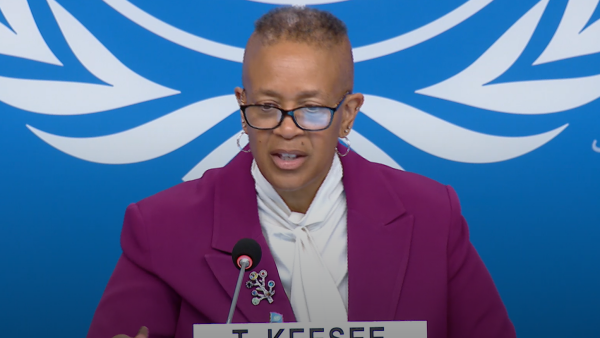
Yemen's health system nears collapse amid conflict, causing rising casualties and medicine shortages.
1
1
1
Press Conferences | HRC
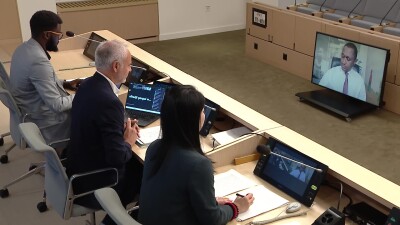
Update by the Expert Mechanism to Advance Racial Justice and Equality in Law Enforcement
1
1
1
Press Conferences | WIPO , WHO , UNICEF , UNHCR , IOM , WFP , FAO
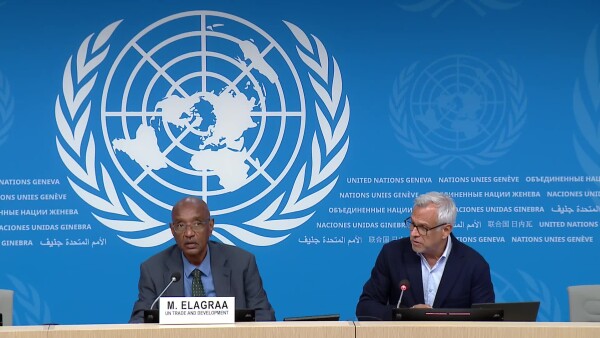
WIPO Global Innovation Index 2026 launch and press conference, WHO Composition of influenza vaccines for the 2027 Southern Hemisphere flu season, UNICEF Yemen hunger and malnutrition; UNHCR Sudan displacement into Chad; IOM Ebola and population movements in DRC; WFP emergency food assistance in Nepal; and FAO food loss and waste.
2
1
2
Press Conferences | UNCTAD
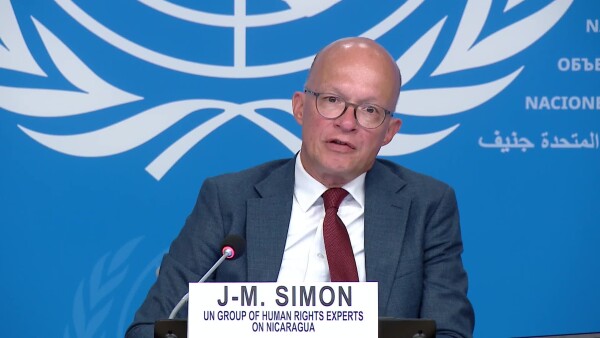
Gaza reconstruction needs reach $71.5 billion as Palestinian economy and public finances face severe strain. Latest UNCTAD report documents the loss of decades of development gains, economic collapse in Gaza and tightening economic constraints in the West Bank.
The report identifies three immediate priorities: transferring withheld Palestinian revenues, safeguarding the banking system and aligning reconstruction support with the documented scale of damage and economic losses.
1
1
1
Press Conferences | HRC
Press conference on the situation of human rights in Nicaragua by the UN Group of Human Rights Experts
1
1
1
Press Conferences | ITU , UNHCR , WHO , WMO
YEMEN - UNHCR: Escalating conflict in Yemen could fuel more displacement, refugee movement
CLIMATE - WHO / WMO: Health and Climate impact of El Niño