

The United Nations Office at Geneva
Multimedia Newsroom
Press Conferences | OHCHR , UNHCR , WHO , UNOG , UNITED NATIONS , WFP , WTO , FAO
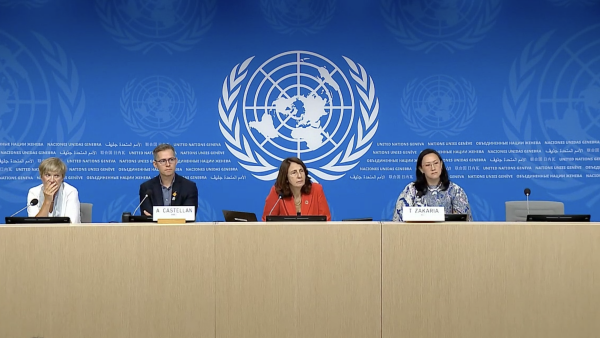
Bi-Weekly Press Briefing 12 November 2021
Health situation in Afghanistan
Margaret Harris, for the World Health Organization (WHO), speaking from Kabul, said that the WHO had continued to deliver help and ensure continuation of essential health services to save lives throughout the crisis in Afghanistan. But that work could not be done without the support of the international community and donors.
Malnutrition continued to be a growing health challenge across Afghanistan. An estimated 3.2 million children under the age of five were expected to suffer from acute malnutrition by the end of the year. At least one million of those children were at risk of dying due to severe acute malnutrition, without immediate treatment. Fuel, electricity, and medical supplies remained. short at many health facilities across the country. Disease surveillance and testing for and vaccination against infectious diseases needed to be urgently enhanced to better monitor and respond to outbreaks to prevent avoidable deaths. Already a measles outbreak was raging, said Ms. Harris.
Donors had to step up support to ensure humanitarian needs were covered in Afghanistan and so that plans and resources were in place to ensure that health facilities could continue providing essential health services including immunization of newborns and children, treatment of diseases, care for people who sustained injuries and mental health and psychological services.
Support was also needed to sustain the tertiary hospitals, including the 37 COVID-19 treatment hospitals not covered under the funding provided by UN CERF.
On a positive note, Ms. Harris said that what most people did not realize was that the health workers of Afghanistan, despite all they had gone through and not being paid for months, were present in the hospitals and clinics, working to save lives every day. Equally impressive was the polio campaign rolled out this week, which had reached children in places inaccessible for three years. Nonetheless, warned Ms. Harris, it was an uphill battle as starvation gripped the country, and temperatures were dropping, making those most vulnerable ever more susceptible to whatever pathogen is spreading through the community. The world could not afford to turn its back on Afghanistan, as the cost of inaction rose by the day.
Responding to questions, Ms. Harris explained that primary health care centres where women were receiving reproductive health care had been in unsatisfactory shape even before the Taliban takeover. The primary healthcare system ought to be forcefully supported; both male and female health workers were coming to work, but it was critical to ensure they were paid. Anecdotal evidence showed that children’s severe acute malnutrition was happening and had to be stopped. Ms. Harris confirmed that medical professionals leaving the health system was a major problem. They needed to be supported. The overall polio vaccination campaign aimed to reach 9.9 million children – every eligible child in the country, she specified.
Call for restraint in Sudan
Elizabeth Throssell, for the Office of the High Commissioner for Human Rights (OHCHR), stated that, ahead of the protests planned to take place across Sudan on 13 November, the OHCHR called on military leaders to ensure that the Sudanese people’s rights to freedom of expression and peaceful assembly were fully respected. Security forces needed to receive clear instructions that they should not disperse peaceful assemblies and had to refrain from the use of force unless absolutely necessary, as a measure of last resort and only to the minimum extent required.
With the reported killing of 14 people and injury of some 300 during protests between 25 and 30 October due to the unnecessary and disproportionate use of force by military and security forces, it was crucial that all necessary steps be taken to ensure there was no further bloodshed at planned protests. The authorities should release immediately all individuals who remained arbitrarily detained since the 25 October coup, most of whom had been held incommunicado now for more than two weeks.
Internet and telecommunications services remained curtailed, seriously hampering the ability of people to communicate during a crisis, as well as damaging livelihoods. OHCHR called on the authorities to respect the Khartoum court ruling, ordering telecommunications companies to restore Internet services to all their customers pending further proceedings. OHCHR welcomed the appointment of Adama Dieng of Senegal as the Special Rapporteur for Sudan.
Rhéal LeBlanc, for the United Nations Information Service (UNIS), added that the Special Representative for Sudan, Volker Perthes, has spoken this week to General (Abdel Fattah al-) Burhan to encourage a return to the transitional partnership, and urge the military to de-escalate the situation and free detainees, including the Prime Minister. The Secretary-General has also spoken to Prime Minister Abdalla Hamdock to express his solidarity and relay his condemnation of the takeover.
OHCHR press release is available here.
Violence in North Kivu, Democratic Republic of Congo
Elizabeth Throssell, for the Office of the High Commissioner for Human Rights (OHCHR), said that the situation in Masisi and Lubero territories in the Democratic Republic of Congo’s northeastern province of North Kivu was very concerning. Land disputes among different communities had led to intercommunal violence, which in turn had fueled the emergence of armed groups. Those groups had been able to take almost total control of Masisi and Lubero, where the State’s presence was negligible and where few security forces were deployed.
The number of violations and abuses reported in Masisi and Lubero had increased steadily since 2015. Currently, more than half of the human rights violations and abuses recorded in North Kivu province take place in these two territories. OHCHR called on the authorities to establish prompt, impartial, independent and effective investigations into all human rights violations and abuses with a view to hold those responsible accountable.
Ms. Throssell stressed that demobilization, disarmament, and insertion programmes to support the integration of fighters into the communities should be fully and rapidly implemented. In parallel, authorities should establish civil administration structures to offer essential services to the local population and so prevent armed groups from filling the vacuum currently left by the State.
Full press release can be found here.
Integrated Food Security Phase Classification Report on Democratic Republic of Congo
Luca Russo, Senior Food Crises Analyst at the Food and Agriculture Organization (FAO) stated that the IFSPC Report published on 10 November showed that 27 million in the Democratic Republic of the Congo required immediate humanitarian assistance. That was the highest number in the world; six million were in IPC category 4, which immediately preceded famine. The situation over the recent years had been persistent, and what was seen in the DRC was a development rather than a humanitarian issue, said Mr. Russo. In the last three years, the level of humanitarian assistance to the country had significantly increased, but there had been no corresponding growth on the development side.
Tomson Phiri, for the World Food Programme (WFP), said the situation in the country had actually become worse in recent years, even if the number of people in need of humanitarian assistance - 27 million people – had not changed recently. Some 857,000 children and 468,000 women were likely suffering from acute malnutrition, said Mr. Phiri. High food prices and falling prices even in the areas where food was available meant that people could not afford sufficient nutrition. While conflict was a major driver behind the current situation, insufficient infrastructure was also an important factor. WFP needed USD 99 million through April 2022 to reach those who needed support the most.
Glorification of war criminals in the Western Balkans
Elizabeth Throssell, for the Office of the High Commissioner for Human Rights (OHCHR), stated that the OHCHR was concerned at events in Belgrade, where police had stepped in to protect a mural of the convicted war criminal Ratko Mladić painted on a building in the city centre.
Symbols glorifying convicted war criminals should have no place in the public space. Such symbols were even more concerning given the recent rise in hate speech and denial of genocide and other atrocity crimes in the Western Balkans – developments that highlight the failure to address the past. The situation in Bosnia and Herzegovina was particularly worrying, where such trends were deepening divisions.
OHCHR called on the authorities in the region to abide by their international human rights obligations to ensure the rights to truth, justice and reparation, as well as to adopt measures to prevent recurrence and to promote further reconciliation efforts.
OHCHR press release is available here.
Food Outlook
Josef Schmidhuber, Deputy Director, Markets and Trade Division at the Food and Agriculture Organization (FAO), said that FAO’s new Food Outlook report showed expectations that the global food import bill would reach an all-time high in 2021 and surpass USD 1.75 trillion, marking a 14 per cent increase from the previous year and 12 per cent higher than earlier forecast in June 2021. The increase was driven by higher price levels of internationally traded food commodities and a threefold increase in freight costs. Farmers and consumers around the world were facing higher energy costs, said Mr. Schmidhuber. Developing regions accounted for 40 per cent of the total and their aggregate food import bill was expected to rise by 20 per cent compared to 2020. The good news was that the agricultural system had shown remarkable resilience. Supply constraints were due to migrant labour shortages, while higher energy prices directly translated into higher food prices. Transportation costs had been going through the roof but had recently decreased somewhat. The impressive recovery of the global economy – much better than in 2008 – had led to higher purchasing power, said Mr. Schmidhuber.
Climate change and food security in the Philippines
Tomson Phiri, for the World Food Programme (WFP), said that the WFP had today unveiled its climate change and food security analysis in the Philippines. It analyzed the interconnectedness between the two in the country. The analysis showed that the coastal communities dependent on fisheries were the ones most at risk. Report had been shared with the media, and experts were available for interviews.
COP26
Andrew Harper, UN Refugee Agency Special Advisor on Climate Action, said that COP26 provided a stark reminder of discrepancies of what needed to be done to support communities on the ground and discussions in capitals. Those who had contributed the least to carbon emissions and global warming were now suffering the most. There was unfortunately not much listening to voices on the ground in Glasgow. Mr. Harper read a statement by a youth group from a Rohingya refugee camp in Bangladesh, which described the dangerous living conditions because of the landfills, flooding, and rising temperatures. Climate crisis was a human crisis, stressed Mr. Harper. The key stakeholders who could reduce emissions and support adaptation should assume their responsibility. Climate change was worsening poverty and putting pressure on peaceful coexistence. Over and over again, it was shown that we did not value nature until it was gone. Mr. Harper informed that a large majority of refugees and internally displaced persons came from the countries severely affected by climate change.
Mr. Harper provided the example of Mauritania, which was doing the right things to build up resilience and protect its people but needed steady financial support from the developed countries. He emphasized that commitments had to be met to support the communities most in need. Looking at the current commitments, UNHCR believed that much more had to be done for climate finance, supporting resilience and adaptation. There were loopholes in so many sectors that needed to be considered, such as militaries around the world. In a response to a question, Mr. Harper said that UN agencies had room for improvement when it came to managing their own carbon footprint, for example by mainstreaming the usage of vehicle fleets.
Full statement can be found here.
Rhéal LeBlanc, for the United Nations Information Service (UNIS), said that the UN Secretary-General, who was back in Glasgow, had welcomed the announced commitments, but also warned that the pledges were far from sufficient. He was calling for more ambitious future revised Nationally Determined Contributions and for implementation of the countries’ pledges. Governments needed to pick up the pace and should not settle for the lowest common denominator.
Poland-Belarus border
Responding to questions from the media, Elizabeth Throssell, for the Office of the High Commissioner for Human Rights (OHCHR), stressed that the human rights of people along the border should be of paramount concern, regardless of their status. The security focus only exacerbated the situation. OHCHR did not have presence in the area and could not confirm some of the reports in the media. She also referred to the High Commissioner’s statement on the issue this week.
Shabia Mantoo, for the United Nations Refugee Agency (UNHCR), added that using migrants, refugees, and asylum seekers for political purposes was deplorable. She confirmed that on 11 November, IOM and UNHCR representatives had visited a makeshift camp by the border. It was estimated there were some 2,000 persons stuck in the area, including pregnant women and young children. UNHCR and IOM were providing emergency assistance, with the objective of saving lives. Those people should be transported to safer locations where their situations could be individually assessed.
Rhéal LeBlanc, for the United Nations Information Service (UNIS), said the Secretary-General was following the situation with concern and had stressed that humanitarian principles and international law should guide migration and refugee issues. Situations such as the one at the Poland-Belarus border should not become a cause of tension between States.
Libya conference
Rhéal LeBlanc, for the United Nations Information Service (UNIS), recalled that an international conference on Libya was taking place in Paris today. UN Special Representative for Libya Jan Kubiš and UN Under-Secretary-General for Political Affairs Rosemary DiCarlo were at the conference, reiterating the UN’s support for inclusive parliamentary and presidential elections in December 2021. The Secretary-General would address the conference via video link.
Geneva announcements
Tarik Jašarević, for the World Health Organization (WHO), said a regular press conference on COVID-19 would take place at 4 p.m. today.
He said the WHO Global Evidence to Policy Summit would take place from 15 to 17 November. It would provide a forum to capitalize on the lessons learned in evidence-informed policymaking in times of COVID-19. The event would offer a platform for researchers, policymakers, health actors, civil society organizations and media representatives to spark new collaborations across the evidence ecosystem.
Mr. Jašarević also said that the Ageism through the Ages campaign, ahead of 20 November - Children’s Day - focused on how ageism affected young people. It imposed powerful barriers to inclusive policies for older and younger people alike.
Fernando Puchol, for the World Trade Organization (WTO), recalled that the 12th Ministerial Conference would take place in Geneva from 30 November to 3 December, and the deadline for journalist accreditations would be on 16 November at midnight. The CICG would be the location for the opening ceremony and plenary sessions; WTO premises would serve as a place for journalists to work, and a press center would be set up there.
Mr. Puchol also said that the launch event for the WTO's World Trade Report 2021 - Economic Resilience and Trade would take place on 16 November at 3 p.m.
A press briefing by the coordinator of the initiative on Services Domestic Regulations, Jaime Coghi of Costa Rica, would be held on 18 November at 1:30 p.m., while a press briefing by WTO spokesperson Keith Rockwell following the formal meeting of the Trade Negotiations Committee would take place on 19 November at 5 p.m.
Rhéal LeBlanc, for the UN Information Service (UNIS), said that on 16 November at 2:30 p.m. there would be a hybrid press conference by the United Nations Conference on Trade and Development (UNCTAD), at which the Review of Maritime Transport 2021 would be presented, under embargo until 18 November at 7 a.m. Speakers would be Rebeca Grynspan, UNCTAD Secretary General, and Shamika Sirimanne, UNCTAD, Director, Division on Technology and Logistics.
The Committee for the Elimination of Discrimination against Women was closing its 80th session this morning. The Committee would issue its concluding observations on the reports of the ten countries reviewed during this session: Maldives, Sweden, Egypt, Yemen, Indonesia, Ecuador, Kyrgyzstan, Russian Federation, South Sudan, and South Africa.
The Committee against Torture would review on 16 November, at 10 a.m., the implementation of the Convention against Torture in Nigeria in absence of the initial report of the country.
The Committee on the Elimination of Racial Discrimination would open on 15 November at 10 a.m. its 105th session, during which it would review the reports of Switzerland, Singapore, Thailand, Denmark, and Chile.
Finally, the Young Activists Summit would take place at the Palais des Nations on 18 November, informed Mr. LeBlanc. YAS21 would feature six impressive young changemakers from around the world and speakers would include the UN Geneva Director-General, the UN High Commissioner for Human Rights, and the UN Under-Secretary-General for Global Communications.
Similar Stories
1
1
1
Statements , Press Conferences | OHCHR
1
1
1
Press Conferences | UNHCR , UNICEF , IFRC , OHCHR , UN WOMEN , IOM , OCHA , WHO
UNHCR – ExCom Meeting, UNICEF – Nepal Recovery, IFRC – Flash Floods, WHO – Mental Health, IOM – South Sudan Floods, OCHA – DRC Humanitarian aid, UNHCR – Sahel Displacement, UNICEF – Yemen Update, IOM – Gaza Shelter, UN Women – Gaza Women, OHCHR – Arrests and detentions of Syrians by Israeli force
2
1
2
Press Conferences | UNCTAD
Presentation of the Trade and Developement Report 2026
Embargoed until 9 October 2026 at 11 a.m. (Geneva Time)
UNCTAD: UNCTAD’s flagship report finds that governments increasingly use industrial, trade, financial and technology policies to pursue economic and national security objectives. Market access and the ability to move into higher-value activities now depend more heavily on technology, finance and geopolitics.
1
1
1
Press Conferences | UPU
Release of the State of the Postal Sector Report 2026
1
1
1
Press Conferences | IOM , ITU , UNECE , UNICEF , WHO , WMO
UNICEF: Ebola, DRC - children orphans or separating them from parents and caregivers; IOM: Humanitarian needs in Djibouti amid arrivals from Yemen and increased migrant movements; WHO: Darfur, scale of health needs far exceeds available resources; WMO co-sponsored Global Heat Forum, Bangkok, monthly Global Seasonal Climate Update; UNECE: UN Forum of Mayors; ITU Plenipotentiary Conference 2026; WHO: child and adolescent obesity guidelines and new global roadmap to tackle pregnancy hypertension, a leading cause of maternal mortality
1
1
1
Press Conferences | OCHA , UN WOMEN , UNHCR , WFP , WHO , WTO , UNEP
OCHA – $160M CERF allocation to 12 underfunded crises; UNHCR – 5.8M refugee children remain out of school amid funding cuts; UN Women – Middle East escalation and food security among women/girls; WHO – Gaza supplies and overall situation; WFP – Yemen food insecurity and impact on global hunger ; UNEP - First International Conference of the Global Framework on Chemicals in Geneva | 16-20 November 2026
1
1
1
Press Conferences | UNHCR , WHO
Yemen's health system nears collapse amid conflict, causing rising casualties and medicine shortages.
1
1
1
Press Conferences | HRC
Update by the Expert Mechanism to Advance Racial Justice and Equality in Law Enforcement
1
1
1
Press Conferences | WIPO , WHO , UNICEF , UNHCR , IOM , WFP , FAO
WIPO Global Innovation Index 2026 launch and press conference, WHO Composition of influenza vaccines for the 2027 Southern Hemisphere flu season, UNICEF Yemen hunger and malnutrition; UNHCR Sudan displacement into Chad; IOM Ebola and population movements in DRC; WFP emergency food assistance in Nepal; and FAO food loss and waste.
2
1
2
Press Conferences | UNCTAD
Gaza reconstruction needs reach $71.5 billion as Palestinian economy and public finances face severe strain. Latest UNCTAD report documents the loss of decades of development gains, economic collapse in Gaza and tightening economic constraints in the West Bank.
The report identifies three immediate priorities: transferring withheld Palestinian revenues, safeguarding the banking system and aligning reconstruction support with the documented scale of damage and economic losses.
1
1
1
Press Conferences | HRC
Press conference on the situation of human rights in Nicaragua by the UN Group of Human Rights Experts
1
1
1
Press Conferences | ITU , UNHCR , WHO , WMO
YEMEN - UNHCR: Escalating conflict in Yemen could fuel more displacement, refugee movement
CLIMATE - WHO / WMO: Health and Climate impact of El Niño