

The United Nations Office at Geneva
Multimedia Newsroom
Press Conferences | UNICEF , UNOG , UNITED NATIONS , UNCTAD
Bi-Weekly Press Briefing 9 November 2021
UN Alliance of Civilizations opens an office in Geneva
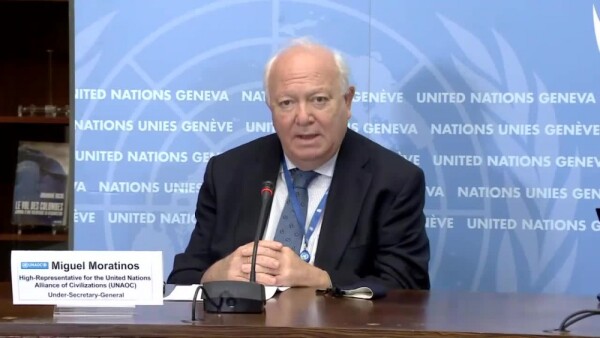
Miguel Moratinos, High-Representative for the United Nations Alliance of Civilizations (UNAOC), announced that the UNAOC had been created in 2005. From the beginning, the intention had been to expand the work and activities of the UNAOC, and it was great that an UNAOC office had now been opened at the Palais des Nations, in the presence of the Spanish and Turkish Foreign Ministers. UNAOC had been created following several terrorist attacks in different countries, with the rationale of building bridges of understanding and mutual respect between different civilizations. Preventive diplomacy, mediation diplomacy, protection of religious sites, and fight against antisemitism and islamophobia were some of the issues on the UNAOC’s agenda. UNAOC had a broad network of friends and partners, and it was working with other UN entities and all other counterparts on the important mission of promoting harmony among the nations and social cohesion globally.
Responding to questions, Mr. Moratinos said the UNAOC was making concerted efforts to listen to and integrate African voices in broader UN activities, and cited an example from Mali. He acknowledged the problem of islamophobia and antisemitism in Europe, which had to be adequately addressed; opening the UNAOC office in Geneva was part of such efforts. While work needed to be done on addressing religious cleavages and divisions, social and economic aspects had to be tackled as well, stressed Mr. Moratinos.
Climate justice and action on emissions
Mitzi Jonelle Tan, a 24-year-old climate activist from the Philippines who is part of UNICEF’s delegation for COP26, stated that the last days of COP26 had to deliver concrete results. As a young woman from the Global South, Ms. Tan recalled having been affected by natural disasters in her native Philippines. UNICEF research revealed there were one billion children - nearly half of the world’s children - at “extremely high risk” of the impacts of the climate crisis now. It was threatening their health, education and very survival. The climate crisis was a child rights crisis, stressed Ms. Tan.
She said that developed countries had not delivered on their promise to the developing world to provide USD 100 billion annually for climate finance. That pledge was just a drop in the bucket to address the reparations needed for the most impacted countries and we could not even make that happen. Meanwhile, climate shocks continued and intensified; the world today was not the world that had been promised to children around the world. Reparations from the Global North to the Global South were also in order. COP26 did not have the luxury to fail; the summit had to deliver and make this moment count, emphasized Ms. Tan.
Replying to questions, Ms. Tan said that it was paradoxical that the largest delegation at the climate summit was representing the fossil fuel industry, whereas young activists often struggled to be heard.
Mr. LeBlanc said the United Nations Secretary-General was returning to Glasgow this evening for the final days of the summit.
Emergency Relief Coordinator completes his visit to Ethiopia
Jens Laerke, for the Office for the Coordination of Humanitarian Affairs (OCHA), said Martin Griffiths, UN Emergency Relief Coordinator, had concluded a four-day visit to Ethiopia, during which he had met with the Prime and Foreign Ministers in Addis Abab. He had also met with the African Union’s high representative for the Horn of Africa, NGOs, donors and representatives of Member States. Mr. Griffiths had visited Mekelle and met with the de facto authorities responsible for the protection of all civilians on the territory under their control. Across Ethiopia, some 20 million people were targeted for assistance, informed Mr. Laerke. Conflict, large-scale displacement, drought, flooding, disease outbreaks and desert locust infestation continued to drive humanitarian needs across Ethiopia. The funding gap for the humanitarian response in Ethiopia for 2021 stood at more than USD 1.3 billion.
Mr. Laerke added that OCHA had addressed the issue of safe humanitarian flights into Tigray; unrestricted access to all areas in need was necessary. Mr. Laerke provided an example of bureaucratic impediments keeping some 400 trucks from reaching the people in need.
Mr. LeBlanc added that the UN Under-Secretary-General for Political and Peacebuilding Affairs, Rosemary DiCarlo, had yesterday highlighted the risks of the year-long conflict in Tigray and the urgent need for a cessation of hostilities and a lasting ceasefire in her briefing to the Security Council. Her remarks are available here.
Fighting in the eastern Democratic Republic of the Congo
Shabia Mantoo, for the United Nations Refugee Agency (UNHCR), said that an upsurge of fighting in eastern Democratic Republic of the Congo had forced at least 11,000 people to flee across the border into Uganda since 7 November. That represented the largest refugee influx in a single day in the country for more than a year. The fighting between militia groups and Congo’s armed forces was taking place in North Kivu’s Rutshuru Territory and the vast majority of those who had crossed the border were women and children.
UNHCR and Uganda’s Office of the Prime Minister, which was managing several transit facilities for asylum-seekers along the Congolese border, were responding to the emergency in coordination with district and local authorities. UNHCR had already relocated about 500 asylum seekers to the nearby Nyakabande transit centre, which could accommodate up to 1,500 people. UNHCR commended Uganda for allowing those seeking refuge to enter the country. However, there was a concern that local capacity and services might be soon overwhelmed. Thus, urgent resources were needed to address the needs of the new arrivals.
Full press release is available here.
There were currently 1.5 million refugees in Uganda, most of whom had arrived from Sudan and the Democratic Republic of the Congo, said Ms. Mantoo in a reply to a question.
On another topic, Ms. Mantoo said the UNHCR was very worried about the situation at the Belarus-Poland border. A tragic loss of life had been recorded; the use of refugees and asylum seekers for political gains had to stop. Humanitarian needs of the most vulnerable were paramount. An earlier UNHCR statement on this issue is available here.
Syringe safety and supply
Lisa Hedman, Senior Advisor for Access to Medicines and Health Products at the World Health Organization (WHO), announced that a new policy brief highlighted some important aspects about the safety and supply of syringes that were a staple in the fight against the COVID-19 pandemic. There was a real concern that there could be a shortage of syringes, which would in turn lead to several serious problems.
There had already been more than 6.8 billion doses of COVID-19 vaccines administered globally - nearly double the number of routine vaccinations given in a year. A shortage of syringes was unfortunately a real possibility. With a global capacity of around 6 billion per year for immunization syringes, a deficit in 2022 of over one billion was a real possibility if “business as usual” continued. Export restrictions and transportation problems for all health products would only compound the problem.
Another problem was the potential for the very unsafe practice of reusing syringes and needles—a problem that had historically been linked to situations where there are not enough syringes and needles. Countries without purchasing power were almost always disproportionately impacted by shortages. If equity was promoted in making vaccines available, the same had to be done with the syringes. Some of the solutions included: planning syringe needs well in advance; avoiding hording and panic buying; and working with governments who had already started financing expansions to increase production. Using the WHO resources, which included tools for forecasting and a complete package of training materials, was another way forward.
Answering to questions, Ms. Hedman said the syringe deficit in 2022 could range from one to two billion; the efforts were being made to bring this risk to zero. Syringes used for immunization usually came with needles attached to them as part of the manufacturing process, and needles could not be taken off. Many such syringes had an “auto destruct” feature and could thus not be used more than once. Any kind of manipulation of needles was strongly discouraged, for the safety of both patients and health personnel. Syringes were manufactured all over the world, but most exports came from India and China. Coordinating the global syringe supply would help ensure that countries would not find themselves in a situation where they could not administer vaccine doses because of a lack of syringes. In the case of shortages, prioritization of syringes would need to take place, but the hope was to avoid this scenario altogether. While COVAX had not been initially set up to provide syringes, some of the mechanism’s members were all making efforts to avoid this type of problem.
Sexual abuse in the Democratic Republic of the Congo (DRC)
In answer to a journalist’s questions, James Elder, for the United Nations Children’s Fund (UNICEF), said the case of a UNICEF staffer accused of sexual abuse in the DRC was not a new story, as it had emerged and been covered in May. That had been prior to the establishment of the WHO’s investigative commission. The now former UNICEF staff member was currently under investigation, and further details could not be provided as the investigation was ongoing.
Geneva announcements
Catherine Huissoud, for the United Nations Conference on Trade and Development (UNCTAD), informed that UNCTAD would issue its annual Review of Maritime Transport on 18 November.
Over 80 per cent of the volume of international trade in goods was carried by sea, and this percentage was even higher for most developing countries. This year's edition of the report, which was an UNCTAD flagship report, published since 1968, had a special focus on the impact of the COVID-19 pandemic on the industry. The hybrid press conference from room B-128 would take place on 16 November at 2:30 p.m. Five different press releases would be issued, said Ms. Huissoud.
Tarik Jašarević, for the World Health Organization (WHO), announced that today at 2 p.m., there would be a virtual press conference related to the World Health Assembly Special Session (29 November- 1 December) to consider developing a WHO convention, agreement, or other international instrument on pandemic preparedness and response. Speakers would Steve Solomon, WHO Principal Legal Officer; and Jaouad Mahjour, WHO Assistant Director-General, Emergency Preparedness and International Health Regulations.
He also said the second round table on longer term preparedness for future pandemics would take place today from 3 to 5 p.m.
Rhéal LeBlanc, for the UN Information Service (UNIS), said that on 10 December at 10 a.m., the United Nations Institute for Disarmament Research (UNIDIR) would hold a hybrid press conference to present its Landmine Monitor 2021 Report Launch. Speakers would include Mark Hiznay, Ban Policy Editor and Human Rights Watch Arms Division Associate Director; Loren Persi, Impact Editor; Ruth Bottomley, Impact Editor; and Marion Loddo, Monitor Editorial Manager.
The Committee on the Elimination of Discrimination against Women would close its 80th session on 12 November at 4 p.m. and issue its concluding observations on the reports of the ten countries reviewed during this session.
The Committee against Torture had begun this morning its review of the report of Sweden and would conclude it on 10 November afternoon.
Finally, Mr. LeBlanc said that as part of the From Geneva to Glasgow campaign, today at 6 p.m. there would be a march from Place des Nations to the Natural History Museum to raise awareness of climate change and call everyone to action.
Similar Stories
1
1
1
Press Conferences | IOM , ITU , UNECE , UNICEF , WHO , WMO
UNICEF: Ebola, DRC - children orphans or separating them from parents and caregivers; IOM: Humanitarian needs in Djibouti amid arrivals from Yemen and increased migrant movements; WHO: Darfur, scale of health needs far exceeds available resources; WMO co-sponsored Global Heat Forum, Bangkok, monthly Global Seasonal Climate Update; UNECE: UN Forum of Mayors; ITU Plenipotentiary Conference 2026; WHO: child and adolescent obesity guidelines and new global roadmap to tackle pregnancy hypertension, a leading cause of maternal mortality
1
1
1
Press Conferences | OCHA , UN WOMEN , UNHCR , WFP , WHO , WTO , UNEP
OCHA – $160M CERF allocation to 12 underfunded crises; UNHCR – 5.8M refugee children remain out of school amid funding cuts; UN Women – Middle East escalation and food security among women/girls; WHO – Gaza supplies and overall situation; WFP – Yemen food insecurity and impact on global hunger ; UNEP - First International Conference of the Global Framework on Chemicals in Geneva | 16-20 November 2026
1
1
1
Press Conferences | UNHCR , WHO
Yemen's health system nears collapse amid conflict, causing rising casualties and medicine shortages.
1
1
1
Press Conferences | HRC
Update by the Expert Mechanism to Advance Racial Justice and Equality in Law Enforcement
1
1
1
Press Conferences | WIPO , WHO , UNICEF , UNHCR , IOM , WFP , FAO
WIPO Global Innovation Index 2026 launch and press conference, WHO Composition of influenza vaccines for the 2027 Southern Hemisphere flu season, UNICEF Yemen hunger and malnutrition; UNHCR Sudan displacement into Chad; IOM Ebola and population movements in DRC; WFP emergency food assistance in Nepal; and FAO food loss and waste.
2
1
2
Press Conferences | UNCTAD
Gaza reconstruction needs reach $71.5 billion as Palestinian economy and public finances face severe strain. Latest UNCTAD report documents the loss of decades of development gains, economic collapse in Gaza and tightening economic constraints in the West Bank.
The report identifies three immediate priorities: transferring withheld Palestinian revenues, safeguarding the banking system and aligning reconstruction support with the documented scale of damage and economic losses.
1
1
1
Press Conferences | HRC
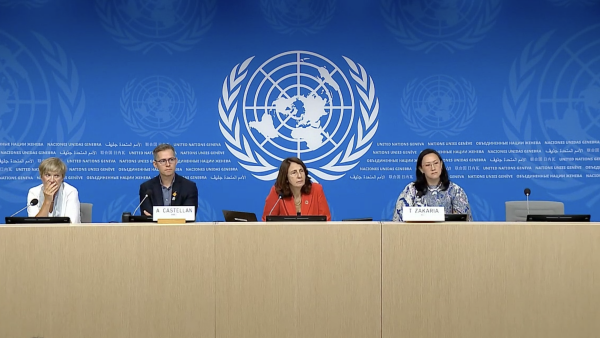
Press conference on the situation of human rights in Nicaragua by the UN Group of Human Rights Experts
1
1
1
Press Conferences | ITU , UNHCR , WHO , WMO
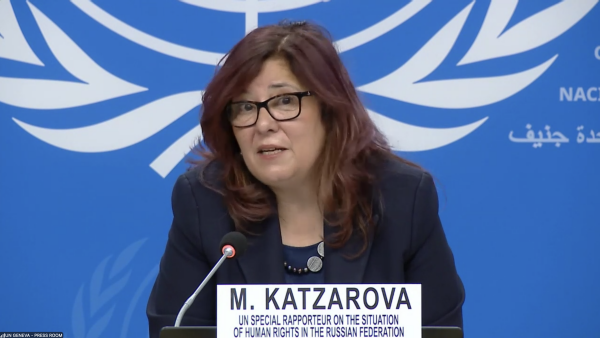
YEMEN - UNHCR: Escalating conflict in Yemen could fuel more displacement, refugee movement
CLIMATE - WHO / WMO: Health and Climate impact of El Niño
1
1
1
Press Conferences | HRC , OHCHR
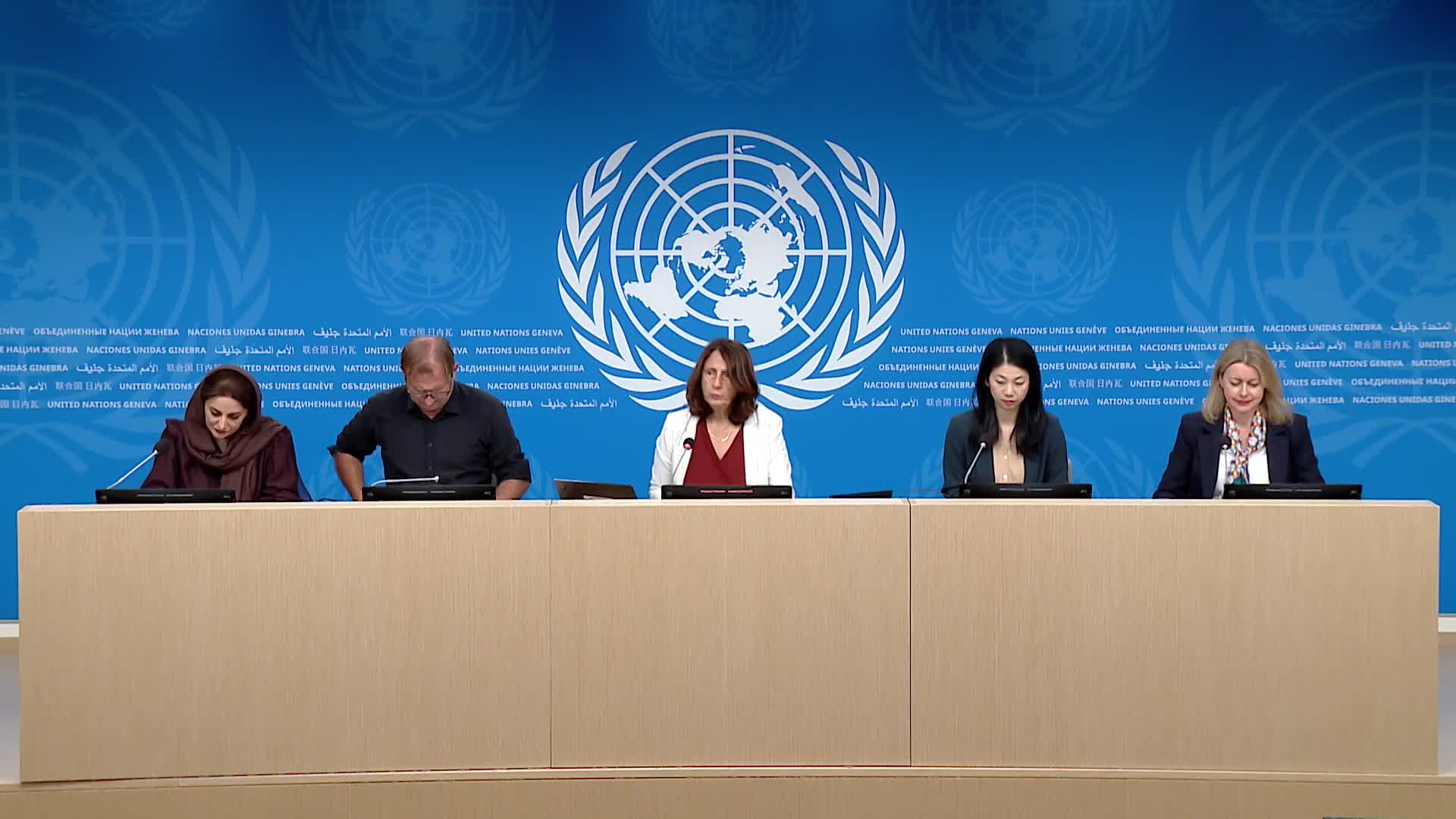
Mariana Katzarova discusses human rights in Russia as a UN Special Rapporteur.
1
1
1
Press Conferences | IOM , OHCHR , UN WOMEN , UNFPA , UNHCR , UNOPS , WHO
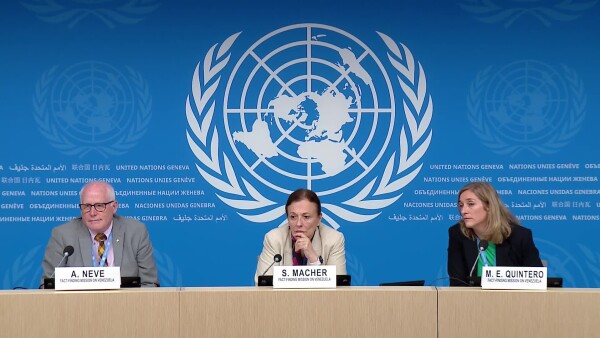
UN Geneva briefing: Yemen crisis worsens, urgent aid needed across multiple sectors.
1
1
1
Press Conferences | HRC
Press conference on the latest report of the Independent International Fact-Finding Mission on the Bolivarian Republic of Venezuela to the UN Human Rights Council
1
1
1
Press Conferences | OHCHR
Victims Still Waiting: A Global Briefing on Transitional Justice Around the World