

The United Nations Office at Geneva
Multimedia Newsroom
Situation in Afghanistan
Shabia Mantoo, for the United Nations Refugee Agency (UNHCR), said the situation across Afghanistan remained extremely fluid. While widespread fighting had decreased since the takeover of the country by the Taliban on Sunday, the full impact of the evolving situation was not yet clear. Bolstered support for the humanitarian response inside Afghanistan was urgently needed. The vast majority of Afghans were not able to leave the country through regular channels.
UNHCR welcomed the efforts of several states to protect at-risk Afghan nationals through bilateral evacuation programmes. These programmes should not be substitute for an urgent and wider international humanitarian response. Nor should these programmes preclude the possibility for Afghans to seek asylum in other countries. UNHCR was concerned that many were confusing these bilateral evacuation programmes from Afghanistan with UNHCR’s traditional refugee resettlement, which was completely unrelated: UNHCR did not transfer citizens from their own countries to other states.
Some 200 UNHCR colleagues, both national and international, remained in Afghanistan. UNHCR was working with 18 local non-government partners with some 900 staff throughout the country. At present, they were able to access all provinces and working in two-thirds of all districts. Together with the wider UN country team, UNHCR was committed to staying and delivering aid to the Afghan people for as long as it had access to populations in need and could ensure safety for its staff.
Since the beginning of this year, UNHCR had provided emergency assistance to 230,000 people. Protection monitoring and needs assessments were ongoing for some half a million displaced Afghans, 80 per cent of whom were women and children. UNHCR called on donors to remain steadfast in their support for humanitarian operations in Afghanistan. UNHCR’s Supplementary Appeal for the Afghanistan Situation highlighted US$62.8 million as urgent needs to support the response for internally displaced people in Afghanistan as well as preparedness in Afghanistan and its neighbouring countries. These requirements were part of the US$351 million requirements, which remained underfunded at 43 per cent.
The full statement could be found here.
Alessandra Vellucci, for the United Nations Information Service, added that the Humanitarian Response Plan for Afghanistan was just 37% funded. Funding for emergency shelter and relief items was particularly urgent due to the surge in displacement – but only 4% of the funds required for this had been received.
Tarik Jašarević, for the World Health Organization (WHO), said that WHO was also committed to staying in Afghanistan and delivering critical health services. WHO called on all parties to respect and protect civilians, health workers, patients and health facilities.
Continuity of health services had to be ensured without interruption, with a focus on ensuring that women had access to female health workers. At the start of 2021, half the population of Afghanistan – including more than four million women and nearly ten million children – already needed humanitarian assistance. One third of the population was facing acute food insecurity and more than half of all children under 5 years of age were malnourished. The current drought was expected to elevate those figures.
Most major health facilities in Afghanistan were functional. Health workers had been called to return to, or remain at their posts, including female health staff. Regarding COVID-19, a decrease in the number of positive cases and deaths had been observed in the past few weeks, but this could be due to a decrease in reporting or testing due to insecurity. Since January 2020, there had been 152,448 cases, and over 7000 deaths. As of 15 August, 1,894,608 vaccine doses had been administered; only 5% of the Afghan population had received one dose.
On 17 August, WHO had dispatched medical supplies to Wazir Akbar Khan Hospital in Kabul. Some work that had been interrupted had now resumed. WHO and partners had conducted an initial assessment of the health needs of recently displaced populations and deployed three mobile health teams.
Ms. Vellucci reminded that yesterday, 19 August, on the national day of Afghanistan, the UN Secretary-General had extended “a special message to the people of Afghanistan during this trying time”, reiterating that “the United Nations is with you and committed to stay and deliver to help advance peace, opportunity and human rights for all”.
On behalf of the Human Rights Council, Ms. Vellucci also announced that next Tuesday, 24 August, the Council would hold a special session to address "the serious human rights concerns and situation in Afghanistan". Pakistan, as coordinator of the Organization for Islamic Cooperation, and Afghanistan had convened the session. An organizational meeting would take place on Monday at 3 p.m. Both meetings would be webcast on UN Web TV. Ms. Michelle Bachelet, UN High Commissioner for Human Rights, as well as the Permanent Representative of Afghanistan, were expected to make their statements in person on Tuesday. Answering a question on the representation of Afghanistan at the United Nations, Ms. Vellucci referred to the UN General Assembly Credentials Committee.
Answering questions from journalists, Ms. Mantoo for UNHCR said that bilateral programs of evacuation were lifesaving and needed. However, a broader international response was needed to help and protect other persons who could not, or would, not leave Afghanistan. The crisis was still contained within Afghanistan. It was hard to leave the country. UNHCR advocated that the borders be opened to people who were seeking safety and protection abroad. The right to seek asylum must also be protected.
Ms. Mantoo for UNHCR indicated that 550’000 persons had been forcibly displaced inside Afghanistan this year. But there were also 2.9 million internally displaced persons from prior crises: they remained in need of assistance, as did 2.6 million Afghans who had fled worldwide over the past decades. Iran and Pakistan hosted 90% of all Afghan refugees worldwide. Ms. Mantoo stressed that the evacuations themselves were beyond UNHCR’s remit; it was concerned about the ability of persons to seek protection and safety in and outside of Afghanistan.
Ms. Vellucci, quoting figures from the Office for the Coordination of Humanitarian Affairs (OCHA), stated that since January 2021, more than 550’000 persons had been newly internally displaced, and that 735’000 had returned to Afghanistan from other countries and were in urgent need of humanitarian aid. Ms. Vellucci also said that the Principals of the Inter-Agency Standing Committee (IASC) had called, on 18 August, for governments to keep borders open to receive. The call had been made by the principals of 18 UN and non-UN bodies.
Ms. Vellucci finally reported that the United Nations Development Programme (UNDP) had been providing COVID-19 and other healthcare to 9000 individuals in several IDP camps in Kabul, through 20 mobile teams since the beginning of August. 60% of the IDP who had received essential health care through these teams were women and children.
Asked whether UN agencies had been prevented by the Taliban from accessing people in need, Ms. Mantoo said UNHCR staff were still delivering assistance in many districts across Afghanistan. UNHCR, among many others, was committed to stay and deliver this assistance, and support for the humanitarian response needed to be boosted. Mr. Jašarević added that WHO, too, was committed to stay in Afghanistan; the Director General was in contact with the acting Minister of health of Afghanistan.
COVID-19
Asked by a journalist whether the Olympic Games in Tokyo had exacerbated the pandemic, and if modelling had been conducted on this issue, Mr. Jašarević, for the World Health Organization, reminded that, for WHO, there had to be a risk-based approach to the organisation of large events. WHO provided States with tools to assess these risks. The regular WHO press conference on COVID-19 would likely take place on Wednesday, 25 August.
Earthquake in Haiti
Regarding Haiti, Ms. Vellucci first said the Deputy Secretary-General was in the country, together with the Administrator of UNDP, to bring the support of the United Nations to the people of Haiti and to determine how best to serve them in this difficult time.
On behalf of the World Food Programme (WFP), Ms. Vellucci then read a statement stressing that the magnitude 7.2 earthquake that had struck Haiti on Saturday morning had devastated an already fragile country. Over 2,000 lives had been lost, 52,000 homes reduced to rubble and nearly 77,000 destroyed. WFP estimated that 215,000 people needed urgent food assistance in Nippes, Sud and Grand'Anse.
Heavy rain and flooding from Tropical Storm Grace were complicating relief efforts. With homes destroyed, families were sleeping on the streets. Hospitals were overwhelmed and are running out of space with many people in need of urgent medical assistance. Access to the affected South remained a challenge – even before the earthquake, recurrent political unrest, gang fights and roadblocks had already limited access to the South.
WFP was using air, sea, and road routes to transport essential supplies like food and medicine for the government and the humanitarian community to the affected areas. A United Nations Humanitarian Air Service helicopter, managed by WFP, was transporting staff, medical supplies, and other essential needs. For this lifeline to continue, WFP urgently needed US$ 2.5 million.
WFP had set-up a shipping service to the South to support the humanitarian response. Before the earthquake, WFP was already assisting communities in the South with cash support. It was now providing hot meals in hospitals in Les Cayes. As an immediate priority, WFP was sending more food to health centres.
The earthquake had struck as Haiti was already dealing with multiple crises; nearly half the population, or 4.4 million Haitians, needed immediate food assistance. Over 1.1 million were expected to suffer from severe hunger. Political instability, gang violence and rising food prices had made day to day life a struggle, with access to basics, including food, becoming difficult.
Photos from earthquake-affected Haiti: https://multimedia.wfp.org/Share/jx74f1768gxcdn33ajy70381s35751s2.
Mr. Jašarević, for the World Health Organization, added that overwhelmed hospitals in Haiti required medical personnel and supplies. Urgent needs included general and specialized medical personnel, medicines, and medical supplies, among others, as well as logistical support for the delivery of supplies and transfer of patients.
WHO-PAHO (Pan American Health Organization) was supporting coordination of health response alongside Haiti’s Ministry of Health and UN agencies. They had delivered essential medicines and other medical and surgical supplies to affected health facilities. PAHO was also coordinating one emergency medical team on the ground; 15 teams from various countries were ready to be deployed depending on the needs of the Ministry. WHO had lost one colleague in the earthquake.
In answers to questions from journalists, Ms. Vellucci, for the United Nations Information Service, said the UN Central Emergency Response Fund had allocated 8 million USD to provide aid to impacted persons. UN assessment teams were evaluating the scale of needs in Haiti. Ms. Amina Mohammed, UN Deputy Secretary-General, and Mr. Achim Steiner, Administrator of UNDP, were visiting affected communities, governmental officials and UN staff, and would go back to New York today.
Ms. Vellucci added that WFP, the International Organization for Migration and UNICEF had already done a lot of work to save lives in Haiti. UNICEF and Haitian officials had conducted preliminary assessments that revealed intensive destruction to schools, just as they were about to reopen. UNICEF was rushing lifesaving supplies to the affected areas. But yesterday (19 August), two UN humanitarian convoys in Haiti had faced roadblocks erected by communities with unmet needs, a fact which highlighted the need for accountability to affected populations.
Responding to other inquiries, Mr. James Elder, for the United Nations Children’s Fund (UNICEF), said that whilst UNICEF had put child-protection measures in place and devoted a lot of work on unaccompanied children, adoption was still an issue, especially in a crisis like this one. UNICEF’s primary response was to address in-country adoption and to create a cadre of child-protection workers, who had some enforcement powers.
Asked why Haitian patients were not sent to the Dominican Republic for treatment, Mr. Jašarević, for WHO, remarked that that would depend on both countries. Haiti’s health system had often been put to test, its capacity not being optimal.
UNCTAD 15th quadrennial conference: call for photos
Catherine Huissoud, for the United Nations Conference on Trade and Development (UNCTAD), said UNCTAD had published a call for submissions for photographs in anticipation of the UN trade body’s 15th quadrennial conference, UNCTAD15, that would take place online from 3 to 7 October, hosted by Barbados. The conference theme, ‘From inequality and vulnerability to prosperity for all,’ called to fix fractures across the world to ensure prosperity for all. Trade was one of the levers in this journey and could help foster development and bring more prosperity.
The top 20 images selected would be virtually exhibited during the conference and, if possible, physically in both Geneva and Barbados. Photographers could submit up to three images. The exhibition would be curated by Lekgetho Makola, the chief executive of the Javett Art Centre at University of Pretoria in South Africa. The deadline for submission was 3 September, at midday GMT.
Announcements
Tarik Jašarević, for the World Health Organization, said WHO would issue new guidance on hypertension prevalence and treatment: a global analysis of trends in hypertension prevalence, detection, treatment and control; as well as guidelines on the pharmacological treatment of hypertension in adults. The documents would be presented on Tuesday, 24 August. A press conference with experts on hypertension would likely take place next Monday, 23 August. Details on the press briefing timing and embargoed material would be communicated in a media advisory to be issued later today or early Monday morning.
In other announcements, Ms. Vellucci said the Committee on the Rights of Persons with Disabilities would continue its review of France today at 12:30 p.m. The Committee would hold a minute of silence to honour one of its members, Soumia Amrani from Morocco, who passed away on Wednesday, 18 August.
The Committee on the Elimination of Racial Discrimination would close next Wednesday (25 August) at 5 p.m. its 104th session, during which it had reviewed the reports of Lebanon and the Netherlands.
The Conference on Disarmament would hold its next public plenary meeting next Tuesday, 24 August, at 10 a.m., under the presidency of Chile. It would discuss its draft annual report to the General Assembly. On Thursday, 26 August, the Conference would hold a public discussion on the participation of women to international security (3 p.m.).
Ms. Vellucci also reminded that yesterday, 20 August, the international community had commemorated the World Humanitarian Day and all the humanitarian aid workers who had given their lives or were working in dire situations to help the most vulnerable people.
Tomorrow, 21 August, would be the International Day of Remembrance of and Tribute to the Victims of Terrorism. In his message, the Secretary-General stated that this year’s observance focused on the importance of connections, especially during the ongoing pandemic, which continued to restrict movements, limit peoples’ ability to see loved ones and, for victims and survivors, denied them the opportunity to come together to support each other. The Secretary-General looked forward to seeing how to further efforts during the first ever United Nations Global Congress of Victims of Terrorism to be held later this year.
Finally, regarding the International Day Commemorating the Victims of Acts of Violence Based on Religion or Belief commemorated on 22 August, Ms. Vellucci noted that the Secretary-General’s message stressed that “this violence often goes hand-in-hand with the infringement of other fundamental rights, including the right to freedom of thought or conscience. States have the primary responsibility to prohibit and deter discrimination and violence and to protect the human rights of religious minorities and ensure that perpetrators of these crimes are held accountable. At the same time, the international community must do more to support the victims of these heinous acts, as well as those who are working to address the root causes of intolerance and hate.” And the Secretary-General would conclude his message by recalling that “Freedom of religion or belief is a human right, enshrined in the Charter of the United Nations and in the Universal Declaration of Human Rights. Today, this right is being tested. Let us commit to turning the tide on this appalling trend, to building more inclusive and peaceful societies, where diversity is celebrated as a richness that strengthens us all.”
Similar Stories
1
1
1
Press Conferences | IOM , UNDRR
UN stresses importance of household preparedness for disaster risk reduction.
1
1
1
Statements , Press Conferences | OHCHR
1
1
1
Press Conferences | UNHCR , UNICEF , IFRC , OHCHR , UN WOMEN , IOM , OCHA , WHO
UNHCR – ExCom Meeting, UNICEF – Nepal Recovery, IFRC – Flash Floods, WHO – Mental Health, IOM – South Sudan Floods, OCHA – DRC Humanitarian aid, UNHCR – Sahel Displacement, UNICEF – Yemen Update, IOM – Gaza Shelter, UN Women – Gaza Women, OHCHR – Arrests and detentions of Syrians by Israeli force
2
1
2
Press Conferences | UNCTAD
Presentation of the Trade and Developement Report 2026
Embargoed until 9 October 2026 at 11 a.m. (Geneva Time)
UNCTAD: UNCTAD’s flagship report finds that governments increasingly use industrial, trade, financial and technology policies to pursue economic and national security objectives. Market access and the ability to move into higher-value activities now depend more heavily on technology, finance and geopolitics.
1
1
1
Press Conferences | UPU
Release of the State of the Postal Sector Report 2026
1
1
1
Press Conferences | IOM , ITU , UNECE , UNICEF , WHO , WMO
UNICEF: Ebola, DRC - children orphans or separating them from parents and caregivers; IOM: Humanitarian needs in Djibouti amid arrivals from Yemen and increased migrant movements; WHO: Darfur, scale of health needs far exceeds available resources; WMO co-sponsored Global Heat Forum, Bangkok, monthly Global Seasonal Climate Update; UNECE: UN Forum of Mayors; ITU Plenipotentiary Conference 2026; WHO: child and adolescent obesity guidelines and new global roadmap to tackle pregnancy hypertension, a leading cause of maternal mortality
1
1
1
Press Conferences | OCHA , UN WOMEN , UNHCR , WFP , WHO , WTO , UNEP
OCHA – $160M CERF allocation to 12 underfunded crises; UNHCR – 5.8M refugee children remain out of school amid funding cuts; UN Women – Middle East escalation and food security among women/girls; WHO – Gaza supplies and overall situation; WFP – Yemen food insecurity and impact on global hunger ; UNEP - First International Conference of the Global Framework on Chemicals in Geneva | 16-20 November 2026
1
1
1
Press Conferences | UNHCR , WHO
Yemen's health system nears collapse amid conflict, causing rising casualties and medicine shortages.
1
1
1
Press Conferences | HRC
Update by the Expert Mechanism to Advance Racial Justice and Equality in Law Enforcement
1
1
1
Press Conferences | WIPO , WHO , UNICEF , UNHCR , IOM , WFP , FAO
WIPO Global Innovation Index 2026 launch and press conference, WHO Composition of influenza vaccines for the 2027 Southern Hemisphere flu season, UNICEF Yemen hunger and malnutrition; UNHCR Sudan displacement into Chad; IOM Ebola and population movements in DRC; WFP emergency food assistance in Nepal; and FAO food loss and waste.
2
1
2
Press Conferences | UNCTAD
Gaza reconstruction needs reach $71.5 billion as Palestinian economy and public finances face severe strain. Latest UNCTAD report documents the loss of decades of development gains, economic collapse in Gaza and tightening economic constraints in the West Bank.
The report identifies three immediate priorities: transferring withheld Palestinian revenues, safeguarding the banking system and aligning reconstruction support with the documented scale of damage and economic losses.
1
1
1
Press Conferences | HRC
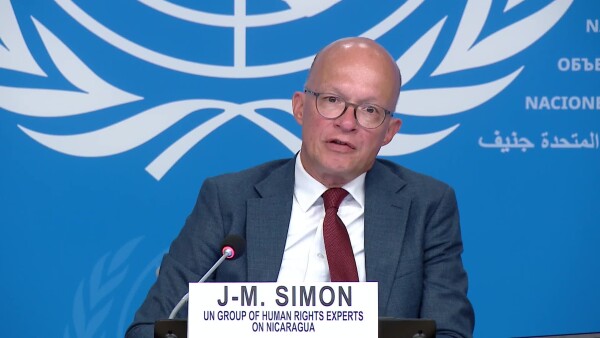
Press conference on the situation of human rights in Nicaragua by the UN Group of Human Rights Experts