

The United Nations Office at Geneva
Multimedia Newsroom
Press Conferences | OHCHR , UNHCR , WHO , UNOG , UNITED NATIONS , WMO
UNOG Bi-weekly press briefing 29 June 2021
Forty-seventh session of the Human Rights Council
Rolando Gomez, for the Human Rights Council, said that the Council would this morning continue its interactive discussion with Dubravka Šimonović, the Special Rapporteur on violence against women. That would be followed at 11 a.m. by the presentation of the report of the new Special Rapporteur on trafficking in persons, especially women and children, Siobhán Mullally, focusing on the implementation of the non-punishment principle, followed by an interactive discussion.
In the afternoon, the Council would continue its interactive discussion on human rights and transnational corporations and other business enterprises, to be followed by a panel discussion on the tenth anniversary of the adoption on 16 June 2011 of the Guiding Principles on Business and Human Rights, with statements from the High Commissioner and John Ruggie, the former Special Representative of the Secretary-General on human rights and transnational corporations and other business enterprises, who had been instrumental in the development of the Guiding Principles.
At 10 a.m. on Wednesday 30 June, the Council would hold a panel discussion on the human rights of older persons in the context of climate change, with opening remarks by the High Commissioner. The Council would then continue its interactive discussion on the report of the Special Rapporteur on trafficking in persons, to be followed by the report of the Special Rapporteur on extreme poverty and human rights, Olivier De Schutter, looking at international solidarity in the service of poverty eradication.
If time allowed on Wednesday, the new Special Rapporteur on extrajudicial, summary or arbitrary executions, Morris Tidball-Binz, would present his predecessor’s summary of the last five years of her work.
In parallel with the formal session of the Council, several informal consultations were taking place on draft resolutions, which had to be submitted by Friday 1 July and would be considered by the Council on 12 and 13 July.
Further information, including information on how to access the meetings via WebEx, can be found here: https://hrcmeetings.ohchr.org/HRCSessions/RegularSessions/47session/Pages/default.aspx.
In response to a question, Mr. Gomez said that, on 21 June, the President of the Human Rights Council had stated that, as the UNGA Credentials Committee had not yet decided which representation of Myanmar would be recognized, the adoption of the report on that country would be postponed until that decision was taken. However, the High Commissioner’s oral update concerning the situation in Myanmar and the oral progress report of the Special Rapporteur on the situation of human rights in Myanmar would take place as scheduled on 6 and 7 July, without hearing statements from any representative of the concerned country.
Severe storms damage refugees’ shelters in Sudan
Boris Cheshirkov, for the United Nations Refugee Agency (UNHCR), said that more than 16,000 Ethiopian refugees in Sudan’s eastern refugee settlements of Um Rakuba and Tunaydbah had been impacted after several weeks of storms had razed tents, swept away belongings and destroyed infrastructure. Nearly 4,000 of 10,000 individual family tents had been damaged by strong winds, heavy rains, and hailstorms. Emergency latrines and other facilities had also been destroyed.
With storms expected to intensify further during the rainy season, from June to October, UNHCR and its partners were in a race against time and nature to repair and reinforce shelters and ensure that affected families had access to clean water and safe latrines. They were replacing blankets and sleeping mats and replenishing food supplies and distributing emergency shelter kits to help those most impacted reinforce their tents.
UNHCR and its partners were calling for USD 182 million in a recently released updated interagency appeal, an increase of USD 33 million, to carry out infrastructure improvements to the camps, including construction of more durable traditional shelters, and to meet the protection and basic needs of the Ethiopian refugees until the end of the year. So far 46 percent of the required amount had been received.
The full press release can be found here: https://www.unhcr.org/news/briefing/2021/6/60dad6574/severe-storms-damage-shelters-16000-ethiopian-refugees-sudan.html
Humanitarian situation in Tigray
Boris Cheshirkov, for the United Nations Refugee Agency (UNHCR), responding to a question, said that UNHCR was extremely worried about the latest developments in Tigray, particularly in Mekelle. Thankfully, UNHCR staff were all safe but electrical power and phone networks were not functioning, which made it even more difficult for them to deliver humanitarian assistance.
UNHCR called for calm and restraint and appealed to all parties to the conflict to abide by international law, to protect civilians, including people who have been displaced, and to ensure that humanitarian workers could continue to work and reach the many people in need with vital assistance.
Alessandra Vellucci, for the United Nations Information Service in Geneva, said that the spokesperson for the Secretary-General, who was deeply shocked by the murders of three Médecins Sans Frontières (MSF) humanitarian workers, had yesterday said that the United Nations condemned any and all attacks on humanitarian workers and called on all parties to ensure that civilians were protected, humanitarian aid reached the people in need and a political solution was found.
Tarik Jašarević, for the World Health Organization (WHO), said that WHO joined with other UN agencies in condemning the attacks on the market and the killing of MSF colleagues last week. WHO was taking measures to strengthen the security and wellbeing of staff, while continuing to deliver activities where possible, including in camps for internally displaced persons, but was concerned about the potential for cholera, measles and malaria outbreaks in the region, as well as the risk of outbreaks of meningitis and yellow fever. With hospitals barely functioning, people displaced and looming famine, the risk of communicable and vaccine preventable diseases spreading due to lack of food, clean water, safe shelter and access to health care was very real. People were also at risk of death from lack of access to health services to treat other health conditions.
An oral cholera vaccine (OCV) campaign targeting more than 2 million people with 4 million vaccine doses had commenced on 10 June in 13 priority districts, but was only able to reach 50 per cent (1 million) of the targeted population because of difficult road access, population movement because of the shifting security situation and the considerable impact of the conflict on health care facilities and workers.
Exceptional heat in northwestern North America
Clare Nullis, for the World Meteorological Organization (WMO), said that an exceptional and dangerous heatwave was baking the northwestern United States and western Canada in areas more accustomed to cool weather. Temperatures were likely to reach around 45.0°C by day for perhaps five or more days, with extremely warm nights in between. While the extreme temperatures posed a major threat to people's health, agriculture and the environment because the region was not used to such heat, it was hoped that heat-health early warnings would limit the death toll.
Lytton in British Columbia had broken the all-time Canadian temperature record on Sunday, with 46.6°C, a huge 1.6°C higher than the previous record, only to record 47.9°C less than 24 hours later, values are more typical of the Middle East or North Africa. Overnight lows were higher than average daytime highs for late June, which prevented people cooling off and recovering before another day of high temperatures.
The heat was caused by a combination of a significant atmospheric blocking pattern which had led to a “pressure cooker effect”, a heat dome with low pressure either side, which was not being moved along by the jet stream.
Other parts of the northern hemisphere were also experiencing exceptional early hot summer conditions. The early summer hot weather conditions were taking place in a human-induced climate change background; heatwaves were becoming more frequent and intense as greenhouse gas concentrations led to a rise in global temperatures. They were starting earlier and ending later and were taking an increasing toll on human health and health systems.
Further details can be found here: https://public.wmo.int/en/media/news/june-ends-exceptional-heat
Meeting of the Libyan Political Dialogue Forum
Alessandra Vellucci, for the United Nations Information Service in Geneva, speaking on behalf of the United Nations Support Mission in Libya, said that the Libyan Political Dialogue Forum had yesterday begun a four-day meeting in Switzerland, which would offer an opportunity for the members of the Forum to develop proposals to further facilitate the holding of national elections on 24 December 2021, particularly in respect of the constitutional basis for the elections. The Forum’s Advisory Committee had previously met for three days in Tunis, during which it had reached consensus on the possible formula to serve as a basis for the deliberations of the Forum and agreement on the Constitution.
The United Nations called on the members of the Forum to overcome their differences and any deficit of trust and work constructively to live up to their responsibility to reach a possible constitutional basis for the elections.
Further details can be found here: https://unsmil.unmissions.org/unsmil-facilitate-meeting-libyan-political-dialogue-forum-switzerland-28-june
Secretary-General’s Travels
Alessandra Vellucci, for the United Nations Information Service in Geneva, said that the Secretary-General would be leaving New York to travel to Paris on Tuesday evening to take part in the opening segment of the Generation Equality Forum convened by UN-Women and co-chaired by France and Mexico. He would underscore the disproportionate impact that the pandemic had had on women and girls and how it had accentuated the great imbalances of power and the failures of the social order that end up harming women.
While in Paris, he was also expected to have a bilateral meeting with President Emmanuel Macron.
On Thursday, the Secretary-General would go to Valencia in Spain to visit the United Nations logistics base at Quart de Poblet to mark its tenth anniversary. While in Valencia, he would also meet with university students and engage with them in a dialogue on today’s most pressing issues.
He would then travel to Madrid where he was expected to meet Prime Minister Pedro Sánchez and have an audience with King Felipe VI. He would also meet with the Vice-President for Ecological Transition, Teresa Ribera, and take part in a round table with climate entrepreneurs.
ITU launches Global Cybersecurity Index
Jovana Miocinovic, for the International Telecommunications Union (ITU), said that the Global Cybersecurity Index would be launched at an information event, including a question and answer session, to be held at 1.30 p.m. today.
Caroline Troein, for the International Telecommunications Union (ITU), said that the Global Cybersecurity Index, which measured the cybersecurity commitments of 193 ITU Member States and the State of Palestine, was designed to help countries identify areas of strength and improvement in the field of cybersecurity. It served as a roadmap for countries to develop national strategies, legal frameworks and build capacity, share best practices and incentivize countries to foster a culture of cybersecurity. The fourth edition mapped 82 questions which measured countries’ cybersecurity commitments across five key pillars: legal measures, technical measures, organizational measures, capacity development and cooperative measures.
The purpose of the Index was to give an overview of countries’ commitments to cybersecurity, not to rank their cybersecurity, nor to measure or evaluate the effectiveness of their cybersecurity capabilities. It was encouraging that 167 countries had some form of cybersecurity legislation and 127 had a national cybersecurity strategy, but 60 per cent of the least developed countries had no strategy and over half had no cybersecurity incident response team.
The full report is available here: https://www.itu.int/en/ITU-D/Cybersecurity/Pages/global-cybersecurity-index.aspx.
Responding to a question, Mr. Marco Obiso, for the International Telecommunications Union (ITU), said that ITU worked to build awareness and capacity around the issue of cybersecurity but had no mandate to assess the abilities of countries to conduct monitoring in this field.
UNCTAD 2021 Commodities and Development Report
Catherine Huissoud, for the United Nations Conference on Trade and Development (UNCTAD) said that the 2021 Commodities and Development Report, “Escaping from the commodity dependence trap through technology and innovation”, would be published on Wednesday 7 July. About two-thirds of developing countries were commodity-dependent in 2019, meaning that at least 60 per cent of their merchandise export revenues came from primary goods, such as cacao, coffee, cotton, copper, lithium and oil. The commodity trap was persistent, as almost all economies that had been commodity-dependent in 1995 remained so in 2018. A press conference would be held for accredited media on Tuesday 6 July at 2:30 pm.
Ms. Huissoud also reminded journalists that, at 3 p.m. today, UNCTAD and the UN World Tourism Organization would present an update on the economic impact of the coronavirus disease pandemic on global tourism.
UNDP report on mitigating poverty
Sarah Bel, for the United Nations Development Programme (UNDP), said that a new report, entitled “Mitigating poverty, Global estimates of the Impact of Income support during the pandemic”, presenting an analysis of the impact of social protection policies in developed and developing countries on the number of people who had fallen into poverty as a result of the COVID-19 pandemic, would be launched on Thursday 1 July 2021.
The report was under embargo until 6 a.m. on 1 July, and an embargoed briefing would be held at 4.15 p.m. on Wednesday 30 June 2021 in which key findings would be presented followed by a question and answer session.
Other announcements
Alessandra Vellucci, for the United Nations Information Service in Geneva, announced that a joint press conference would be held by the UN Refugee Agency (UNHCR) and the Office of the United Nations High Commissioner for Human Rights (OHCHR) at 9.30 a.m. on Wednesday 30 June to address the challenges of protection for LGBTQI+ people on the run, with UNHCR Assistant High Commissioner for Protection, Gillian Triggs, and the Independent Expert on sexual orientation and gender identity, Victor Madrigal-Borloz.
Ms. Vellucci further said that the Human Rights Committee, meeting in its 132nd session, would hear the presentation of the State party report of Togo today at 12.30 p.m.
The Committee on the Elimination of Discrimination against Women would hold the closing meeting of its seventy-ninth session on Thursday 1 July.
Finally, Ms. Vellucci reminded journalists that, from next week, the regular bi-weekly press briefings would be held in room XXVII of the Palais des Nations.
Similar Stories
1
1
1
Press Conferences | IOM , UNDRR
UN stresses importance of household preparedness for disaster risk reduction.
1
1
1
Statements , Press Conferences | OHCHR
1
1
1
Press Conferences | UNHCR , UNICEF , IFRC , OHCHR , UN WOMEN , IOM , OCHA , WHO
UNHCR – ExCom Meeting, UNICEF – Nepal Recovery, IFRC – Flash Floods, WHO – Mental Health, IOM – South Sudan Floods, OCHA – DRC Humanitarian aid, UNHCR – Sahel Displacement, UNICEF – Yemen Update, IOM – Gaza Shelter, UN Women – Gaza Women, OHCHR – Arrests and detentions of Syrians by Israeli force
2
1
2
Press Conferences | UNCTAD
Presentation of the Trade and Developement Report 2026
Embargoed until 9 October 2026 at 11 a.m. (Geneva Time)
UNCTAD: UNCTAD’s flagship report finds that governments increasingly use industrial, trade, financial and technology policies to pursue economic and national security objectives. Market access and the ability to move into higher-value activities now depend more heavily on technology, finance and geopolitics.
1
1
1
Press Conferences | UPU
Release of the State of the Postal Sector Report 2026
1
1
1
Press Conferences | IOM , ITU , UNECE , UNICEF , WHO , WMO
UNICEF: Ebola, DRC - children orphans or separating them from parents and caregivers; IOM: Humanitarian needs in Djibouti amid arrivals from Yemen and increased migrant movements; WHO: Darfur, scale of health needs far exceeds available resources; WMO co-sponsored Global Heat Forum, Bangkok, monthly Global Seasonal Climate Update; UNECE: UN Forum of Mayors; ITU Plenipotentiary Conference 2026; WHO: child and adolescent obesity guidelines and new global roadmap to tackle pregnancy hypertension, a leading cause of maternal mortality
1
1
1
Press Conferences | OCHA , UN WOMEN , UNHCR , WFP , WHO , WTO , UNEP
OCHA – $160M CERF allocation to 12 underfunded crises; UNHCR – 5.8M refugee children remain out of school amid funding cuts; UN Women – Middle East escalation and food security among women/girls; WHO – Gaza supplies and overall situation; WFP – Yemen food insecurity and impact on global hunger ; UNEP - First International Conference of the Global Framework on Chemicals in Geneva | 16-20 November 2026
1
1
1
Press Conferences | UNHCR , WHO
Yemen's health system nears collapse amid conflict, causing rising casualties and medicine shortages.
1
1
1
Press Conferences | HRC
Update by the Expert Mechanism to Advance Racial Justice and Equality in Law Enforcement
1
1
1
Press Conferences | WIPO , WHO , UNICEF , UNHCR , IOM , WFP , FAO
WIPO Global Innovation Index 2026 launch and press conference, WHO Composition of influenza vaccines for the 2027 Southern Hemisphere flu season, UNICEF Yemen hunger and malnutrition; UNHCR Sudan displacement into Chad; IOM Ebola and population movements in DRC; WFP emergency food assistance in Nepal; and FAO food loss and waste.
2
1
2
Press Conferences | UNCTAD
Gaza reconstruction needs reach $71.5 billion as Palestinian economy and public finances face severe strain. Latest UNCTAD report documents the loss of decades of development gains, economic collapse in Gaza and tightening economic constraints in the West Bank.
The report identifies three immediate priorities: transferring withheld Palestinian revenues, safeguarding the banking system and aligning reconstruction support with the documented scale of damage and economic losses.
1
1
1
Press Conferences | HRC
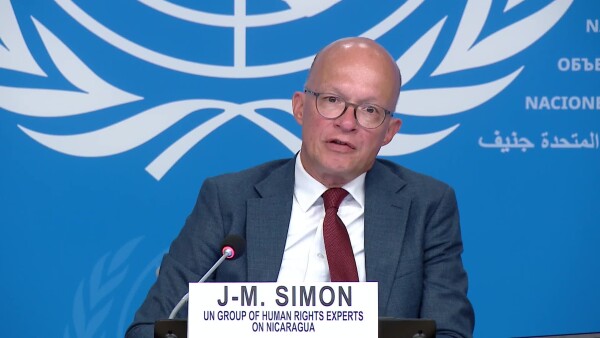
Press conference on the situation of human rights in Nicaragua by the UN Group of Human Rights Experts