

The United Nations Office at Geneva
Multimedia Newsroom
Intense restoration of nature needed to address climate and biodiversity crises, says joint UNEP-FAO report
The triple threat of climate change, loss of nature and pollution requires the world to deliver on its commitment to restore at least one billion degraded hectares of land in the next decade - an area about the size of China states the report “Becoming #GenerationRestoration: Ecosystem restoration for people, nature and climate,” launched today by the UN Environment Programme (UNEP) and the Food and Agriculture Organization of the UN (FAO).
The report is also an urgent call for action to address the climate and biodiversity crises.
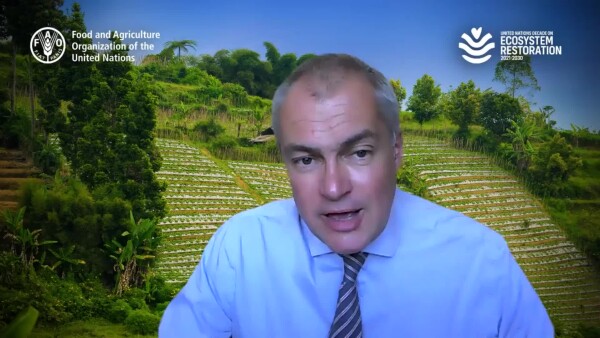
“Ecosystem faces massive threats, forests are being cleared, rivers and lakes polluted, wetland and peatlands drained, coast and oceans are degraded and overfished, just to mention a few examples”, said Dominique Burgeon, Director of the FAO Liaison Office at the UN in Geneva”. He added that “the conservation of healthy ecosystems is essential, but it is not sufficient. We need to go beyond and restore all ecosystem that can be restored”.
Ecosystems requiring urgent restoration include farmlands, forests, grasslands and savannahs, mountains, peatlands, urban areas, freshwaters, and oceans. Communities living across almost two billion of degraded hectares of land include some of the world's poorest and marginalized.
“The ecosystems are degraded in alarming ways and humanity is using about 1,6 times the amount of services that nature can provide sustainably to its survival”, said Bruno Pozzi, Director of the Europe Office, UNEP. “So definitely the conservation and the way we treat healthy ecosystems as of today is not enough. So we need to restore what we lost or what we have degraded and we need to invest”.
FAO and UNEP stressed that countries should consider building their post-COVID-19 recovery in a greener way. According to UNEP’s Bruno Pozzi, “the Covid-19 pandemic has just reminded us that when we treat nature badly, well there are consequences. It is therefore an opportunity with the trillions of dollars and Euros and Swiss Francs that are coming on the market to accelerate a change and to build back differently, greener and restore our ecosystems”.
Tim Christophersen, Head of the Nature for Climate Branch at UNEP’s Ecosystems Division said that “if we do this at the necessary scale, it will have benefits far beyond climate change and biodiversity. It will have benefits for food security, for health, for clean water, for jobs, restoration can benefit all these Sustainable Development Goals (SDG)”.
Actions that reverse degradation are necessary to meet the Paris Agreement target of keeping global temperature rise well below 2 degrees Celsius. Restoration, if combined with stopping further conversion of natural ecosystems, may help avoid 60 percent of expected biodiversity extinctions. Agroforestry alone has the potential to increase food security for 1.3 billion people, while investments in agriculture, mangrove protection and water management will help adapt to climate change, with benefits around four times the original investment.
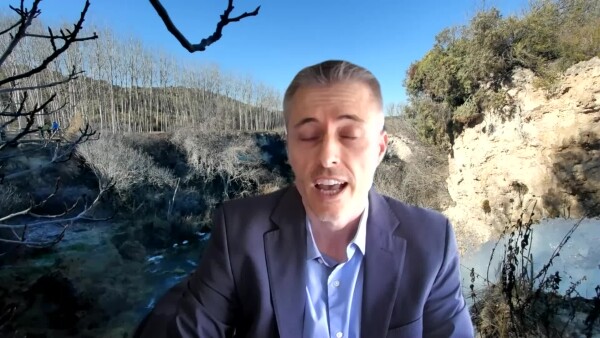
“In the last 30 years we have lost an area of forest of 420 million hectares, that’s the size of two countries, India and Nigeria combined, so we are currently still losing 10 million hectares a year”, said Mette Wilkie, FAO Director of the Forestry Division. “That is two and a half time the size of Switzerland. That has to stop and we can do that. The major reason for deforestation varies across the world but largely it’s because of agricultural expansion”.
UNEP and FAO estimate that global land restoration costs are to be at least USD 200 billion per year by 2030. The report outlines that every 1 USD invested in restoration creates up to USD 30 in economic benefits.
While the need for terrestrial restoration is urgent, the coastal and marine protection is even more important for everyone’s wellbeing.
“Two thirds of ocean ecosystems are already being damaged, degraded or modified. If we consider that this planet is about 70% ocean, then that is an enormous amount”, said Tim Christophersen, Head of UNEP’s Nature for Climate Branch and Ecosystems Division. “Keep in mind that his includes also plastic pollution in the ocean which is now so ubiquitous that it is very hard to avoid plastic even in fish that we catch and eat. One third of commercial marine fish populations are fished unsustainably, so this is a real risk to food security.”
-ends -
Shotlist of the Edited story
- Exterior wide shot, Palais des Nations flag alley, nations’ flags flying, a sunny day.
- Medium shot, UNTV studio with technicians
- SOUNDBITE (English) —Dominique Burgeon, Director of the FAO Liaison Office at UN in Geneva: “Ecosystem faces massive threats, forests are being cleared, rivers and lakes polluted, wetland and peatlands drained, coast and oceans are degraded and overfished, just to mention a few examples. Conservation of healthy ecosystems is essential, but it is not sufficient. We need to go beyond and restore all ecosystem that can be restored”.
- Close up, hands on mixer
- SOUNDBITE (English) —Bruno Pozzi, Director of the Europe Office, UNEP: “The ecosystems are degraded in alarming ways and humanity is using about 1,6 times the amount of services that nature can provide sustainably to its survival. So definitely the conservation and the way we treat healthy ecosystems as of today is not enough. So we need to restore what we lost or what we have degraded and we need to invest”.
- Close up, equalizer of sound machine
- SOUNDBITE (English) —Bruno Pozzi, Director of the Europe Office, UNEP: “Covid-19 pandemic has just reminded us that when we treat nature badly, well there are consequences. It is therefore an opportunity with the trillions of dollars and Euros and Swiss Francs that are coming on the market to accelerate a change and to build back differently, greener and restore our ecosystems”.
- Medium shot, monitor with Tim Christophersen speaking
- SOUNDBITE (English) —Tim Christophersen, Head, Nature for Climate Branch, Ecosystems Division, UNEP: “If we do this at the necessary scale, it will have benefits far beyond climate change and biodiversity. It will have benefits for food security, for health, for clean water, for jobs, restoration can benefit all these Sustainable Development Goals (SDG)”.
- Wide shot, UNTV studio in Geneva with technician
- SOUNDBITE (English) —Mette Wilkie, Director of the Forestry Division, FAO: “In the last 30 years we have lost an area of forest of 420 million hectares, that’s the size of two countries, India and Nigeria combined, so we are currently still losing 10 million hectares a year. That is two and a half time the size of Switzerland. That has to stop and we can do that. The major reason for deforestation varies across the world but largely it’s because of agricultural expansion”.
- Close up, recording machine
- SOUNDBITE (English) —Tim Christophersen, Head, Nature for Climate Branch, Ecosystems Division, UNEP: “Two thirds of ocean ecosystems being already damaged, degraded or modified. If we consider that this planet is about 70% ocean, then that is an enormous amount. Keep in mind that his includes also plastic pollution in the ocean which is now so ubiquitous that it is very hard to avoid plastic even in fish that we catch and eat. One third of commercial marine fish populations are fished unsustainably, so this is a real risk to food security.”
- Medium shot, UNTV studio in Geneva with technician
- Medium shot, screen with Mette Wilkie speaking
- Medium shot, screen with Mette Wilkie speaking
Similar Stories

1
1
1
Edited News | UNICEF , IFRC
Six weeks after Nepal’s deadly flooding disaster, communities are still struggling to rebuild their lives, but they will need sustained help as global warming increases the risk of another Himalayan catastrophe, the UN Children’s Fund (UNICEF) said on Friday.

1
1
1
Statements , Press Conferences | OHCHR

1
1
1
Press Conferences | UNHCR , UNICEF , IFRC , OHCHR , UN WOMEN , IOM , OCHA , WHO
UNHCR – ExCom Meeting, UNICEF – Nepal Recovery, IFRC – Flash Floods, WHO – Mental Health, IOM – South Sudan Floods, OCHA – DRC Humanitarian aid, UNHCR – Sahel Displacement, UNICEF – Yemen Update, IOM – Gaza Shelter, UN Women – Gaza Women, OHCHR – Arrests and detentions of Syrians by Israeli force

2
1
2
Press Conferences | UNCTAD
Presentation of the Trade and Developement Report 2026
Embargoed until 9 October 2026 at 11 a.m. (Geneva Time)
UNCTAD: UNCTAD’s flagship report finds that governments increasingly use industrial, trade, financial and technology policies to pursue economic and national security objectives. Market access and the ability to move into higher-value activities now depend more heavily on technology, finance and geopolitics.

1
1
1
Press Conferences | UPU
Release of the State of the Postal Sector Report 2026

1
1
1
Edited News | WHO
In suspected Russia plague death, testing and monitoring underway – WHO
The death of a lab worker in Russia’s Siberia region has sparked concerns about plague being the cause, the UN World Health Organization (WHO) said on Tuesday, adding that it was following the situation closely.
1
1
1
Press Conferences | IOM , ITU , UNECE , UNICEF , WHO , WMO
UNICEF: Ebola, DRC - children orphans or separating them from parents and caregivers; IOM: Humanitarian needs in Djibouti amid arrivals from Yemen and increased migrant movements; WHO: Darfur, scale of health needs far exceeds available resources; WMO co-sponsored Global Heat Forum, Bangkok, monthly Global Seasonal Climate Update; UNECE: UN Forum of Mayors; ITU Plenipotentiary Conference 2026; WHO: child and adolescent obesity guidelines and new global roadmap to tackle pregnancy hypertension, a leading cause of maternal mortality

1
1
Edited News | OHCHR , UNOG
UN Human Rights Chief Volker Türk on Friday provided and oral update to the 63rd session of the Human rights Council on Ukraine.

1
1
1
Edited News | OHCHR , UNOG
UN Human Rights Chief Volker Türk on Friday provided and oral update to the 63rd session of the Human rights Council on the human rights situation in Haiti.

1
1
1
Edited News | WHO
Repeated delays in bringing lifesaving medicines, prosthetics and more from Israel into Gaza risk having devastating consequences on Palestinians who urgently need them in the wartorn enclave, the UN World Health Organization (WHO) said on Friday. “A truck full of non-priority supplies or the right supplies arriving too late, doesn't save lives. That's the question that actually matters," said Dr Reinhilde Van De Weerdt, WHO Representative in the OPT.
1
1
1
Press Conferences | OCHA , UN WOMEN , UNHCR , WFP , WHO , WTO , UNEP
OCHA – $160M CERF allocation to 12 underfunded crises; UNHCR – 5.8M refugee children remain out of school amid funding cuts; UN Women – Middle East escalation and food security among women/girls; WHO – Gaza supplies and overall situation; WFP – Yemen food insecurity and impact on global hunger ; UNEP - First International Conference of the Global Framework on Chemicals in Geneva | 16-20 November 2026

1
1
1
Edited News | WHO
DRC: Early access to care and oxygen decisive for Ebola patients’ survival – WHO
In the Democratic Republic of the Congo (DRC), health workers fighting the country’s largest-ever Ebola outbreak are struggling to overcome critical challenges to patient care, the UN World Health Organization (WHO) warned on Tuesday.