

The United Nations Office at Geneva
Multimedia Newsroom
Press Conferences | UNHCR , OCHA , WHO , WFP , UNCTAD , ILO , WEF , IOM , ITU
UNOG Bi-weekly press briefing 18 May 2021
Escalation in the West Bank, the Gaza Strip, and Israel
Jens Laerke, for the Office for the Coordination of Humanitarian Affairs (OCHA), stated that OCHA welcomed the opening of the Kerem Shalom crossing for critical humanitarian supplies and staff that had just been announced. Meanwhile, reports continued to arrive on the significant displacement of people within Gaza; UNRWA reported that as many as 47,000 citizens were sheltering in its schools. Since the start of the escalation, 132 buildings had been destroyed, according to the local authorities. Humanitarian partners had supported 500 families with non-food items, but needs were much larger. Six hospitals and primary health centers had been damaged. The need for food and cash support was also continuing, stressed Mr. Laerke. The North Gaza Seawater Desalination Plant was still not operational, which undermined access to drinking water for about 250,000 people. In total, an estimated 800,000 people were lacking regular access to safe water in Gaza.
There had been 200 fatalities in the Gaza Strip, 20 fatalities in the West Bank, along with a reported 1,300 injuries; and in Israel, ten people had been killed and hundreds injured by rockets from Gaza, said Mr. Laerke.
More information is available here.
Margaret Harris, for the World Health Organization (WHO), said that 46 percent of essential drugs and 33 percent of essential supplies were worryingly low – standing at less than one-month supply. The fact that the desalination plant was not working also adversely affected the public health measures. Crowding in UNRWA schools at the time of the COVID-19 pandemic was worrying. WHO had locally procured USD 160,000 of critical medicine; an additional USD 500,000 of essential supplies were on their way. WHO had so far released USD 1.4 million to support the immediate health response. WHO was appealing for the violence to end and to protect civilians and civilian targets, such as hospitals, in line with the international humanitarian law. Access to essential health care ought to be facilitated. More information is available here.
Responding to questions, Dr. Harris said that a total of 91 attacks against health care had been recorded, out of which 21 in the Gaza Strip. Mr. Laerke informed that the latest figures of the internally displaced persons in Gaza stood at over 52,000. Schools were civilian infrastructure, stressed Mr. Laerke, and as such they were protected by the international humanitarian law.
Tomson Phiri, for the World Food Programme (WFP), said that the WFP had started providing emergency assistance for more than 51,000 people in north Gaza in response to rising humanitarian needs among families affected by the recent escalation of conflict in the impoverished strip. WFP urgently required USD 14 million to be able to provide emergency assistance over the coming three months for 160,000 affected people in Gaza and 60,000 people in the West Bank. More information is available here.
Mozambicans fleeing violence
Boris Cheshirkov, for the United Nations Refugee Agency (UNHCR), said that UNHCR was concerned by ongoing reports of people fleeing Mozambique’s volatile Cabo Delgado province being forcibly returned after crossing into Tanzania. Several thousand Mozambicans had been reportedly pushed back from Tanzania into northern Mozambique since last year, which included reports of over 1,500 returned this month. Most of those Mozambicans were hoping to find refuge in Tanzania after fleeing deadly attacks by non-state armed groups in Palma in March. People had told UNHCR they had trekked for days to the Rovuma River, crossing it by boat to reach Tanzania, from where they had been returned by the authorities. Many were women and young children. UNHCR appealed to both governments to respect the principle of family unity and to spare no efforts to ensure that separated family members are traced and reunited as soon as possible.
In response to questions, Mr. Cheshirkov said that UNHCR stood ready to support the Tanzanian authorities in accepting the asylum seekers. UNHCR’s main call was that people in need continue to be assisted and protected.
UNHCR briefing note is here.
Migrants arriving to Ceuta
In a response to a journalist’s question, Boris Cheshirkov, for the United Nations Refugee Agency (UNHCR), said that UNCHR had been following information about some 5,000 people who had reached the Spanish city of Ceuta from Morocco. UNHCR was in a regular contact with the Spanish authorities and those engaged from the protection perspective, so that asylum procedures were respected.
Food security in Cox’s Bazaar
Tomson Phiri, for the World Food Programme (WFP), stated that almost five years after the 2017 influx of Rohingya refugees, food security remained a priority in Cox’s Bazaar. The refugees were more vulnerable than at any point since 2017, largely due to the impact of COVID-19 on those fragile communities. The vulnerability of the host communities had also increased, with many jobs drying out. The World Food Programme had provided food baskets to 860,000 people, from which they could choose what was best for their families. Fresh food corners would be made available as well. WFP injected USD 10 million into the local community every month; all fresh foodstuffs were locally produced and procured. Mr. Phiri warned that the food precarity in Cox’s Bazaar would dramatically increase if sustained funding were to be halted.
Finally, he warned that Cox’s Bazar was extremely disaster-prone – and refugees were immensely exposed to the elements. Every 12 months in Cox’s Bazar saw one monsoon and two cyclone seasons. In 2021 the WFP was continuing our disaster risk reduction activities, including rehabilitating cyclone shelters, improving drainage systems, stabilizing slopes in the camps, maintaining existing forests and planting new ones, and helping communities diversify their livelihood activities so they did not need to rely only on agriculture for income.
WFP briefing note is here.
Migrant inclusion in global COVID-19 vaccination campaigns
Paul Dillon, for the International Organization for Migration (IOM), said that Government policies, operational realities and administrative requirements like ID cards and residency permits might be impeding migrant access to COVID-19 vaccinations in 53 of the more than 160 countries where IOM had collected information on access. There was often a disconnect between commitments on paper and what was happening in practice when it came to vaccinating migrants. Some 47 nations had taken steps to allow access to vaccines to migrants, whereas at least 53 States had administrative and logistical hurdles in place that would make vaccinating migrants difficult or impossible. Having to present national identification documents before receiving a vaccine shot was one of such obstacles. There was a general vaccine hesitancy due to the linguistical and career barriers and insufficient communication between host and migrant communities. IOM applauded those Governments choosing the path of inclusion and solidarity for their vaccine rollouts.
More information is available here.
Vaccine equity
Tommaso Della Longa, for the International Federation of Red Cross and Red Crescent Societies (IFRC), informed that a statement would be issued today by the International Red Cross and Red Crescent Movement to call on states and pharmaceutical companies to move much faster toward a solution to the glaring inequity in access to COVID-19 vaccines around the world. Ways had to be found to increase COVID-19 vaccine production and distribution. The extraordinary times of a global pandemic demanded extraordinary measures from the international community. The Movement encouraged States to consider all possible measures to boost production, distribution, and equitable access to COVID-19 vaccines both between countries and within countries, to leave no one behind.
As of this month, the poorest 50 countries in the world accounted for two percent of the doses administered globally, while the richest 50 countries were being vaccinated at a rate that was 27 times higher than the rate of the 50 poorest countries. IFRC and ICRC spokespeople and health experts were available for interviews, informed Mr. Della Longa.
Full statement is available here.
World Health Assembly
Fadéla Chaib, for the World Health Organization (WHO), stated that the seventy-fourth session of the World Health Assembly would start on 24 May and run until 1 June. On 2 June, the Executive Board would hold a meeting, as per usual practice. Ms. Chaib stressed that there were 72 agenda items to be discussed during the nine-day long virtual meeting. Working hours were from 10 am to 1 pm, and from 2 pm to 5 pm, including Saturdays. On 24 May, a high-level segment of the WHA would take place, which would include the election of a new president of the Assembly. Several heads of state and government were also expected to address the Assembly that day, along with Dr. Tedros. Live webcast would be available on http://webtv.un.org/
A press release outlining key messages would be shared on 19 May. On 19 May at 9 a.m., there would also be a pre-WHA briefing with Dr Peter Singer, Special Advisor at the Office of the WHO Director-General, and Steve Solomon, WHO Principal Legal Officer.
International Labour Conference
Rosalind Yarde, for the International Labour Organization (ILO), informed about the opening and schedule of the virtual International Labour Conference (ILC), also known as the world’s parliament of labour, attended by representatives of workers, employers, and governments of 187 Member States. On 20 May, election of ILC officers would take place. The formal opening would take place on 7 June, when the plenary session would start in the afternoon. The discussions would focus on the ILO’s response to COVID-19 and labour standards. On 17-18 June, the World of Work Summit would be held, and would be attended by heads of state and government. A report on domestic workers would also be launched, among other documents.
More information on the ILC is available here.
Geneva announcements
Catherine Huissoud, for the United Nations Conference on Trade and Development (UNCTAD), informed that UNCTAD would publish its next Global Trade Update on 19 May at 7 a.m. Geneva time. A media alert with a direct link to the document would be sent out today. Data showed that global trade was recovering faster than in the last two recessions, and trade in goods was doing better than trade in services. Economists were available for interviews, said Ms. Huissoud.
Rosalind Yarde, for the International Labour Organization (ILO), announced the launch of the World Employment and Social Outlook Report on 27 May, which looked at the effects of the pandemic on the global labour market and the prospects for a recovery. An embargoed press conference to present the report would be held on 27 May, 11 a.m., and the embargo would be lifted at 1 p.m.. Interviews were possible with the ILO Director-General Guy Ryder.
Alessandra Vellucci, for the UN Information Service (UNIS), informed that, while COVID-19 had taken over three million lives and millions were being pushed into extreme poverty globally, United Nations teams were also responding in emergency mode to the huge social and economic impacts of the pandemic. In 2020 alone, nearly 250 million people had received essential services backed by UN teams—nearly half of them in Least Developed Countries, 42 per cent of them in Landlocked Developing Countries and 2 million in Small Island Developing States. These were some key findings of two new UN reports to be launched by Secretary-General António Guterres and Deputy Secretary-General Amina J. Mohammed today, on the occasion of the three-day operational activities for development segment of the UN Economic and Social Council, which would be live webcast at http://webtv.un.org/. More information is available here.
Ms. Vellucci also informed that UN Geneva’s Annual Report 2020 was available now. The report highlighted the work of UN Geneva in a year in which the world had faced many significant challenges. UN Geneva, stressed Ms. Vellucci, had undertaken extraordinary efforts to facilitate multilateralism during these difficult and uncertain times. Thanks to the resilience, creativity and dedication of UN Geneva staff and the wider UN family in Geneva, the UN office had rapidly adapted to new technologies and ways of working, ensuring the continuation of its mandate to the Member States and of its support to international cooperation, despite both the pandemic and financial constraints.
Ms. Vellucci informed that today at 12:30 pm, there would be a virtual press conference to launch the 2021 Joint Response Plan for Rohingya Humanitarian Crisis. Speaker would be Shahriar Alam, Bangladesh State Minister for Foreign Affairs; Filippo Grandi, United Nations High Commissioner for Refugees; and António Vitorino, IOM Director General.
The Conference on Disarmament was holding this morning from 10 a.m. to 12 noon a public plenary meeting, still under the Presidency of Bulgaria. The plenary would have a substantive focus on agenda item 2 (Prevention of nuclear war, including all related matters).
The Committee on the Rights of the Child, which had opened its eighty-seventh session (17 May–4 June, online), would begin at 2 pm on 19 May the review of the report of Luxembourg. From 26 May, the Committee would review the report of Tunisia.
Similar Stories
1
1
1
Press Conferences | UPU
Release of the State of the Postal Sector Report 2026
1
1
1
Press Conferences | IOM , ITU , UNECE , UNICEF , WHO , WMO
UNICEF: Ebola, DRC - children orphans or separating them from parents and caregivers; IOM: Humanitarian needs in Djibouti amid arrivals from Yemen and increased migrant movements; WHO: Darfur, scale of health needs far exceeds available resources; WMO co-sponsored Global Heat Forum, Bangkok, monthly Global Seasonal Climate Update; UNECE: UN Forum of Mayors; ITU Plenipotentiary Conference 2026; WHO: child and adolescent obesity guidelines and new global roadmap to tackle pregnancy hypertension, a leading cause of maternal mortality
1
1
1
Press Conferences | OCHA , UN WOMEN , UNHCR , WFP , WHO , WTO , UNEP
OCHA – $160M CERF allocation to 12 underfunded crises; UNHCR – 5.8M refugee children remain out of school amid funding cuts; UN Women – Middle East escalation and food security among women/girls; WHO – Gaza supplies and overall situation; WFP – Yemen food insecurity and impact on global hunger ; UNEP - First International Conference of the Global Framework on Chemicals in Geneva | 16-20 November 2026
1
1
1
Press Conferences | UNHCR , WHO
Yemen's health system nears collapse amid conflict, causing rising casualties and medicine shortages.
1
1
1
Press Conferences | HRC
Update by the Expert Mechanism to Advance Racial Justice and Equality in Law Enforcement
1
1
1
Press Conferences | WIPO , WHO , UNICEF , UNHCR , IOM , WFP , FAO
WIPO Global Innovation Index 2026 launch and press conference, WHO Composition of influenza vaccines for the 2027 Southern Hemisphere flu season, UNICEF Yemen hunger and malnutrition; UNHCR Sudan displacement into Chad; IOM Ebola and population movements in DRC; WFP emergency food assistance in Nepal; and FAO food loss and waste.
2
1
2
Press Conferences | UNCTAD
Gaza reconstruction needs reach $71.5 billion as Palestinian economy and public finances face severe strain. Latest UNCTAD report documents the loss of decades of development gains, economic collapse in Gaza and tightening economic constraints in the West Bank.
The report identifies three immediate priorities: transferring withheld Palestinian revenues, safeguarding the banking system and aligning reconstruction support with the documented scale of damage and economic losses.
1
1
1
Press Conferences | HRC
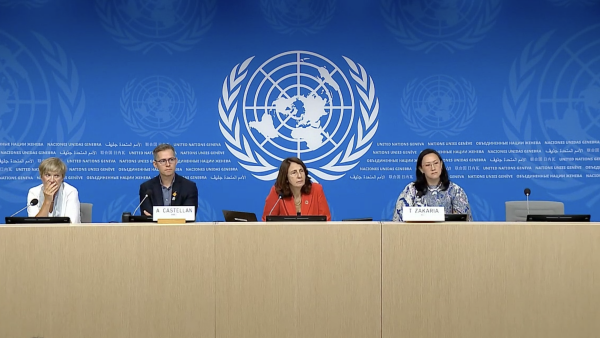
Press conference on the situation of human rights in Nicaragua by the UN Group of Human Rights Experts
1
1
1
Press Conferences | ITU , UNHCR , WHO , WMO
YEMEN - UNHCR: Escalating conflict in Yemen could fuel more displacement, refugee movement
CLIMATE - WHO / WMO: Health and Climate impact of El Niño
1
1
1
Press Conferences | HRC , OHCHR
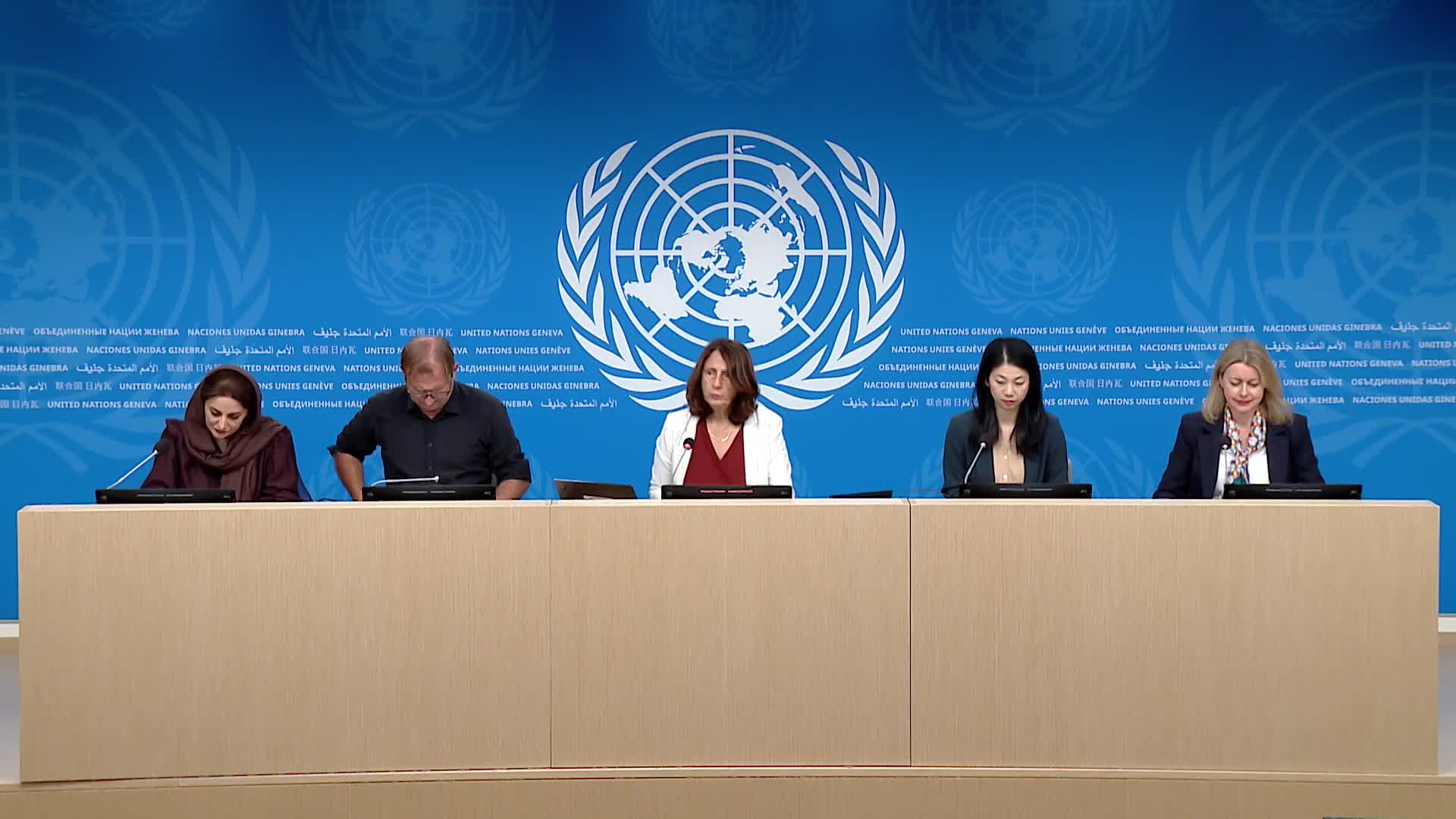
Mariana Katzarova discusses human rights in Russia as a UN Special Rapporteur.
1
1
1
Press Conferences | IOM , OHCHR , UN WOMEN , UNFPA , UNHCR , UNOPS , WHO
UN Geneva briefing: Yemen crisis worsens, urgent aid needed across multiple sectors.
1
1
1
Press Conferences | HRC
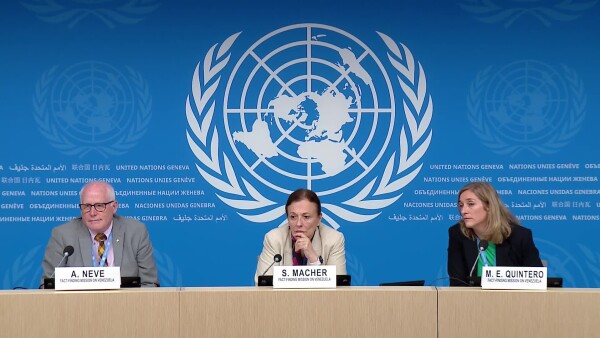
Press conference on the latest report of the Independent International Fact-Finding Mission on the Bolivarian Republic of Venezuela to the UN Human Rights Council