

The United Nations Office at Geneva
Multimedia Newsroom
UN Secretary-General
Alessandra Vellucci, for the United Nations Information Service in Geneva, said that the Secretary-General had returned to Madrid for the 2019 United Nations Climate Change Conference and would remain there until its conclusion. He would then travel to Geneva, where he would speak at the opening of the first Global Refugee Forum, which was being co-hosted by the United Nations Refugee Agency and the Government of Switzerland. The Secretary-General and the United Nations High Commissioner for Refugees, Filippo Grandi, would hold a press conference on Tuesday, 17 December 2019 at 2 p.m. in Room III.
Update on Ebola outbreak situation in DRC
Dr. Michel Yao, Ebola Incident Manager for the World Health Organization (WHO) in the Democratic Republic of the Congo, said that the outbreak was one of the most complex that he had encountered in his 20 years of experience in responding to emergencies, not least because of the ongoing conflict involving several armed groups and the resultant security challenges. Security incidents that prevented WHO staff from carrying out surveillance, active case finding and other activities undermined progress made in containing the outbreak. The previous week, 27 new cases had been identified. WHO was working to maintain its presence on the ground while ensuring the safety of its staff. Attacks such as the one on an Ebola treatment centre in Biakato, Ituri province on 27 November 2019, in which three people had lost their lives, had a negative impact on morale. In total, eight health workers, including one WHO staff member, had been killed since January 2019. WHO wished to appeal to all key stakeholders to ensure that its staff had safe and unrestricted access to populations affected by the outbreak.
In response to questions from a journalist about the vaccination campaign launched jointly by Rwanda and the Democratic Republic of Congo, Dr. Yao said that research was ongoing to develop vaccines to control the outbreak. As part of that process, a second vaccine had recently been introduced to complement the one being used in areas that had active Ebola transmission. The second vaccine, which was given in two doses, 56 days apart, was intended to extend protection against the Ebola virus among at-risk populations in areas that did not have active Ebola transmission. The first dose conferred a degree of immunity, and the second one served as a booster. Given the high mobility of populations in border areas, awareness-raising was crucial to ensuring that as many people as possible received both doses.
Asked for details of plans to use airlifts to reach affected populations in Biakato, Dr. Yao said that arrangements were in place for airlifts to begin that day for a period of three weeks. The helicopter that would be used could transport around 20 people. The serious attack on an Ebola treatment centre in Biakato had to be investigated, and had made it necessary to adopt security measures, but WHO had considered that it would be risky to stop providing a response on the ground in Biakato. Through the use of airlifts, teams could be flown in from Beni and return the same day.
Invited to comment on the role played by the United Nations Organization Stabilization Mission in the Democratic Republic of the Congo and on its strained relationship with local populations, Dr. Yao said that the United Nations as a whole was endeavouring to control the outbreak. It was important to raise awareness of those efforts and ensure better coordination.
Responding to further questions, Dr. Yao said that WHO had resumed its interactions with the local community in Biakato following the attack on the treatment centre. It had so far been unable to identify the leader of the armed group active there. Problems with access were not always due to resistance from the community, and in fact, local communities themselves sometimes appealed for protection from armed groups.
Asked how much progress WHO had actually made in controlling the outbreak, Dr. Yao said that, of the 29 health zones in the Democratic Republic of Congo, only four were active, with the others having been cleared. Until the previous week, when 27 new cases had been identified, the number of new cases each week had fallen below 10. The four active health zones were largely rural.
Asked if it was unrealistic to hope that the outbreak would be eradicated by the end of 2019, Dr. Yao said that, bearing in mind the incubation period for the virus, even if the last transmission was that day, the outbreak could not be considered to have ended until late January at the earliest.
Responding to questions about a recent case of possible reinfection, Dr. Yao said that an investigation was still under way to determine whether the person concerned, who had died, had been infected by the same virus on both occasions. The person may simply have relapsed, as the virus could persist in various bodily fluids, but it was too early to draw any conclusions.
Afghan displacement
Babar Baloch, for the United Nations Refugee Agency (UNHCR), read the following statement:
“UNHCR, the UN Refugee Agency, is appealing for intensified support for displaced Afghans and their hosting communities ahead of the first ever Global Refugee Forum in Geneva next week.
As we enter the fifth decade of Afghan displacement, some 4.6 million Afghans remain uprooted globally – including some 2.7 million registered as refugees, and another 2 million displaced inside Afghanistan. Afghans represent the longest displaced and the longest dispossessed population under UNHCR’s mandate worldwide.
An overwhelming majority of some 90 per cent of Afghan refugees remain in the Islamic Republics of Pakistan and Iran. Afghans are also the single largest group of asylum seekers arriving in Europe, owing to a sharp deterioration in security in Afghanistan, and increasing financial pressure on hosting nations.
In both Iran and Pakistan, Afghan refugees access education and national health-care systems. The results of this inclusive approach have been remarkable and world-leading. In Iran, the literacy of Afghan children has risen more than tenfold since 1979. Official figures estimate that some 480,000 Afghan refugees and undocumented children are currently enrolled in school for 2019–2020, indicating a continuing increase from previous years.
In Pakistan, the Government and UNHCR are working together under the Refugee Affected and Hosting Areas (RAHA) initiative to boost support to host communities and alleviate the burden placed on infrastructure and resources. Since 2009, these programmes have benefited more than 12.4 million Pakistanis and Afghan refugees in total.
Inside Afghanistan, the Government is partnering with UNHCR and others to support returnees and host communities with return and reintegration projects, focusing on livelihoods, education, health-care support and energy. This year alone, approximately 350,000 Afghans have been helped by sustainable development initiatives promoting access to key infrastructure including energy, education and affordable housing.
Socioeconomic difficulties remain a serious obstacle to humanitarian efforts in all three countries. In Iran, the economic downturn has given rise to soaring health-care costs, impacting Iranians and Afghans alike. Refugees have faced a corresponding 65 per cent increase in public health insurance premiums in recent months. Despite huge economic challenges, the Government remains committed to sustaining assistance and protection for Afghan refugees. But this cannot be managed alone and will require greater efforts by the international community at the upcoming Global Refugee Forum and beyond.
The overwhelming majority of Afghans both within the country and in exile are youth. In Pakistan and Iran, approximately three quarters are under the age of 25. These young refugees are the future of Afghanistan and are critical to shaping their communities — but they will require more support to do so.”
In response to questions from a journalist about the funding available to support displaced Afghans and their host communities, Mr. Baloch said that, for 2019, UNHCR had requested around USD 310 million, but had received only 41 per cent of that. It had received 49 per cent of the USD 100 million requested for Iran, 40 per cent of the USD 100 million requested for Pakistan and 32 per cent of the USD 121 million requested for Afghanistan. The security situation in Afghanistan had deteriorated in recent months and years, and much support was still desperately needed.
Responding to further questions, Mr. Baloch said that, since the fall of the Taliban regime in 2002, more than five million Afghan refugees had returned to Afghanistan. Recently, the rate at which refugees were returning had slowed. Of the roughly 70,000 migrant arrivals in the Eastern Mediterranean so far this year, 37.4 per cent had been Afghans, which highlighted the need to protect Afghan refugees both in Europe and in countries neighbouring Afghanistan. Some 1 million registered Afghans were living in Iran, where the economic challenges faced by the country were affecting refugees and their host communities. A lack of funding was threatening efforts to support refugees in the areas of health and education, in particular. UNCHR currently provided support to 10 per cent of the Afghan refugee population in Iran through a health insurance scheme, and was cooperating with the Government of Iran to build schools, with one 12-classroom building costing in the region of USD 650,000. Many Afghan refugees had been born and raised in their country of exile. Some of the Afghan migrants who had arrived in the Eastern Mediterranean this year had travelled from Afghanistan, but others had not. He did not have a precise breakdown.
India’s Citizenship Amendment Law
Jeremy Laurence, for the Office of the United Nations High Commissioner for Human Rights (OHCHR), read the following statement:
“We are concerned that India’s new Citizenship (Amendment) Act 2019 is fundamentally discriminatory in nature.
The amended legislation seeks to expedite citizenship for religious minorities — naming specifically only Hindus, Sikhs, Buddhists, Jains, Parsis and Christians — fleeing persecution in Afghanistan, Bangladesh and Pakistan, who have been resident before 2014. But it does not extend the same protection to Muslims, including minority sects.
The amended law would appear to undermine the commitment to equality before the law enshrined in India’s Constitution and India’s obligations under the International Covenant on Civil and Political Rights and the Convention for the Elimination of Racial Discrimination, to which India is a State party, which prohibit discrimination based on racial, ethnic or religious grounds. Although India’s broader naturalization laws remain in place, these amendments will have a discriminatory effect on people’s access to nationality.
All migrants, regardless of their migration status, are entitled to respect, protection and fulfilment of their human rights. Just 12 months ago, India endorsed the Global Compact for Safe, Regular and Orderly Migration, which commits States to respond to the needs of migrants in situations of vulnerability, avoiding arbitrary detention and collective expulsions and ensuring that all migration governance measures are human rights-based.
While the goal of protecting persecuted groups is welcome, this should be done through a robust national asylum system that is premised on the principle of equality and non-discrimination, and which applies to all people in need of protection from persecution and other human rights violations, with no distinction as to race, religion, national origin or other prohibited grounds.
We understand the new law will be reviewed by the Supreme Court of India and hope it will consider carefully the compatibility of the law with India’s international human rights obligations.
In the meantime, we are concerned at reports that two people have died and many, including police officers, have been injured in the Indian states of Assam and Tripura as people protest against the Act. We call on the authorities to respect the right to peaceful assembly, and to abide by international norms and standards on the use of force when responding to protests. All sides should refrain from resorting to violence.”
In response to questions from journalists, Mr. Laurence said that OHCHR had been in contact with the Indian authorities to discuss its concerns. He was not in a position to provide additional information on those discussions or comment about a possible broader pattern of discrimination against Muslims by the Indian Government.
Similar Stories
1
1
1
Press Conferences | IOM , UNDRR
UN stresses importance of household preparedness for disaster risk reduction.
1
1
1
Statements , Press Conferences | OHCHR
1
1
1
Press Conferences | UNHCR , UNICEF , IFRC , OHCHR , UN WOMEN , IOM , OCHA , WHO
UNHCR – ExCom Meeting, UNICEF – Nepal Recovery, IFRC – Flash Floods, WHO – Mental Health, IOM – South Sudan Floods, OCHA – DRC Humanitarian aid, UNHCR – Sahel Displacement, UNICEF – Yemen Update, IOM – Gaza Shelter, UN Women – Gaza Women, OHCHR – Arrests and detentions of Syrians by Israeli force
2
1
2
Press Conferences | UNCTAD
Presentation of the Trade and Developement Report 2026
Embargoed until 9 October 2026 at 11 a.m. (Geneva Time)
UNCTAD: UNCTAD’s flagship report finds that governments increasingly use industrial, trade, financial and technology policies to pursue economic and national security objectives. Market access and the ability to move into higher-value activities now depend more heavily on technology, finance and geopolitics.
1
1
1
Press Conferences | UPU
Release of the State of the Postal Sector Report 2026
1
1
1
Press Conferences | IOM , ITU , UNECE , UNICEF , WHO , WMO
UNICEF: Ebola, DRC - children orphans or separating them from parents and caregivers; IOM: Humanitarian needs in Djibouti amid arrivals from Yemen and increased migrant movements; WHO: Darfur, scale of health needs far exceeds available resources; WMO co-sponsored Global Heat Forum, Bangkok, monthly Global Seasonal Climate Update; UNECE: UN Forum of Mayors; ITU Plenipotentiary Conference 2026; WHO: child and adolescent obesity guidelines and new global roadmap to tackle pregnancy hypertension, a leading cause of maternal mortality
1
1
1
Press Conferences | OCHA , UN WOMEN , UNHCR , WFP , WHO , WTO , UNEP
OCHA – $160M CERF allocation to 12 underfunded crises; UNHCR – 5.8M refugee children remain out of school amid funding cuts; UN Women – Middle East escalation and food security among women/girls; WHO – Gaza supplies and overall situation; WFP – Yemen food insecurity and impact on global hunger ; UNEP - First International Conference of the Global Framework on Chemicals in Geneva | 16-20 November 2026
1
1
1
Press Conferences | UNHCR , WHO
Yemen's health system nears collapse amid conflict, causing rising casualties and medicine shortages.
1
1
1
Press Conferences | HRC
Update by the Expert Mechanism to Advance Racial Justice and Equality in Law Enforcement
1
1
1
Press Conferences | WIPO , WHO , UNICEF , UNHCR , IOM , WFP , FAO
WIPO Global Innovation Index 2026 launch and press conference, WHO Composition of influenza vaccines for the 2027 Southern Hemisphere flu season, UNICEF Yemen hunger and malnutrition; UNHCR Sudan displacement into Chad; IOM Ebola and population movements in DRC; WFP emergency food assistance in Nepal; and FAO food loss and waste.
2
1
2
Press Conferences | UNCTAD
Gaza reconstruction needs reach $71.5 billion as Palestinian economy and public finances face severe strain. Latest UNCTAD report documents the loss of decades of development gains, economic collapse in Gaza and tightening economic constraints in the West Bank.
The report identifies three immediate priorities: transferring withheld Palestinian revenues, safeguarding the banking system and aligning reconstruction support with the documented scale of damage and economic losses.
1
1
1
Press Conferences | HRC
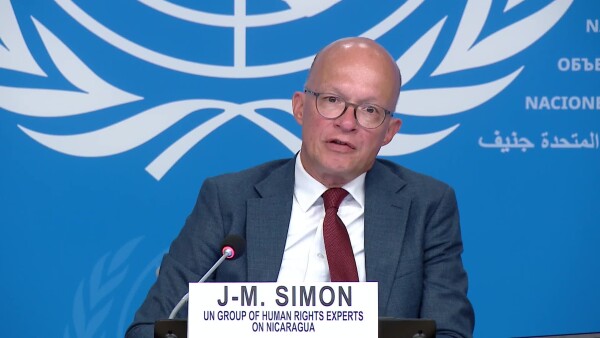
Press conference on the situation of human rights in Nicaragua by the UN Group of Human Rights Experts