

The United Nations Office at Geneva
Multimedia Newsroom
Press Conferences | UNICEF , UNHCR , OCHA , WHO , UNOG , UNITED NATIONS , WFP , IOM
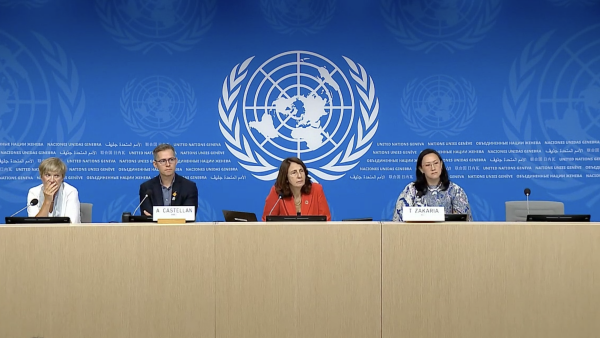
UNOG Bi-weekly press briefing 20 April 2021
NGO’s open letter to world leaders to prevent famine in 2021
Tomson Phiri, for the World Food Programme (WFP), said that more than 260 non- governmental organizations – under the auspices of the International Council of Voluntary Agencies – had signed an open letter calling world leaders to respond urgently to the call by the WFP and FAO to provide 5.5 billion dollars to prevent famine in 2021. The participating organizations were specifically asking governments to forego one day of military spending to fight famine.
Ambassador Ahmed Shehu, Regional Coordinator for the Civil Society Network of Lake Chad Basin – with a mandate covering North-Eastern Nigeria, Cameroon, Niger, and Chad – described the situation in North-Eastern Nigeria, where an eleven-year conflict had cut people off from their main means of livelihoods – farming and fishing. Answering questions from journalists, Mr. Shehu said that considering the money injected fighting the insurgency, sacrificing this amount even for one day would go a long way toward providing support against famine.
World Food Programme starts activities in Venezuela
Tomson Phiri, for the World Food Programme, said that after reaching an agreement with the Government of Venezuela, the WFP would start a humanitarian operation in Venezuela that would focus on a school meal programme in areas that were most food insecure. WFP aimed to gradually provide daily meals to 1.5 million students by the end of the 2022-2023 school year. WFP would also invest in the rehabilitation of school canteens and training school staff on food safety practices as a means of reaching the wider community.
WFP’s school meal programme was independent and separate from the national social protection programmes. In Venezuela and across the world, the WFP’s operations followed the humanitarian principles of humanity, neutrality, impartiality, and operational independence.
In coordination with the government, WFP would work closely with the United Nations agencies and other partners in Venezuela responding to food security needs. The signing allowed WFP to set up again a presence in Venezuela and start its operation, which would focus on children and schools.
Answering questions, Mr. Phiri said that 2,3 million people were exposed to severe food insecurity in Venezuela. The Programme would aim first to provide nutritious meals to as many of the some 8 million children aged less than 14 as possible. The WFP had already worked in Venezuela in the past.
Situation of children in Tigray, Ethiopia
James Elder, for the United Nations Children's Fund (UNICEF), said the crisis in the Tigray [region of Ethiopia] had entered its fifth month with no clear end in sight. UNICEF had been concerned from the onset about the harm this crisis would cause to children, and these fears were now being realized. “What is emerging is a disturbing picture of severe and ongoing child rights violations”, Mr. Elder said, “and I saw extensive destruction to the systems and essential services on which children rely”.
Due to COVID-19, 1.4 million children had been out of school since March 2020. Many of the displacement sites were overcrowded, unsanitary and unsafe, magnifying risks of exploitation of children. Personal statements received from children who had been raped or testimonies of women who were victims of sexual violence were harrowing. Also, as fighting broke out just as people should have been harvesting, there was a spike in malnutrition.
In response, since November last year, UNICEF had provided emergency supplies, including school-in-a-carton kits and early childhood development kits. UNICEF was leading on efforts to rehabilitate damaged water schemes and supply of water. Through these efforts, more than 640,000 people had received safe water for personal use. Survivors of sexual assault had been provided with medical assistance, psychosocial support and dignity kits at a center supported by UNICEF.
UNICEF’s priority in the education sector was the re-opening of schools while working with partners to establish temporary learning spaces. UNICEF had also supported partners to kick-start 22 mobile health and nutrition teams which were reaching tens of thousands of children and women in ten of the neediest areas.
Security remained an issue, however. UNICEF had received credible reports of at least 16 incidents that impacted the activities of mobile health and nutrition teams.
Answering questions from journalists, Mr. Elder said there was no plan at the present to reopen schools in Tigray – the ministry of education estimated that about a quarter of all schools had been damaged. UNICEF distributed aid to all areas it could gain access to; but there remained great impediments to give full humanitarian support to people, given the difficulties in obtaining administrative clearances – even if the situation were better than it was a two months ago. Relevant authorities must denounce the sexual violence occurring and hold those responsible to account, Mr. Elder insisted.
Arrival of refugees in Chad after clashes in the Central African Republic
- Babar Baloch, for the United Nations Refugee Agency (UNHCR), said recent clashes between government forces and rebel groups in northern Central African Republic (CAR) had forced more than 2,000 refugees to cross into Chad in the past week. The new arrivals told HCR teams in Chad that they had fled clashes, as well as acts of violence, pillaging or extortion from rebel groups as government forces were closing in on them.
The refugees were now settled in Gandaza village and the bordering town of Sido, although some were having to resort to crossing back into CAR to find food or salvage what little was left from their properties. Shelter, food, and water, as well as access to sanitation and health care, were the most urgent needs. UNHCR’s ability to meet their basic requirements was constrained by a lack of funding and resources.
Fighting in northern CAR reignited due to an armed rebellion following contested elections in December, uprooting hundreds of thousands of people inside the country and across borders into neighbouring states. The influx had considerably slowed since mid-March after government forces and their allies reclaimed most of the rebel strongholds. This had allowed 40,000 formerly internally displaced people to return to their areas of origin, who now needed help to rebuild their lives.
Chad currently hosted close to 11,000 of the total 117,000 Central African refugees who also fled to neighbouring Cameroon, the Democratic Republic of the Congo, and the Republic of the Congo in the wake of the post-electoral violence, which also had displaced 164,000 people inside the country.
The CAR humanitarian crisis was one of the most underfunded UNHCR operations globally, with only 12 per cent of the US$164.7 million requirement currently met despite the scale of displacement, Mr. Baloch regretted.
World Malaria Day (25 April)
Mrs. Vellucci, Director of the United Nations Information Service in Geneva, next read out a statement by the Secretary General, in which he commended all countries that had reached the ambitious target of “zero malaria”. Yet each year malaria claimed the lives of more than 400,000 people, mainly young children in Africa. Malaria could be defeated: with a robust political commitment, adequate investment, and the right mix of strategies, [the] common goal of a world free of malaria could be reached.
Tarik Jasarević, for the World Health Organization, then gave an update on the malaria vaccine pilots launched two years ago (RTS, S/AS01, or RTS,S). More than 1.7 million doses of this malaria vaccine had been administered across Ghana, Kenya, and Malawi, and more than 650 000 children had received their first dose of vaccine and should benefit from this additional malaria prevention.
The number of children reached with this vaccine in this relatively short period was very encouraging and indicated good community acceptance of the vaccine. So far, safety data from the evaluation of the pilot introduction was very reassuring. The information and data collected through the evaluation of the pilot introductions would inform a potential WHO recommendation for broader use of the vaccine across Sub-Saharan Africa, perhaps later this year.
An estimated 229 million malaria episodes and more than 400 000 premature deaths were attributed to malaria in 2019; malaria claims the lives of more than 265,000 children in Africa each year, Mr.Jasarević noted.
Mr. Jasarević also announced that a webinar would take place tomorrow (21 April, 2-3.30 p.m.), where journalists would be able to hear from frontline workers and country leaders about efforts to reach the target of “zero malaria” through various interventions; a press briefing would follow.
Answering questions on the seventh meeting of the International Health Regulations Emergency Committee regarding the coronavirus disease (COVID-19), which had taken place yesterday, Mr. Jasarević indicated that WHO was working on what kind of “smart vaccination cards” could be devised. The issue was what that certification would be used for. The Emergency Committee had advised against its use for accessing services and for international travel, especially since vaccines were not available everywhere.
Announcements
Ms. Alessandra Vellucci, Director of the United Nations Information Service in Geneva, reminded that today was the Chinese Language Day; that tomorrow would be the World Creativity and Innovation Day; and that 22 April would be the International Girls in ICT Day – journalists had already received a written message by the Secretary General on that subject.
With 22 April also marking the International Mother Earth Day, the Secretary General would deliver remarks at the Virtual Leaders’ Climate Summit. This Summit (22-23 April) would coincide with the fifth anniversary of the opening of the Paris Agreement on Climate Change for signature. Ms. Vellucci stressed that yesterday, during a press conference with the head of the World Meteorological Organization to present the State of the Climate report, the Secretary General had made a very strong call for bold action against climate change.
Regarding treaty bodies meetings, Ms. Vellucci said that the Committee on Enforced Disappearances would conclude today the review of the report of Colombia; it would then review the initial report of Mongolia, from tomorrow on. The Committee on the Elimination of Racial Discrimination would, for its part, begin today the review of the report of Belgium.
Answering questions from journalists, Ms. Vellucci indicated that the Cyprus talks would take place next week, on 27-29 April; the Secretary General, having convened the meetings, was expected to attend. Questions were still pending regarding the access for the press, given the COVID-19 restrictions.
On behalf of the Food and Agriculture Organization (FAO), Ms. Vellucci announced that FAO Director-General Qu Dongyu had, last week, designated European Space Agency astronaut Thomas Pesquet as “FAO Goodwill Ambassador”. Pesquet would help FAO raise awareness about the importance of transforming the world's agri-food systems, making them more efficient and sustainable to overcome the challenges of hunger, and preserving the planet's environment.
Also, FAO, together with the African Union (AU) Commission, had launched a new continent-wide framework to boost trade and improve food security in Africa (report available on FAO website). Finally, the Interparliamentary Union and FAO had published, on 19 April, a handbook to provide parliamentarians with practical guidance on legislation focusing on improving nutrition and transforming food systems.
Similar Stories
1
1
1
Statements , Press Conferences | OHCHR
1
1
1
Press Conferences | UNHCR , UNICEF , IFRC , OHCHR , UN WOMEN , IOM , OCHA , WHO
UNHCR – ExCom Meeting, UNICEF – Nepal Recovery, IFRC – Flash Floods, WHO – Mental Health, IOM – South Sudan Floods, OCHA – DRC Humanitarian aid, UNHCR – Sahel Displacement, UNICEF – Yemen Update, IOM – Gaza Shelter, UN Women – Gaza Women, OHCHR – Arrests and detentions of Syrians by Israeli force
2
1
2
Press Conferences | UNCTAD
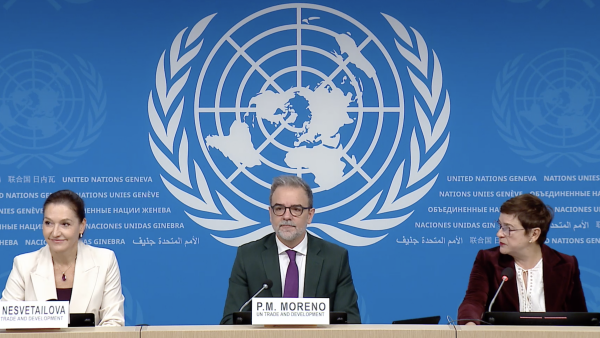
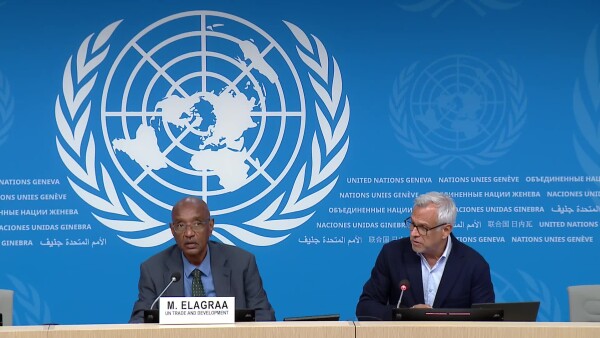
Presentation of the Trade and Developement Report 2026
Embargoed until 9 October 2026 at 11 a.m. (Geneva Time)
UNCTAD: UNCTAD’s flagship report finds that governments increasingly use industrial, trade, financial and technology policies to pursue economic and national security objectives. Market access and the ability to move into higher-value activities now depend more heavily on technology, finance and geopolitics.
1
1
1
Press Conferences | UPU
Release of the State of the Postal Sector Report 2026
1
1
1
Press Conferences | IOM , ITU , UNECE , UNICEF , WHO , WMO
UNICEF: Ebola, DRC - children orphans or separating them from parents and caregivers; IOM: Humanitarian needs in Djibouti amid arrivals from Yemen and increased migrant movements; WHO: Darfur, scale of health needs far exceeds available resources; WMO co-sponsored Global Heat Forum, Bangkok, monthly Global Seasonal Climate Update; UNECE: UN Forum of Mayors; ITU Plenipotentiary Conference 2026; WHO: child and adolescent obesity guidelines and new global roadmap to tackle pregnancy hypertension, a leading cause of maternal mortality
1
1
1
Press Conferences | OCHA , UN WOMEN , UNHCR , WFP , WHO , WTO , UNEP
OCHA – $160M CERF allocation to 12 underfunded crises; UNHCR – 5.8M refugee children remain out of school amid funding cuts; UN Women – Middle East escalation and food security among women/girls; WHO – Gaza supplies and overall situation; WFP – Yemen food insecurity and impact on global hunger ; UNEP - First International Conference of the Global Framework on Chemicals in Geneva | 16-20 November 2026
1
1
1
Press Conferences | UNHCR , WHO
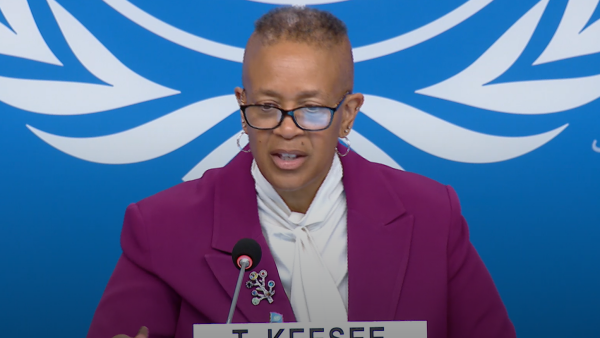
Yemen's health system nears collapse amid conflict, causing rising casualties and medicine shortages.
1
1
1
Press Conferences | HRC
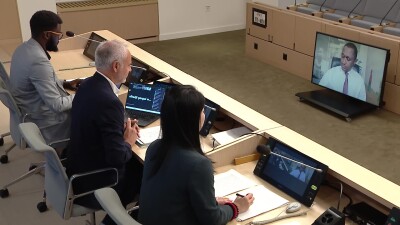
Update by the Expert Mechanism to Advance Racial Justice and Equality in Law Enforcement
1
1
1
Press Conferences | WIPO , WHO , UNICEF , UNHCR , IOM , WFP , FAO
WIPO Global Innovation Index 2026 launch and press conference, WHO Composition of influenza vaccines for the 2027 Southern Hemisphere flu season, UNICEF Yemen hunger and malnutrition; UNHCR Sudan displacement into Chad; IOM Ebola and population movements in DRC; WFP emergency food assistance in Nepal; and FAO food loss and waste.
2
1
2
Press Conferences | UNCTAD
Gaza reconstruction needs reach $71.5 billion as Palestinian economy and public finances face severe strain. Latest UNCTAD report documents the loss of decades of development gains, economic collapse in Gaza and tightening economic constraints in the West Bank.
The report identifies three immediate priorities: transferring withheld Palestinian revenues, safeguarding the banking system and aligning reconstruction support with the documented scale of damage and economic losses.
1
1
1
Press Conferences | HRC
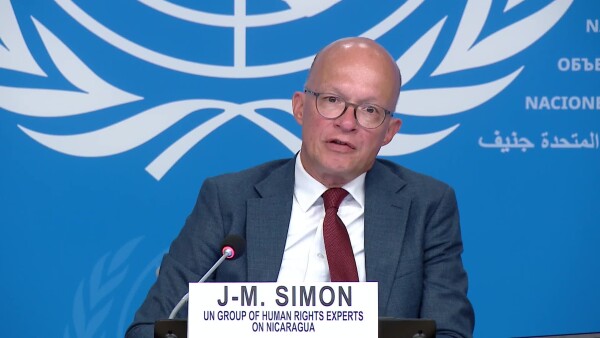
Press conference on the situation of human rights in Nicaragua by the UN Group of Human Rights Experts
1
1
1
Press Conferences | ITU , UNHCR , WHO , WMO
YEMEN - UNHCR: Escalating conflict in Yemen could fuel more displacement, refugee movement
CLIMATE - WHO / WMO: Health and Climate impact of El Niño