

The United Nations Office at Geneva
Multimedia Newsroom
Press Conferences | OHCHR , UNHCR , OCHA , WHO , WFP , IOM
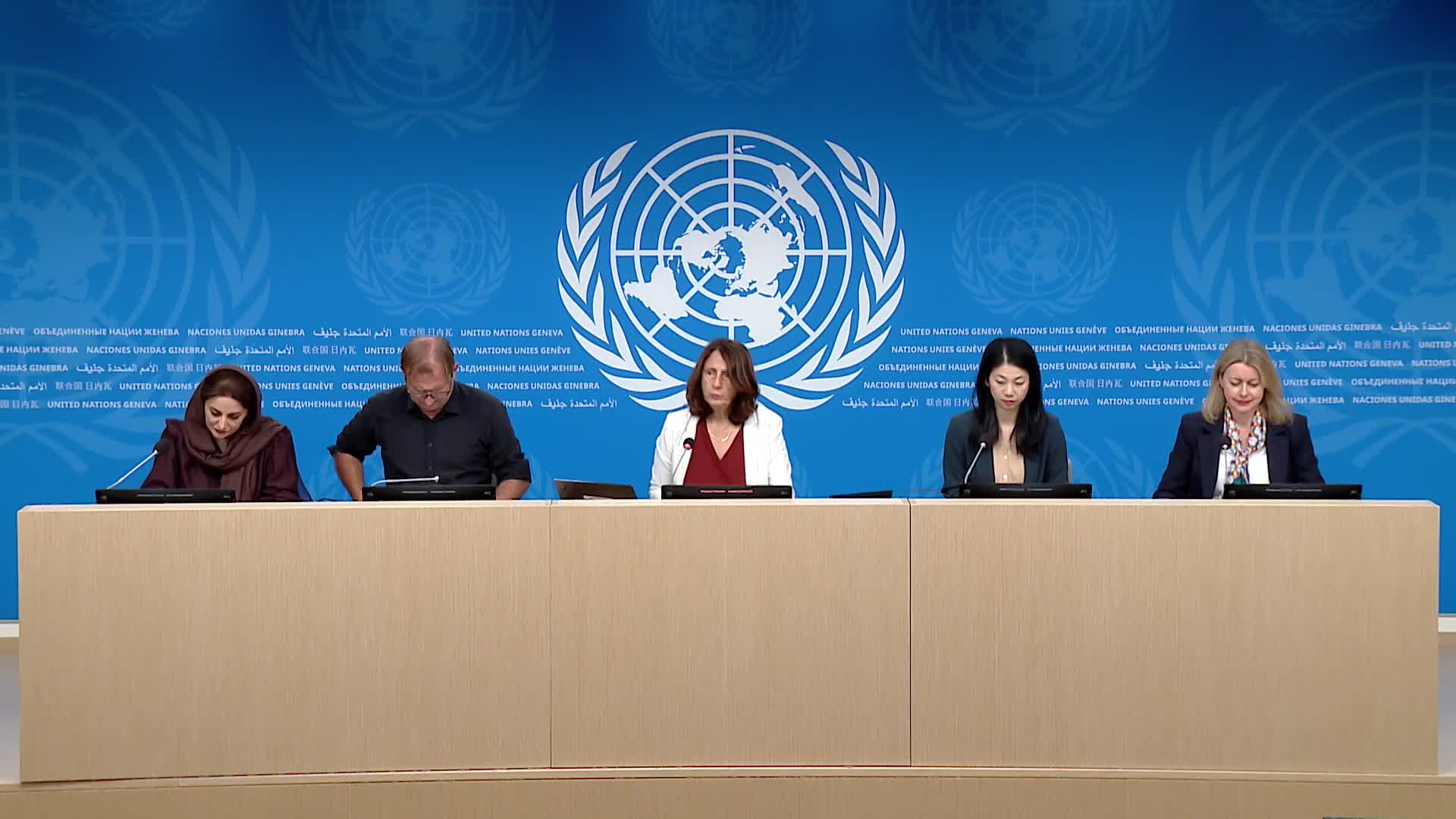
UNOG Bi-weekly press briefing 23 March 2021
Fire in Cox’s Bazar
Angela Wells, for the International Organization for Migration (IOM), said that a massive fire had swept through three IOM-managed sites, displacing roughly 8,000 Rohingya refugee families and causing catastrophic damage in Cox’s Bazar, Bangladesh, the world’s largest refugee camp. More than 9,100 family shelters had been damaged in the fire and IOM’s largest health clinic in the camp had been completely destroyed. The cause of the fire and the exact number of casualties remained unknown.
IOM teams and partners had worked through the night to respond to the most immediate needs of those who had fled the scene. Rohingya volunteers on the ground were the first responders. IOM had deployed its ambulances and mobile medical teams to respond to all those injured and provide mental health and psychosocial support. It was also distributing emergency assistance to all those affected, including shelter kits and emergency items.
With the start of the monsoon season looming, rebuilding was critical. IOM would continue to help people reconstruct durable shelters, emergency latrines and the vital health facility. Its emergency fund had pledged USD 1 million to the relief efforts, and a further USD 20 million were required to respond to the most urgent needs.
Johannes van der Klaauw, for the United Nations Refugee Agency (UNHCR), said that the scale of the fire and ensuing devastation were unprecedent. So far, 15 people had been confirmed dead and 560 injured, 400 remained unaccounted for and at least 10,000 shelters had been destroyed, meaning that at least 45,000 people had been displaced and required provisional shelter. Health clinics and distribution points had also been destroyed. UNHCR was distributing supplies, including 3,000 blankets, 14,500 solar lamps, over 10,000 kitchen sets and over 11,000 mosquito nets. It was helping to coordinate the response and, within its specific protection mandate, was prioritizing safety and security arrangements for the most vulnerable, chiefly woman and children. It also needed to monitor how the assistance was being distributed, for which it relied on refugee volunteers, who were the backbone of service delivery. A new registration system was being put in place to re-issue those who had lost everything with essential refugee documents.
Tomson Phiri, for the World Food Programme (WFP), said that WFP was providing emergency rations of high-energy biscuits to evacuated families sheltering with friends and family in nearby camps and transit centres and would provide 60,000 hot meals to affected families that day. On Monday night, WFP's engineering experts had been deployed to help contain the fire while food assistance teams had provided rapid assistance to affected families. WFP had also deployed light and heavy machinery. Front-line staff in the camps reported horrific scenes of devastation, destruction and despair. Two WFP nutrition centres and one general food distribution point had been burnt to the ground, and two other nutrition sites and an electronic-voucher outlet had had to be closed until damage could be assessed.
James Elder, for the United Nations Children’s Fund (UNICEF), said that teams on the ground had reported that the scale and intensity of the latest fire were unlike anything seen before in the camps. That only made things worse for the more than 450,000 Rohingya children in need of assistance, some of whom had been injured or separated from their families. Furthermore, many UNICEF learning centres were feared to be completely destroyed. A UNICEF team was on the ground addressing the immediate and urgent needs of children and families, health teams had been mobilized to provide first aid support and volunteers were evacuating refugees from their shelters.
In response to questions from journalists, Mr. van der Klaauw said that the Bangladeshi authorities should be the ones to investigate the cause of the fire; speculation in the interim should be avoided. Those displaced would be moved to temporary lodging in other parts of the camp, for instance to the UNHCR transit centre, but not outside the camp. While the priority was on finding shelter for the 45,000 displaced, work was beginning immediately on re-issuing them with registration documents, which would take some time as they contained biometric information.
Launch of the Hunger Hotspots report
Dominique Burgeon, Director of the Food and Agriculture Organization of the United Nations (FAO), said that the Hunger Hotspots report provided early warnings about countries where parts of the population were likely to face a rapid deterioration of acute food insecurity over the next five months and where critical actions were urgently needed. The current edition flagged 20 hotspots at risk of such deterioration and confirmed trends that the agencies had been warning about since mid-2020. Acute hunger was on the rise around the world as a result of a combination of factors exacerbated by COVID-19. Some 174 million people had been in high acute food insecurity at the end of 2020, compared with 135 million in 2019. Multiple drivers were behind the deterioration and, in most of the hotspots, were interlinked and mutually reinforcing. They included conflict and other forms of armed violence, access constraints, economic shocks, extreme weather and pest infestations. It was paramount that Security Council resolution 2417 (2018), on the protection of civilians in armed conflict, was implemented.
Annalisa Conte, Director of the World Food Programme (WFP) Geneva office, said that WFP was particularly concerned about the situation of more than 30 million people already facing emergency level food insecurity and who were, in other words, on the brink of famine. Their food consumption was already insufficient, most of their children were already malnourished and excess death due to hunger was already a reality. What lay beyond that point were starvation and widespread mortality. The window to avert a catastrophic situation was closing fast, and flexible, unearmarked and frontloaded funding was needed to facilitate immediate action. FAO and WFP were calling for USD 5 billion to provide emergency food assistance to the 34 million people facing the highest risk of famine and famine-like conditions, as well as USD 500 million for targeted livelihood measures. It was vital that agricultural inputs were delivered before the planting season.
Replying to journalists, Mr. Burgeon said that the hotspots were identified on the basis of the Integrated Phase Classification (IPC) and ongoing assessments of the main drivers of food insecurity. The situation in Latin American was quite concerning. In Venezuela specifically, food insecurity was expected to rise beyond 2019 levels, when 9.3 million people had been food insecure, and a 10 per cent economic contraction was forecast for 2021 in addition to hyperinflation. The impact of a number of hurricanes and COVID-19 was expected to worsen acute food insecurity in places such as Honduras, Guatemala and El Salvador. Brazil was not covered in the latest edition of the Hunger Hotspots report. FAO was further concerned by the situation in Syria, where the agricultural sector was in severe difficulty amid a dire economic context, leading to production and access problems. Ms. Conte added that the 30 million people on the brink of famine were mainly in Africa but also elsewhere, for instance in Afghanistan.
Women’s rights in Turkey
Alessandra Vellucci, for the United Nations Information Service, said that over the week-end, UN‑Women had issued a statement on Turkey’s withdrawal from the Council of Europe Convention on Preventing and Combating Violence Against Women and Domestic Violence, also known as the Istanbul Convention. Violence against women was a central priority for the UN Secretary-General. It was important to maintain the solidarity of nations in dealing with this problem. Accordingly, the Secretary‑General appealed to Turkey to review this decision.
Elizabeth Throssell, for the Office of the United Nations High Commissioner for Human Rights (OHCHR), said that Turkey’s announcement that it was withdrawing from the Istanbul Convention on combatting all forms of violence against women highlighted wider concerns regarding the human rights situation in the country. The decision had been taken without a parliamentary debate or wider consultation with civil society. The High Commissioner had expressed her dismay at the withdrawal, especially given that gender inequality and gender-based violence against women remained a serious concern in Turkish society. The decision to abandon the Convention was all the more shocking that Turkey had been active in its negotiation and had been the first to ratify it. OHCHR called on Turkey to reverse its withdrawal, conduct consultations with civil society and women’s groups and make tangible efforts to promote and protect the safety and rights of all women and girls in Turkey.
Other developments in recent weeks, for instance the detention of opposition politicians and human rights defenders and counter-terrorism operations, had also deepened concerns about the human rights situation in the country. OHCHR reiterated the importance of Turkey taking actions consistent with its obligations under international human rights law and stressed that the recently adopted human rights action plan should be implemented in conformity with such international obligations.
The full statement is available here.
Responding to questions, Ms. Throssell said that OHCHR was worried about women’s rights everywhere, especially amid the rise in domestic violence associated with the pandemic. It had taken years to have violence against women recognized as a human rights issue, and the Istanbul Convention, an instrument of the Council of Europe, was considered the most comprehensive treaty in that domain, as the UN Convention on the Elimination of All Forms of Discrimination against Women did not contain specific provisions on violence. Countries should adhere to minimum international standards so that they could hold each other to account and share best practices. Four women had been killed by their partners in Turkey since the announcement of the withdrawal; OHCHR had discussed a range of issues with the authorities.
Deadly attacks against displaced population in western Niger
Boris Cheshirkov, for the United Nations Refugee Agency (UNHCR), said that UNHCR condemned in the strongest terms the attacks in western Niger on 21 March that had killed 137 people, many of them already displaced after having fled earlier violence. UNHCR was evaluating the needs and preparing to provide health care, assistance and protection. Niger’s Tahoua and Tillaberi regions were already host to 204,000 refugees and internally displaced people. UNHCR renewed its urgent call on warring parties in the Sahel to protect civilians, people forced to flee and the communities hosting them. Despite increased insecurity, Nigeriens continued to show their generosity to people fleeing violence in Africa’s Sahel and Lake Chad regions. Countries in the Sahel were at the epicentre of one of the world’s fastest growing displacement and protection crises.
The full briefing note is available here.
Civilians killed in north-west Syria
Jens Laerke, for the Office for the Coordination of Humanitarian Affairs (OCHA), said that the United Nations strongly condemned the shelling in Aleppo on 21 March that had killed and injured dozens of civilians, including children and hospital workers. Artillery shells had hit the Al Atareb Surgical Hospital in Aleppo governorate, resulting in at least six deaths among patients and visitors and 16 injured, including five medical staff. The hospital itself had sustained major damage. Civilian casualties had also reported in the neighbourhoods of Al Firdous and Al Saliheen in Aleppo as a result of artillery shelling on the same day. The United Nations called on the parties to the conflict to respect the special protection afforded to hospitals and the prohibition of indiscriminate attacks. Aerial attacks had also been reported that day near Bab Al Hawa on the Syria-Turkey border, where life-saving United Nations cross-border humanitarian deliveries took place.
World Tuberculosis Day on 24 March
Hervé Verhoosel, for UNITAID, said that a quarter of the world’s population had latent tuberculosis (TB), and it was necessary to prevent those people from developing the disease. Despite being preventable and curable, TB was one of the deadliest infectious diseases: 10 million people had fallen ill with TB in 2019, a number whose decline was very slowly. TB was also a leading cause of death among people living with HIV/AIDS. South East Asia accounted for the most cases (44 per cent), followed by Africa (25 per cent) and the western Pacific (18 per cent). COVID-19 could have a direct impact on the TB death toll in 2020, as global cases could rise by 200,000–400,000 for every three months of impaired health service delivery. However, a new preventive treatment, whose cost had been negotiated down by 70 per cent to only USD 15, would shortly be rolled out in five high-burden countries in Africa. The treatment consisted of three pills a week for three months, down from nine pills a week for six months. More than 3 million patients could be treated with the new drug in 2021.
World Meteorological Day
Clare Nullis, for the World Meteorological Organization (WMO), said that the theme of World Meteorological Day, “The Ocean, Our Climate and Weather”, had been chosen to highlight how observations, research and services were more critical than ever before. The ocean covered more than 70 per cent of the Earth’s surface and was increasingly vulnerable and hazardous. Ocean heat was at record levels, and the ocean would absorb two to four times more heat by 2100 than it had in the last 50 years. Furthermore, the ocean was increasingly acidic and deprived of oxygen. Sea level rise was expected to accelerate, a major hazard considering that 40 per cent of the global population lived within 100 km of the coast. Services needed to be improved to help mariners reach a balance between cost minimization and routing, while maximizing safety. There was also a need to close the geographical and research gaps in the Global Ocean Observing System.
A virtual ceremony would be held that day at 1 p.m. WMO Secretary-General would give opening remarks, followed by keynote addresses by the UN Special Envoy for the Ocean, the UN Assistant Secretary-General for Climate Action Team, the Director of the Alfred Wegener Institute, yachtswoman Alexia Barrier and youth advocates.
Announcements
Alessandra Vellucci, for the United Nations Information Service (UNIS), on behalf of Rolando Gomez, said that the Human Rights Council would be taking action on 31 draft resolutions that morning and into tomorrow. Mr. Gomez was available for questions.
Ms. Vellucci also said that the next public plenary meeting of the Conference on Disarmament would take place on Friday, 26 March, at 10 a.m.
Ms. Vellucci announced that Tatiana Valovaya, Director-General of the United Nations Office at Geneva, would be speaking on lessons learned by UN Geneva from 2020 and priorities for 2021 at a hybrid press conference on Thursday, 25 March, at 10 a.m.
The United Nations Refugee Agency and the United Nations Development Programme would be holding a virtual press conference on Thursday, 25 March, at 4 p.m., ahead of the Brussels V Conference "Supporting the future of Syria and the region" on 29–30 March. The High Commissioner for Refugees, Filippo Grandi, and UNDP Administrator Achim Steiner would review the status of the critical Regional Refugee and Resilience Plan for Syrian refugees and host countries.
Similar Stories
1
1
1
Press Conferences | UNCTAD
Presentation of the Trade and Developement Report 2026
Embargoed until 9 October 2026 at 11 a.m. (Geneva Time)
1
1
1
Press Conferences | UPU
Release of the State of the Postal Sector Report 2026
1
1
1
Press Conferences | IOM , ITU , UNECE , UNICEF , WHO , WMO
UNICEF: Ebola, DRC - children orphans or separating them from parents and caregivers; IOM: Humanitarian needs in Djibouti amid arrivals from Yemen and increased migrant movements; WHO: Darfur, scale of health needs far exceeds available resources; WMO co-sponsored Global Heat Forum, Bangkok, monthly Global Seasonal Climate Update; UNECE: UN Forum of Mayors; ITU Plenipotentiary Conference 2026; WHO: child and adolescent obesity guidelines and new global roadmap to tackle pregnancy hypertension, a leading cause of maternal mortality
1
1
1
Press Conferences | OCHA , UN WOMEN , UNHCR , WFP , WHO , WTO , UNEP
OCHA – $160M CERF allocation to 12 underfunded crises; UNHCR – 5.8M refugee children remain out of school amid funding cuts; UN Women – Middle East escalation and food security among women/girls; WHO – Gaza supplies and overall situation; WFP – Yemen food insecurity and impact on global hunger ; UNEP - First International Conference of the Global Framework on Chemicals in Geneva | 16-20 November 2026
1
1
1
Press Conferences | UNHCR , WHO
Yemen's health system nears collapse amid conflict, causing rising casualties and medicine shortages.
1
1
1
Press Conferences | HRC
Update by the Expert Mechanism to Advance Racial Justice and Equality in Law Enforcement
1
1
1
Press Conferences | WIPO , WHO , UNICEF , UNHCR , IOM , WFP , FAO
WIPO Global Innovation Index 2026 launch and press conference, WHO Composition of influenza vaccines for the 2027 Southern Hemisphere flu season, UNICEF Yemen hunger and malnutrition; UNHCR Sudan displacement into Chad; IOM Ebola and population movements in DRC; WFP emergency food assistance in Nepal; and FAO food loss and waste.
2
1
2
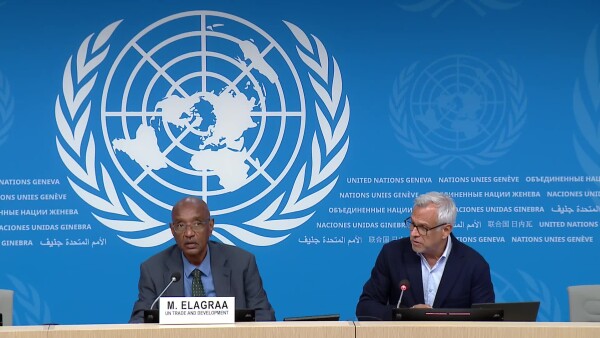
Press Conferences | UNCTAD
Gaza reconstruction needs reach $71.5 billion as Palestinian economy and public finances face severe strain. Latest UNCTAD report documents the loss of decades of development gains, economic collapse in Gaza and tightening economic constraints in the West Bank.
The report identifies three immediate priorities: transferring withheld Palestinian revenues, safeguarding the banking system and aligning reconstruction support with the documented scale of damage and economic losses.
1
1
1
Press Conferences | HRC
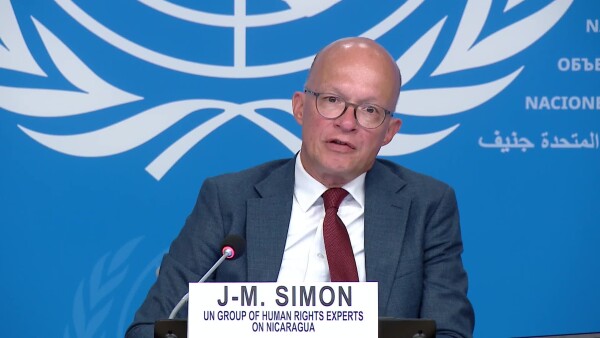
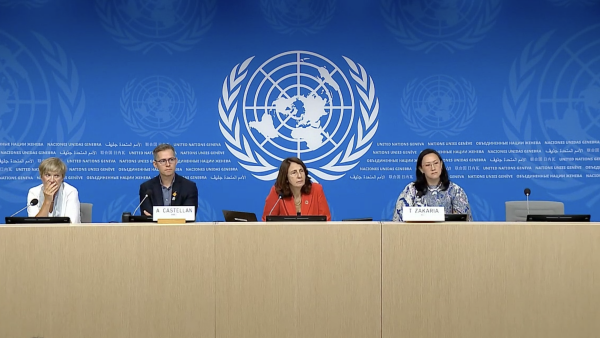
Press conference on the situation of human rights in Nicaragua by the UN Group of Human Rights Experts
1
1
1
Press Conferences | ITU , UNHCR , WHO , WMO
YEMEN - UNHCR: Escalating conflict in Yemen could fuel more displacement, refugee movement
CLIMATE - WHO / WMO: Health and Climate impact of El Niño
1
1
1
Press Conferences | HRC , OHCHR
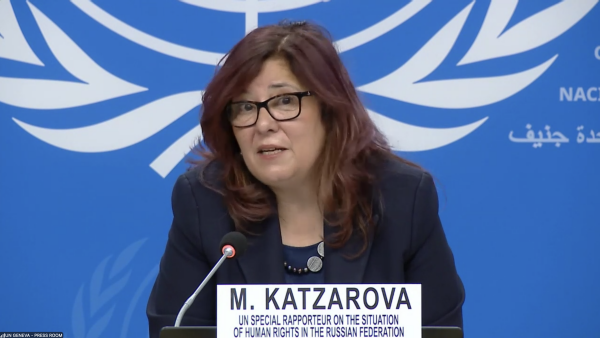
Mariana Katzarova discusses human rights in Russia as a UN Special Rapporteur.
1
1
1
Press Conferences | IOM , OHCHR , UN WOMEN , UNFPA , UNHCR , UNOPS , WHO
UN Geneva briefing: Yemen crisis worsens, urgent aid needed across multiple sectors.