

The United Nations Office at Geneva
Multimedia Newsroom
Press Conferences | OHCHR , UNHCR , WFP , WIPO , WMO , FAO
UNOG Bi-weekly press briefing 19 March 2021
International Day of Forests
Mette Wilkie, for the United Nations Food and Agriculture Organization (FAO), said that the International Day of Forests would be celebrated throughout the world on Sunday 21 March 2021, under the theme “Forest restoration: a path to recovery and well-being”. Forests covered more than 30 per cent of the world’s surface and provided health benefits for everyone and habitat for 80 per cent of all known terrestrial species, many of which were under threat - more than 1 million of the planet’s estimated 8 million plant and animal species were at risk of extinction. Up to 25 per cent of medicinal drugs in developed countries and 80 per cent in developing countries were plant-based.
Deforestation was causing the loss of over 10 million hectares of forest, or the equivalent of twice the land area of Costa Rica, every year. One in every three disease outbreaks was directly linked to deforestation through the disturbance of habitat. However, it was possible to change that situation through investment: restoring forests was as cost-effective option and could both contribute to economic recovery after the coronavirus disease pandemic and help mitigate and adapt to the effects of climate change.
Alessandra Vellucci, for the United Nations Information Service (UNIS), said that the UN Secretary-General, in a message to mark the International Day of Forests, had said that, despite all that forests provided to the world, their loss was continuing at an alarming rate. He called on the world to plant the seeds for a sustainable future by committing to restore and conserve the world’s forests. The Secretary-General’s full message is available here.
Replying to questions from journalists, Ms. Wilkie said that the two main drivers of deforestation were large-scale commercial exploitation and small-scale farmers. Alternative livelihoods needed to be found for the latter and new efforts were being made to help countries do that in order to reduce deforestation. It had been shown, notably in Latin America, that indigenous groups were effective in protecting forests, and funding should be channelled into helping local people manage the forest sustainably, through forest-based livelihoods, especially to build back better from the pandemic. Africa had the largest annual net loss of forests, with deforestation affecting the east and the south in particular, but rates were rising throughout the continent. She noted that data showed a significant reduction in deforestation in Brazil since 2014, but that more recent satellite imaging indicated that there had been an increase in the last couple of years.
New Water and Climate Coalition
Clare Nullis, for the World Meteorological Organization (WMO), said that oceans, like forests, absorbed large amounts of CO2 and took up over 90 per cent of the excess heat trapped in the atmosphere. World Water Day would be marked on Monday 22 March; on Thursday 18 March, a high-level event had been convened in New York by the President of the UN General Assembly to launch a new Water and Climate Coalition, aimed at highlighting the lagging progress made towards the water-related Sustainable Development Goals, particularly Goal 6, on clean water on sanitation for all.
Some 39 per cent of the world’s population did not have access to safe drinking water; 50 per cent would face water stress by 2015. Climate change was altering rainfall patterns, with increasing damage caused by floods and drought throughout the world; those problems were exacerbated by socioeconomic change and population growth. The melting of ice cover and glaciers was leading to increased water stress for millions of people. Over half of all countries had no quality management system for water, which meant that there was an immense information gap, a problem that the new Coalition, spearheaded by WMO, aimed to address. The Water and Climate Leaders Panel, whose 15 members included presidents and ministers from many countries and business leaders, would provide strategic guidance to the Coalition.
Attacks on civilians in Democratic Republic of the Congo
Babar Baloch, for the United Nations Refugee Agency (UNHCR), said that attacks blamed on the armed group, Allied Democratic Forces (ADF), had killed nearly 200 people, injured dozens of others and displaced an estimated 40,000 people in Beni Territory in North Kivu province of the Democratic Republic of the Congo, as well as nearby villages in Ituri province. In less than three months, ADF had reportedly raided 25 villages, set fire to dozens of houses, and kidnapped over 70 people. That was in addition to the 465 Congolese who had been killed in attacks attributed to ADF during 2020. While the men had generally remained behind to protect their homes, the women and children had fled to Beni and other towns and were living in dire conditions.
UNHCR urgently needed USD 2 million to reinforce its protection and humanitarian response in Beni, North Kivu and Irumu Territory in Ituri. Currently, the USD 33 million UNHCR required for the response in the whole of the eastern part of the country was just 5.5 per cent funded.
In response to journalists’ questions, Mr. Baloch said that armed groups refrained from attacking settlements when Government troops or forces of the United Nations Organization Stabilization Mission in the Democratic Republic of the Congo (MONUSCO) were present. However, once they withdrew, the armed groups would attack, supposedly in retaliation for villagers passing on information to the military, but often in a search for food or medicines. They killed, injured or kidnapped local people. Many armed groups had long carried out such attacks, but the intensity and violence of the ADF attacks over the past three months were particularly disturbing.
The full briefing note is available here.
Answering a question, Alessandra Vellucci, for the United Nations Information Service (UNIS), said that, on 15 March 2021, peace-keeping forces deployed to Bulungo in the Democratic Republic of the Congo had found the bodies of victims of an attack, reportedly committed by ADF.
WFP cuts food rations in Somalia because of funding shortages
Tomson Phiri, for the World Food Programme (WFP), said that the continued deteriorating food security situation in Somalia, combined with significant funding shortfalls, had forced WFP to cut by 50 per cent the rations it had distributed to almost 1.3 million people in the country in February. It had reallocated resources to restore full rations, but urgently required USD 172 million to continue its operations in the country at current levels for the next six months.
The vital nutrition programmes were also at risk because of funding shortages and, previous gains, including a 2 per cent reduction in the malnutrition rate last year, risked being undermined; 840,000 children were expected to suffer from moderate acute malnutrition, 143,000 from severe acute malnutrition, and 51,000 were at risk of dying.
In answer to a question, Mr. Phiri said that the rations provided represented only the most basic of food supplies and that the cuts to them, combined with the effects of the previous year’s poor harvest and the poor rain forecast for the coming season, could represent the difference between life and death.
Human Rights Council update
Rolando Gomez, for the Human Rights Council, said that the forty-sixth session of the human Rights Council had been extended by a day to 24 March to allow time for the consideration of the draft resolutions and amendments. Regarding the Council’s programme, he said that the conclusion today of the general debate on item 8, the Vienna Declaration and Programme of Action, would be followed by an oral update by the High Commissioner for Human Rights on systemic racism, violations and international human rights law against Africans and people of African descent by law enforcement agencies, in follow up to a resolution adopted in June 2020. The general debate on item 8 would continue into the afternoon.
At 5 p.m., there would be an interactive dialogue on the human rights situation in the Kasai region in the Democratic Republic of the Congo.
The meeting on Monday would begin at 9 a.m. with a presentation by the new Independent Expert on the situation of human rights in Mali of the annual report of the mandate-holder, to be followed by a high-level interactive dialogue on the human rights situation in the Central African Republic.
There would then be a general debate on technical assistance and capacity building and, towards the end of the day, the Council would begin considering the draft resolutions. For the first time, the Council would be voting simultaneously in a virtual manner on an electronic platform referred to as e-delegate platform, using a system intended to mimic voting taking place in person. There were 31 draft resolutions, plus 14 amendments, to be voted on, all available on internet.
Launch of a WIPO report
Edward Harris, for the World Intellectual Property Organization (WIPO), said that WIPO would hold a press conference on Monday 22 March at 11 a.m. to present a report entitled “Technology Trends 2021, Assistive Technology”, which was under embargo until 11.30 a.m. on 23 March. The report used patent data to look at the future of innovations that helped people overcome mobility, sight and other physical limitations and showed how such emerging “assistive technologies" were increasingly integrated with consumer goods.
WTO, Aid-for-Trade Event
Alessandra Vellucci, for the United Nations Information Service said, on behalf of the World Trade Organization (WTO), that WTO would hold a virtual Aid-for-Trade Stocktaking Event from Tuesday 22 to Thursday 24 March 2021, to survey the trade impacts of the COVID-19 pandemic on developing and least-developed countries and examine how Aid for Trade could help support recovery and foster resilience.
The high-level session will feature Ngozi Okonjo-Iweala, Tedros Adhanom Ghebreyesus, Isabelle Durant, Kristalina Georgieva, Angel Gurría, and David R. Malpass.
The high-level plenary on Tuesday 23 March and the closing session on Thursday 25 March would be livestreamed on the WTO YouTube channel.
Journalists interested in registering to participate in the high-level session should send a request to the WTO at pressbriefing@wto.org
Other Announcements
Alessandra Vellucci, for the United Nations Information Service (UNIS), said that, as of the previous evening, a total of 237 staff members of the United Nations Secretariat in Geneva had tested positive for COVID-19 since March 2020.
Ms. Vellucci said that the next public plenary meeting of the Conference on Disarmament would take place on Friday 26 March at 10 a.m., under the presidency of Bulgaria. It would be the last meeting of the first part of the current year’s session.
She noted that the Human Rights Committee would close its 131st session on Friday 26 March at 4 p.m. It had reviewed the reports of Finland and Kenya.
The Committee on the Rights of Persons with Disabilities would hold a public general debate on Monday 22 and Wednesday 24 March at 12.30 p.m., in view of the drafting of a general comment on article 27 of the Convention, related to the right to work and employment. The Committee would close its 24th session on 1 April 2021.
Ms. Vellucci said that the international days being marked in the next week included the International Day of Happiness and French Language Day, both on 20 March, and World Poetry Day, World Down Syndrome Day and Nowruz on 21 March.
She also announced that, on Friday 19 March, at the noon press briefing at United Nations Headquarters in New York, the Secretary-General’s report on “Special Measures for the Protection from Sexual Exploitation and Abuse” would be issued in all the United Nations languages. The report contained information on and a series of charts outlining the nature of allegations reported for United Nations peace operations, for United Nations entities other than peace operations, implementing partners, and for non-United Nations forces operating under a Security Council mandate.
Similar Stories
1
1
1
Press Conferences | IOM , UNDRR
UN stresses importance of household preparedness for disaster risk reduction.
1
1
1
Statements , Press Conferences | OHCHR
1
1
1
Press Conferences | UNHCR , UNICEF , IFRC , OHCHR , UN WOMEN , IOM , OCHA , WHO
UNHCR – ExCom Meeting, UNICEF – Nepal Recovery, IFRC – Flash Floods, WHO – Mental Health, IOM – South Sudan Floods, OCHA – DRC Humanitarian aid, UNHCR – Sahel Displacement, UNICEF – Yemen Update, IOM – Gaza Shelter, UN Women – Gaza Women, OHCHR – Arrests and detentions of Syrians by Israeli force
2
1
2
Press Conferences | UNCTAD
Presentation of the Trade and Developement Report 2026
Embargoed until 9 October 2026 at 11 a.m. (Geneva Time)
UNCTAD: UNCTAD’s flagship report finds that governments increasingly use industrial, trade, financial and technology policies to pursue economic and national security objectives. Market access and the ability to move into higher-value activities now depend more heavily on technology, finance and geopolitics.
1
1
1
Press Conferences | UPU
Release of the State of the Postal Sector Report 2026
1
1
1
Press Conferences | IOM , ITU , UNECE , UNICEF , WHO , WMO
UNICEF: Ebola, DRC - children orphans or separating them from parents and caregivers; IOM: Humanitarian needs in Djibouti amid arrivals from Yemen and increased migrant movements; WHO: Darfur, scale of health needs far exceeds available resources; WMO co-sponsored Global Heat Forum, Bangkok, monthly Global Seasonal Climate Update; UNECE: UN Forum of Mayors; ITU Plenipotentiary Conference 2026; WHO: child and adolescent obesity guidelines and new global roadmap to tackle pregnancy hypertension, a leading cause of maternal mortality
1
1
1
Press Conferences | OCHA , UN WOMEN , UNHCR , WFP , WHO , WTO , UNEP
OCHA – $160M CERF allocation to 12 underfunded crises; UNHCR – 5.8M refugee children remain out of school amid funding cuts; UN Women – Middle East escalation and food security among women/girls; WHO – Gaza supplies and overall situation; WFP – Yemen food insecurity and impact on global hunger ; UNEP - First International Conference of the Global Framework on Chemicals in Geneva | 16-20 November 2026
1
1
1
Press Conferences | UNHCR , WHO
Yemen's health system nears collapse amid conflict, causing rising casualties and medicine shortages.
1
1
1
Press Conferences | HRC
Update by the Expert Mechanism to Advance Racial Justice and Equality in Law Enforcement
1
1
1
Press Conferences | WIPO , WHO , UNICEF , UNHCR , IOM , WFP , FAO
WIPO Global Innovation Index 2026 launch and press conference, WHO Composition of influenza vaccines for the 2027 Southern Hemisphere flu season, UNICEF Yemen hunger and malnutrition; UNHCR Sudan displacement into Chad; IOM Ebola and population movements in DRC; WFP emergency food assistance in Nepal; and FAO food loss and waste.
2
1
2
Press Conferences | UNCTAD
Gaza reconstruction needs reach $71.5 billion as Palestinian economy and public finances face severe strain. Latest UNCTAD report documents the loss of decades of development gains, economic collapse in Gaza and tightening economic constraints in the West Bank.
The report identifies three immediate priorities: transferring withheld Palestinian revenues, safeguarding the banking system and aligning reconstruction support with the documented scale of damage and economic losses.
1
1
1
Press Conferences | HRC
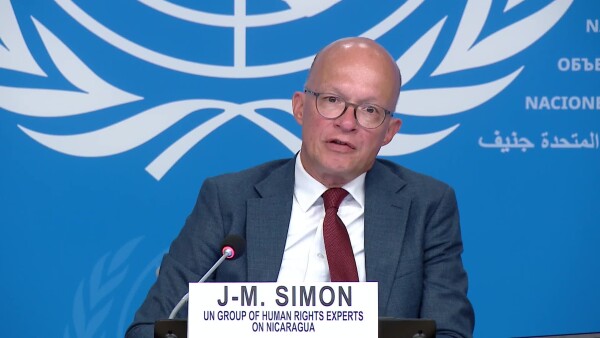
Press conference on the situation of human rights in Nicaragua by the UN Group of Human Rights Experts