

The United Nations Office at Geneva
Multimedia Newsroom
Press Conferences | OHCHR , OCHA , UNOG , UNITED NATIONS , UNCTAD
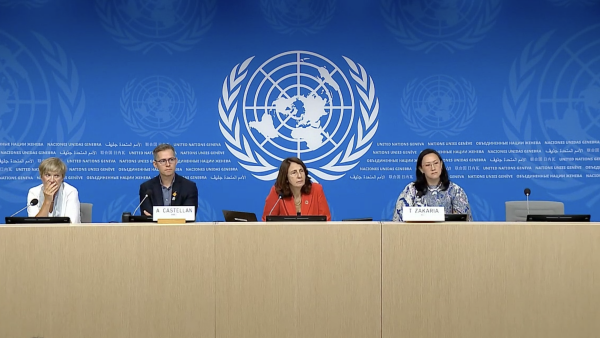
UNOG Bi-weekly press briefing 05 February 2021
Situation in Tigray, Ethiopia
Jens Laerke, for the Office for the Coordination of Humanitarian Affairs (OCHA), said that three months into the conflict in Tigray, the humanitarian response remained severely constrained and inadequate, because most people in need could simply not reached, and necessary clearances to enter Tigray were still missing. The needs observed on the ground were dire and growing for some 2.3 million people, which included those who had needed assistance before the conflict. Access to the countryside was mostly blocked to both the United Nations and NGOs; no humanitarian assistance was taking place in the non-government-controlled areas. Mr. Laerke stated that more than 70 humanitarian staff were waiting in Addis Ababa to receive clearance to travel to the region. Basic services remained largely disrupted in Tigray, where two thirds of the population lived, including electricity and communications. Key supply routes to Tigray were still cut, and malnutrition among the population had already been on the rise before the hostilities, due to the COVID-19 and locust situations.
Responding to questions, Mr. Laerke said that the United Nations was encouraged by recent visits which had resulted in productive meetings with the Ethiopian authorities, and it was hoped that the assurances made at the highest level would be put into practice. Mr. Laerke could not provide the reasons why the Ethiopian Government was not still allowing humanitarian access to the affected region. Getting in and assessing the needs was a paramount first step.
Babar Baloch, for the United Nations Refugee Agency (UNHCR), answering questions, said that many Eritrean refugees in Tigray also needed assistance. The process of permissions should be improved to avoid the existing delays. High Commissioner for Refugees Filippo Grandi had met with both high-level authorities and refugees, who had shared their traumatic experiences, including on their forced returns to Eritrea by the Eritrean troops. The High Commissioner had shared his concerns with the authorities in Addis Ababa. On another question, Mr. Baloch said that UNHCR had access to two camps in the south of Tigray but had had no access to other camps in northern Tigray. There was still no clearance by the Ethiopian Government for UNHCR to visit Mekele and conduct an assessment there.
Killing and disappearance of children in Paraguay
Marta Hurtado, for the Office of the High Commissioner for Human Rights (OHCHR), informed that the High Commissioner Michelle Bachelet was deeply concerned at recent reports in Paraguay regarding the disappearance of a 14-year-old girl, Carmen Elizabeth Oviedo Villalba, and the lack of progress in investigating the killing of two 11-year-old girls, Lilian Villalba and Maria Carmen Villalba.
According to available information, Carmen Elizabeth had witnessed an operation carried out on 2 September 2020 by the Paraguayan Joint Task Force against members of the Paraguayan People’s Army group in the Yby Yaú area, some 370 kilometres north of Asunción. The two 11-year-old girls, who had been killed in the same operation, were Argentinian citizens.
The High Commissioner called the Paraguayan authorities to urgently search for the missing girl, Carmen Elizabeth. Considering the new witness accounts about the capture and killing of the other two girls, Bachelet urged calling on the Paraguayan authorities to conduct a prompt, independent and effective investigation into the many unanswered questions surrounding their deaths. An independent forensic study should be carried out.
Full briefing note is here.
Geneva announcements
Alessandra Vellucci, on behalf of the United Nations Support Mission in Libya (UNSMIL), announced that UNSMIL had received four lists of candidates for the positions of the three-member Presidency Council and of Prime Minister. The Libyan Political Dialogue Forum (LPDF) had convened at 9:30 am today to vote on the lists. The required selection threshold was 60 percent of valid votes. Should no list reach this threshold, a second round would be held to vote on the two lists which obtain the highest number of votes in the first round. The threshold for the second round is 50 percent + 1 of the valid votes. More information is available here. A press conference was expected in late afternoon today, said Ms. Vellucci.
Speaking on behalf of the Human Rights Council (HRC), Ms. Vellucci informed that the Human Rights Council would hold an organizational meeting on 8 February at 10 am, to discuss its upcoming forty-sixth regular session scheduled to take place from 22 February to 23 March. The meeting would provide an opportunity for States to announce initiatives they intended to take during the month-long session and discuss other procedural issues. The Council's new President, Ambassador Nazhat Shameem Khan of Fiji, would deliver her inaugural address. The meeting would be public and webcast.
Catherine Huissoud, for the United Nations Conference on Trade and Development (UNCTAD), informed that a virtual press conference would be held on 8 February at 11:45 am to present a new tool - the Productive Capacities Index. The Productive Capacities Index measured countries’ capacity to achieve social and economic transformation and helped track their ability to achieve the Sustainable Development Goals.Speakers would be Mukhisa Kituyi, UNCTAD Secretary-General, and Paul Akiwumi, Director of the Division on Africa, LDCs and Special Programmes. The subject would be under embargo until 6 pm of the same day. Ms. Huissoud informed that this would be the last press conference by the outgoing UNCTAD Secretary-General.
On 8 February, UNCTAD would also share its Global Trade Update with figures on what had happened in 2020. The document would be under embargo until 10 February at 12 noon.
Jens Laerke, for the Office for the Coordination of Humanitarian Affairs (OCHA), informed that from 8 February, Ramesh Rajasingham, Deputy Emergency Relief Coordinator, would be in Burkina Faso, with the view of drawing international attention to the deteriorating situation and unfolding large-scale humanitarian emergency. Humanitarian needs had increased sharply, with a large displacement crisis, and the record 3.5 million people who would need humanitarian assistance in 2021.
Ms. Vellucci informed that that the Conference on Disarmament should have its next public plenary meeting on 10 February, at 10 am, under the presidency of Belgium.
The Committee on the Rights of the Child had publicly concluded the previous day the works of its eighty-fifth session.
Similar Stories

1
1
1
Statements , Press Conferences | OHCHR

1
1
1
Press Conferences | UNHCR , UNICEF , IFRC , OHCHR , UN WOMEN , IOM , OCHA , WHO
UNHCR – ExCom Meeting, UNICEF – Nepal Recovery, IFRC – Flash Floods, WHO – Mental Health, IOM – South Sudan Floods, OCHA – DRC Humanitarian aid, UNHCR – Sahel Displacement, UNICEF – Yemen Update, IOM – Gaza Shelter, UN Women – Gaza Women, OHCHR – Arrests and detentions of Syrians by Israeli force

2
1
2
Press Conferences | UNCTAD
Presentation of the Trade and Developement Report 2026
Embargoed until 9 October 2026 at 11 a.m. (Geneva Time)
UNCTAD: UNCTAD’s flagship report finds that governments increasingly use industrial, trade, financial and technology policies to pursue economic and national security objectives. Market access and the ability to move into higher-value activities now depend more heavily on technology, finance and geopolitics.

1
1
1
Press Conferences | UPU
Release of the State of the Postal Sector Report 2026
1
1
1
Press Conferences | IOM , ITU , UNECE , UNICEF , WHO , WMO
UNICEF: Ebola, DRC - children orphans or separating them from parents and caregivers; IOM: Humanitarian needs in Djibouti amid arrivals from Yemen and increased migrant movements; WHO: Darfur, scale of health needs far exceeds available resources; WMO co-sponsored Global Heat Forum, Bangkok, monthly Global Seasonal Climate Update; UNECE: UN Forum of Mayors; ITU Plenipotentiary Conference 2026; WHO: child and adolescent obesity guidelines and new global roadmap to tackle pregnancy hypertension, a leading cause of maternal mortality
1
1
1
Press Conferences | OCHA , UN WOMEN , UNHCR , WFP , WHO , WTO , UNEP
OCHA – $160M CERF allocation to 12 underfunded crises; UNHCR – 5.8M refugee children remain out of school amid funding cuts; UN Women – Middle East escalation and food security among women/girls; WHO – Gaza supplies and overall situation; WFP – Yemen food insecurity and impact on global hunger ; UNEP - First International Conference of the Global Framework on Chemicals in Geneva | 16-20 November 2026
1
1
1
Press Conferences | UNHCR , WHO
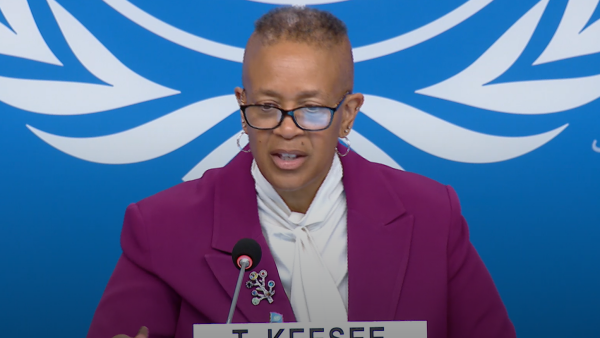
Yemen's health system nears collapse amid conflict, causing rising casualties and medicine shortages.
1
1
1
Press Conferences | HRC
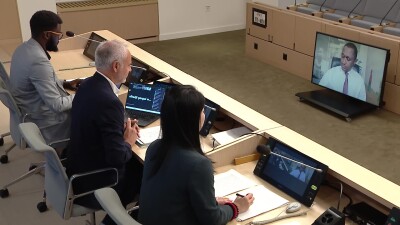
Update by the Expert Mechanism to Advance Racial Justice and Equality in Law Enforcement
1
1
1
Press Conferences | WIPO , WHO , UNICEF , UNHCR , IOM , WFP , FAO
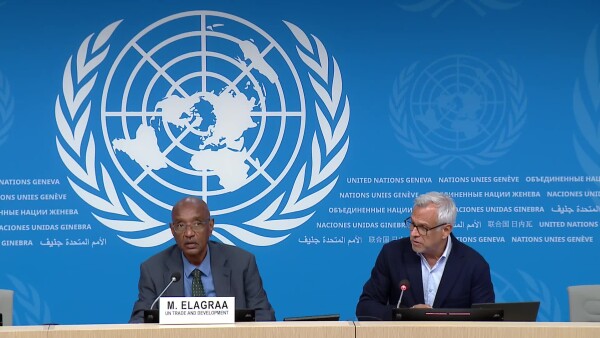
WIPO Global Innovation Index 2026 launch and press conference, WHO Composition of influenza vaccines for the 2027 Southern Hemisphere flu season, UNICEF Yemen hunger and malnutrition; UNHCR Sudan displacement into Chad; IOM Ebola and population movements in DRC; WFP emergency food assistance in Nepal; and FAO food loss and waste.
2
1
2
Press Conferences | UNCTAD
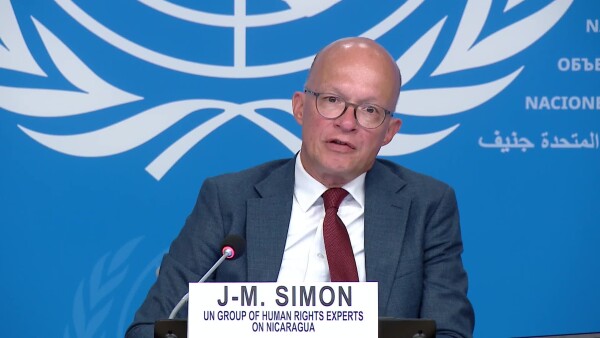
Gaza reconstruction needs reach $71.5 billion as Palestinian economy and public finances face severe strain. Latest UNCTAD report documents the loss of decades of development gains, economic collapse in Gaza and tightening economic constraints in the West Bank.
The report identifies three immediate priorities: transferring withheld Palestinian revenues, safeguarding the banking system and aligning reconstruction support with the documented scale of damage and economic losses.
1
1
1
Press Conferences | HRC
Press conference on the situation of human rights in Nicaragua by the UN Group of Human Rights Experts
1
1
1
Press Conferences | ITU , UNHCR , WHO , WMO
YEMEN - UNHCR: Escalating conflict in Yemen could fuel more displacement, refugee movement
CLIMATE - WHO / WMO: Health and Climate impact of El Niño