

The United Nations Office at Geneva
Multimedia Newsroom
International Day for Disaster Risk Reduction
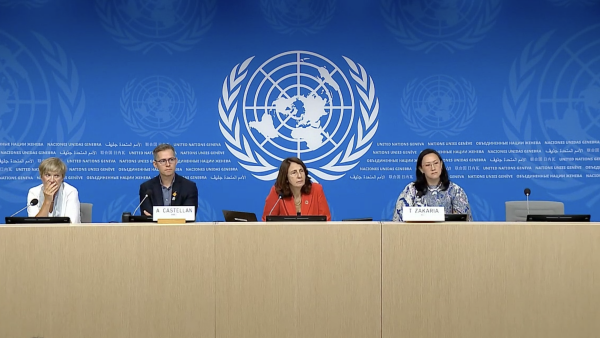
Michele Zaccheo, for the United Nations Information Service (UNIS), said that on the occasion of today’s International Day for Disaster Risk Reduction, the UN Secretary-General had issued a message, in which he stressed that this year’s theme, “Resilience Starts at Home”, was so critical because safety began where we lived, and preparedness at the household level — understanding the risks, having a plan, and acting swiftly — could mean the difference between life and loss.
Jeanette Elsworth, for the United Nations Office for Disaster Risk Reduction (UNDRR), stressed that resilience indeed started at home. Housing accounted for 43 per cent of direct economic disaster losses reported by countries through the Sendai Framework Monitor, highlighting the urgent need for greater investment in safer homes and household preparedness. Resilience was not only about buildings; it was also about people. Launching today in London, new findings from the Lloyd's Register Foundation World Risk Poll 2026 showed the importance of household preparedness. Among those people who had received an advanced warning during a disaster, only 27 percent had neither a household disaster plan nor confidence in their ability to protect themselves and their families were able to act on that warning. By contrast, 83 percent of those who had both a plan and confidence in their ability to respond were able to take action. The findings also pointed to inequalities across income groups, highlighting the importance of ensuring that all households have access to risk information, early warnings, and the resources they need to protect themselves.
UNDRR was therefore calling on governments, the private sector, and communities to put housing resilience at the center of disaster risk reduction efforts by building in safer locations, enforcing resilient building standards, retrofitting existing homes. Ms. Elsworth said that UNDRR’s message today was straightforward: reducing disaster impacts required both resilient homes and prepared households. If we wanted to reduce disaster losses and protect communities, resilience had to start where people lived. Reducing disaster impacts would require that homes that were built to last and households that were empowered to act.
Further details are available here.
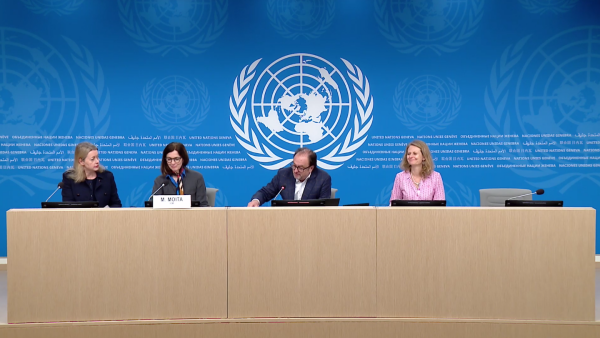
Maria Moita, Director, Department of Humanitarian Response and Recovery at the International Organization for Migration (IOM), said that for many families, the end of a disaster was only the beginning of a much longer struggle to return home, restore livelihoods and rebuild their lives. What was done before disasters struck could reduce their impact, while what was done afterwards could determine how quickly people could rebuild their lives and reclaim their dignity. In 2025, Ms. Moita informed, IOM had reached 1.4 million people across 39 countries through disaster risk reduction programmes, supported 1,194 communities and helped extend early warning coverage to more than 1.2 million people. These investments helped communities prepare, protect lives and livelihoods, and reduce displacement risks.
Ms. Moita pointed out that recent emergencies showed why preparedness had to be connected to recovery. Nepal, for example, highlighted why reliable information mattered. Knowing where people had been displaced, what they needed and the risks they faced helped direct assistance and orient recovery to build back better. In Venezuela, following the June earthquakes, assessments found that more than half of affected households had identified housing repairs as a priority. Families faced difficult choices: remain displaced, return home or relocate elsewhere. The lesson was clear: recovery planning had to begin early, before temporary displacement became prolonged. In Colombia, following the August earthquake, rebuilding homes alone was not enough. Communities also needed functioning services and opportunities to rebuild their lives. Ms. Moita stressed that the experiences of these three countries pointed to one shared priority: preparedness, emergency response and recovery must work together. Sustained investment in early warnings, local preparedness, safer housing and recovery efforts had to begin from the outset.
Announcements
Michele Zaccheo, for the United Nations Information Service (UNIS), informed that in New York today, the General Assembly would vote for new members of the Human Rights Council, while the Secretary-General would present the 2027 programme budget.
In Geneva, the Committee on the Elimination of Discrimination against Women (CEDAW) was reviewing the report submitted by Paraguay. During this week, the Committee would also review reports submitted by Togo, Angola, and Cabo Verde.
The sixth Forum of Mayors was continuing in WIPO, while the UNHCR’s Executive Committee was meeting at the Palais des Nations throughout the week.
Mr. Zaccheo also informed that the head of the United Nations Office for Project Services (UNOPS), Jorge Moreira da Silva, was traveling in Asia, where he would visit Thailand, Nepal, and the Philippines. All details are available here.
***
UNDRR Jeanette Elsworth (PR)
· Commemoration of the International Day for Disaster Risk Reduction, which is observed annually on 13 October.
IOM Omondi Okoth (PR) with Maria Moita, Director, Department of Humanitarian Response and Recovery (PR)
· Linking disaster preparedness and recovery to prevent prolonged displacement.
Similar Stories
1
1
1
Statements , Press Conferences | OHCHR
1
1
1
Press Conferences | UNHCR , UNICEF , IFRC , OHCHR , UN WOMEN , IOM , OCHA , WHO
UNHCR – ExCom Meeting, UNICEF – Nepal Recovery, IFRC – Flash Floods, WHO – Mental Health, IOM – South Sudan Floods, OCHA – DRC Humanitarian aid, UNHCR – Sahel Displacement, UNICEF – Yemen Update, IOM – Gaza Shelter, UN Women – Gaza Women, OHCHR – Arrests and detentions of Syrians by Israeli force
2
1
2
Press Conferences | UNCTAD
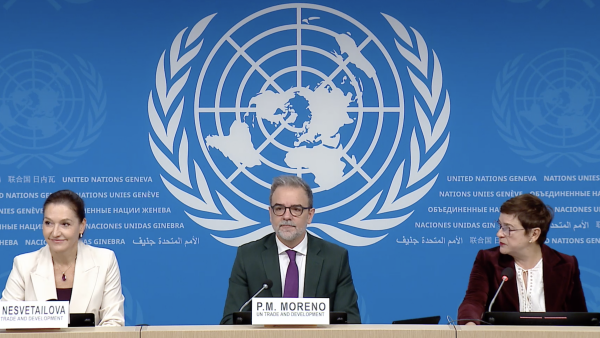
Presentation of the Trade and Developement Report 2026
Embargoed until 9 October 2026 at 11 a.m. (Geneva Time)
UNCTAD: UNCTAD’s flagship report finds that governments increasingly use industrial, trade, financial and technology policies to pursue economic and national security objectives. Market access and the ability to move into higher-value activities now depend more heavily on technology, finance and geopolitics.
1
1
1
Press Conferences | UPU
Release of the State of the Postal Sector Report 2026
1
1
1
Press Conferences | IOM , ITU , UNECE , UNICEF , WHO , WMO
UNICEF: Ebola, DRC - children orphans or separating them from parents and caregivers; IOM: Humanitarian needs in Djibouti amid arrivals from Yemen and increased migrant movements; WHO: Darfur, scale of health needs far exceeds available resources; WMO co-sponsored Global Heat Forum, Bangkok, monthly Global Seasonal Climate Update; UNECE: UN Forum of Mayors; ITU Plenipotentiary Conference 2026; WHO: child and adolescent obesity guidelines and new global roadmap to tackle pregnancy hypertension, a leading cause of maternal mortality
1
1
1
Press Conferences | OCHA , UN WOMEN , UNHCR , WFP , WHO , WTO , UNEP
OCHA – $160M CERF allocation to 12 underfunded crises; UNHCR – 5.8M refugee children remain out of school amid funding cuts; UN Women – Middle East escalation and food security among women/girls; WHO – Gaza supplies and overall situation; WFP – Yemen food insecurity and impact on global hunger ; UNEP - First International Conference of the Global Framework on Chemicals in Geneva | 16-20 November 2026
1
1
1
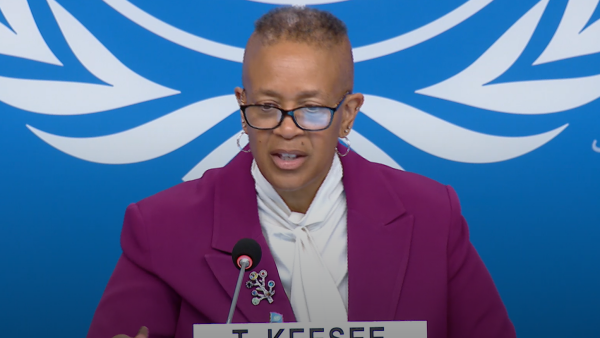
Press Conferences | UNHCR , WHO
Yemen's health system nears collapse amid conflict, causing rising casualties and medicine shortages.
1
1
1
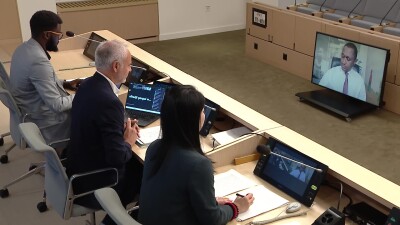
Press Conferences | HRC
Update by the Expert Mechanism to Advance Racial Justice and Equality in Law Enforcement
1
1
1
Press Conferences | WIPO , WHO , UNICEF , UNHCR , IOM , WFP , FAO
WIPO Global Innovation Index 2026 launch and press conference, WHO Composition of influenza vaccines for the 2027 Southern Hemisphere flu season, UNICEF Yemen hunger and malnutrition; UNHCR Sudan displacement into Chad; IOM Ebola and population movements in DRC; WFP emergency food assistance in Nepal; and FAO food loss and waste.
2
1
2
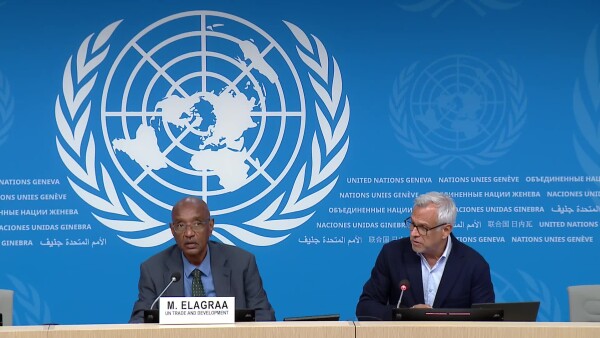
Press Conferences | UNCTAD
Gaza reconstruction needs reach $71.5 billion as Palestinian economy and public finances face severe strain. Latest UNCTAD report documents the loss of decades of development gains, economic collapse in Gaza and tightening economic constraints in the West Bank.
The report identifies three immediate priorities: transferring withheld Palestinian revenues, safeguarding the banking system and aligning reconstruction support with the documented scale of damage and economic losses.
1
1
1
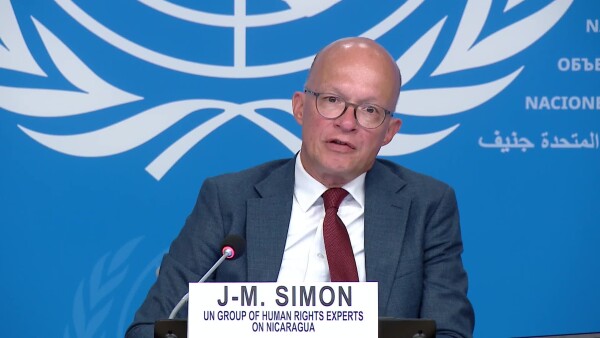
Press Conferences | HRC
Press conference on the situation of human rights in Nicaragua by the UN Group of Human Rights Experts
1
1
1
Press Conferences | ITU , UNHCR , WHO , WMO
YEMEN - UNHCR: Escalating conflict in Yemen could fuel more displacement, refugee movement
CLIMATE - WHO / WMO: Health and Climate impact of El Niño